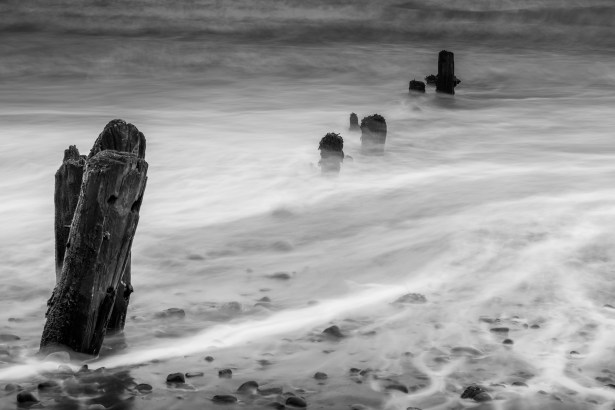
What If?

Photo prompt © Ceayr


“Are you sure this is the house?”

“It says 345.”

“What if it’s the wrong number?”

“It’s not.” She unfurled a sweaty fist to show him the piece of paper and its slightly smudged pen marks. “It says right here.”

“What if you wrote it down wrong?” His eyes met hers, mirroring her apprehension and amplifying the seeds of doubt that tightened shoots of worry in her stomach.

She shook her head, courage evaporated.

It was one thing to flee their miserable surroundings. Another entirely to knock on the door of the father who’d rejected them even before they were born.


For Rochelle’s Friday Fictioneers


Ancient Crush

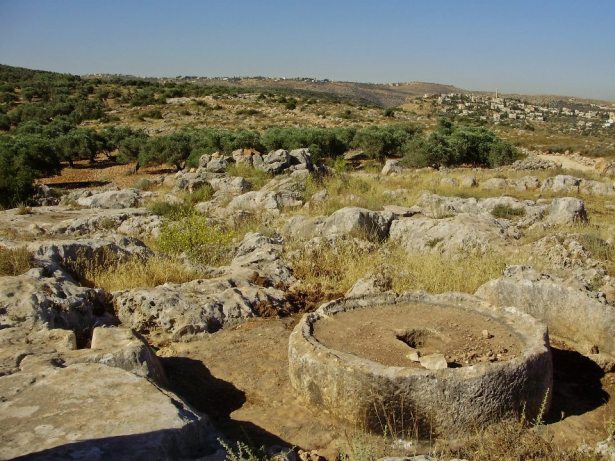
Yam lower stone for crushing olives AmitaiAsif

Photo: Amitai Asif


You’ve seen nations

Rise

And fall,

Felt oil

Extracted

From trees’ toil.

You’ve seen

The farmers

Tend the soil,

Bread dipped

To nourish

Heart and soul,

As children laughed

And played

And lived

And died

Through centuries of

War and spoil,

While you remained

Above the boil,

Till peace returns

For olives’ roil.


Note: The photo is of an ancient base stone (called “Yam” in Hebrew) of the grinding stones that are used for the first step of extracting oil from olives. A current-day olive grove can be seen in the background to the left. Olives were first domesticated about 6,000 years ago, likely in the Mediterranean basin. Documented history of deliberate oil pressing can be found as early as 4,500 years ago (around 2,500BCE).

To this day, making olive oil involves several stages of crushing and rinsing to extract the oil. In many places, olives are still harvested by hand or by beating the fruit off of the trees. The olives are then washed, and crushed by milling stones (traditionally between a bottom stone like the one in the photo and one or two mill stone that stand perpendicular to it and roll around the base stone). The millstone/s were historically moved by use of man-power or animal power, and in some places still are. The pulp is placed in woven bags or baskets, then the baskets themselves are pressed. The liquid from the press bags gets drawn into a reservoir where oil is left to settle and separate. Oil is then skimmed off and allowed to settle again, sometimes repeatedly, to remove impurities.


For the Tuesday Photo Challenge: Ancient


The Sultan

Portrait: Sultan Saifuddin of Tidore, Czartoryski Museum, Krakow


“Kesultanan Tidore does not betray its people,” the Sultan waved his hand to dismiss the envoy. “We are not Ternate,” he added, ignoring his advisor’s frown.

The envoy left, stiff-backed, and the Sultan sighed and rose from his seat. It was past time for lunch.

“I do not like the Portuguese any more than I like the Dutch,” he admitted.  “Neither have our well-being in mind. But the Spaniards have helped us resist the Dutch’s dogged attempts at making us their puppets. I will not become Ternate.”

“The Sultan speaks wise words,” the advisor bowed. “As for the trade?”

“I will take the Dutch’s payment for the cloves my people grow,” Sultan Saiffudin’s smile was tight, “and I will gift it to my people, whose support I trust more than that of the Dutch East India Company.” His smile dropped. “Make no mistake, the Dutch’s only aim is monopoly.”


For What Pegman Saw: Raja Ampat, Indonesia