The Keys To Happiness

alfred-schrock-IEK9fXzLZKs-unsplash

Photo: Alfred Schrock on Unsplash


Two years, and he could hardly remember how he’d managed to survive before.

The rush. The never ending tasks. The constant worry. The being pulled a million ways by demands and the dreams of others.

He’d run on fumes for months on end, then crash and burn in ways that hurt not only himself but also the ones whose lives were closest. All those bridges he’d burnt.

It was the last burnt bridge that had paradoxically saved him. It became a light from burning embers. He’d flown out to care for an ailing uncle, but in truth just to escape the consequences of another interpersonal disaster. He expected to discover his uncle, who’d been the family’s previous pariah, on death’s door. What he did not expect was to find him so content.

“Live here,” were his uncle’s last words. “Need little. Use less. The Keys saved me. Claim your turn.”


For What Pegman Saw: Florida Keys


Zen Essence

calm curl NaamaYehuda

Photo: Na’ama Yehuda


In the moment of the soft swell

Of a calm curl,

The gentle foam

Belays the power of

The waves that lift ocean liners

And cradle whales.

A breath

Before

Exhale.


Thank you, Terri, for this prompt. Perfect for today. For me, the shore is the ultimate calibrator. I took this photo in Ogonquit, Maine, quite too many years ago. Time to go back. Time to go to the beach. Any beach. For breath, for awe, for space, for zen.

For Sunday Stills: Essence of Zen


For A Comb

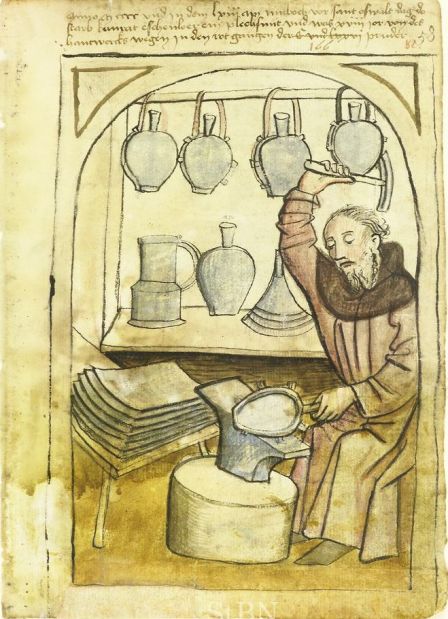
https://paleotool.files.wordpress.com/2014/08/tinsmith.jpg


“For all the Gods!”

“What is it?” I startled. This was the closest I’d heard Papa get to swearing.

He lifted the milking-pail to reveal a wet stain on the earthen floor. A defiant fat drop fell, confirming.

It was our only pail.

I emptied the soup-pot into our bowls. “I’ll scrub this, Papa. It’ll cool and do till the morrow, when I’ll take the pail to the tinker. He’ll repair it for my comb.”


For Sammi’s Weekend Writing Prompt: Tinker in 75 words


Collateral Damage

sharon-mccutcheon-AuPRHJe8Mhs-unsplash

Photo: Sharon McCutcheon via Unsplash


“They’re collateral damage,” he said, and gestured toward the flash of news images across the screen. “It’s not anything personal against them.”

He shrugged as if his words explained all of what happened. Of what continues to take place.

“They never should’ve put themselves in this situation,” he added, perhaps because he’d perceived my incredulous stare as an invitation to explain further, or perhaps because someplace, somehow, he felt ashamed. That is, if he was capable of shame, which as the evening dragged on I found myself increasingly doubtful of.

I glanced at Brenda, whose dinner plate seems to have become her world. Her absconding only made me angrier, but the boulder in my throat allowed no sound. I shook my head.

“Well, they could’ve stayed where they were,” he retrieved a comb out of his pocket and proceeded to slick back his salt-and-pepper hair, and the outrageously incongruous act against the reality of utter misery, somehow released my breath.

“They are children!” I choked on the word, but the rest tumbled out behind it as if afraid to become lodged again. “They could not make the decision to stay. They had no choice where to be born. Or who they were born to, or whether or not to put themselves in any situations.”

He continued to groom himself with the comb and I fought the urge to grab his arms and toss away the thing, one of the many things, the children were denied.

“Their parents should’ve taken better care of them,” he added blandly.

I took in a deep breath. “Even if that was true, which it is not in the vast majority of the cases, how does that make it acceptable for others to deliberately traumatize these children further?”

He raised an eyebrow in disdain to signal that my upset was the overreaction. “If their parents stayed in their own countries,” he stated sedately, “instead of coming here, the children wouldn’t get locked up. It’s simple, really. If a person doesn’t want their kids to suffer, they should not do certain things.”

“So now we’re talking like the mafia? Threatening people with harm to their kids?”

“Calm down,” he drawled. “Now that people know their kids wouldn’t have it easy here, perhaps they’d think before they decide to make their kids into collateral damage. If they did as they were told and stayed wherever it was they belonged, none of this would have to happen.”

I inhaled and glared at his wife, the colleague whose silence at the face of cruelty made her increasingly less of a friend. Her eyes scanned the wall someplace not quite behind my head.

“So you approve of terrorizing children,” I stated, my fingers groping for my purse. Her birthday dinner or not. I was done. “This is exactly what mafia does.”

He actually cackled. “They’re the mafioso. It’s their fault if their kids are cold and wet and getting hurt. What did they expect, crumpets and tea?”


For Linda Hill’s SoCS writing challenge: co-


Up Or Down


She could go up

Or down

On the path

Into town.

There the low road

Awaited,

Full of snarls and

outdated.

Or she could take

The high

With its twists,

Turns,

And sighs.


She could go up

Or down

On the path

Into town.

So she paused to

Reflect,

How to best

Course correct,

And decided it

Best

To give the high road

A test.


For Crimson’s Creative Challenge


The Constitutional

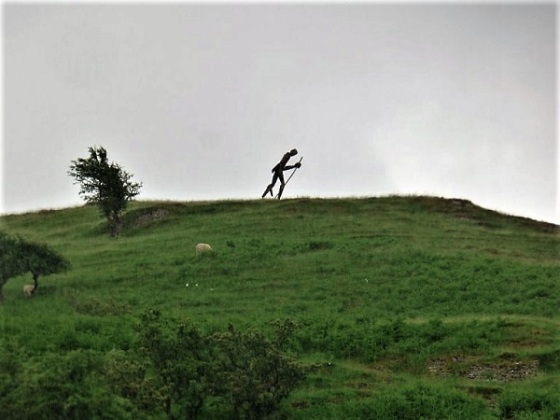
Photo: Sue Vincent


“He never would’ve been out there without his hat.”

Elizabeth shook her head in suppressed exasperation. Of course her mother would find fault.

The older woman perched on the edge of the folding chair that Elizabeth and the fresh-faced health-carer had dragged over for her. The flickering episodes of weakness and disorientation had grown more frequent since Grandfather died. Perhaps it had been the shock of finding him, as her mother had, slumped against the edge of the bathtub. Perhaps it had been the letting go that followed endless years of caring for an increasingly ailing parent. Perhaps it was her mother taking on the role of family invalid.

The doctors certainly did not seem to know.

Or know the difference.

Not that Elizabeth could not understand the wish to let go. She could. Very much so.

Caring for her increasingly moody mother gave her a taste of what it had to have been like for her mother to endure the constant worry over and never-ending bitterness of a man who could no longer do what had sustained him. The amicable if somewhat taciturn grandfather had turned into a fussy, verbally cruel, bed-bound tyrant. Her mother’s father had to have become insufferable.

A little like her mother was becoming.

“They should’ve made a hat. It’s all wrong without a hat.” Her mother scowled.

The figure on the hill leaned into the wind. Impossibly lithe and utterly determined, it embodied how Elizabeth the young child had known him. As far back as she could remember, Grandfather never missed a day of what he’d called his “constitutional.” Rain or shine or wind or hail or mist or blazing sun, her grandfather would leave on his solitary afternoon walk, returning — like clockwork — when the sun had disappeared behind the hill.

Elizabeth would wait for him, her child’s body pressed against the stone fence that bordered the estate, and watch his shadow edge on home, his walking stick as part of him as any limb could be. At some point his tweed pants would materialize at the bottom of the shadow, and in another step or two the rest of him would unveil into certainty.

By the time he’d reach the gate, his windblown face would hold a smile for her. He’d nod a welcome, compensating with it for the long wait, for the yearning that he’d take her along (he never did, nor had he taken any of his children before that), and for the fluttery worry that perhaps the shadowed figure was not Grandfather at all, but in fact an elf or ghost or some trickster’s apparition.

She gazed at the silhouette on the hill, its stride frozen forever in the time before a stroke changed everything.

Hat or not, this was how he’d want to be remembered.

“He’d stuff the hat in his pocket when the wind was high,” she whispered, her voice full of sudden sorrow. “He’d pull it out and put it on a step before he reached the gate.”

Her mother’s mouth opened in preparation for automatic argument, but then the wrinkled corners turned down as a quiver shook her chin.

“He did,” her voice a child’s in elder’s clothing. “It is exactly what he’d do.”

Elizabeth squeezed her mother’s shoulder and the older woman placed a trembling hand over her daughter’s.

“It is perfect, then,” her mother murmured. “I’d forgotten. Take me home, Lizzy. Let us allow him his constitutional in peace, now that he can once more go about it.”


For Sue Vincent’s WritePhoto Challenge


Gravity

Photo prompt © Jan Wayne Fields


“The box said up to 20 people,” Martin insisted.

I gazed at the purple awning below and my eyes rested momentarily on my cousin’s bare feet. He inherited Uncle Georgie’s hairy toes, I noticed. His impulsive stubbornness, too, it seems.

“That’s not what they meant,” I shook my head.

Martin glared at me as if my IQ wouldn’t make it past the bottom inch of a ruler.  “Twenty people is twenty people, Ralph. Math is math,” he announced and launched himself from the garage’s roof onto the tent.

CRASH!

And gravity is gravity … I sighed. I had 911 on speed dial.


For Rochelle’s Friday Fictioneers


Voice Of Song

Lady Liberty SmadarHalperinEpshtein

Photo: Smadar Halperin-Epshtein


There is no

Place,

No space,

Without

Voice.


If the trees of our soul

Fall

With no ears near

To hear,

Silence deafens

Roar into

Lore.


Be the voice

Of your song.

Let the air move

Through lungs

Via cords

To record:

You’re aboard.


For the dVerse Quadrille challenge: Voice