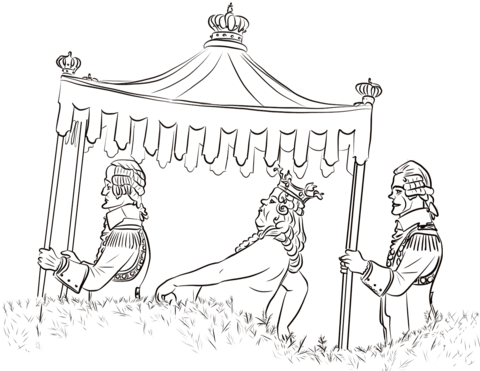
Emperor’s New Clothes

the-emperors-new-clothes-3-coloring-page

Nata Silina at Supercoloring.com


“I expect loyalty,” he stated.

A silence followed.

Shock or perhaps because

There was

No honorable way to respond.


“I need loyalty,” he repeated

With the implication clear:

You bend the knee

Or you are gone,

Swear fealty to the man

Or you’re a traitor

And an enemy to be scorned.

“You will always get honesty from me,”

Came the measured return.

“That’s what I want,” twisted the retort,

“An honest loyalty.”


As if there was such thing

As honest loyalty

To one who deemed acceptable

Only what offers

Praise and supplication,

And allows no room

For truth,

Let alone for the calling out of

The Emperor’s bare bottom

Of the barrel

Governing

Or his disregard for honor

As he dons repeated sets of

Non-existent,

Yet much lauded by him,

‘New Clothes.’


Note: As it happens, the book I’m reading and which was right by my elbow as I read the prompt … is “The Mueller Report” (w/ commentary by the Washington Post; page 296 of the book, page 35 of volume II in the report).  … And the rest, well, is history. And what will be …? We shall yet see.

For Linda Gill’s SoCS: open book, point, write


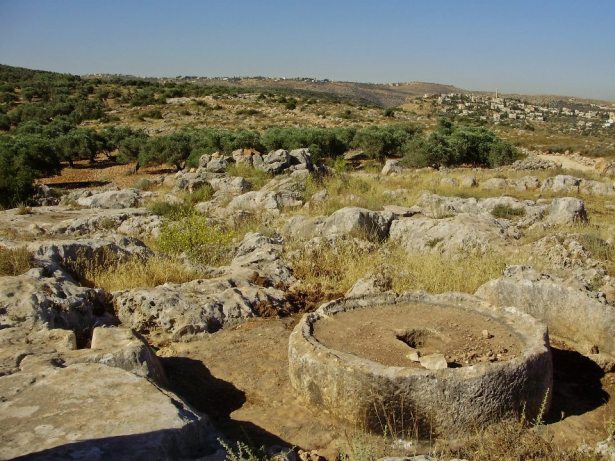
Ancient Crush

Yam lower stone for crushing olives AmitaiAsif

Photo: Amitai Asif


You’ve seen nations

Rise

And fall,

Felt oil

Extracted

From trees’ toil.

You’ve seen

The farmers

Tend the soil,

Bread dipped

To nourish

Heart and soul,

As children laughed

And played

And lived

And died

Through centuries of

War and spoil,

While you remained

Above the boil,

Till peace returns

For olives’ roil.


Note: The photo is of an ancient base stone (called “Yam” in Hebrew) of the grinding stones that are used for the first step of extracting oil from olives. A current-day olive grove can be seen in the background to the left. Olives were first domesticated about 6,000 years ago, likely in the Mediterranean basin. Documented history of deliberate oil pressing can be found as early as 4,500 years ago (around 2,500BCE).

To this day, making olive oil involves several stages of crushing and rinsing to extract the oil. In many places, olives are still harvested by hand or by beating the fruit off of the trees. The olives are then washed, and crushed by milling stones (traditionally between a bottom stone like the one in the photo and one or two mill stone that stand perpendicular to it and roll around the base stone). The millstone/s were historically moved by use of man-power or animal power, and in some places still are. The pulp is placed in woven bags or baskets, then the baskets themselves are pressed. The liquid from the press bags gets drawn into a reservoir where oil is left to settle and separate. Oil is then skimmed off and allowed to settle again, sometimes repeatedly, to remove impurities.


For the Tuesday Photo Challenge: Ancient