“How is it possible that it took place and no one knew?”
“How can they say they didn’t see?”
“Can people really be this blind?”
“Don’t they care?”
“Don’t they see?”
Maybe they didn’t. The improbable is possible. People can be that blind. Even when they care, they may not see.
It is easy to see what one wants, what’s congruent, what matches assumptions or views or held beliefs. It is easy to recognize what one had learned already, to follow perceptions already accepted, ways familiar … easier to understand words that resonate with what does not burden with new challenges or calls for reassessment or brings up shame.
Shame. People don’t like to see what brings up shame.
The very whiff of it can bring on denial. Projection. Deflection. Blame of others. Avoidance. Cold shoulder. Dismissal. Refusal. Minimization of the pain of others to avoid feeling one has done wrong, seen wrong, is wrong.
Shame tugs along with hate and violence, in words or action or both. Inflicting pain on others might get justified or explained away … A way to keep downtrodden what one thinks should stay unnoticed, un-make-wave-able, quiet, under rugs, buried. Unseen.
It takes time, heart, and bravery to crack and drain shame.
It is easier to blame. To point fingers. To make “an other” to scapegoat or distance from. To claim misfortune due to one’s abilities, affiliation, religion, political leanings, nationality, age, gender, race, vocation, location, possessions or lack thereof.
To yell “false claims”, “exaggeration”, “attention seeking” or the newest term: “fake news.”
Shaming is a weapon of pseudo self-preservation for those who need to ensure the pain of another remains unseen and one’s own comfort can stand unprovoked.
Shame silences:
Unspoken words of wounded children
Pleas of disrespected women
The worlds of the oppressed, belittled, turned against them.
The desperate, the lost … unanswered. Unaccepted. Unacceptable.
Unseen.
It does not need to so remain.
To face what was already there but eyes were closed to, is the first step to unmaking shame. To healing pain.
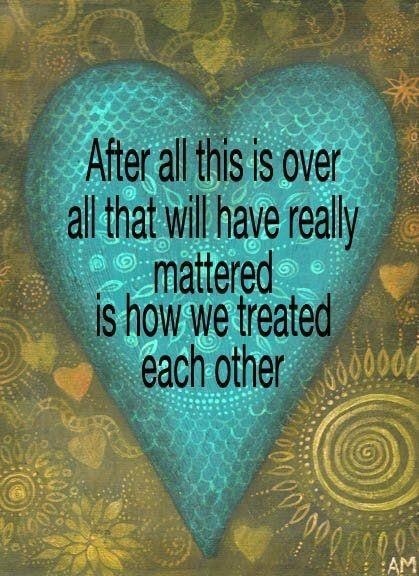
May we find ways to see. May we take heart to act. May we become for others what we need or needed them to see in us, to do for us, to hold with gentleness.
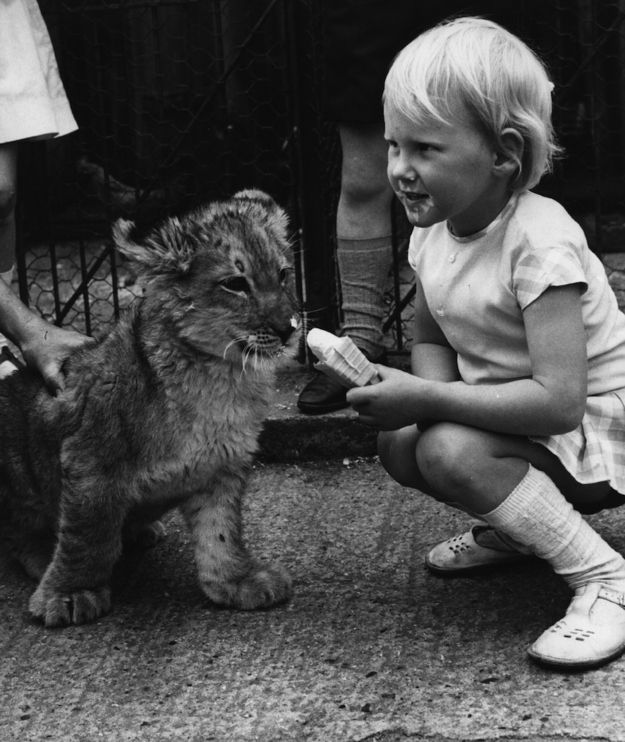
The little family was heading to the crossway and in my direction as I was sitting on the bench in the sun, thirty yards from the crossway, waiting for a friend to emerge from a store. They made the prettiest picture: the father pushing a stroller, the mother to his left, holding the hand of a preschooler. The little one skipping, pigtails bouncing, dressed in pink t-shirt and purple tutu, light up sandals, little handbag full of turquoise rhinestones and the latest animated princess character; giddy with the unsuppressed delight that kids that age can have. I had me a feeling they were on their way to the ice-cream store across from the bench I was on. The excited anticipation was written all over the little face.
Steps from the crosswalk and probably noticing the commotion on the corner right behind a row of parked cars and flashing lights, the mother tried to circle to the father’s other side. Maybe she intended to put herself and the other adult as barriers to the scene on the asphalt.
There was a person on the ground ten feet away from the sidewalk, right behind the row of parked cars. Paramedics with a backboard. An ambulance. Two police cars flashing lights and directing traffic from the three lanes to just one, keeping a perimeter so the nosier onlookers not get too close to the accident. Another police man stood by a car parked sideways across one lane, talking to the driver who hit the man. There was concern in the air. I’d been sending some good thoughts when I noticed the family nearing.
The child was too short to see over the parked cars, but either the energy of the congregated people or the movement of her mother caught her attention. She stopped skipping. Stood. Tried to see. The mother stopped, as well, then tugged gently on her daughter’s hand. The child did not move. The woman stood a moment–maybe considering the benefit of picking up the child to get them moving away from the area but give the child a vantage point that could be startling. The father bent toward the little one, said something. The girl nodded and resumed walking, but her head kept swiveling toward the street and as they crossed and the cars no longer obscured everything, she slowed. The mother picked her up and rushed to make it to the other side before the light changed. To put some distance, too.
The child kept talking, the mother shook her head and spoke back, tried to turn the child in her arms to face the other way and still the child kept turning her head over the mother’s shoulder–looking at the scene on the street: the paramedics were lifting the man on the board onto the stretcher. The family walked faster now that the little one was in arms. I could sense the parents urgency in wanting to get her away.
I could hear them as they walked closer.
“So you are ready to get some ice-cream?” The father, his voice kind but a bit too loud and strained in the slightly false cheer of worried grown ups that children always pick up on.
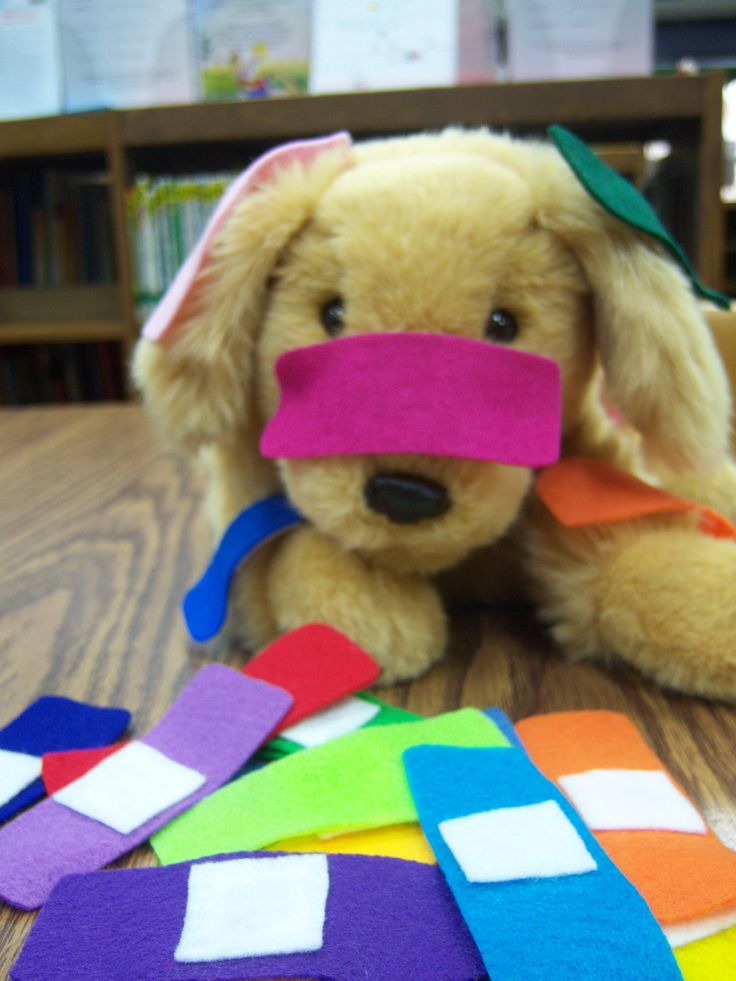
The girl nodded, her attention still divided. She looked back. “Why he has a big Band-Aid?”
The neck-brace. It did look like a big Band-Aid from the distance.
“They are just helping him be more comfortable,” the dad responded. The mom looked upset, walked faster.
“He has a big boo-boo?” the little girl looked again.
“Maybe. Don’t worry. They’ll take him to the doctor and make sure he’s okay.”
“He fall down?”
“Maybe.”
“I don’t want him to have a big boo-boo,” the little girl said, frowning. Then her eyes brightened. “Maybe he want ice-cream too so he feel all better.”
“He doesn’t want ice-cream,” the mother blurted as they reached the ice-cream store and walked in.
Maybe not the kind that comes in a cone, I thought, but the energy of sweetness from this child I bet already made him feel better, even if he did not know the pigtailed gold-heart who offered it.
Last year, a preteen I worked with told me about a child in her class who began cutting herself. The classmate showed this child the scars but swore her to secrecy.
We discussed the kinds of secrets that one should not keep (the ones that feel ‘too big’ to keep, or are about someone being hurt, or feel wrong to keep, or come from shame or guilt), who to tell (a parent, a teacher, a trusted adult, even the school nurse), and how. The girl was relieved to know that she did not have to keep this scary secret (“I get worried that maybe she’ll like, bleed to death or something and then she’ll die and it will be my fault for not telling anyone …”).
In our conversation, the reasons children self-harm also came up: to deal with difficult feelings, to express pain they don’t know how to verbalize, to feel alive, to feel numb, to ‘try and see how it feels’, to be noticed … And what to do if she ever felt the urge to hurt herself (thankfully, she said she never did feel that way, but it never hurts to give some options just in case …).
Relieved though this girl was to know she could share this secret with someone, the preteen was also worried that it will somehow become known to the other children and how it will make things worse. “Kids are already like, making fun of her for everything …” she fretted, “so, if they found out she’s like, cutting … they’d be all like, joking about it and texting and stuff ….”
Apparently the self-harming classmate–not the most attractive by other students’ standards (directly derived from society’s harsh shaming of anyone who does not adhere to a very narrow range of ‘acceptable’) was found to have confessed a crush on a boy in a higher grade … Someone found the note where it had fallen from the girl’s pocket, ‘kindly’ photographed it, and circulated it in among the students, along with some choice words about the girl’s morality (you can insert your own words here, copied from the shaming terminology of grownups toward women and girls: ugly hurtful words that are meant to cut to the core). A cascade of comments and ugliness ensued, along with catcalls, leering, and whispered words.
“Some kids even say that she’s like, you know … the ‘c’ word …”, the girl blushed in embarrassment and indignation. “She didn’t even kiss him or anything …” she said, then added urgently, “not that it would even be okay if she did let him kiss her … or, you know, stuff …”
The “if she did let him” did not escape me … nor did the outright meanness of exposing vulnerability and turning it onto some way to cause harm. The backbone of bullying.
Bullying is a very real issue, and not only in children and teens. The culture of putting down others for real or perceived differences and flaws is disturbing, and for those caught in it, it is often shattering. Bullying thrives on shaming, and shaming reflects a void of compassion and empathy. It is especially apparent on websites, news media, twitter, Facebook, and many online blogs: people behaves in ways that are purposely hurtful, narrow minded, and outright cruel; and it is somehow seen as witty and cool.
It is not cool.
It is not witty.
It is cowardly and it is heartless.
It is, really, a form of terror. Insidious and sneaky, but no less meant to cause helplessness and pain.
The truth is that bullying is not ‘fun’ or ‘funny.’ Cruelty of words is especially cowardly, and cyber-bullying is uniquely hurtful in that it can easily seem like the whole world is (and indeed can be) laughing at one’s misery. Many would cringe at the sight of someone literally cutting another person or kicking them in the groin, yet somehow cyber-bullying has become a culturally accepted means of expressing disdain and showcasing ignorance. Meanness is not frowned upon, but adopted and propagated. It should not be so. It can and must be stopped.
Some of the things people (children, but not only children) write:
“Why don’t you just kill yourself so we can be rid of you?”
“You are so ugly that you shouldn’t have been born.”
“Everyone hates you. Just go jump from a bridge or something.”
How have we let it come to that?
The conversation I had with the preteen was not unique–bullying often occupies children’s conversations. However, I was reminded of the one I had with this particular preteen as I watched Monica Lewinsky break her silence and deliver an outstandingly candid and important speech–her first public talk in 16 years. Lewinsky calls out the shame culture that allowed (and cultivated) the ugliness toward her in the late 90s, and which is all too alive and well today and still takes lives–figuratively or literally.
Monica Lewinsky survived it, but not without immense cost, and she would not have survived it had it not been for the compassion and empathy of family and friends who held her close through the awfulness.
Not everyone has people to hold them through bullying, and not everyone survives it. Even in those who do, the price is often very high.
Watch this video, and pass it along. It is important. It is worth the time.
Because the Shame Game can only be played if we perpetuate and feed it, and it will cease if enough of us practice compassion and empathy. Like the preteen who turned to me, and would not be a silent witness to pain or bullying, let us all become ambassadors for compassion and ending shaming.
Let there be no more casualties of shame, no more shattering of souls. Let us not be instruments of despair–directly or by our silence.
These days, with much strife in the world and overmuch rhetoric of fear and hatred, it can seem easy to feel pulled to lash out, to “get it through the thick skulls” of those who are supposedly different/less-than/not-as-right. It may seem justifiable to use violence: emotional, verbal, physical, sexual, religious, political. It may seem like “this is the only language these people (insert different/less-than/not-as-right populace here) understand.”
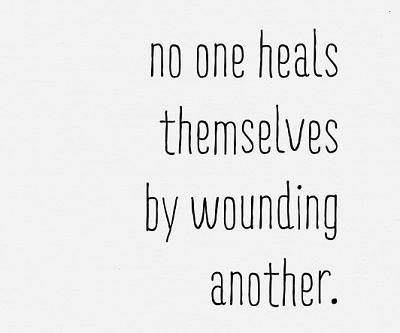
Let us not wound others in attempts to heal/correct/make-right/avenge/justify.
Hold your ground for kindness.
There is plenty pain in this world without adding to it. More wounded people will not a healing make. There is plenty drama without conjuring more of it. More despairing people will not hope bring.
Hold your ground for care.
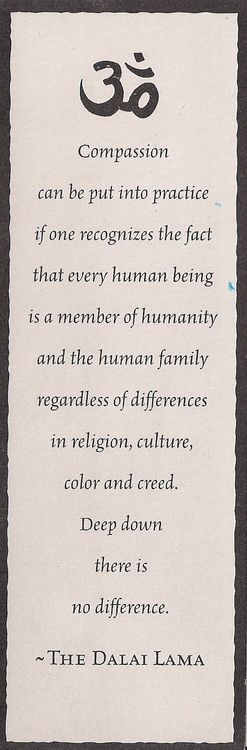
May there be a path to true-heart-reason. Not to ‘fairness’ maybe, but to humanity. Not to ‘justice’ maybe, but to compassion. Not to ‘paying back’ but to gaining calm. Not to ‘avenging’, but to taking a step toward finding a common ground. One we can all hold on to … a healing span.
May there be less wounding. Wounds already borne will not heal faster if more are inflicted. There will be no less rage if ire remains amplified. Fires will not be put out by constant dose of fear or hate or it-is-their-fault-that-I-have-to-do-it. No more. Alienation. No more. Harm.
Let us all, hold our ground. In open hearts. In listening. In understanding. It is past time.
Whatever fights you are pulled to become embroiled in–personal, communal, religious, political, national, global–may you keep your feet firmly rooted in empathy. May the seedlings of care grow strong and fine. May we patch up the hurts to foster quickest healing, and may we carry hope and light, for they are the menders of all hearts.
To participate in the Ragtag Daily Prompt, create a Pingback to your post, or copy and paste the link to your post into the comments. And while you’re there, why not check out some of the other posts too!
You have reached a quiet bamboo grove, where you will find an eclectic mix of nature, music, writing, and other creative arts. Tao-Talk is curated by a philosophical daoist who has thrown the net away.












 Na'ama Yehuda

You must be logged in to post a comment.