Find Joy!

joy

Find joy in the places where sunshine streams inwards

Find joy in the friendships that sparkle the heart

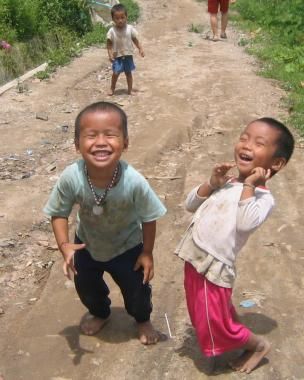
Double over with mirth

Let belly laugh jingle

And all worry scatter

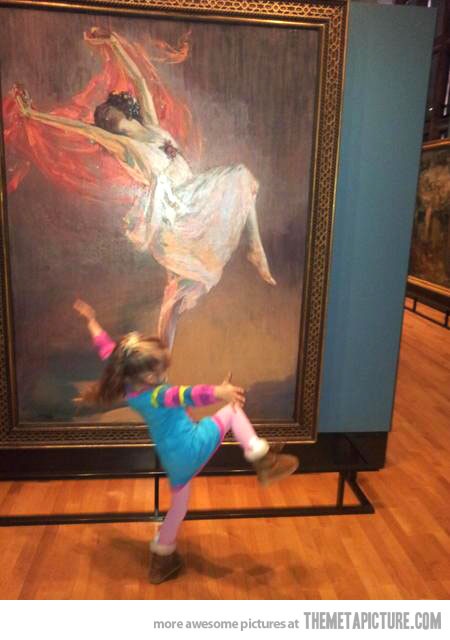
Find joy in a dance, in art, in creation

In mirroring pleasure

Where words do not matter

joy1

Find joy in belonging

In giggles with one like no other

In nature come close

And delight spilling over

joy2

Superhero Story

superhero

The little boy loves chocolate. He adores candy, cookies, florescent sour sticks. His idea of a balanced meal is french fries and ketchup with some chicken fingers on the side. He cringes at anything that grows on trees and runs away from any shorter plant life, especially those grown on farms with salads in mind.

He thinks brownies are a food group and can name all the junk food in the aisle of a mega-mart. He’s a keen critic of the varieties of cheese doodles, pasta shapes (no sauce), donuts, and icing from a can.

He perfected pouts and frowns to span the whole range of disgust, denial, and gradients of ‘no-way-Jose’ with which to respond to any and all attempts at offering healthy nutrition. You can dress vegetables however you like, try to hide fruit in a smoothie or an ice pop, claim that dried fruit are “as sweet as candy”–he sees right through the sneakiest disguise. The only way a vitamin will pass his lips is in a gummy.

His world revolves around sweets, snacks, and superheros.

Of the latter, he owns every size, shape, and denomination; in clothes, sheets, watches, slap-on-bracelets, stickers, backpack, cup, cap, hat, and mittens. He is genially inclusive of all superheros, identifiable by characteristic puffy chests, disproportionate arms, odd skin color (tending toward green), and various kinds of billowing plastic capes and armament. There are of course the Spiderman, Batman, and Superman, Green Lantern man, and Darth Vader, but also many others that adults keep confusing and, more’s the pity, cannot even name … 

The boy lives, breathes, sleeps, plays, narrates, and animates his superheros. He is rarely found without one–they are constant companions–at home, in the car, in the tub. He takes one with him to the toilet, for some friendly company and conversation.

He keeps a place at the table for his superheros. He lugs a carry-on packed with them onto the plane. He delights in having them, ecstatically anticipates upcoming birthdays and holidays as opportunities for enlarging his beloved collection.

Some may think his ‘fixation’ willful or limiting. They may frown upon his adulation of plastic figurines with overstuffed musculature and unrealistic proportions and stereotype. Others see him walk along the street in full superhero regalia, grinning, prancing, proud as rain … and they cannot hold back a smile. He is absorbed, enchanted and enchanting. At almost-four, he bobs easily in and out of the bubble of delight in mystery and magic-thinking.

His parents tolerate sheets and towels becoming capes, draping furniture, and sweeping fragile items off of shelves and coffee tables. They have learned to live with constant sound effects as Spiderman climbs walls and Superman flies atop buildings and other superhero this-or-that saves all manner of fallen toy-victims. His parents accept that going anyplace takes longer when there’s a world to rescue with each move, a hero to swoop wide from every stair, a never ending battle between good and bad to wage and master.

Speaking of battles … there is the matter of his aversion to tooth brushing. Sugary and colored yellow with sticky cheese powder, he refuses to allow any mention of teeth cleaning. He clenches jaws against attempts at probing. He flees, superheros in each hand, at the sight of toothpaste or mouthwash.

Oh, he has some valid reason to–medical professionals have spliced his little mouth all too many times in efforts to reshape what a birth defect distorted. They came from care, but his experience left him wary and refusing further vulnerability. He controls access to his mouth with iron will that puts maximum security detention centers to shame.

His parents despair — they loathe to force him when so much was forced already and yet they know that to neglect his mouth is to invite issues in the future and invasive dental work besides. They admit helpless caving in to his refusal. Embarrassed, they are torn between their worry for his pain and the need to work beyond it.

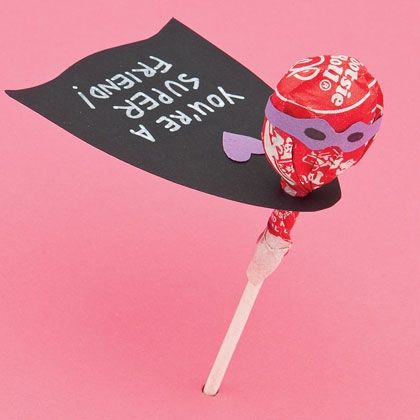
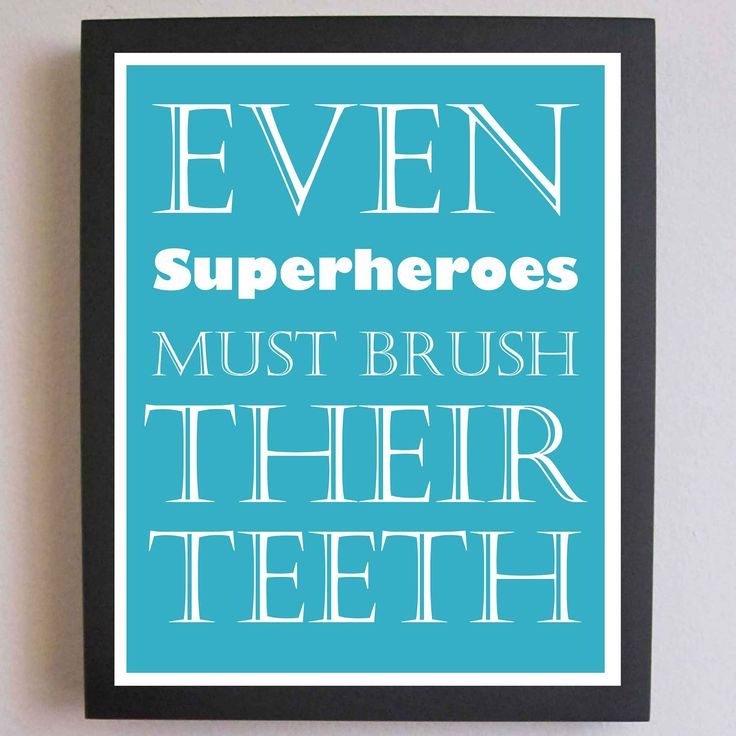
So we had a hubbub, he and I, and we’ve come to an agreement. An understanding. A plan of action. Superheros brush teeth, too, you see. They floss regularly with gusto. They gargle mightily. They epitomize mouth-care and a fighting spirit against germs a-hiding. The proof is seen in any superhero movie, cartoon, or poster; where one is certain to be dazzled by the light reflecting from their pearly white perfection ….

Now, superheros line the sink, the toothbrush is adorned with muscled plastic. Towel cape on shoulders, feet in puffy superhero slippers, he seeks to destroy all hidey-holey bugs that wish to burrow cavities.

Superheros brush teeth, too. Whew. Next, they will be eating vegetables…
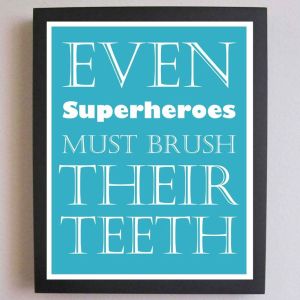
superheros

Sky-High Practicality

airplane

Seven hours into a twelve-hour flight the other night, an adorable (and chatty) curly top three-year-old in a nearby row: “Mommy, I don’t want to stay on the airplane anymore. My legs want to run.”

Mommy (sounding similarly fed-up if not run-ready): “I know, Sweetie, but we can’t get off right now.”

Curly Top, miffed, tone slightly rising toward whine-a-thon: “Why?”

Mommy: “Because we’re very high up so we can’t go out now.”

Curly Top: “We’re in the sky, Mommy?”

Mommy, voice disheartened: “Yes … we’re up in the sky.”

Silence. Then Curly Top again, pensive with a touch of wonder filtering in: “Mommy, we flying?”

Mommy: “Aha … the airplane is way up high because we’re flying.”

Another silence, followed by bubbly cheerfulness in the toddler’s voice: “Oh, that okay Mommy! We can just fly down right now!”

🙂

airplane2

Heartbeat of love

heartbeat

The little boy had a difficult beginning. Born unwelcome, left at an orphanage in a rural area overseas, raised in a crib in a room full of other babies in cribs–bereft of stimulation or affection or even much in the way of nourishment, when funds at the orphanage were low.

He was among the fortunate ones who survived infancy, and was adopted at age two, to parents who showered all the love they had on him and then found that they had even more to give when that threatened to run out. He was not easy to care for, you see. Unresponsive, non-communicative, alternately rubbing himself against their legs like a kitten, squirming to get off, or slumping like a lump of potatoes in their arms. He either cried inconsolably or stared stoically. He would eat things that should not be eaten and hide foods that should. He could not fall asleep unless he was in an empty bed, never a quiet room, and only after a long while of rhythmic head banging. He barely spoke. Only sometimes responded to his name. It was not looking good.

Fortunately, these parents had excellent instincts, stout souls, and good guidance. They sought help to know how to best assist a child so traumatized that he had learned to take himself away to cope. How to support a child who did not know others could be relied on. How to guide into love a child who did not recognize affection as markers for attachment or caring. They did not believe those who said that their son was autistic. “Maybe he is,” they argued, “but how could we know if he’s autistic, if he never had a chance to truly communicate?”

They sought other opinions and took him to speech language therapy and sensory therapy. They went to counseling themselves–there was much heartbreak to deal with in finally having a child and finding him unwelcoming of love. They looked for help with someone who understood developmental trauma and the adjoining dissociation that often follows–they wanted to know more how to best support him. They knew just loving him more was not enough: they had to find a way to help him process what he’d lived before he could find hope to live differently. Together with professionals, they worked to help give voice to what had none, they walked with him along the story of his lost beginning and his suffering and his strength and masterful coping and his current safety. He needed to know it in all of his being before he could trust it. Gently, they helped him heal.

Persistent gentle kindness integrated with knowledgeable attention and direction helped. The child bloomed. He is no longer checked out from his world, or words, or feelings. He’s in first grade now. Still closing gaps in language and communication, and he may always carry scars from his early years and a plausible exposure to substances before birth that make it difficult for him to regulate his body’s reactions and excitement. However, a more affectionate little boy you would be pressed hard to find. He’s happy. He knows he’s loved.

Not too long ago we were busy with a task where we listed things one does in the morning, or after school, or on weekends, or in a mall, or a park, or before going to sleep at night. To the last he said: “take a bath, brush my teeth, read a book, put my head on mama or papa’s chest.”

I smiled at that–the mom told me that they had a nightly routine where they’d cuddle, making up for the many lonely nights of empty cribs and no arms to rock him. They would snuggle together for a while, let him use them as a pillow, then kiss him goodnight. The parents had held him most the night when he was younger, once he let them.

The boy nodded at me, maybe taking my quiet smile as a sign that he needed to convince me of the veracity of what he was saying, or its importance. “Mama is softer, …” he continued, “and papa’s chest boo-booms louder. I like it. It makes me feel nice inside and it helps me not feel like I have to bang my head.”

Enough said.

Be a Light

be a light

“Can people be like light?” The question comes from a bright-eyed five-year-old (who in my view lights the room wherever she goes …).

“What do you think?” (my almost standard response to children’s questions–lets me know what they already have in mind …)

“I don’t know,” frown, scowl, “that’s why I’m asking YOU!”

(Oops, strategy backfired. Okay, I guess I deserved that)

“Why are you asking?” I am treading carefully here, asking again in a different way, but I am really interested in knowing what the question is about.

“My Nana told me I’m her light,” the girl’s young forehead creases in concentration. “She said, ‘you the light of my life!'”

“Aw … it’s a great expression! And a very sweet thing for her to say. I can totally see why.” Children of her age group often begin to notice that there are some things people say that do not quite make sense: the words don’t add up, and they realize that there has to be another meaning, something else that’s being conveyed by the words but is not the words themselves (e.g. “she has a sharp tongue” or “he has no heart” or “raining cats and dogs” …). Sometimes they can infer the meaning, sometimes they are lost or have some sense they are not sure about. I love it when they ask. “What do you think she meant?”

Girl shoots me a “there she goes again with her Speech Pathologist questions again” look, but she relents. She’s patient with me. “That she loves me?”

“Yep … and what else do you think it can mean that you are the light of her life?” I wait.

Eyebrows up, lips scrunched in thought, “… and … that she’s really happy to have me or happy to see me maybe?”

“Yes! Both. Very much so. Also that you are important to her, and that you bring her joy, and that you make her feel better by simply being you. All of that.”

The child smiles. Beams, more like.

We go on with the session. Suddenly she stops again and asks (it is very often that things percolate a while before another level of query bubbles up to the surface): “Can someone be a light for other people?”

“Do you mean for more than one person?” I want to make sure I understand.

A nod.

“Absolutely. I think you can be a light in many people’s lives.”

Pause, thought, creased forehead. Smile. “Oh, like, if you turn the light on then it is light for everyone?”

My turn to nod. My turn to smile. Super smart cookie, that one.

“Cool!” Eyes wide.  Now that she’s got it, she runs with it. “I wish … I wish I could be a light for every every EVERY ONE in the whole wide world!  A big light that goes all over around! You think I can?”

She may not know it, but I think she already is one …


Make Rain, Not Thunder

rainnotthunder

“ENOUGH!”

How many times have you heard this spoken loudly (word interchangeable, same intention) from a fed-up parent, caregiver or teacher to a child? How many times have you yourself said this or something similar in anger, to a child?

Frustration happens when dealing with little ones with strong opinionated minds and limited awareness for time, urgency, consequences or your priorities; it is inevitable. Children can be persistent, stubborn, wild, loud, aggravating, aggressive, irritating, exhausting. Caregivers get fed up, tired, annoyed, irritated, overwrought. They can have bad days with too much to do, too little sleep, too many children to care for, too many demands with too few hands to do them with, too many worries. Crises, emergencies, a clogged sink, a car that would not start, yet another ‘accident’ right after cleaning is finally done … Children, especially young ones, rarely know to take adult burdens and juggling into account. On the contrary, it is as though they are uncannily aware of any lag or energy slump … and if anything, are more likely to be needy, clingy, whiny, and doubly argumentative exactly when you have the least time or energy to spread around … (FYI, it is mostly not done to drive you nuts, but because children may need to reassure themselves even more when you are stressed, that you are there for them: a difficult cycle, when you have to be extra-patient when there is least patience to be found …).

Parents and caregivers are human. They make errors. They get upset. They may raise their voice, match their child one to one in volume, heel-digging, and demand. It happens, and as long as it does not happen too often, it can be repaired with comfort and apology, time to reconnect, some soothing, an opportunity to explain and understand.

In general, however, children listen better when the volume is set lower. Calm allows the brain to form connections that make meaning, while anxiety and overwhelm awaken circuits of survival while shutting higher learning down. Experienced teachers will tell you that they keep their voice low to keep the children listening: it may seem paradoxical, but in effect it works like a charm. Gentle speaking allows the intonation and cadence of your thoughts to pass through better. It allows the listener to let it in without alarm. It differentiates emotions and helps regulate a child’s understanding of nuance and intention.

A raised voice is a good tool for calling an alarm, to keep the child away from danger, to make clear what should not be done to prevent harm. For instruction, though, the raised voice spins way off the target, and misses by a long shot: the meaning of the words you wanted to convey gets lost in the tone and loudness of the sound.

We cannot force flowers to grow faster by pulling on the stalks, nor would it help if we stalked constantly, demanding them to hasten. We cannot make a plant drink more by spewing a stronger stream of water–it will only exposes roots and hit raw nerves. With children, too, we cannot force growth by raising our voice or hardening our words. We’d get a reaction, maybe, but not learning, and we’d shut down tendrils of potential besides.

“Raise your words, not your voice” Rumi said. Yes. Whenever possible, use good words, taken from and guided by the better part of yourself or the best part of yourself that you can find at that moment. Explain more, demand less: “it is rain that grows flowers, not thunder.”

Children, too, grow best in gentle sprinkles, rather than thunderstorms.

And He Duly Obliged–Cop Matters!

And He Duly Obliged…. (click link to go to original posting at thekindness.com blog)

police officer ties a little boy's shoelaces

Lovely!

Good for his mama for teaching him to be discerning in seeking help AND for letting him know that he CAN seek help if there’s something too big or difficult for him to manage. As for the task itself–I think the match is perfect! A cop ones told me that police officers tie very good knots–the last thing you want is to have a lace go loose when you’re chasing a suspect…

Good call, kiddo!

(and good job, Mr. Cop!)

How do you teach integrity?

integrity

We all want the children in our lives to have integrity and a moral compass. We want them to not only know right from wrong, but to apply it. We wish for them to have empathy toward others and to choose the better path not just to avoid punishment, but because it is the right thing to do.

That’s all well and good, but how do you teach integrity? How is it related to empathy and is it even something that is learned, or something one has to be born with? Something some of us ‘have’ and others ‘not’?

Though individual sensitivity and empathy-capacity varies, and some children are born with more empathy-capacity than others, empathy is still something almost all children can learn and have develop. Children vary in the age they begin to show clear empathy, but babies and young children are naturally self-centered and egoistical. It is normal for them to view others’ feelings through their own and to judge situations according to whether they’d get a reward or keep from getting punished, rather than the inherent morality. Fairness may be easier to detect, but true morality is learned, as is the reasons for it.

A child may not eat another’s cookie not because they persuade themselves they do not want it, but because the praise for not doing so may be worth more, or the disappointment of another in them if they not abstain may feel worse than the immediate gratification of eating the cookie. Children learn to share–maybe at first not so much because they truly want to share, but because of the positive feedback and praise that they get when they do so. With good modeling and opportunities, they can be taught how others may have feelings just like their own, and that other people’s feelings matter, too (e.g. if someone ate their candy, they’d be sad, so they can understand how if they took another’s treat the other child may feel sad about it). While some toddlers show well developed empathy, oftentimes it is through the preschool and then kindergarten years, that children learn to appreciate another persons’ pain, and to understand that another person may hold a different opinion or agenda and to accept that as okay. They learn to follow rules (all the better when rules are clear, consistent, and kind), and they practice enforcing rules in their peer and imaginary play.

How do they learn that? Well, empathy and integrity are best taught through empathy and integrity. It may sound simplistic, but there are all too many examples of attempts to teach integrity through fear of punishment (“If you take candy without paying, the police will take you to jail”), or empathy through guilt-inducing and shame (“look what you did–now she’s crying! I told you to not take her teddy bear from her!”) Fear can certainly be a deterrent, but fear is not integrity, nor is guilt the same as empathy.

Teach empathy through modeling your own. Children who have sensitive caregivers who show them care, who reflect their feelings back to them, and help them put experiences into words, are more likely to develop empathy themselves and to do so sooner. Be kind, demonstrate sympathy and empathy toward others–let your child see how you help a neighbor, or feed a stray, or hold a door for someone whose arms are full. Explain to your children about disabilities and differences, and make sure that you do not display disgust or ambivalence about the same. Apologize if you hurt someone–the child, too–even if by mistake, and acknowledge the feelings that your error caused and the need (and possibility) for repair. Be respectful of others’ feelings. Be kind.

Similarly, children whose parents and caregivers live by the same rules that they demand, learn integrity as a cohesive, non-confusing concept. Confusing rules result in confused and inconsistent learning. It is rather simple (if not easy): If you don’t want your child to lie, don’t tell them to answer the phone call you don’t want to take and say “Mommy’s not home,” or “Mommy is in the shower” (when you are not). If you don’t want your child to steal, don’t bring home pens from the office … If you don’t want them to cheat, don’t justify not following the rules at other times (lying about a child’s age to get out of fare or parking at a handicap space also counts …). Don’t promise what you do not intend to keep or just to get peace and quiet for the moment (“If you give your toy to your baby sister I will buy you a toy tomorrow”). Promises that are not kept, teach a child that words are empty and that it is okay to use untruth to defer discomfort. Be honest. Even when it is difficult. ‘fess up if you lied and explain how it happened and why you’d work hard to not have it happen again. You don’t have to be perfect, but you have to be a good enough role model … and to have the same patience with your child if they miss a step. Be curious rather than accusatory: a child who said an untruth to escape punishment is not “a liar”–though they may have lied. Don’t label, and let them explain what they feared would happen if they did tell the truth. You may find out something you need to learn, too: are your consequences fair? Would you have indeed flown off the handle or blamed them anyway?

Integrity begins with you. As does empathy. That includes empathy for yourself, as well. Be kind to yourself, let your child see a gentle way of relating to oneself as well as toward others. Be aware of phrases such as “I’m so fat” or “I’m such a loser” or “UGH, I’m such a moron!”–they get copied, they get internalized. Also, not only are you giving a less than kind model, but you are also bad mouthing your child’s parent … it is their mom or dad you are talking about …

Give children consistent fair rules, a good model, kind reflection, sensitive explanation, and they will learn that it feels good to be kind, and feels good to make a choice that is the right one. Even little ones can.

“I saw something amazing” a mom of a kid I work with called to tell me. “I gave Dave (age 5) a treat that he earned for cleaning up his room all week without whining, and he went to play outside on the deck. It is a two-family home and the neighbors’ children often come down to play, too. Tommy,  the neighbor’s kid, came downstairs to play. I saw Dave look at Tommy, then at his fruit-roll-up. He didn’t see me, but you could see his little brain working–clearly Tommy would want some … Dave then pulled out the whole roll-up, tore it in two, and gave half to Tommy. It was so sweet, I wanted to run out and hug him, but I also didn’t want to interfere–he was being kind because he chose to, and that was his moment, not mine. I am so proud!”

So was I.

One World

Photo Credit: A.L.

Photo Credit: A.L.
Photo Credit: A.M.
Photo Credit: A.M.

There’s snow in the North hemisphere

There’s sun in the South

A mystery line that splits seasons

And turns the sun around

One world

Two halves

East and West, North and South

A multitude of places and

Even bigger one of beings

All unique in their glories

All striving for life

Photo Credit: A.A.
Photo Credit: A.A.

Ice coats sidewalks in New Hampshire

Sweat coats brows in Brazil

There are coats in Chicago

Flip flops Down Under

Naked trees in Vermont

Bikinied girls in Cape Town

All attires between

Photo Credit: O.B.
Photo Credit: O.B.

In all places are children:

Bundled up or

Bare armed

Booted and coated

Warmed in the sun

In a sphere blue with oceans

Currents, islands, trade winds

Charted lands

Charted songs

Charted trends

Blogged, tweeted, emailed heart lines

There’s a place of belonging

A tangible understanding

A gravity holding

Us all on shared ground.

Photo Credit: Y.B.
Photo Credit: Y.B.

(Spa Corner–February 2014)

Believe in Magic!

magic

“Is the tooth-fairy real?”

The six-year-old shows me a new hole in her mouth. First wobbly baby tooth fell out over the past week, welcoming this Kindergartener to a new world, as well as placing her face to face with the frail veil between reality and fantasy, logic and magic.

“What do you think?” (again, my standard reply: she must have some hypothesis about this if she’s asking. I’m more interested in knowing what she’s thinking than telling her about mine)

Frown. Pause. A searching look–am I doing the ‘adult avoidance of answers dance’ or am I really interested? She decides I’m worth the effort.

“I think she’s not real,” the little girl curls one side of her mouth with the bitterness of the words.

“Wow, really? Why??” The surprise in my voice is real enough, even if the extra oomph to it is intentional as a way to mirror the depth of the child’s emotion about this.

“Because it is really not her. It is mommies and daddies. The tooth-fairy is just pretend. I saw my mommy put the dollar under my pillow,” she is trying to sound very matter of fact about it, but she is disappointed. Crushed, more like. A little miffed, too, for the charades, and for having noticed it. Certain kinds of knowing exact a high price.

“Oh, well, maybe the tooth-fairy just needed their help,” I note. Sometimes such announcements about magic-loss are actually challenges, fragile requests for help in restoring the possibility of wonder, Santa-Clause, and fairies.

Eyebrows raised–am I trying to trick her?–but there’s also a smallish rounding of wonder in her eyes. She’s curious now. Hopeful. “What do you mean?”

“Well, I’m thinking, all those children losing teeth. I bet sometimes there are just too many in one night for the tooth-fairy to get to, so maybe she asks the parents to help.”

“Oh.” A moment of silent thinking. She’s letting this in, perched on the fence between accepting what she wants to believe, and what would put doubts to rest but also put out magic.

I wait. There’s no rushing works of hearts.

“So …” she pipes up, “Maybe my mommy helped because there’s only one tooth-fairy and she was too busy?”

“Maybe, huh?”

“YEAH!” her face transforms. It is lit now. “Because the tooth-fairy, she only has little wings, and maybe she had to be very far, like in California … so she couldn’t have time to come everywhere at night!” Pause. Smile. Wonder in her eyes. “You think maybe next time … when my other tooth falls, see? (she demonstrates a minor-wiggle in the other top incisor), you think the tooth-fairy will maybe be in New York?”

Magic restored.

thanktoothfairy