The Old Tree

old olive tree Jerusalem

Take a road

To the old

Olive tree.

In the city

Of God

It has seen

Two millennium of

Seasons

And more.

It has borne

Many fruits

Born of peace

Lost to war.

It allowed countless branches

Be shaken

Come harvest.

Its gifts of

Ripe ovals

Olive branch,

Nourished life

Lighted shores

Hallowed faith, custom, lore.

Take a road

To the old

Tree of yore

Still within us.

In its gnarled trunk

A history

Written in

Well-bent rings

Wrought in

Famine and drought

Rain and flood

Hope and blood.

Take a road to

The old tree that still stands

In a sacred

Scarred city

Named for sighting a peace.

It awaits

Patient and life-lived-long hollowed

To awake

One true day

To a lasting glow

Of eternal Hello.

A Leap of Faith

leap of faith1

“I want my parents to see Billy Elliot.” The boy and I were discussing Marco Polo and history of Europe in the 1200s, looking at sources from his textbook and encyclopedias. The remark seemed out of context, but whatever the connection or association, I was curious to know more. The boy’s eyes rested on me. Serious. This was no fly-by thought.

“Oh?” I commented, “I heard good things about it. What about it do you want them to see?”

He paused. Fiddled with his pen, checked the time. “I’m not sure,” he mumbled, fiddled more. “Actually …” he looked up, “I want to play the cello.”

The boy has been taking guitar lessons this past year. An athletic guy, his parents thought he was better suited for sports, which he is indeed very good at and loves doing. They were not against the guitar lessons, though they admitted hoping that those were only a passing internet music-video inspired fad.

I just listened. There was more there. I was sure.

“I like playing guitar, but I really love cello. Only thing is .., it’s for like, classic music …” his eyes met mine and then he looked away, stared at his lap. “For orchestra and stuff, you know … nerd stuff.”

“Hmm,” I mused. “People use cellos in other kinds of music, but I get what you’re saying, even though I never thought of cello players as nerds.”

He blushed. “I don’t think they are. I think its beautiful music …” his blush deepened. “I don’t want my dad to think I’m a nerd or like … soft.”

My impression of the father was of a caring, all American, be-my-boy’s-best-buddy kind of dad. They often went to sports events together, traveled to see their favorite teams, bonded over tailgate parties. The boy loved it. And had other interests now, too …

“So … Billy Elliot …” I noted gently.

“Yeah … so they understand I want this, even if it’s kind of different. Is it kind of different?” he looked up, hopeful for denial.

“Personally, I don’t think so. I think music is a lot like a sport–you have to practice, you have to keep at it, you have to love it to do it, and it can also be very satisfying. It is even often kind of a team sport, with players needing to coordinate and work together …”

He gave me the almost-teenage lopsided grin that tells adults that they were doing an okay job in cheering up but their game was up and the comparison was barely passing. “Try telling that to my dad …” he chuckled, not quite mirthfully. He sighed. “My guitar teacher said I have good finger skills,” his voice was hesitant but a warble of pride was evident. “He let me try a cello that he plays sometimes. It felt so right …”

His whole face lit up when he said that.

“So … I want my parents to see Billy Elliot. I told my grandmother. She said she’d get them tickets … for next week.” He pushed on then, his speech suddenly urgent, rapid, “you see, there’s this summer camp, and it is for music … and I can do cello there. Not all summer, just three weeks … I can still go to the other camp, because that one’s only through July … and the music camp is in August … so I could still do both …”

I smiled.

“… they still have openings–my grandma checked–but we have to register, like, now … so … I want them to see Billy Elliot.” He chuckled, a bit tensely, “I’m thinking, it is a lot less nerdy than dancing … so maybe my dad will be, like, relieved that it’s ‘only’ the cello … My grandma said she’ll back me up …”

“I will, too,” I grinned. “Take the leap. Go for it. Try it out. If this is what you really love, then it is wonderful to find it. And if not, then you will still have tried something new that felt worth exploring.”

“Exploring … right,” he grinned. “Back to Marco Polo, huh?”

take risks

Green Magic

Small child in tight braids under sticker-emblazoned helmet, hands holding on to pink scooter handles, stands at park’s entry: “Mommy, see the trees!”

Mom (typing one-handed on smartphone while pushing the child’s scooter with the other): “Yes, honey, very nice.”

“MOMMY!” 

Mom, still on automatic: “Don’t yell, sweetie. I’m right here.”

The kid glances upwards, stamps: “No you’re not.”

Slightly startled, Mom looks up. Frowns, puzzled.

“You in the phone!”

Quick blush. “Sorry hon. I had to return that email real fast.”

“But you missing the best part! Look at the trees, Mommy! They didn’t have leaves and now they have green magic all over! The green magic won!”


Take a look outside!

Take a walk. Find a bench. Breathe in spring.

And you’ll see … just how right:

The green magic made a most magnificent entry.

Luxuriously verdant

It utterly, certainly, brilliantly won!

green magic

Compassion in action

In these times of headlines of corruption, fighting, obfuscating, conflict, and ego-led officials and executives; it can be difficult to remember that they are the exception, not the norm. Most of us would sooner help another than take what isn’t ours. How healing to be reminded that it is so!

Enjoy this beautiful, heart-opening video, and may your day be full of the expansion of soul that comes with sharing the magic of empathy, and with reconnecting with the truth that most of us are good.

http://www.youtube.com/watch?v=fwUT1JCY7kY

ADHD or Trauma?–The Likelihood for Mistaken Diagnosis

trauma brain

A new study shows that a child with an ADHD diagnosis is more likely to have also experienced stress and trauma early in life.

Clinicians working with traumatized children and adolescents have long noticed–and noted–that it was not unusual for children with trauma histories to be diagnosed (and possibly all too often misdiagnosed) with ADHD. 

What complicates the clinical picture is that a child can have ADHD and trauma history (or Autism and trauma history). In fact, children with ADHD and children with communication disorders are more likely to be maltreated than children without these issues.

As the article below states, and what is very important to take into account, is the need to rule out trauma as the cause–or contributor–to the child’s clinical presentation, rather than simply assume that a distracted, inattentive child has ADHD. Assessment needs to address the possibility of trauma, and intervention approaches must be adjusted accordingly. For example, medication for ADHD may not be appropriate for a child whose inattentiveness is due to hypervigilance. It is crucial to ensure that past trauma be treated and ongoing trauma be addressed, so that the child can let go of the coping skills adopted to manage overwhelm.


The article is copied below. You can also read it on the original webpage by clicking on the title below. For more information about trauma and development, click here.


News Analysis: Are We Misdiagnosing Childhood Traumas as ADHD?

Children with attention deficit hyperactivity disorder (ADHD) receive a diagnosis based on their behavior: age-inappropriate fidgeting, inattentiveness, hyperactivity, and trouble sitting still and concentrating. However, according to new research presented today at the Pediatric Academic Societies annual meeting in Vancouver, Canada, these behaviors may also be linked to childhood trauma.

A research team analyzed data about 65,680 children ages 6 to 17. (The data was taken from the 2011-2o12 National Survey of Children’s Health.) The children’s parents answered questions about whether their kids had been diagnosed with ADHD, how severe their symptoms were, and whether they were taking any ADHD medications. The parents also reported on whether the children had had any of nine adverse childhood experiences (ACEs): poverty, divorce, the death of a parent or guardian, domestic violence, neighborhood violence, substance abuse, incarceration, familial mental illness, or discrimination.

“Diagnoses of ADHD have increased over the last decade, and there has been a concomitant rise in stimulant medication use,” said Nicole Brown, an assistant professor of pediatrics at the Children’s Hospital at Montefiore and lead author of the study, in an interview with Healthline. “Many of my patients also experience trauma during childhood, which often exacerbates ADHD symptoms and poses diagnostic challenges with respect to teasing out whether their symptoms directly result from the trauma they experience.”

About 12 percent of the children who participated in the survey had been diagnosed with ADHD. Parents reported that these children had also experienced higher rates of all of types of ACEs than children without ADHD.

The children with ADHD were also more likely to have experienced a greater number of adverse events. Seventeen percent of children with ADHD had experienced four or more ACEs, as opposed to 6 percent of children without ADHD. The children who had dealt with four or more ACEs were almost three times are likely to be using an ADHD medication as children with three or fewer ACEs, and their parents rated their ADHD as being more severe.

ADHD and Trauma: The Chicken and the Egg

How is ADHD connected to stress and trauma? There could be a number of explanations.

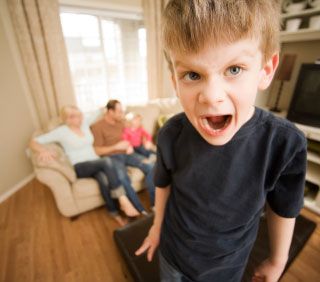
First, it’s possible that doctors are simply mistaking the signs of trauma in children for ADHD. “What we find is that there is often an overlap in the symptoms of children who have ADHD and children who have experienced trauma, particularly small children,” said Alicia Lieberman, professor and vice chair for academic affairs at the University of California, San Francisco, Department of Psychiatry and the director of the Child Trauma Research Program at San Francisco General Hospital, in an interview with Healthline. “The inability to concentrate, the fidgetiness, the inability to pay attention, the distractibility, the restlessness, and the irritability are often behaviors that trigger a diagnosis of ADHD. And often, the people making the diagnosis do not ask what happened to the child, what kind of experiences the child has had.”

Brown agrees that this may explain her findings. “Studies have also shown that symptoms of post-traumatic stress disorder (PTSD) or acute stress disorder resulting from adverse life events closely resemble ADHD symptoms, so there is a high likelihood for clinicians to diagnose ADHD and overlook a possible trauma history,” she said.

Another explanation is that children with ADHD may be more likely to get into trouble and to experience traumatic events as a result. “Children with ADHD can become more impulsive, can be more annoying to parents that might be depleted, so children with ADHD might be at greater risk for being maltreated or getting into accidents, which might in turn trigger PTSD,” explained Lieberman.

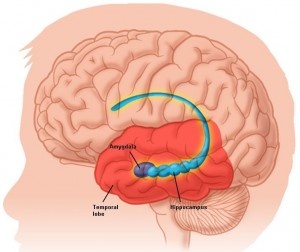
Finally, researchers know that stress in the early life environment might affect the development of the brain. “It’s also possible that being exposed to a traumatic event increases the likelihood of developing psychiatric disorders that have a range of manifestations, including anxiety, post-traumatic stress disorder, and ADHD,” Lieberman said.

“When a child is presenting difficult behavior, the first thing to ask is ‘What happened to the child?’ rather than ‘What is wrong with the child?’”

Under this lens, ADHD is only one of many possible outcomes that can result from early-life trauma. And even then, ADHD might just be a sign of what’s to come. “We know that early life adversity produces developmental changes consistent with ADHD, but it produces many other effects as well,” explained Regina Sullivan, a professor of child and adolescent psychiatry at the New York University School of Medicine. “As a child is developing, and there’s a neurobehavioral deficit, how that is expressed changes during development. ADHD can sometimes be symptoms of neurobehavioral problems that will emerge later in development.”

Sullivan added, “Early life trauma and stress can interact with genetics to produce different disorders based on the age the trauma was experienced and the particular type of stress or trauma. Different-aged children, and children with different genetics, and children with different personalities, will respond differently to a given stress.”

Are We Medicalizing Stress?

Rising rates of ADHD diagnosis and medication use raise the question: are we turning normal levels of life stress into a medical condition? Lieberman points out that more than 60 percent of children report that they have been exposed to some kind of victimization in the previous year, and more than 10 percent have had five or more exposures. For many children, ACEs aren’t rare, they’re the norm.

And when kids are under stress, they’re more likely to act out. “When a child is presenting difficult behavior, the first thing to ask is ‘What happened to the child?’ rather than ‘What is wrong with the child?’” said Lieberman. “The recommendation that the authors of the study make about the importance of screening for trauma exposure in every child that is showing symptoms that can be associated with ADHD is extraordinarily important and timely.”

In these circumstances, medications probably aren’t the answer. “While stimulant medications may prove beneficial for some children, they may not be the most effective management strategy for all children,” said Brown. “Children with ADHD diagnoses who have experienced trauma may additionally benefit from specific behavioral interventions that are tailored to addressing their underlying trauma histories.”

However, Sullivan cautions against drawing too many conclusions about a child’s past from his or her diagnosis of ADHD. “Not all children with ADHD have had early life adversity,” she said. ADHD also isn’t necessarily a sign of other disorders to come. “Sometimes, when someone has ADHD, they maintain those ADHD symptoms throughout life, changing somewhat, but they still have the diagnosis of ADHD.”

It will be many years before the root causes of ADHD are fully understood. Until then, doctors must try to figure out which symptoms are caused by trauma, while also ensuring that children with ADHD get proper treatment for the disorder itself.
adhd

Tenderness

tenderness

May tenderness infuse your heart

In every turn you take

May warmth envelope every day

And soften all your cares

May awe and joy flow in your soul

Like sunbeams in the air

May your see caring, everywhere.

It is already there.

tenderness1


tenderness4


tenderness3

tenderness2


Love Mothers

mother

To all the mothers

And all who mother:

Happy Mother’s Day.

To all who listen, hold, support, 

Who remember the small things that matter

Who kiss the hurts 

Hug the sorrows,

Who shine with pride and

Cheer the loudest as they 

Clap delight:

Happy Mother’s Day.

To those who raise from babies 

or late childhood 

or adulthood.

To those who foster safety

Where none was before.

To those who make a home

For hours, days, a week, a life time

And write upon the slate of heart to let one know

That to be mothered, is to be loved:

Happy Mother’s Day.

To all the mothers

Biological, adoptive, temporary or forever

To all who open hearts to others

Just because they know

That love can mother

And that mothering

Can heal

And so they do:

Happy Mother’s Day.

And may you be loved

And mothered,

Too.

love mothers