The Connection that Never Was

Am sharing the article below because there is benefit to reducing the worry and panic and misconceptions among those who still hear things about the supposed connection between autism and vaccination, and don’t know or never had good access to the facts.

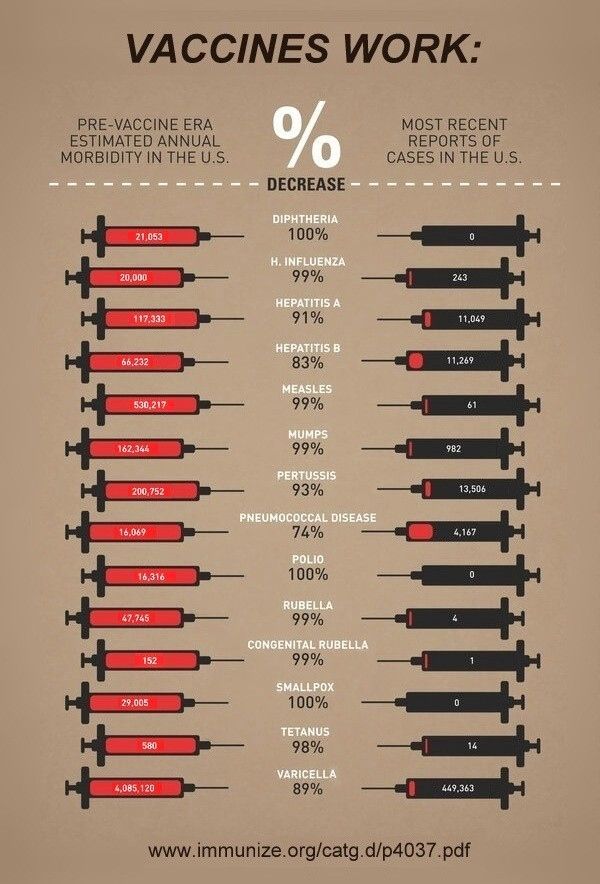
This recent article in JAMA is one more study that shows NO CONNECTION between the MMR Vaccine and Autism. In fact, there never WAS a connection. In fact, no peer reviewed studies ever did show a connection. The study that caused the original panic was — by the admission of the researcher himself — made up and the results were falsified. The article was withdrawn a long time ago from reputable journals, and the scientist has been discredited for the results he falsified. Furthermore, his claims were never replicated (not surprisingly, given that they were false from the get go), and there has never been any support for the connection.

Some children may have adverse effects to vaccines–or to any medication or substance for that matter. Children can react to cotton, wool, milk, wheat, sugar, natural vegetable dyes, sweet potato, eggplant, broccoli, eggs–just about anything. This does not make the rare reactions mean that these substances should be avoided generally, or that they ’cause’ diseases. Vaccinations do not cause autism. There has never been any support for that, and many people did try to find it. They did not.

I hope this current publication in one of the most prestigious and rigorous journals in the world will help straighten out some of the facts for those who are still worried.

Vaccines save lives. They do not cause Autism. Never had.

http://jama.jamanetwork.com/article.aspx?articleid=2275444#

vaccines work

Books and stories: a recipe for laughter and growth

From Pintrest

From Pintrest

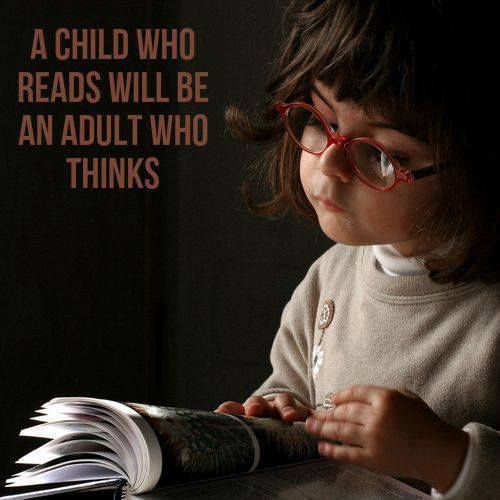
Oh so true … that a child who reads will be an adult who thinks. Reading opens doors, windows, paths, and secret passages to all manner of worlds and imaginations, language and vocabulary, expression and understanding.

Reading matters.

A reading child is also preceded by a child who is being read to and is spoken to and with, and who experiences being part of conversations and experiences, narrative and the day to day stories of life lived and happenings that happen …

Because:

A child who is read to will be a child who listens, imagines, thinks, wonders, comprehends and symbolizes… A child more likely to read and enjoy reading …

A child who is talked to, who participates in conversation and discussion, is a child who knows to ask questions and answer queries, offer opinion and listen to that of others, be curious about others’ experience and tolerant of differences, ideas, and views… A child more likely to read and enjoy variety in what they read …

A child who is listened to–and is shown how to reciprocate and take one’s turn in listening–is a child who can relate and remember, reminisce and realize, teach and learn, listen, comprehend and think… A child more likely to read and find books a place for expanding understanding and relating …

So …

Did you open a book today? Did you tell a story? Make a story together? The story of going to the store, of cleaning up the room together, of salad making and laundry folding, of visiting the park and counting dogs with spots and kids in strollers, of the rainbow of colors in the produce aisle and the funny thing that silly dances do to your feet and heart and smile …

Go tell some stories. We’re never too old or too young!

Giving Thanks

gratitude1

For all the things that merit gratitude,

Let there be many thanks.

For all the wonders that fill hearts

And gladden souls,

Let there be thanks.

For the bounty of all blessings:

For the smiles,

The newborn children,

The rediscovery of

Newfound hopes

And boundless potential

For growth,

Let there be thanks.

*

For it is not joy that

Makes us grateful,

But the thanks

that bring us

Joy.

 happy thanksgiving

Find Your Pace

rollercoaster

“I think life is moving too fast. I can’t keep up.”

My friend’s face on the chat’s screen was drawn. She has been through some hectic times. Her father fell and broke his hip two weeks before, cascading into issues that required not only the logistical reorganization of everyday life from an independent elder to someone who would not be likely to return to his home of 60 years; but also the emotional and psychological support for both herself and her father at this sudden change. An active retiree, her father was usually out and about, fishing, carpentering, flirting with a few old ladies at the retiree club he frequented. My friend lived only 15 minutes away, and visited often, but he rarely asked for her help. When he did, she suspected it was more as a point of connection and to let her “feel needed” than due to actual need for her assistance.

One burnt light-bulb later, and it all changed.

Life’s pace for both of them shifted. Her father’s life turned mostly idle, his days passing with him sedately in his bed, or at most in a wheelchair. Where he had counted months and weeks and days in plans and projects; he now counts hours as he waits for meals, physical therapy, and his daughter’s calls and visits. For my friend, life sped to calculating minutes into which to fit things. She juggles her job and two children, her home and preparing it for winter, the recent flooding of her basement, coordinating the care for her father, orthodontist appointments for one son, college applications for another, all while trying to manage the stress and grief and worry without losing so much sleep that she is no good in the morning.

Things do not let up. Her father is to be discharged from the nursing home very soon, and he will need a long term placement where he could continue to get care now that other systems in his body have decided to give in to old age. To top things off, she just found out there is a problem with her car that will require her to leave it for repairs for several days. The logistics of a simple car rental outdid her just the night before.

“I can’t keep up,” she stated, sadly shaking her head.

“Maybe you don’t need to–or at least, not with everything,” I suggested.

She glared at me a moment. Then her eyes softened–she knows I understand a bit about overwhelm. “How?” she asked, voice shaking now, maybe with just a hint of hope that there can be a way off of the roller-coaster and into calmer rides. “How, when it all needs to get done …”

We brainstormed, and she realized that she had accumulated quite a few vacation days. The original plan was to use the lot for a cross-country trip with her kids–and her father–but these plans may  well change some anyway. It could do more good to take some of those days now. Even three days off would give her time to check out retirement-homes in the area without the stress of rushing from work to try and get catch administrators before they left for the day. It would allow her to learn more about the financial and logistical burdens her father will now face and what support can be made available. No less importantly–a few days off will give her just a bit of time for herself.

She decided to take four, luxuriating in the concept of creating time.

The realities to juggle did not change but her pace did. She found a way to slow it just a tad to give herself some sense of traction. Renting that car no longer seemed so daunting. She laughed that she would see if they had one in red, just because she always wanted do drive one that color. She friend relaxed just knowing there’d be an opportunity to catch up, pay bills, cook everyone’s favorite fall stew, drink her coffee sitting down, take a bubble bath.

“I forget,” she noted before we hung up our Skype connection. “I think so much about making sure everyone else has time to decompress, that I get squashed and do not notice until I am frantic.”

“So many of us do,” I told her. “I think this is where we can hold a mirror for one another and remind each other how to find a better pace.”

I am no longer worried about my friend. She found her balance, as she had helped me find my own once in a while. We do that for each other, calibrating pace.

Life rushes. We all rush on, attempting to catch up … But for today, may you find your best pace. A place to pause, a breather in the midst of life’s amazing and yet often tiring long race.

Rest your mind, calm your heart

Human Archipelago

kornati archipelago croatia-banner

We are not meant to be an island, but an archipelago …

Connected to each other by crisscross of flows and frequent boat trips,

Birds raising young on all our shores

Turtles rushing to the surf as we shelter soft eggs in the sand.

We are not meant to be an island, but an archipelago …

Close and yet not meshed together

Siblings born of planetary upheaval

that created life

And land.

We are not meant to be an island, but an archipelago …

Each unique yet wholly intertwined

Into an ecosystem of together

Sharing horizons, water, rainbows, rain-tears, storms

Exchanging endless sand.

mergui_archipelago_cruise

More Alike Than Different

Sharing a link below to a fabulous set of photos from around the world, of parents with their children, doing the things parents and children do best: living life, sharing smiles, bonding, comforting, playing, laughing, being, holding … loving.

The locations are almost redundant, inasmuch as they portray universality, anyway.

Because we are, all of us, far more alike than different.

May our commonality be what leads humanity going forth, and not the smallish misconception of separation. After all, what seems different is insignificant once you strip reality down to its components: care, love, connection, hope.

Click below to enjoy:

http://www.buzzfeed.com/mikespohr/incredible-photos-of-parents-from-around-the-world?bffb#48a14qb

Renew, Refresh, Believe

easter egg hunt

For all who celebrate Easter

Who praise spring’s freedom

Rebirth

Renewal

Restoration of new hopes and

Fresh possibilities.

May it be a day of close connection

Of bonding

Great fun

Much affection.

May it a day to celebrate

New life

In all its forms

The delicate

The Playful

The endlessly adorable beginnings

Of little ones commencing

A first path

And of the new paths

For us all

Unfurling alongside.

elephant attachment

sprout buddies

Inside Your Hug

by robert wagt

by robert wagt

She’s a dark-haired gal with doe eyes and willowy body. All arms and legs that find corners and bump into tables and spill things and break stuff and mess up what appear to be the most child-proof settings. She doesn’t want to be clumsy. It is just that her body is full of angles that don’t quite plan their movements and her brain does not quite catch up to what’s happening until it is a moment too late and the damage done.

She wants to be an acrobat or a ballerina. The graceful movement, the delicate balance, the painstaking patience–they are to her the incarnation of what she would want to be and all that she finds terribly difficult. She would do better at hip-hop, her caregiver thought at some point, only to find out that a child who cannot quite catch a ball or toss it without hitting someone or breaking a window, cannot quite coordinate her movements in an elaborately sequenced dance. The teacher all but fired her after one class. Literally too many toes stepped on.

Still, the girl dreams.

She adores delicate, filmy, whispery clothing. Her caregiver thinks it would be more practical to put her in iron-knees pants and canvas but had resigned herself to letting this elephant-in-china-shop gal wear tights and lace-edged shirts. It is an act of faith, as they last about five minutes before they don a massive stain or spring a hole (which, perhaps thankfully, the child rarely seems to notice).

This little girl is a life on steroids. A roller coaster of emotions–she is either elated or devastated, overawed or broken-hearted, eager or despairing. She tries so hard. She keeps failing, falling, disappointing. Adults frown. Teachers scold. Caregivers sigh and try to keep a restraining hand nearby.

It is difficult to make friends, or rather, to keep them. Oh, she’s never mean; in fact, she is quite sensitive at reading others’ emotions and wants to take care of their needs, real or perceived. It is just that she pulls too hard when she holds hands, she pushes when she only wants to touch lightly to call someone’s attention, she messes stuff up and breaks things, she barges into conversations, she speaks too loud.

Her official diagnoses are all kinds. Some of you who recognize the symptoms may have an idea what those could be. Some of you would know why in my work with her, we tackle symbolic language, idioms and stories, auditory memory and following directions. Why we talk about social situations and solutions, practice narrative and inferences, work with predictions, and rephrasing, identifying context clues and finding the main idea in what to her is a soup of details. Why we make charts, write bullets, jot lists, follow steps, check items one by one.

She’s a bundle of everything–stories, anecdotes, questions, observations, feelings spilling over, hands tapping, legs wagging, hair twisting, lip biting, noise making.

I love working with her.

Oh, she’s a handful–in more way than one–but that’s okay. I work with many kids who struggle with managing incoming information, who need help regulating what their body senses and require direction to make sense. Fidgety bodies don’t faze me. Nor do spilled water cups, sticky fingers, rocking on chairs or crumpled papers full of holes from erasing too hard.

What fazes me more is how some of those kids who have an alphabet soup of diagnoses and a history of testing enough to fill a filing cabinet, have internalized that something in them is somehow eternally broken or ill-fitting. How all too often adults around them have come to believe this, too. I absolutely see the places needing tending, but along with the fizzy energy, there is all too often an untapped possibility, just waiting to be helped along through less correction and more connection and an ample dose of calm.

This one? She fiddles with a top while we’re working. When she’s thirsty, I offer her a water bottle (I’m super fast at twisting on a cap …). I corral pencils, crayons, papers, tape, bits of this or that. She hums and makes popping noises while she’s writing–I don’t mind. There is enough control to manage while at school, where it can bother others. With me she can just be and is exactly and perfectly good enough. Indeed she is. She’s working hard. She’s trying even harder. She’s making small but certain steps to a less chaotic path.

And she gives great hugs. They go straight to the heart.

She asks to give one, at the start and end of every session. She wraps her arms around me and leans her head against me as we stand side-by-side. She breathes. Through my hand resting lightly on her shoulder, I can feel her body slow down some.

The other day before she left, arms still around me, she said: “You make my head feel more quiet. You don’t get mad or yell and I can think.” Then she looked up at me sideways, doe eyes filled with wisdom of those whose knowledge is hard-earned and dog-eared with practice. Her arms tightened around my midriff and she sighed: “My quiet place is right here, inside your hug. Sometimes I think about it when other people look at me mad and it helps me not feel I am bad.”

inside hug

A Giraffe’s Goodbye

Sharing a lovely story that touched my heart and underscores tenderness and care.

We often underestimate the ability of animals–especially wild animals–to make connections and to express compassion. When they display affection, it can surprise us. Every time.

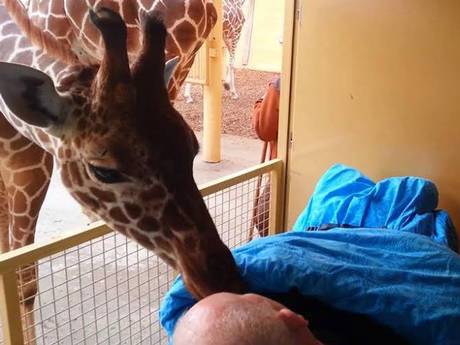
Empathy, connection, and memory of sensitive care are often associated with apes and elephants, dolphins and whales, even lions, but not very often with giraffes … Giraffes are more commonly known for their vicious kick than for their tenderness for humans … Though here they are, ‘kissing’ and nuzzling a terminally ill zoo worker who cared for them most of his adult life. They recognized him, and in their own way these lumbering and potentially deadly animals, came to say a gentle goodbye.

Giraffegoodbye1

Read the story at the Independent here!