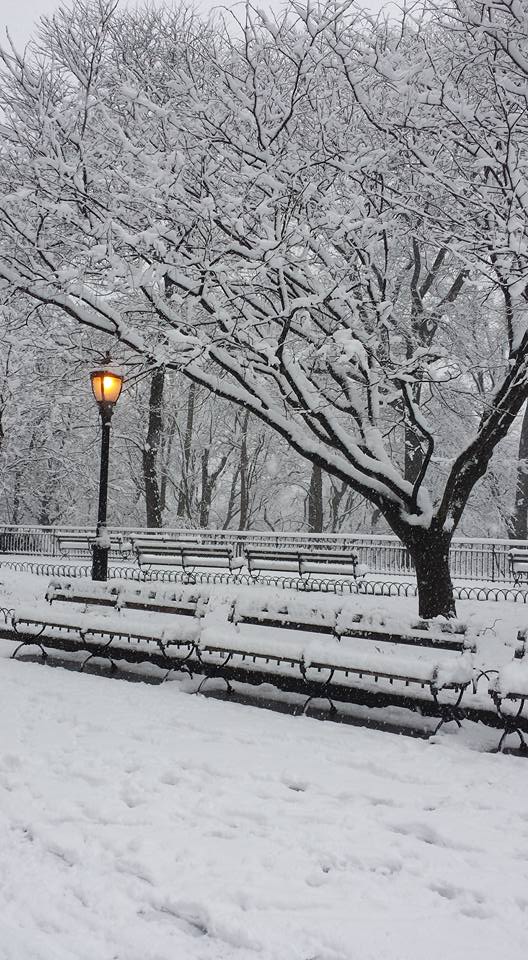
Photo: Na’ama Yehuda
I remember
Past winter
Of old,
There was light
Shining warmth
In the cold.
I recall spring’s
Late blanket
White bold,
Under lamps’
Glow of soft
Molten gold.
For the Lens-Artists challenge: Cold

Photo: Na’ama Yehuda
I remember
Past winter
Of old,
There was light
Shining warmth
In the cold.
I recall spring’s
Late blanket
White bold,
Under lamps’
Glow of soft
Molten gold.
For the Lens-Artists challenge: Cold

Photo: Osnat Halperin-Barlev
“It will be long enough, for a life,”
He said.
She blinked back tears
And said nothing
Because she knew that no matter
How long he would be
Around
Would not be longevity
Enough
For her.
Instead, she patted his hand and
Plumped his pillows
And fussed with the covers
Over his beloved
Form,
Once robust,
Now a shadow of itself.
The shadow smiled.
He understood.
He always had.
At his last inhale, she smiled back.
For Sammi’s Weekend Writing Prompt: Longevity in 76 words
Note: Dedicated to all tender goodbyes. Especially the final kind.


They’d fortified the ceiling.
So they said.
The old structure needed periodical reinforcing.
So they said.
The thickness of the walls supported their claims. The deeply recessed windows. The heavy coats of paint on ancient plaster.
‘Twas all a ruse. Of course.
The false ceiling hid a warren of crawl-spaces and narrow hiding places. A stream of escaped slaves was followed by a flood of those fleeing Nazi persecution and thereafter a steady trickle of modern-day refugees.
The ceiling hid them all. Young and old. Broken and defiant. Desperate and bewildered. Men and women and the all-too-heartbreaking child.
Some stayed a night. Others for longer sheltering. Hilda had stayed the longest. A girl on arrival, she was almost a woman at war’s end. She emerged educated. In silence. In stealth. In compassion.
She became the guardian of those who followed.
Fortified with hope of one day needing it no more.
For the Crimson’s Creative Challenge
Note: Dedicated to all the heroes who — often at tremendous risk to themselves — had managed to shelter the needy, the desperate, the voiceless, and the vulnerable during times of injustice, persecution, violence, horror, and hate. To all who do so still. May we one day need to do so no more.


Photo: Paweł Czerwiński on Unsplash
They said it was the best thing for it.
They hinted that to forgo discussing it will
Mean all manner of awfulness
happening
(And would, perhaps, be partially my fault
For not taking steps to fix
By listening).
They showed how it would better
Everything:
My house, my shape, my friends
My job.
May even lead to what I never had
Or always wanted
But an illness was sure
To rob.
The ad said it was the best thing for it.
A discovery deserving of a
King.
If only my eyes hadn’t left the screen
To pluck an errant string,
Which had my ears
Abandoned
To the chatter —
Which had previously lay hidden
Under sprawling beaches
And smiling people
And every beautiful
Thing —
And I heard
The actual words
That listed
All the side-effects
(from death, to heart-attack, to vomiting)
That this supposed
Miracle drug
Was likely to also
Bring.
For Linda Hill’s SoCS prompt: Flyer/Ad

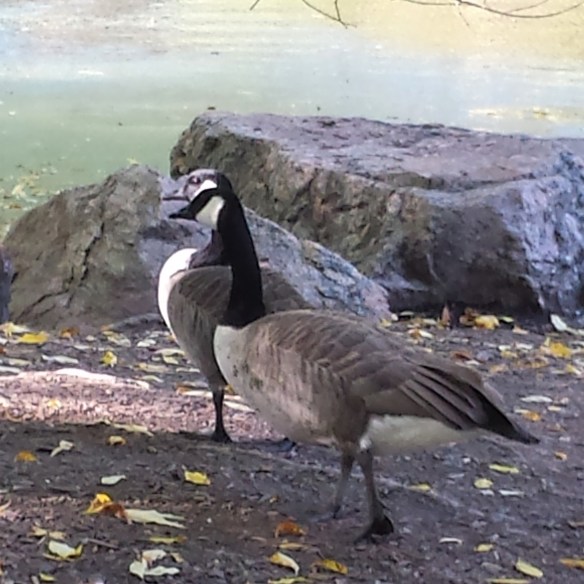
Photo: Na’ama Yehuda
There’s a serene kind
Of beauty
Not far into the
Park,
Where the geese,
Quite majestic,
Will parade and then
Park.


The snow fell softly in the early hours, blanketing a brittle frost with a bridal veil.
She undid the entrance flap and shivered in the chill. Her thin underclothing was not sufficient for the cold. She retreated back into the shelter to don her clothes, lace her cloak, and pull on her boots.
Still when she emerged from the tent, her breath caught in the frigid air. She welcomed it. She needed her wits about her, today more than most.
Her feet crunched over the frozen ground as she hurried to relieve herself by a nearby tree. The warmth leaving her body felt palpable. In it there was relief and wariness, both.
She did not fold the tent but she did not know if she’d return to it. What she did not carry along might not be seen again … and she would not be carrying much. She was warned to bring naught but herself.
“You’d have no need for anything,” were the instructions.
The words could be ominous or comforting. She wasn’t sure which it was and she didn’t think she was meant to be certain about it. Or about anything.
There was some food left in her pack, but her stomach did not feel ready for any digesting. She drank some water instead. It tasted flat and smelled of the container it’s been in, but it would have to do. She didn’t know where water sources might be found and even if she saw some on the path she didn’t think she’d be able to avail herself of any.
She shuddered again. Of fear. Of cold. Of worry. Of expectation. Of trepidation. Of all of the above.
It will be what it will. She had little choice now. She’d given her word, and what follows was not for her to decide on anymore.
She turned her back to the tent and began counting paces. The location for her tent had been marked. The one thousand steps were to be taken away from it, with the rising sun at her back.
She mouthed the numbers, ignoring the breeze as it tunneled under her cloak, the errant twigs that grabbed hold of her hood and deposited wet fluffs of snow on her hair, down the nape of her neck, on her back. No one had said what will happen if she lost count. She did not intend to find out.
The steps became a meditation of intent and tunnel vision. The world receded into the yard immediately ahead. Then the next. Then the next.
Nine hundred ninety nine, she breathed.
“Turn around.”
She jumped. The sound came from the space her body had just vacated.
She turned only to be blinded by the sun’s glare, rising through the narrow branches of a sapling. The light speared her.
When she finally adjusted, she was elsewhere. The forest was no more. The world as she’d known it, gone.


The cells were small. Sturdy enough to keep them separated. Aerated enough to keep them alive. Near enough to let them marinate in each other’s misery.
What the jailers did not foresee, however, was how they were just close enough to offer comfort. Fingers laced through fencing let them hold hands. Almost.
Oh, they moved to corners when anyone came. Pretended to hate each other. Endured each other’s fake bullying that so amused their captors.
But in the silent moments they sat close, back-pressed-through-chain-to-back. Their ‘caretakers’ warehoused them like animals, but the children’s defiance held: they remembered they were siblings.
For Rochelle’s Friday Fictioneers


Photo: Anne Toet
Time had arrived
To make the shift
From frog
To handsome
Prince,
But then the kiss
When it was dished
Kept Frog’s
Amphibian
Bliss.
For the Tuesday Photo Challenge: Fantasy


Photo: Andrew Buchanan on Unsplash
“It is just a crack,” she said,
“A splinter off of perfection.”
‘Twas more than that, she understood,
Knowing what effort it exacted of her
To keep her direction,
To balance scales just so
They did not tip life
And hope
Into utter disconnection.
For the dVerse quadrille challenge: Crack


Her rooms were in the middle of the castle, hovering above the center of the river, sandwiched between two layers of guard rooms, bordered on both sides with sentinel halls.
Her residence, her very life, was perched between the woods on one bank and the manicured gardens on the other, split between one land and another, between a grand promenade entrance on one side and an into-the-wild entrance on the other, belonging to both and owned by neither. It was so by design.
Oh, she was no prisoner. She had the freedom of the castle and the pleasures of the adjacent lands. She could go riding or strolling, hunting or frolicking, visiting or picnicking. As long as she made sure to spend the exact time on either side of the river, as long as she took heed to show no favor, no preference, no prediliction.
Three of her attendants were timekeepers. One from each side of the river. One from a foreign country altogether. All three carried hourglasses and were charged with maintaining synchronicity. Disputes were rare, for they would mean a cease of all outdoor activities till the disagreement resolved, cause a strain on her well-being, tarnish their families, and lead to possible replacement. The timekeepers kept discrepancies to a minimum.
The comparable reality extended to everything: An exactly equal number of ladies in waiting from each side of the river, exactly the same number of servants, workers, soldiers, guards, and tradesmen who were allowed to live and work in, or gain access to the castle. The same number of her dresses had been made on each side of the river. Half the furniture, too.
The constant balancing act was tedious. It was also necessary.
“You are the bridge,” her governess had explained to her when — still a child — she was fed up with being shuttled across the castle mid-activity, so equal play time on the other side can be maintained. She did not want to have two of everything and be required to play with each equally. “You were born to end five hundred years of bloodshed.”
Her parents had defied odds and had sought alliance instead of massacres. They’d built a bridge over the fear and hate that endless war had fed. They’d began construction on the castle. They’d birthed her.
The people had watched and waited.
She was barely toddling when her parents’ carriage had gotten ambushed by some who’d believed that ending the alliance would enliven the centuries-old feuds. The warmongers were wrong. They’d killed her parents, but not the want for peace. People on both sides of the river came for the murderers. People on both sides worked to complete the castle-bridge and ensured the princess could be raised in its center.
It was on that day, cocooned in her governess’s lap, in the room above the river that had for generations divided her people, that she truly understood: After so much distrust, an exacting fairness had to be the glue that would hold peace till lasting trust could grow.
No betters. No less-thans. Not even the appearance of favorites.
The efforts to keep it so were sometimes so precise as to be ridiculous, but she preferred to err on the side of the absurd, rather than risk her people any harm.
She was the princess on the bridge.
Her rooms were in the middle of the castle, hovering above the center of the river, sandwiched between two layers of guard rooms, bordered on both sides with sentinel halls.
Her residence, her very life, was perched between the woods on one bank and the manicured gardens on the other, split between one land and another, belonging to both and owned by neither. It was so by design.
For Kreative Kue 238

A place to improve my writing skills, and that's all.
We're not thriving, we're creatively photosynthesizing under duress.
History of the Bloomingdale area on Manhattan's Upper West Side
A creative miscellany of mythic fantasies
a weekly flash fiction prompt inspired by google maps
A community for writers to learn, grow, and connect.
To participate in the Ragtag Daily Prompt, create a Pingback to your post, or copy and paste the link to your post into the comments. And while you’re there, why not check out some of the other posts too!
I can't sleep...
Alternative haven for the Daily Post's mourners!
never judge a girl by her weight
original fiction and rhyme
You have reached a quiet bamboo grove, where you will find an eclectic mix of nature, music, writing, and other creative arts. Tao-Talk is curated by a philosophical daoist who has thrown the net away.
A photographer's view of the world - words and images to inspire your travels and your dreams
Life in progress
Straight up with a twist– Because life is too short to be subtle!
WordPress & Blogging tips, flash fiction, photography and lots more!
Light Words
 Na'ama Yehuda
You must be logged in to post a comment.