Being sensitive: A blessing or a curse?


In her great blog Adele and the Penguin, Adele Ryan McDowell posts about all manner of lovelies (well worth peeking in!). Her recent post is about sensitivity, about those of us who may be labeled “too sensitive” or “highly sensitive people.”

Adele and the Penguin

http://adeleandthepenguin.com/is-being-sensitive-a-blessing-or-a-curse/

Reading it made me think–and not for the first time (Adele’s blog posts do that–they touch the everyday in novel and eye-opening and heart-opening ways).


The highly-sensitive people thing? Yep. I can totally relate …

So can many of my little clients.

Personally I don’t see being sensitive as a bad thing. Like any quality, I think the ability itself is neutral. It is how we react to it, what we do with it, how it affects our lives, and whether it adds or detracts from the person we are and can become, that is the most important aspect of it to me.

There seems to be more good than bad in sensitivity. Creative people are often sensitive. Artists, writers, thinkers, inventors. I certainly see more positive than negative in the more sensitive children who come to see me. They perceive the world minutely, they read people amazingly well (even if they don’t always know how to verbalize it), they feel deeply.

They are also, all too often, overwhelmed. There is too much, everything, everywhere, from everyone. In reaction, they snail in, lash out, fidget, shut down, alternate being acutely perceptive and deeply numbed out. They can have spectacular tantrums, meltdowns for seemingly nonsensical slights, go from happy to weepy in a blink of an eye. They get all kinds of acronym diagnoses, sometimes rightfully, often not … They can walk through the days feeling raw, exposed, vulnerable, tender, empathetic, perceptive, disorganized and evocative.

Emotional regulation is a must for all children to learn. Without ability to do so and find a place of calm attention–they will struggle at school, in public, in getting along. All caregivers of children are tasked with the teaching and modeling of emotional regulation to the children in their lives. It is even more crucial for highly-sensitive children … who can tax even the most patient caregiver. The sensitive children need more help, much more help, to learn to regulate, to know when they need to take a break, to recognize the beginning of overwhelm and be able to apply a tool for grounding.

They need more time. To play. To rest. To think. To cuddle. To get bored. To dream. To get used to new things. To gather their courage to try. It is a luxury of time all too many of them do not get these days, in our modern world that does not make it easy to be sensitive.

Our world–and within it the education system and children’s schedules–is currently calibrated for very low sensitivity: there is information everywhere and increased pace galore. Blinking screens, beeping car horns and phone messages, jingles of all manners, multi-sensory bombardment, loud, fast, multitasking everywhere. There is stimulation all the time. Every. Where.

Wake up and rush to school, bend over homework in the car to complete what didn’t get done the night before because there was a birthday party and soccer practice. After a long day at school in a class of 30 and no recess or playground because it rained and a two hour assembly in a noisy auditorium followed by lunch in an equally ruckus lunchroom, grab your bag and gobble down dinner on the way from dance to chess before you go home and try to do homework with the TV in the background, someone angry with tech-support on the phone, the vacuum and the dishwasher rumbling along. Get a math problem wrong and dissolve in tears onto a kicking puddle of misery on the floor. It is not the math problem. It is the everything and that little bump of difficulty simply toppled tolerance. Everyday stuff mushrooming to a thunderstorm.

Sometimes I think that sensitive people may be better calibrated for slower life … for long walks from place to place, bigger nature around them, more connection with animals (and their highly regulating energies), more connection to the earth and its calming breath.

It is not how most children grow up anymore, and it is not about going back to lack of modernity (there’s much to be said for running water, electricity, and even the Internet …). However, it is about helping children–especially sensitive children–learn how to stop, pause, breathe, step away, maintain boundaries.

All children need that. Sensitive children need it even more. Their drama-streak, their tantrums, their meltdowns, their whining, begging, shutting-down are all their ways of communicating to us that they need our help to manage. That they are feeling raw and need a hug, a pause, a hand.

What to do?

First what not to do … It is not about ‘helping them grow thick skin’ or expecting them to ‘suck it up’ or ‘toughen up.’ Shame has yet to heal any sensitivity. Expecting one to be what they are not will not resolve anything other than create a distance and thicker pain, not skin.

What does work?

Try to keep things simple. Establish routines and try to maintain them reasonably consistent (we’re not talking OCD here, just predictability). Make time for quiet. At the very least relegate a certain space in the house that is off-screens: a place to read, do homework, dream. Be aware of competition–of stimuli, that is–if there is much background noise you cannot control, consider noise-canceling earphones for the child to wear when they need to concentrate. Keep it comfortable: temperature and clothing, yes, but also tone of voice and your own emotional regulation. Sensitive kids pick up on your state of mind and internalize it. It filters in. It gets under their skin. They are too young to manage your adult feelings for you … and they already have plenty of their own. Keep it soothing: quiet cuddling, snuggling together with a book or a few precious moments at the end of day, offer comfort when they are distraught. Let them know you see them, hear them, feel for their discomfort. It is real.

Sensitivity is like a fragile gift. It is precious, it is beautiful, it can light up the room and make for excellent potential. It is also delicate and needs some special care. It calls for careful holding in times of transition. It needs a very safe space, for sure.

Have no worries, if you treat your child’s sensitivity (and yours, if you need to) with care and … yes, sensitivity … you will not spoil them. To the contrary, you will teach them how to control and modulate their hyper-acute-perceptions. They will learn from your attuned care how to keep aware without drowning in information, how to keep empathetic without taking on other people’s needs, how to keep their senses vibrating brilliantly without becoming blinded or overwrought. They will learn from you to take time to breathe, to pause, to consider. They will recognize their own cues and clues and find ways to respond to them healthily.

They will blossom like the rare delicate beings that they are. Come fully wonderfully into their own. Sensitivity seen, understood, utilized, known.

delicate2


Manhattanhenge 2014


manhattanhenge-from-34th-street

There is something mystical and wonderful about the sun aligning perfectly into the streets of NYC, flowing liquid gold onto the buildings’ facades and licking pavements and concrete.

There is another one due this evening: two hours from now the sun will spill into the grid and crown the city with molten awe … and for few moments … slow Manhattan’s relentless speed …

It will light this city of towers, this island built to canyons of glass and steel, of people darting in and out of holes and yellow vehicles like so many ants on missions, little human workers bent over phones with busy thumbs …

Manhattanhenge will make them stop. In. Their. Tracks.

Sometimes in the middle. Of. The. Street.

Jaw open. Eyes wide. Typing forgotten. Pointing finger drawn.

I’ve seen people weep. I’ve seen some gasp. Grasp someone’s arm. I’ve seen people grin at total strangers–connected over these magical rays that show us how distance and proximity are no more than an illusion.

We are all of us, potentially, perfectly aligned.


To read more about Manhattanhenge, go to this link from the American Museum of National History.

manhattanhenge


Keep Your Peace

A quote for today … a reminder …

inner peace

Maintaining Inner Peace …

It does not mean to have apathy to what is happening. It does not mean you don’t care. It does not mean that things do not touch your heart. It does not mean you have no feelings about what is wrong and should not ever be happening, but is.

It does mean keeping your center.

It does mean holding hope.

It means to not be swept up by anger, hate, frustration, worry, pain … Instead it calls for keeping a boundary of compassion (toward self and others) illuminated in kind care around one’s heart … to keep the dark in check, so it not wriggle in to take a hold.

It means acknowledging that darkness offers an opportunity for contrast, that in its universal way, it even serves to balance. Day and Night. Light and Dark. A difficult lesson. One I still do not fully understand.

It means seeking beauty. Seeing beyond the swirls and eddies. Smiling at the multitude of good. It never left: it is already–always has been, will be–there.

It means remembering what can be done. Not losing compass for the path that can be taken and still matters–integrity, empathy, listening. The way of heart.

Maintaining Inner Peace … It is a gentle breeze of calm in winds of other feelings. A sphere of peace, even in the midst of chaos. A home for the soul. A hand to offer without being pulled or tugging. A being.

Hope can be, is, restored.

And so it is …

peaceful

Hold your ground …

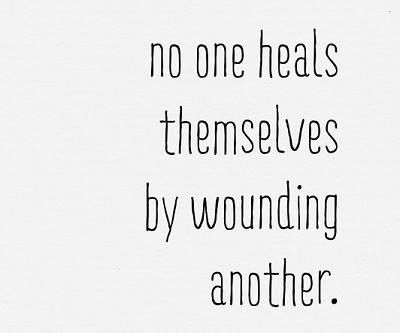
no wounding

These days, with much strife in the world and overmuch rhetoric of fear and hatred, it can seem easy to feel pulled to lash out, to “get it through the thick skulls” of those who are supposedly different/less-than/not-as-right. It may seem justifiable to use violence: emotional, verbal, physical, sexual, religious, political. It may seem like “this is the only language these people (insert different/less-than/not-as-right populace here) understand.”

Frustration breeds anger. Helplessness breeds desperate acts. Rage breeds blindness.

Let us not wound others in attempts to heal/correct/make-right/avenge/justify.

Hold your ground for kindness.

There is plenty pain in this world without adding to it. More wounded people will not a healing make. There is plenty drama without conjuring more of it. More despairing people will not hope bring.

Hold your ground for care.

May there be a path to true-heart-reason. Not to ‘fairness’ maybe, but to humanity. Not to ‘justice’ maybe, but to compassion. Not to ‘paying back’ but to gaining calm. Not to ‘avenging’, but to taking a step toward finding a common ground. One we can all hold on to … a healing span.

May there be less wounding. Wounds already borne will not heal faster if more are inflicted. There will be no less rage if ire remains amplified. Fires will not be put out by constant dose of fear or hate or it-is-their-fault-that-I-have-to-do-it. No more. Alienation. No more. Harm.

Let us all, hold our ground. In open hearts. In listening. In understanding. It is past time.

Whatever fights you are pulled to become embroiled in–personal, communal, religious, political, national, global–may you keep your feet firmly rooted in empathy. May the seedlings of care grow strong and fine. May we patch up the hurts to foster quickest healing, and may we carry hope and light, for they are the menders of all hearts.


bandaid pup


Swing high

To all the little girls on beaches everywhere …

Inspired by the beatific smile of one …

Remembered with much fondness today.


swing beach

Swing high.

Touch the sky.

Feel the sand 

Rushing by.

Sense the surf

Humming forth.

Hear the waves

Singing froth.

Swing on high.

To the sky.

Sun and cloud

Streaming by.

Move your heart

To the pace,

Of your legs’

Aerial race.

Swing up high.

Touch the sky.

My oh my.

Breathe and fly.

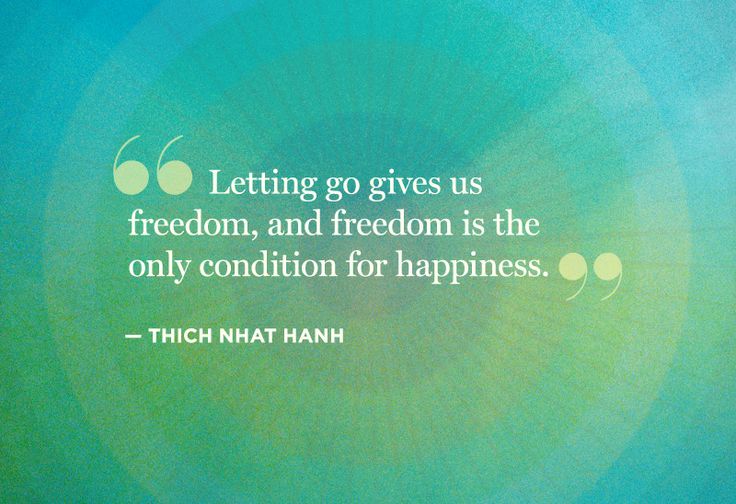
Freedom

freedom happiness

On this day. May we remember.

That freedom is not owned.

It is shared.

It is not American.

It is human.

It is not given, but a given.

It is a state of being.

It is a right.

An attitude of the heart.

freedom love

Mean Math …


math

“If I have four and you give me more than I have more.”

This axiomatic truth came from the mouth of a bright preschooler. His speech is difficult to understand, but his ideas are crystal.

He asked me, the other day, about math. More like, told me. Checked to see I understand …

Math, but also some other things.

“If I get angry and then my mommy gets angry than we have a lot more angry.”

Yes. That’s true.

“I don’t like it when we have more angry.”

I totally understood that, and told him that I didn’t like ‘having more angry’ either.

“It is lots more better when we have giggles. I love giggles.”

So do I.

He was quiet a moment, then asked me about the news he’d heard. Children often pick up more than you give them credit for, and understand more than you would like to think they have internalized.

“A lot of people are angry and crying on TV,” he said. He was referring to the news of three teens who were kidnapped and murdered by Hamas terrorists in Israel. The teenagers’ bodies were found that day, and his parents were aghast and upset with the realities in the Palestinian territories, terror, hate, and rage. They discussed the news among themselves, along with their reactions and thoughts. He saw and heard reactions of others, perceived the agony of desperate angst, the fumes of hate. I’ve seen it, too. It is difficult, difficult stuff.

“Yes,” I responded. “They are.”

“Are more people going to be mean?” he worried. “I don’t like it when more people want to be mean.”

Oh, how I agree, dear boy, neither do I.

He wasn’t quite done. How could he be? These are big issues, even for grownups, let alone little ones. He pressed on: “If more people are going to be mean then it is going to be even more mean and more mean.”

“I understand.”

I think I sighed. He looked at me a bit quizzically, adorable in his earnestness. I smiled at him and asked, “do you have suggestions about what people can do?”

“I don’t know,” he said after a thought. “Maybe a ‘safe tantrum’?” (in his house, this is the term used for when someone–usually him…–gets very angry. They can’t hurt themselves o others but they can punch a boxing bag and shout a little and jump and jump …).

I nodded. Safe tantrums would be a good, in fact a very good alternative.

“But,” he interjected, “even if they still feel mean I think maybe they need to learn to use their words.”


From the mouth of babes, Little Teacher. Simplified reality yet no less wise. In all war, terror, conflict, violence–may all find room for less hatred, more reason, some space, more safety, less meanness … more peace … in their hearts.


the problem with hate


Giving is the best communication

This ad from Thailand touched my heart. May it touch yours.

May we all find a place of giving and heart-communication: One never knows where a kind act would take another, and how it sets the wheels in motion for themselves.

What Would You Do If …? Children’s Safety Plans.

safety

The mother of one of the children I work with called to let me know they’d would have to cancel their session for the week. There were some unexpected problems and she had no arrangement for the older child. Her youngest, whom I see in Speech Therapy, has several developmental issues, and the mother–a single parent–shuttles him for several remedial therapies every week. She sounded anxious and wrung out, so I asked her if she wanted to tell me more about what was going on.

“My older son had a bad experience with someone,” she sighed.

“What kind?”

“He usually stays with my mom when I take Mick* to therapies, but my mom’s away for a couple of months to take care of her sister who is having heart surgery. I found a sitter for him, but the sitter can’t come to my house, so I take him there and pick him up on the way home. Everything has been fine the first two weeks and Dan loved going …”

“But?”

“He was really upset when I picked him up yesterday. Said he never wanted to go back …” The mom sounded quite upset herself.

“Did he tell you why?”

“He said he didn’t like being there anymore. You know where my mind went … I was thinking the worst … but I didn’t want to put words in his mouth, so I tried to breathe and told him I respected his feelings and that we’ll figure out what to do, but it would help me to know what about being there he didn’t like … At first he just shrugged and looked down and such. Then he told me someone had come to visit the babysitter and brought a ‘really big scary dog who jumped.’ He got scared but the babysitter laughed it off and called him a baby and kept egging him on to pet the dog, ‘not be so yellow’ and not ’embarrass himself’ … and kept sending the dog toward him. Dan wanted to go home but he ‘knew I wasn’t there’ because I was in PT with Mick and he didn’t know what to do … I’m relieved nothing worse happened … but I feel awful he was scared and I wasn’t there. When I called the sitter, he was dismissive and said ‘it was just a dog and it wouldn’t hurt for the dude to toughen up some’. I won’t send him there again!”

We rescheduled for when she could bring both children, at least until she found another option.

“It was good you listened and took him seriously,” I tried to reassure her. “You can’t always protect kids from having an uncomfortable experience, but you can give them the power to reach out and have you help make sure it doesn’t go on. He told you something changed, and you’re taking steps to keep him safe. He did well for telling you, and you did well by not pooh-poohing his worries. In fact,” I added, “this is probably a good opportunity to speak with both kids about things they CAN do if they ever feel uncomfortable or need help. Just like adults, kids feel more secure if they know there’s a plan.”

red phone

Many adults have some form of emergency plan. We know what we’ll do if there’s a fire. We know what to do if someone ails. We have an idea of who can help if we’re feeling scared or intruded upon. We have phones and know how to use them. We have friends and family we can call on, we understand ‘gut-feelings’ and know that danger requires a response.

While children don’t need to figure out their own safety plans, it can be very helpful for them to have some tools and to have rehearsed certain scenarios during times of calm.

It is why schools have fire drills. It is why you should have one in your house–in day time as well as during dark. Make it fun, but keep it serious: it can save lives to know what way one is expected to go, what the alarms sound like, who to look for, where to convene, what exit to use, how to make it to the door with your eyes closed (think: dark and smoke and a blaring alarm …).

It is why children need to know to call 911 (and that it’s not a toy or something to ‘experiment on’). Why it helps to teach children to ask for help from people in uniform and/or from mothers with children (while most strangers are probably safe, uniformed people are often ‘in official capacity to help’ and mothers with children can often feel less intimidating and know how to respond age-appropriately to a child in distress).

Children as young as three can memorize their first and last name, as well as their parents’ names, what they do, and where they work. They can memorize their address (make it into a song …). Four-year-old can memorize a phone number. At five they can practice writing it from memory.

In addition to immediate safety, children should also be taught what to do ‘in case’: what if they find themselves separated from you in a mall or public gathering? What if they’re someplace else (with a baby-sitter, school, a birthday party or sleepover) and feel something is wrong? What can they do if they don’t feel safe?

Children should know they can always reach out to you, and need not worry about hurting the feelings of the adult they are with (you’d be surprised how often children don’t call a parent because they worry they might upset the adult they’re with). They need to know you will not be angry with them if they tell you they’re uncomfortable or scared. They need to know you’ll find a way to make it better–it may not be possible for you to fly in from another State in the middle of the night, but you might be able to speak with someone where the child is, or to otherwise assess whether more extreme measures are required–children shouldn’t feel they have to figure it out on their own if things feel too much to manage.

Teach children what to do if they need help and cannot reach you. Who else can they call? A good friend of the family? Another family member? A classmate’s parent?

Teach them when it is a good idea to call 911: If there’s a fire (even if they’d caused it), if they think something really bad is happening; if they or someone else is being hurt or might get hurt real soon if someone doesn’t come to help; if someone (especially an adult, but also if the adult in charge seems unable to manage the situation) is out of control or inappropriate; if the person in charge ‘acts weird or scary’ (children may not know to identify drunk or drugged, but often do pick up on something that’s not as it should be).

fireman with boy

Reassure children they shouldn’t get in the car with anyone they don’t feel safe riding with, who breaks the rules or is being tricky or secretive. It doesn’t have to be a stranger. You don’t have to explain drunk or drugged to very young children (though it might not be a bad idea to bring up the issue with older elementary school children), but you can give the child a sense of control for when they feel unsafe and ill at ease. I know a child (age 9) who refused to get in the carpool because the adult had texted while driving and had her eyes off the road for what felt like very long. That child’s mother had discussed safety with her, so she was able to say to the driver: “My mom doesn’t let me ride in cars where someone is texting. Please put the phone away until we get there.” When the driver refused, the child asked to call her mom.

Many parents are afraid to discuss problematic situations with their children. They think about sexual offenders, they worry about making their child feel unsafe in the world.

In reality, discussing safety skills is just as important as teaching children how to cross the street, how to wait for the light to change, how to use (and not use) tools and sharp objects, what to touch (and not). Preparing your children to manage unexpected situations is just as important. It gives them skills to be less helpless. Role play and practice these at home. Let them know it is okay to reach out and that you’ll figure out how to help … Reassure them they should tell you if they think they’d done something wrong … even if they worry you’d be mad: That you’d like to know and would help and love them anyhow.

As for the little boy: his mother had a good discussion with him (and his younger brother), and together they’d made some plans.

They talked about ‘listening to tummy messages’ (intuition) which let them know something was not okay. They talked about things they could do: Call mommy or grandma, call Auntie Nell (who lived nearby and was willing to be standby help), call 911 if they were really afraid or needed someone to come right away.  They talked about how it was okay to tell about things that didn’t feel right, and that they didn’t need to keep secrets they didn’t want to keep. That their bodies were theirs, and so were their feelings. That being scared is not bring a crybaby and they didn’t need to touch, go, see, try, say things they felt weren’t okay, went against the rules in their house, or felt ‘not right.’

And the little guy?

He learned his mother was there for him. That it was okay to let her know how he felt and he didn’t have to protect her or worry or figure out things on his own. That he was just as important to take care of as his younger brother. That he could listen to his gut. That it wasn’t okay for anyone to put him down or make him feel ashamed to tell. And … that the world can at times be uncomfortable but he did not have to manage it alone and knew what to do if he felt he needed help.

Do your children know what to do if something happens? If a caregiver doesn’t show up to pick them up? If they find themselves alone someplace? If they feel intruded upon? If they are told confusing things? If they are asked to break rules they don’t think should be broken? Do they know who they can call on if you’re not around?

Make a plan. Today is a good time!

action plan

*names changed to protect confidentiality