However you celebrate it,
Whichever way it brings you joy
Happy summer
Starts today
Go enjoy!








Sharing this You Tube video for cuteness sake … and for the amazing little people kids are, and their language abilities, intonation, explanation, and social skills, even at that age.
She has it all figured out (though I do wonder if that mirror really did change hands come Mother’s Day …).
As for the title of the video–I disagree. I think you CAN very much trust a two-year-old! You can trust them to tell it like it is! Enjoy!

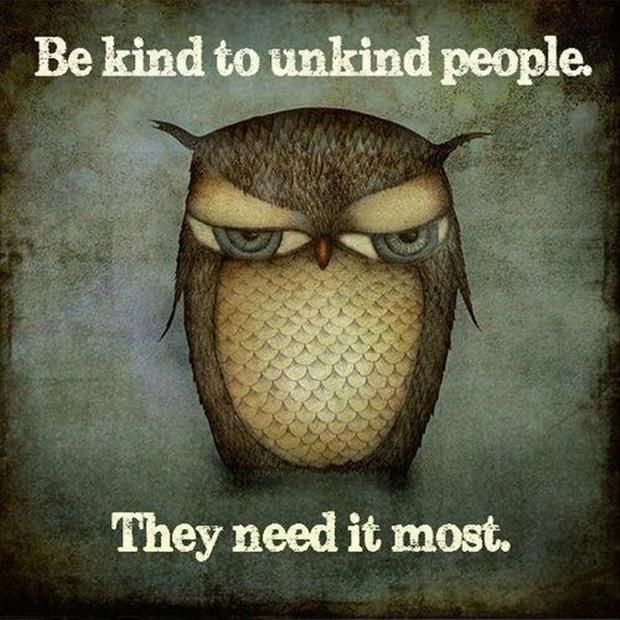
Keep your heart soft, especially around cruelty.
It is there it is the most vulnerable to hardening.
[Na’ama Yehuda]


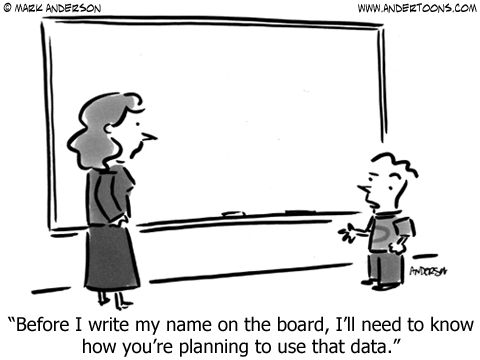
“My mommy said not to write my name.”
“She did?”
I am easy pickings for leg pulling and the kids know it, but somehow this little tyke looks dead serious. None of the tell-tell signs of lip corners dying to lift in merriment. None of the twinkly eyes that let me know I have been had. Again.
I’ve been through all manner of stories that led to hilarity-about-my-gullibility: Believing that a child had gone to the circus instead of school, or that their grandma allowed ice-cream for dinner, that they went to the zoo on a rainy day and everyone got wet (in actuality, this one was wishful thinking, as the trip got cancelled…), or that their dad said they would get another iPad all their own (scratch that, this one ended up being true … the earlier version having lost its sheen, in the eyes of the child or father, I’m not sure …).
This no-writing-name business; however, that was new. No hidden grins, either.
“Your mommy said not to write your name?” Maybe I misheard. Happens.
Little-Tyke nods serenely.
“How come?”
“Because.”
Fair enough. We grownups should get a taste of our own medicine at times. Not that I do a lot of the “because” why-chain-question-closer, but I probably have said it once in a while when it became too clear that questions served to avoid work, and not for real curiosity or learning.
“Hmm. I’m curious, though …”
Little-Tyke gazes at me.
“Is it you who should not write your name, or is everyone not allowed?”
Frown. Tiny creases appear in the five-year-old’s forehead. Cute as a button, this one. Even perplexed. Maybe especially when perplexed.
“I think only me. Me not write it. You can because it is your job already.”
“Ah, okay. That’s good to know.”
Sage nod.
“Why do you think you can’t write your name?” I really want to know. This rings of misunderstanding of adult-talk.
Throughout this all the nanny, her head buried in her cell phone, ear-buds plugged in, sits motionless by the far table she often chooses to wait by, rather than on the couch near us, where most caregivers sit. I have come to believe that the sessions are a time of rest for her, a calm refuge from having to constantly watch an active munchkin, and I know she has very long days.
“Because you’re not suppose to,” the kid brings me back to the topic. “You not suppose to write your name.”
Now I’m not supposed to, either? Is this a repeat of something he heard said, a glimpse into the bigger context of this misunderstanding?
“Why, though.”
“The bad people will steal it.” The boy’s expression is certainty reincarnate.
“Oh?”
“Yeah, if you write your name then the bad people take it and steal it and take all your numbers and even all your money and then you don’t have a name anymore.”
Identity theft. Preschool style.
A few moments of discussion of private information and how one can still have a name even if they write it … and Little-Tyke is reassured that he ‘probably’ could add his name on the drawing he had made to take home. I leave it as an open option. No pressure … For extra measure of reassurance–and because I don’t want to put him in a bind of doing something I say is okay but that be believes his mom said was not–I send a text to his mom in his presence and following his approval of the query wording: “can LT write his name on the work he does here?”
The mom’s response is “??? of course he can! Is everything okay?”
“All fine.” I respond. “I’ll explain on phone. TTYL,”
The little boy’s eyes have been glued to the phone’s little screen. He sits up suddenly, part-admonishing, part-suspicious, part-gratified. “Aha! You see? You didn’t write your name, either!”




“Everyone has a father, right?”
The question came from a little boy. Age 7. A usually cheerful child. Subdued this time.
“What do you think?” (my standard response to children’s queries, figuring they have a working hypothesis already)
“I guess. Sort of. But not exactly.”
“Hmm … want to say more about it?”
Fidget, spin a top, twirl it, drop it, lean precariously out of the chair to get it, spin again. “I think you need one. To get born.”
“Yes, that’s generally true.” I pause. I sense there’s more.
“But I think you also need one to grow up better. Kind of. I’m not sure. Only if you have a good dad, though.”
“That makes sense.”
He looks up at me, tolerant of my very vague responses. I am certainly capable of being more verbose, and he knows it. However, my sense is that he is seeking an audience to bounce ideas off of, more than he wants my actual input. At least now.
He plays with the top another minute. Tries spinning it on the handle, upside down. It falls. He frowns. “I don’t like Father’s Day.”
“I hear you. I understand. It is a great day for many but it can also be a tough day for some. Can be confusing, too.”
He nods. “Yeah …”
Fidget, spin the top, drop it, pick it up. “My mom says that my dad is the kind of person people warn their kids about.”
I know … My heart breaks for him. It should not be reality for anyone.
“I’m so so sorry.”
Words don’t quite suffice, and yet I hope he feels it comes from true compassion, that he hears I get it (even if he doesn’t need to know how well I understand).
The father lost custody because of “serious issues” that led to the mother’s sole custody for “the child’s safety.” The boy’s dad spent time–or still may be–in jail. Something to do with child pornography. The mother got custody when the boy was still an infant and he doesn’t remember his dad. The mother reassures me that the boy had been “protected all along.” A warm and caring mother, she works hard to not vilify the boy’s father even as she tries to ensure he understands enough about why he does not see his dad and most of all that it does not have to do with him not being worthy of a father’s love.
He is a happy child overall, but not without a loss. Father’s Day can be tough.
He twirls the ornate wooden top between his fingers. “Sometimes I wish I had a better dad.” His voice is matter of fact.
“I know. I wish you did, too.”
“My mom says there are many kinds of father people. That they don’t even have to be your real dad to be a little like a dad.”
I love that mom! “She’s very right. I agree with that.”
His nod is reassured. He brightens some.
“My uncle is a little bit like my dad.” His mother’s younger brother. I’ve heard the boy wax poetic about this uncle before: He idolizes the man. His eyes light up.
“He’s already in my family, right? So maybe this makes him even more like he could be sort of my dad. I mean, not really really, but in my heart …”
You betcha’, little man.
Your heart is an excellent place to collect fathering. You deserve a dad as fully as anyone!

On this Father’s day:
To you who are plentifully fathered–may it be a Father’s Day to celebrate the gift of love. The miracle of true parenthood.
And to you who seek a father. Who lost theirs. Whose fathers lost their way or lost their lives or lost their soul–may you know a sense of fathering regardless. May you recognize its quality and accept its salve into your lives. Be someone’s prince or princess. May you find the fatherhood that grows within you: the knowledge of strength, the acknowledgement of protection, of strong arms, stronger heart.



An acquaintance once stunned me and a colleague when she noted she believes that, “babies are basically a lump of meat just lying there until they are 10 months old.”
After I collected my jaw from the floor, I went on a long winded explanation (okay, tirade …) about all the things that we know and that prove infants are anything but lumps of meat until they reach 10 months old. In fact, they are active learners and interactively relating beings from the very moment they are born. Babies are so visibly actively engaged that I recall my absolute incredulity at the very notion that anyone can think them “lumps of meat just lying there.”
Well, they are not “just lying there,” not one iota so. Don’t know how the notion got into this acquaintance’s head, but she was wrong.
This fabulous Ted Talk is a great (and I admit far less tirade-like) way of explaining some of how they are very much the opposite. It is well-worth listening to. In it Alison Gopnik describes some things you may not think babies can do, as well as how they might be doing them.
Oh, and don’t miss the adorable ‘little scientist thinker’ video embedded in her talk. He defines “cute”!
http://www.ted.com/talks/alison_gopnik_what_do_babies_think?




[Na’ama Yehuda]



The woman on my answering machine sounded anxious: “I got your name from a friend of mine. You come highly recommended and you really helped her kids. I know you are really busy but can you please call me back about my child? I have a 5th grader who really needs your help.”
I called her back. Based on her wording–and her urgency–I fully expected to hear details about a child who is falling behind academically. A child with teachers worrying about difficulty with vocabulary, comprehension, attention, expressive writing, memory, fluency, or a combination. Possibly a referral from an orthodontist about tongue thrust issues, or about stuttering. Or hearing remediation.
The mother’s pleading was real enough, but the cause for it surprised me (though it ought not to–this is not the first time!): Her son, entering 6th grade in the fall, was receiving “only B+ and A-” on his reports and tests. She wanted “to give him some extra help so he can do better at school.”
Being a clinician, I don’t see children unless there is cause to see them. Normally developing children don’t usually need speech-language-therapy. Still, sometimes parents don’t know how to exactly explain the difficulties their children are experiencing, so to be sure there is no issue needing remediation, I probed some more: was there a particular reason she thought he should be better than he was already doing? What were her son’s strengths and weaknesses, did he receive assistance in the past? Though the child’s grades were very respectable, especially for a highly competitive private school, grades don’t tell the whole story about a child’s abilities. Also, some children can be good students and still perform below their actual potential because their actual ability is excellent, not average. It is important then to find out what holds them back. Was that the issue here? Why would a mother worry about a child’s basically good–if not exceptional–academics?
From the information the mother provided, it seemed that the child’s ERBs were average and that his IQ test (which had been required for his school admission at the time), showed average abilities in both verbal and performance measures. His vocabulary scores have always been age-appropriate. He conversed well in two languages, and read voraciously. The child was solidly within the 60th percentile or so in all measures. Moreover, the mother reported that he is a happy, social, kind young man with many interests, who enjoys sports and likes most his teachers. Even by the mother’s own account, the child was doing well.
And yet, as she was seeking ‘help’, apparently not well enough.
There are several issues in why this is a problem. One is that grades can be inflated so that they do not actually reflect a child’s abilities in a race to showcase a higher class/school average than may otherwise be warranted. It doesn’t have to happen in all schools to be a problem. Paradoxically ‘partial inflation’ would even make it worse: if some schools inflate grades and push “B”s to look like “A”s, then a “B” in a school that does not inflate grades can appear a failure in comparison even though the measured ability is the same.
Another problem is that in today’s competitive education and unrealistic expectation for ‘above average’ performance from everyone (a statistical impossibility), even good is no longer good enough. Even a ‘real’ B, is not seen as adequate for a student who may well be a B-student. Average is unacceptable. Excellence is required. B and A- are not sufficient. Especially not when there are the of A+ and even A++ or A+++
In a timely article in CounselingResource, Gordon Shippey, a Licensed Professional Counselor from Atlanta, touches on this very topic, as well as the realities of grade inflation. His article, “A is for “Acceptable”, is a must read.
Among many other things, Shippey notes: “If A was acceptable, there would need to be A+, A++ and A+++. In fact we’d need as many different gradations as could reasonably be detected. This would give exceptional students something to aim for beyond “A.”
Actually there ARE already the A+ and A++ and A+++ as realities in some schools. Students now no longer aim for 100 on a test (that became ‘merely acceptable’) but feel the pressure need to get ’105 or 110 or more for ‘bonus’ or a ‘truly well done job.’ It may give excellent students some margin of distinction, but it does not release the squeeze on others, for whom even an “A” no longer seems okay.

When I went to school, 100 was as high as you could get. It meant perfection. It meant no errors, best performance. Full stop. Now 100 is ‘almost best’ and ‘almost excellent’; and an A paper or even an A+ paper does not equate with remarkable.
The bell curve did not shift, but the names we call each place on the curve did. A no longer depicts a small portion of children with superior performance (7% or so, of students). Now A is for Average.
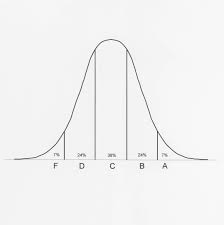
Normal Grade Distribution Curve
There is something seriously wrong when average performance for an average student is looked at as failure. Average children are not stupid. Average means “as expected.” Average means “okay.” Children with average school performance are presenting skills equivalent to what is expected of the majority of children their age. Expecting all children to be ‘above average’ is not realistic. Pushing a good-effort B student to get only “A”s (and above) is a recipe for stress and worry, for frustration, disillusion, anxiety.
I certainly understood the mother’s plea. She was being carried along in the currents of requirements and expectations Shippey speaks about, and she believed–and her belief was strongly reinforced by teachers’ notes, societal pressure and the higher-education reality–that it was required of her child to be remarkable. Remarkable is the new ‘expected.’
Grades used to be a measure of a child’s ability and effort. We rightfully demanded that children to do their best and put an honest effort, but it was pretty clear that not everyone could be at the top of the class. By definition, this cannot be.
Nowadays, grades are not so much a measure of a child’s ability and effort as they are an artificial soup made of an (often unfair) measurement of a teacher’s skills, a school’s ranking and a district’s relative superiority. Grades are measured for political gain and their manufacture sustains a multimillion industry of ever reinvented ‘teaching programs’ (and recently, ‘common-core’ goals), which are rarely developed by educators. Grades are big business. Less so about the kids.
The saddest part is, that children know it.
Children always sense unfairness or hypocrisy, they may not know to explain it but they feel when they are in a halls of mirrors. They realize that they are cogs in a machine. They perceive that they are being measured by academic yardsticks that do not really measure them and yet they are to be judged solely by.
The system needs to change. It is unhealthy, and children are reflecting it–in anxiety, depression, disillusion, burn-out, anger, attitude, apathy, a sense of invisibility and impossible demands.
In the meanwhile, the dilemma of this mother (and many other parents)–and in a way mine as a clinician who can hone a child’s ability or give them a leg up–is whether to feed into the system and push that child forward. Whether to put him into intense tutoring and ask him to perform beyond his skills and at the price of other areas of development; or leave him to learn at his normal (if average) rate and enjoy his childhood at the price of his potential future.
If it were your child, your potential client, what would you have done?

A place to improve my writing skills, and that's all.
We're not thriving, we're creatively photosynthesizing under duress.
History of the Bloomingdale area on Manhattan's Upper West Side
A creative miscellany of mythic fantasies
a weekly flash fiction prompt inspired by google maps
A community for writers to learn, grow, and connect.
To participate in the Ragtag Daily Prompt, create a Pingback to your post, or copy and paste the link to your post into the comments. And while you’re there, why not check out some of the other posts too!
I can't sleep...
Alternative haven for the Daily Post's mourners!
never judge a girl by her weight
original fiction and rhyme
You have reached a quiet bamboo grove, where you will find an eclectic mix of nature, music, writing, and other creative arts. Tao-Talk is curated by a philosophical daoist who has thrown the net away.
A photographer's view of the world - words and images to inspire your travels and your dreams
Life in progress
Straight up with a twist– Because life is too short to be subtle!
WordPress & Blogging tips, flash fiction, photography and lots more!
Light Words


You must be logged in to post a comment.