Tom’s Secret

The animation video below was chosen to lead the European Day on the Protection of Children against Sexual Exploitation and Sexual Abuse which is held on November 18.

The five-minute video had been originally launched in Hebrew, and was since translated to Russian, English, and French. It guides parents, teachers, and other caregivers in ways to identify and react to cases of sexual assault and abuse in children. It has been incorporated into learning programs in Europe, Asia, and the United States.

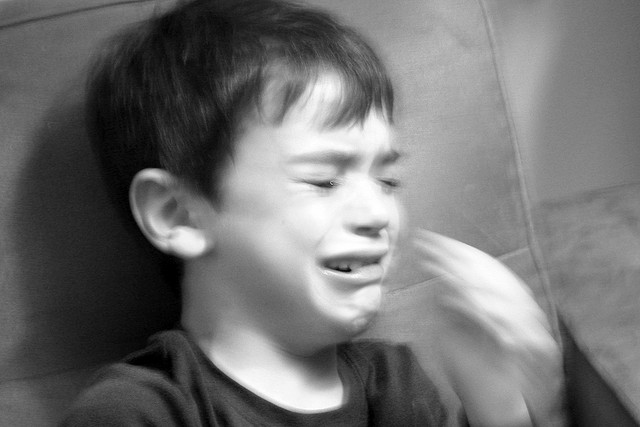
The clip portrays with sensitivity and clarity the reactions children often have to sexual abuse: dissociation, denial, secrecy, fear, worry, shame, and more. It also shows the behaviors children might display and which should be treated as red flags: reluctance to do things or go places they might’ve enjoyed before, irritability, sadness, refusal, lack of appetite, bed-wetting, physical complaints, etc. While these may not be specific to sexual abuse, they are often representation of distress, and need attending to.

It is a fact that most children who endure sexual abuse don’t tell. At least not directly.

It is also a fact that many parents/teachers/caregivers don’t know when to ask or how to ask or what to do or say if they find out something did take place. They may not understand how a child can seem okay, even when they are internally not okay. Even those who want to help, may not know how to go about it.

This video offers a good start.

Watch it. Share it widely.


For the Hebrew version, and more information (in Hebrew) about sexual abuse of children, and ways to identify and respond to red-flags, click on the link to an article below:

http://www.ynet.co.il/articles/0,7340,L-4880054,00.html


What PTSD teaches us about human frailty and resilience

The link below will lead you to one of the best interviews about PTSD I have ever seen, hands down.

The fact that Rachel Yehuda is my cousin is an added bonus–I am ever so proud of her: for the person she is, for the work she does, for the wisdom and empathy she imparts, for how she has literally changed the field of PTSD in the last 25 years.

(I recommend reading the transcript, not just viewing the snippet of video on the site)

Take a look. Take a read. You will be glad to have taken the time:

Ingenius: Rachel Yehuda

http://nautil.us/issue/31/stress/ingenious-rachel-Yehuda


experience

How childhood trauma could be mistaken for ADHD

child brain

This is an immensely important article. Not because traumatized children cannot have ADHD–they can, and many do–but because children with ADHD must also be screened for trauma. They are already at a higher risk for maltreatment and overwhelm, and trauma may also lower their ability to manage stimuli and process information, exacerbating inattention.
Trauma and attention for learning are at cross purposes–this alone is a good enough reason to assess what part trauma may play in a child’s clinical presentation.
And of course–if there is trauma that is ongoing, we are all of us entrusted with doing all we can to identify it and stop it, so that children can be safe.
Until we ensure they are safe and FEELING safe, we cannot truly expect them to lower their hypervigilance or attend to what the teacher is saying in class. We cannot expect their brains to respond well to medications that are meant to treat inattention when their survival may feel as it hinges on remaining in hyper-vigilance mode and constantly scanning for danger.
I highly recommend reading this article.

Rebecca Ruiz's avatarACEs Too High

Acry

[Photo credit: woodleywonderworks, Flickr]

Dr. Nicole Brown’s quest to understand her misbehaving pediatric patients began with a hunch.

Brown was completing her residency at Johns Hopkins Hospital in Baltimore, when she realized that many of her low-income patients had been diagnosed with attention deficit/hyperactivity disorder (ADHD).

These children lived in households and neighborhoods where violence and relentless stress prevailed. Their parents found them hard to manage and teachers described them as disruptive or inattentive. Brown knew these behaviors as classic symptoms of ADHD, a brain disorder characterized by impulsivity, hyperactivity, and an inability to focus.

When Brown looked closely, though, she saw something else: trauma. Hyper-vigilance and dissociation, for example, could be mistaken for inattention. Impulsivity might be brought on by a stress response in overdrive.

“Despite our best efforts in referring them to behavioral therapy and starting them on stimulants, it was hard to get the symptoms under control,”…

View original post 1,765 more words

The Childhood Adversity Narratives: Learn. Share. Educate.

ACES

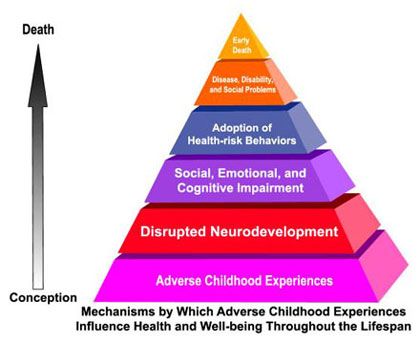
How do childhood adverse events affect development? How do they impact health? How much does it cost society to have children exposed to adverse events? What are the social ramifications? How does childhood adversity reflect in mental-health? In illness? Can we prevent childhood adverse events? Why is it worth it for society to invest in prevention and treatment of childhood trauma?

And other questions: What is more harmful: second hand smoke or childhood maltreatment? How is that reflected in funds or investment in prevention or treatment? Where does asthma come in? What can we do about any of this, anyway?

To find the answers to these questions and more, check out this amazing presentation (also available in PDF and PPT on the site–see links below).

This free resource is available due to the generosity of Frank and Karen Putnam along with their colleagues, who created this presentation in the hope that it will be widely disseminated and that it be used as an education resource for the public as well as for researchers and clinicians. The presentation details the prevalence, impact, treatment, and importance (it is highly possible!) of prevention of child abuse and neglect. The authors encourage everyone to use the presentation and share it.

The slides are available on the website http://www.canarratives.org/

To view the Power Point Show: CAN_Narrative_4-26-15-v2L4

To download the pdf: http://static1.squarespace.com/static/552ec6c7e4b0b098cbafba75/t/553e3673e4b09e094f914b8f/1430140531869/CAN_Narrative_4-26-15-v2L4.pdf

Outdated or Misinformed? Childhood Maltreatment in college textbooks

Vintage Phrenology: thegraphicsfairy.com

Vintage Phrenology: thegraphicsfairy.com

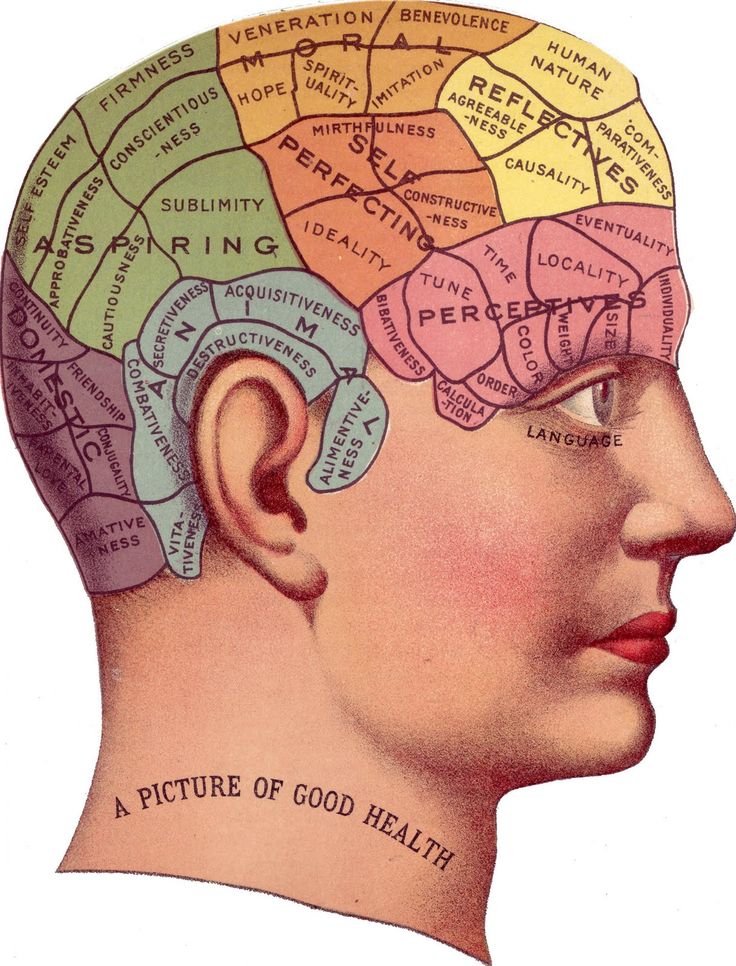
There are over 1,000,000 substantiated reports of child maltreatment annually in the US alone (US Department of Health 2013). The impact of maltreatment on development and health is indisputable. The last two decades showed brisk research in the area of trauma and dissociation all over the world. It is therefore quite surprising to find psychology textbooks to be so behind the times (and behind the data) on covering child maltreatment. This leaves hundreds of thousands of students a year with less-than-accurate information that may impact their ability to identify or understand the aftermath of child maltreatment.

In an important article (also see full link below), Brand and McEwen review the three leading introductory psychology textbooks and how they address (or not address) childhood maltreatment and its aftermath. The results are distressing in lack of citing of current data (as in  many textbooks on psychopathology).

One can hypothesize why prominent textbooks will not sufficiently cover such an important topic (one would think they would find it essential to cover well if only for the known health effects of childhood maltreatment across the lifespan, in both physical and psychological health, costs, and healthcare utilization). Maybe it is as simple as using outdated resources or not keeping up with research and known data. Maybe it speaks to more widespread issues of denial and minimization of childhood maltreatment. Maybe other reasons. Regardless of why the textbooks are lacking, the reality remains that the textbooks leave students un-informed on the topic.

The good news is that this can be changed! The data is available–it just needs to be included and reviewed better!

Hopefully having more awareness to this will allow students and faculty to challenge the choice of textbooks and to demand better coverage of such a relevant issue. Students are shortchanged when they are under-informed and when data is slanted or may appear to be biased or outdated.

What can you do?

Let your faculty, librarian, and fellow clinicians and students know that our college students deserve a more cohesive review of childhood maltreatment. Share the article below. Talk to professors who teach these courses and support them in seeking better balanced textbooks. The research is available, it simply needs to be included rather than avoided. Let us work together for improving information in education!

Coverage of Child Maltreatment and Its Effects in Three Introductory Psychology Textbooks / Bethany L. Brand, PhD, and Linda E. McEwen, MA

http://traumapsychnews.com/2015/01/coverage-of-child-maltreatment-and-its-effects-in-three-introductory-psychology-textbooks/

Trauma’s Memory Problems : A good article

child trauma

Trauma all too often brings up the detective in people, prods them to question, pin point, dissect accounts, weigh relative credibility. It is an odd thing, given the reality that trauma–by its very essence of overwhelm and shutting down of language centers, processing, and memory integration–affects how one may be able to remember, recount, and narrate it. Trauma is difficult to articulate and often too difficult to comprehend, even to know. And yet, it is often demanded to be phrased in exact details that go beyond every-day memory. As if trauma memory should be, somehow, more stellar, subject to higher standard, to bigger scrutiny.

Granted, there may be a motive in it: people would rather believe trauma is less frequent and not as severe. If there are holes in a story, maybe it is ‘proof’ that it did not take place, or not as badly, or not deliberately … At the same time, there is an inherent lack of understanding about how memory and overwhelm conflict and contradict each other. In some ways, a misremembered, disjointed, incoherent event fraught with numbness and confusion may well BE one of a trauma … rather than be proof of something not happening …

Trauma is a problematic thing for memory.

People remember trauma differently. Some remember constantly, vividly, intrusively. Some remember oddly. Some remember snippets, or sensations, or disjointed unease that seems disconnected from anything that seems to make sense. Some remember sometimes. Some remember not at all.

Children, especially, may find not remembering safer than to try and manage the overwhelming reality of what to let reality in may mean. They may have to keep things in the ‘not knowing’ folder to go on and push away reminders that make no sense, they recant, reverse, deny, ignore.

In the article below, the author explores memory and trauma, denial and dismissal, inaccuracies and interpretations, shame and judgment, burden and prejudice, reality and myth.

It is a worthy read for anyone who has been touched by or knows someone who has been touched by trauma (that should include the lot of us, really …). It is an even worthier read if one keeps in mind how it would be all the more difficult for children to conceptualize and remember trauma cohesively, when they have less tools with which to manage what they had endured, and are more vulnerable to misconceptions about what it says to them, about them, about those who hurt them, about the world, about who they may be or have become.

​I Was Sexually Assaulted As A Child. Here’s Why I Didn’t Remember For Years.

http://thinkprogress.org/health/2014/12/23/3606576/memory-and-sexual-trauma/

On Nov.7–Making Peace with Suicide–a recommended new and powerful book!

Launching November 7, 2014!

Making Peace with Suicide: A Book of Hope, Understanding, and Comfort

By: Adele Ryan McDowell, PhD

Sometimes a new book comes along that deserves a special shout out–this is one !

I am delighted to help spread the word about Adele McDowell’s new, powerful, and heart opening book.

I’ve known Adele for almost 18 years now, and she is the real deal: knowledgeable, compassionate, deeply empathetic, super-sensitive, and down-to-earth. She understands human suffering and human potential, the depths of pain and the triumphs of spirit, the reality of trauma and the tangible hold of hope.

The combination of her skill and personality make her the best person to approach and manage such a tender topic, and she does so with much heart and practical advice.

The book is filled with information and much needed explanations to one of the most heart-wrenching realities of human connection and loss. It is also filled with anecdotes, candid testimonies, and personal paths through grief and healing.


Read it!

Join the launching celebration on November 7 and be one of the first to own a copy!

Get it on November 7, 2014!

Making Peace with Suicide: A Book of Hope, Understanding, and Comfort

By: Adele Ryan McDowell, PhD

Get it on Amazon November 7! http://www.amazon.com/dp/0982117620/ref=pe_385040_121528360_TE_dp_1

About the book:

Insightful, compelling, and compassionate, Making Peace with Suicide: A Book of Hope, Understanding, and Comfort takes a good hard look at the world-wide phenomena of suicide.

This book is designed for anyone who has lost a loved one to suicide and felt that sucker punch of grief; for anyone who is in pain, walking unsteadily, and considering suicide as an option; and for anyone who works with, guides, or counsels those feeling suicidal and/or suffering the profound grief from a suicidal loss.

Making Peace with Suicide includes stories of courage, vulnerability, and steadfastness from both the survivors of suicidal loss as well as the unique perspective of the formerly suicidal. It offers shared wisdom and coping strategies from those who have walked before you. It explores the factors leading to suicide and the reasons why some do and some don’t leave suicide notes.

Making Peace with Suicide sheds light on the phenomena of suicide vis-à-vis our teens, the military, new mothers, as an end-of-life choice, and asks if addiction is a form of slow suicide. It provides a seven-step healing process and opens the door to consider suicide and the soul, the heart lesson of suicide, and the energies of suicide.

If suicidality has impacted your life, Making Peace with Suicide is a must-read! You will be guided through the unknown territory, given insights to allow understanding, stories to help you heal, and ways to make peace with a heart wide-open. Making Peace with Suicide is good medicine for the body, mind, and soul.

Praise for Making Peace with Suicide

“Suicide is one of our most painful, difficult, confusing and wounding of human experiences. Dr. Adele McDowell addresses this topic with love and beauty. She non-judgmentally restores empathy, compassion and understanding.  She courageously offers deep tending in a “place of primal pain.” And she is comprehensive, sharing the history, complexity, universality, and even positive dimensions of this mysterious act. Whether you are contemplating or have survived the attempt, lost someone to suicide, or counsel and help these populations, Adele McDowell’s Making Peace with Suicide will bring you hope, healing, compassion and understanding.”

–Edward Tick, PhD; Director, Soldier’s Heart; Author, War and the Soul and Warrior’s Return

“With sensitivity and compassion, Making Peace with Suicide explores the depth and breadth of suicide and offers insights and healing. This book is essential reading.”

–C. Norman Shealy, MD, PhD

“No topic could be more timely than suicide. This remarkable book addresses people who have contemplated ending their lives as well as those who have to deal with the aftermath of those who succeeded. But it will also be invaluable to mental health workers and military chaplains, especially those who deal with young people who have been bullied and veterans with PTSD. For such a complex topic, Dr. McDowell’s writing style is reader-friendly and the stories she presents may well evoke tears. Her wise recommendations include teaching self-mastery techniques to help people cope with the stress of a success-oriented society. I have read many books on this sensitive topic, but none with the breadth and scope of Making Peace with Suicide.”

–Stanley Krippner, PhD; Co-author, Personal Mythology: The Psychology of Your Evolving Self and Haunted by Combat: Understanding PTSD in War Veterans

“Finally. A book that explains—in the simplest of terms, in a non-sensational, non-academic manner—the phenomenal, worldwide epidemic we call suicide. If you read one book on mental illness and how it affects our world, READ THIS ONE!”

–Ginny Sparrow, Editor, American Association of Suicidology

“Adele bravely and compassionately tackles a topic that many people avoid discussing—suicide. Yet in the understanding of it, the confusion and sense of loss is greatly eased. Making Peace with Suicide is rich with insight and healing methods all intended to help heal the void we feel when we lose a loved one to suicide. It’s also written for those who are suicidal to help them understand their pain and despair, and to let them know there is always help and there is always hope. I wish I had this book to read when my best friend took her life.”

–Carol Ritberger, PhD, author of Healing Happens with Your Help: Understanding the Hidden Meaning behind Illness

“This powerful book, written by a psychologist and former suicide-hotline responder, speaks to us all, about a present epidemic, surrounded by shame, taboo and secrets. Offering many personal stories, Adele helps the reader to find peace speaking to both those who believe they’re the only person who has ever felt this desperate and to the survivors whose lives are thrown into turmoil. This excellent book, full of useful resources, is essential for everybody who feels alone with their issues of life or death, bringing greater understanding, acceptance and comfort.

–Christine Page, MD, seminar leader & author of The Healing Power of the Sacred Woman

“As a minister/therapist for more than thirty years as well as a wife who lost her military husband to suicide, I have never found a more compassionate, effective book on suicide and its aftermath. This book serves many needs and highlights the myriad ways in which suicide changes one’s life direction. I cannot say strongly enough how powerful and helpful this book is.”

–Rev. Colleen E. Brown, Unity minister

“The loss of a loved one by any means is traumatic. When the loss is by suicide, in addition to the grief of the loss itself, survivors are often left riddled with guilt, anger, shame, and endless questioning, by both themselves and by others. In Making Peace with Suicide, Dr. McDowell gently and brilliantly weaves vital suicide survivor education with comforting and inspirational thoughts and quotes, all designed to direct the reader on a path of healing, resolution and peace.  A must-read for anyone who has been touched by the tragedy of suicide and left to answer the question, ‘Why?’ ”

—Carole Brody Fleet, award-winning and bestselling author of Widows Wear Stilettos…; Happily Even After…; and When Bad Things Happen to Good Women

“A subject such as this is never easy to digest. However, with Adele’s wisdom and guidance through her experience, this is a must read. We are in a new world now. Let Adele’s wisdom guide you with her insights for a new perspective on suicide.”

–Mona Delfino, author of The Sacred Language of the Human Body


Get Making Peace with Suicide on Amazon, November 7!

ADHD or Trauma?–The Likelihood for Mistaken Diagnosis

trauma brain

A new study shows that a child with an ADHD diagnosis is more likely to have also experienced stress and trauma early in life.

Clinicians working with traumatized children and adolescents have long noticed–and noted–that it was not unusual for children with trauma histories to be diagnosed (and possibly all too often misdiagnosed) with ADHD. 

What complicates the clinical picture is that a child can have ADHD and trauma history (or Autism and trauma history). In fact, children with ADHD and children with communication disorders are more likely to be maltreated than children without these issues.

As the article below states, and what is very important to take into account, is the need to rule out trauma as the cause–or contributor–to the child’s clinical presentation, rather than simply assume that a distracted, inattentive child has ADHD. Assessment needs to address the possibility of trauma, and intervention approaches must be adjusted accordingly. For example, medication for ADHD may not be appropriate for a child whose inattentiveness is due to hypervigilance. It is crucial to ensure that past trauma be treated and ongoing trauma be addressed, so that the child can let go of the coping skills adopted to manage overwhelm.


The article is copied below. You can also read it on the original webpage by clicking on the title below. For more information about trauma and development, click here.


News Analysis: Are We Misdiagnosing Childhood Traumas as ADHD?

Children with attention deficit hyperactivity disorder (ADHD) receive a diagnosis based on their behavior: age-inappropriate fidgeting, inattentiveness, hyperactivity, and trouble sitting still and concentrating. However, according to new research presented today at the Pediatric Academic Societies annual meeting in Vancouver, Canada, these behaviors may also be linked to childhood trauma.

A research team analyzed data about 65,680 children ages 6 to 17. (The data was taken from the 2011-2o12 National Survey of Children’s Health.) The children’s parents answered questions about whether their kids had been diagnosed with ADHD, how severe their symptoms were, and whether they were taking any ADHD medications. The parents also reported on whether the children had had any of nine adverse childhood experiences (ACEs): poverty, divorce, the death of a parent or guardian, domestic violence, neighborhood violence, substance abuse, incarceration, familial mental illness, or discrimination.

“Diagnoses of ADHD have increased over the last decade, and there has been a concomitant rise in stimulant medication use,” said Nicole Brown, an assistant professor of pediatrics at the Children’s Hospital at Montefiore and lead author of the study, in an interview with Healthline. “Many of my patients also experience trauma during childhood, which often exacerbates ADHD symptoms and poses diagnostic challenges with respect to teasing out whether their symptoms directly result from the trauma they experience.”

About 12 percent of the children who participated in the survey had been diagnosed with ADHD. Parents reported that these children had also experienced higher rates of all of types of ACEs than children without ADHD.

The children with ADHD were also more likely to have experienced a greater number of adverse events. Seventeen percent of children with ADHD had experienced four or more ACEs, as opposed to 6 percent of children without ADHD. The children who had dealt with four or more ACEs were almost three times are likely to be using an ADHD medication as children with three or fewer ACEs, and their parents rated their ADHD as being more severe.

ADHD and Trauma: The Chicken and the Egg

How is ADHD connected to stress and trauma? There could be a number of explanations.

First, it’s possible that doctors are simply mistaking the signs of trauma in children for ADHD. “What we find is that there is often an overlap in the symptoms of children who have ADHD and children who have experienced trauma, particularly small children,” said Alicia Lieberman, professor and vice chair for academic affairs at the University of California, San Francisco, Department of Psychiatry and the director of the Child Trauma Research Program at San Francisco General Hospital, in an interview with Healthline. “The inability to concentrate, the fidgetiness, the inability to pay attention, the distractibility, the restlessness, and the irritability are often behaviors that trigger a diagnosis of ADHD. And often, the people making the diagnosis do not ask what happened to the child, what kind of experiences the child has had.”

Brown agrees that this may explain her findings. “Studies have also shown that symptoms of post-traumatic stress disorder (PTSD) or acute stress disorder resulting from adverse life events closely resemble ADHD symptoms, so there is a high likelihood for clinicians to diagnose ADHD and overlook a possible trauma history,” she said.

Another explanation is that children with ADHD may be more likely to get into trouble and to experience traumatic events as a result. “Children with ADHD can become more impulsive, can be more annoying to parents that might be depleted, so children with ADHD might be at greater risk for being maltreated or getting into accidents, which might in turn trigger PTSD,” explained Lieberman.

Finally, researchers know that stress in the early life environment might affect the development of the brain. “It’s also possible that being exposed to a traumatic event increases the likelihood of developing psychiatric disorders that have a range of manifestations, including anxiety, post-traumatic stress disorder, and ADHD,” Lieberman said.

“When a child is presenting difficult behavior, the first thing to ask is ‘What happened to the child?’ rather than ‘What is wrong with the child?’”

Under this lens, ADHD is only one of many possible outcomes that can result from early-life trauma. And even then, ADHD might just be a sign of what’s to come. “We know that early life adversity produces developmental changes consistent with ADHD, but it produces many other effects as well,” explained Regina Sullivan, a professor of child and adolescent psychiatry at the New York University School of Medicine. “As a child is developing, and there’s a neurobehavioral deficit, how that is expressed changes during development. ADHD can sometimes be symptoms of neurobehavioral problems that will emerge later in development.”

Sullivan added, “Early life trauma and stress can interact with genetics to produce different disorders based on the age the trauma was experienced and the particular type of stress or trauma. Different-aged children, and children with different genetics, and children with different personalities, will respond differently to a given stress.”

Are We Medicalizing Stress?

Rising rates of ADHD diagnosis and medication use raise the question: are we turning normal levels of life stress into a medical condition? Lieberman points out that more than 60 percent of children report that they have been exposed to some kind of victimization in the previous year, and more than 10 percent have had five or more exposures. For many children, ACEs aren’t rare, they’re the norm.

And when kids are under stress, they’re more likely to act out. “When a child is presenting difficult behavior, the first thing to ask is ‘What happened to the child?’ rather than ‘What is wrong with the child?’” said Lieberman. “The recommendation that the authors of the study make about the importance of screening for trauma exposure in every child that is showing symptoms that can be associated with ADHD is extraordinarily important and timely.”

In these circumstances, medications probably aren’t the answer. “While stimulant medications may prove beneficial for some children, they may not be the most effective management strategy for all children,” said Brown. “Children with ADHD diagnoses who have experienced trauma may additionally benefit from specific behavioral interventions that are tailored to addressing their underlying trauma histories.”

However, Sullivan cautions against drawing too many conclusions about a child’s past from his or her diagnosis of ADHD. “Not all children with ADHD have had early life adversity,” she said. ADHD also isn’t necessarily a sign of other disorders to come. “Sometimes, when someone has ADHD, they maintain those ADHD symptoms throughout life, changing somewhat, but they still have the diagnosis of ADHD.”

It will be many years before the root causes of ADHD are fully understood. Until then, doctors must try to figure out which symptoms are caused by trauma, while also ensuring that children with ADHD get proper treatment for the disorder itself.

adhd

Teaching Children Calm

deep breath

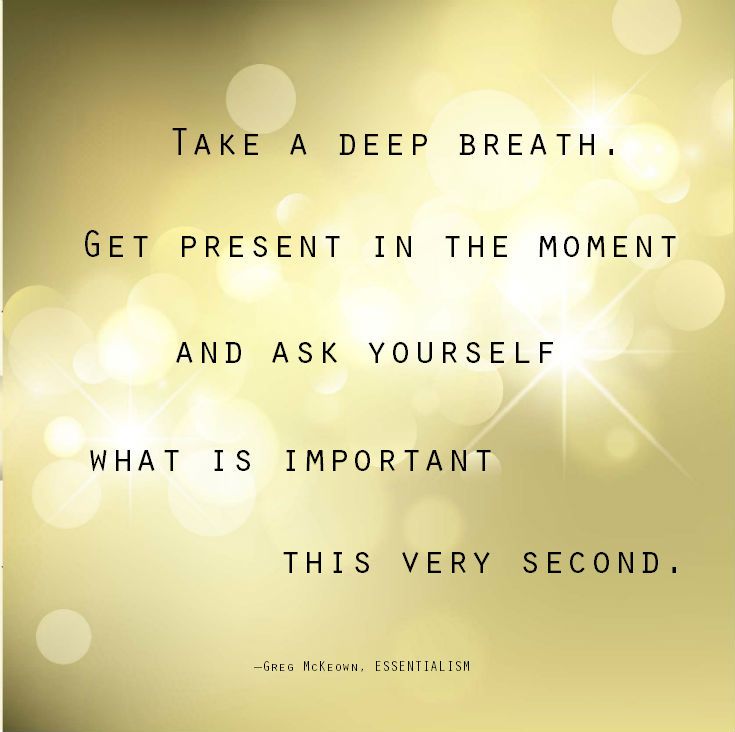
“Calm down!” Sounds simple, but for many young children it is a foreign concept unless and until we show them how.  Especially if they had known more overwhelm than calm.

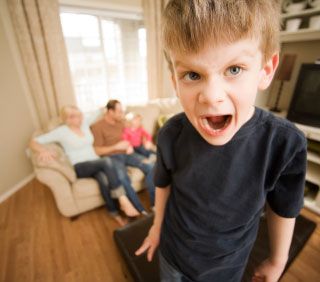
Young children who experience overwhelming events such as neglect, severe stress, abuse, chronic illness, or sudden separation at a young age can be traumatized. The world around them no longer–maybe never–feels safe. They don’t know how to regulate, how to calm themselves, how to manage when they get upset. They act out, they hit, they don’t listen, they ‘misbehave.’ They have a hard time making good decisions, explaining their actions, or utilizing memory. They fall behind at school, socially, in their ability to learn new things, communicate, or play.

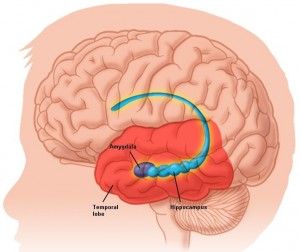
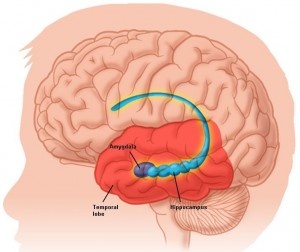
Trauma changes the brain and can interfere with development. It also creates a vicious cycle of hyper-vigilance and checking-out that costs children opportunities for learning, interaction, and connection.

Children need adult support to manage traumatic aftermath. They cannot be expected to find the way without help. Many of them may need psychotherapy, but even then they need support in non-therapeutic interactions in the day to day. Support that we can all learn to provide by understanding trauma. By knowing what trauma is and how it works, recognizing what it does, how it affects children, and learning what we can do to help reduce its effects so a child get traction in the now.

In an excellent opinion article in the NYTimes this week: Teaching Children To Calm Themselves, David Bornstein details one such system of support set in place, and how it already works to change the lives of the children as well as of the adults who care for them: teachers, caregivers, siblings, even the school-bus drivers. http://opinionator.blogs.nytimes.com/2014/03/19/first-learn-how-to-calm-down/

Read it. Then share it with anyone who works with children. Or who has one.

Spread the word. Our children are worth it. Open the path to teaching calm.

boy with dog

For more information about the impact of trauma on communication, check The Language of Trauma, and other publications here.

For more information about the Adverse Child Experiences Study, and the cost (literally and figuratively) of trauma throughout the lifespan, check: http://www.cdc.gov/ace/

For more information about how to help traumatized children at home and in the classroom, check the links to the ISSTD’s FAQ pages here.