Kids’ Logic

Kids have been known to say the most amazing things. They can come up with stuff that leaves jaws hanging. Make connections we did not see coming. Expose language ambiguities that we no longer hear, and make expressions a never ending study in explaining why we did not mean the words we said even though we very much did mean what we said …

Kids can also give the most hilariously brilliant unexpected answers.

Here is a compilation of answers from 25 kids whose responses on tests, quizzes, assignments and schoolwork prove that they are awfully literal, completely out to lunch on what’s inquired about, totally impish, wholesale Smart-Alec’ish, or a combination of the above …

whatended

Read more and enjoyhttp://www.viralnova.com/awesome-kid-answers/#VGpIS22CscTiyxSg.99

Thank you ViralNova.com for this delightful collection!

“He suddenly can’t talk!”

It was an urgent message.

“I have a little boy. He just turned three, and he suddenly can’t talk!” The mother’s voice was pressed with worry. She forgot to leave a callback number and the number on my caller ID showed as “Private Number.”

She called again the next day and I happened to pick up. I knew immediately that it was the same person who’d left the message–the urgency in the voice was palpable. She was flustered when she realized she did not leave a phone number–she’d been waiting for me to call back all of the day before, late into the evening. My heart ached for her. It does not take much to worry a parent, and a major change in any child’s behavior is alarming.

“He’s always been a little talker, you see,” she said after I asked her to tell me a bit more about what the problem was. “He started talking really early, actually,” pride filtered into the concern, a hint of smile of remembering. “Said his first words even before he was one, and he was putting sentences together before his second birthday. We used to laugh, my husband and I, about how he never shuts up …” her voice caught. “But now he can barely talk! He tries, but it is like nothing’s coming out!” Her own voice rose in worry.

“Can he sing?” I asked.

“What?” My question surprised her. It was intended to, in some way, though I had other reasons for asking it. I didn’t want to describe the boy’s speech for her, didn’t want to put words in her mouth, but I did want to get some information about possible clinical presentation.

“Can he sing?” I repeated gently.

“Yea … actually …” her voice turned pensive, surprised, a little confused. “He sings really well. He’s not stuck at all when he’s singing! He loves singing … It is when he’s trying to tell me something that he gets stuck. He gets all red in the face from trying and I don’t know what to do to help him. He’s repeating the same sounds ‘mm….mm’ or ‘I I I I’ and can’t get a word out. It takes forever for him to say something.”

We spoke a bit more. Apparently this started the week before, though there were days in the week or two before that when when he would “stop” on a word, or repeat the beginning of a sentence a few times before “diving into it.” This first born little boy had no history of medical issues, there were no major changes in the house or in his life recently, no illness, falls, medications, ear infections. His articulation was stated to be “super clear” and his language was reportedly rich. He could tell stories and speak in sentences and “knew a ton of words.” He was a happy toddler and other than the occasional tantrum had an overall jolly disposition, which this ‘inability to talk’ did not mar. For all his red-faced stress, the mother admitted that she did not think that he was all that bothered by it and “just stood there and stayed stuck…” It was her who was alarmed, and her husband. “My husband has a co-worker who is a stutterer,” she said quietly, as if divulging a shameful secret. She did not need to add what she was fearing, what her husband feared–that their little boy was going to become that co-worker. A Stutterer.

I agreed to see the little guy for an observation and parent consultation, but had no opening till the week following. In the meanwhile I suggested to the mother to just let him be and not draw too much attention to his speech (including refraining from telling him to “start again” or “say it slowly” or “breath deeply”…). I recommended they continue reading to him, regular routines, and listen to him (even if it takes him a long time to get a sentence out) while maintaining interest and without making a big deal out of the dysfluency. I recommended lots of songs and music–for fun, but also because they can give a sense of fluency and reinforce a feeling of success and ease for the boy. We chuckled over how she’d just have to live with listening to the dude’s favorite playlist a few thousand more times…

She called me two days before our scheduled appointment.

“He’s fine!” she called into my machine. “It’s like he never got stuck at all! I don’t know what happened but he just woke up yesterday and he’s not getting stuck! I thought he was doing better but I thought that I was just hoping … but he’s just … talking up a storm! Do we still need to come?”

We decided to defer the consultation, and to have her call me if need be at a later date.  I explained that this might have been an episode of “Developmental Dysfluency” or “Developmental Stuttering” and that these sometimes recur, and if so, she can call me immediately, or watch and see what happens for a week or so before she does that. Whichever she prefers.

Developmental Dysfluency (AKA Developmental Stuttering) affects many children. In fact, 75-90% of children between the ages of 3-5 have times of dysfluency in one form or another and the vast majority of them do not continue to stutter. Sometimes dysfluency happens once. Sometimes it recurs. While dramatic, most times it is nothing to worry about. That said, if it recurs, if it continues for a long time, if the child seems upset by it, avoids speaking, seems embarrassed, etc., if there’s family history of stuttering, and if it causes stress and worry in the family; then an evaluation and follow up by a speech-language-pathologist are very important.

Stuttering can become a life-long issue, and it can impact people’s communication. Early intervention helps and can sometimes prevent stuttering from becoming complicated. It is also important to ensure that the speech issues are not related to problems with motor-planning, retrieval, processing, or other issues that need clinical help.

In this little guy’s case, his dysfluency recurred a few months later, and I got to meet him. His mother also brought a videotape of his interactions at home (including the cutest singing in the tub!) and took him to an ENT and had a hearing test done at my request. The boy’s language indeed was superb, and he showed no issues with motor-planning, social communication, or articulation. There were no issues of concern about his development or abilities. He was not bothered at the least by getting “stuck”, and commented to me, unperturbed, “sometimes my mouth gets a traffic jam.” His mother was not so alarmed this time around. The second dysfluency episode passed a few weeks afterwards, and did not return.

There are some theories about what causes dysfluency/stuttering in toddlers and young children. Many echo this little guy’s theory, and state that it is a ‘traffic jam’ of sort–a temporary mismatch between language skills that are improving and sentences that are getting longer and more complex; and motor skills that are not yet up to the challenge–literally too many instructions coming down the pipe for the coordination the child has at present to execute in timely manner.

Stuttering may have a genetic component, but that does not mean that having someone who stutters in the family dooms children in the family to same. Not everyone who is predisposed to stuttering does stutter, and whether one continues to stutter following dysfluency episodes depends on many factors. These include the child’s personality, and ability to regulate frustration, their other communicative and developmental strengths and weaknesses, their age when the stuttering begins, how easily frustrated they become, their life circumstances (e.g. trauma increases the risk), whether there are other speech and language issues, and the reactions of people around them (e.g. if people get worried, the child may become aware that something is ‘wrong with them’ and feel embarrassed or nervous or worse, ashamed), to name a few. The latter reason, especially, is why it is so important for those around the child to get support about how to react, what to do, and especially what NOT to do or say. It is always better to do what this mom did, and reach out to a professional for a consult, than try to ‘fix this’ on your own.

Treatment for stuttering is available, and can be very successful, especially in children (the more years one stuttered, the harder it can be to treat, though even adults can improve and sometimes overcome stuttering after years of difficulty). There are different approaches and methods to the treatment of stuttering, as well as different possible underlying issues that cause it in the individual person. So one size does not fit all–not one method works for everyone–and it is important to look for a clinician who will assess, consider, and match the treatment that is most appropriate to a particular person and be flexible to adjust it as need be.

I got a call from the little guy’s mom not too long ago. He’s starting Kindergarten and is into drama classes and theater. “He still sings in the bath,” she told me, “and sometimes I think that he does not shut up from the moment his eyes open to when they close at night …”

penguin chick

For more information about stuttering, click here.

A Path To Peace

Peace is not made by force

Or guns

Or terror.

It is not reached through the infliction of an added pain

Unto another

In the name of God or righteousness.

Peace is not made

By fighting for it with hatred

Or another war.

Children everywhere are children

Worthy of far more.

May compassion multiply and kindness grow …

To put out the fires of hatred and division,

The smoldering of war and rage,

Of profiteering and apathy,

Of greed and power-hunger

Disguised as they can be by flag or faith or vocal moral lore.

May compassion multiple and kindness grow …

To pour cool peacefulness

On zealots and prejudiced

And remind them we have all been born

Under the same skies

In the same form

Onto the same blue-green shores.

May love flow through the wounded places

Through the broken walls and empty spaces,

To fill the shattered hearts with light,

To gently hold

Let light unfold.

we dont need

Quietude

Take some time to be quiet.

Quietude. Do you remember what it is?

“Impossible,” some say. “Unrealistic.”

“Maybe the next time I am on vacation,” others lament wistfully, “… don’t know when … maybe next year. If I can manage it. Somehow.”

In this world of ours, it may be difficult to imagine taking time for quiet. Maybe harder still to figure out how. Logistics, you know. The noise of churning plans.

If you must, make a quiet-date with yourself. And keep it. But if you can let yourself release a moment of control and grab a quiet moment, do so. Today. Now.

Just do it.

Take a minute. Take two breaths. Take five minutes if you can. A half-hour if you’re extra-lucky and the stars align. A few hours if you’ve won the My-Time-Lottery …

Find a bit of quietude. This day.

A bit tomorrow, when you can.

And the next …

Whatever brief respite you clear up in your mind–take it. Make it yours. Be quiet in it. This is worth it for you, but will also pricelessly teach others who need knowing, who forgot the way to be quiet, who maybe had never learned how.

Little ones, too, need quiet time.

Some of them do not know, either. About silence. Constant beeping, typing, video, screen time, phone time, entertainment, play-dates, lessons, coaching, characters and things that move and ping and chime and replay high-pitch recordings.

Brains need quiet like they need oxygen. Like they need love. Like they need soul.

Show them you believe that quietude is important. Show them you know how … begin now …

Oh, I know it is a rare thing; silence.

In this busy, hustle-bustle, to-do lists and beeping phones, email, texts, chats, calls, meetings, reports, social obligations, family events, work mingling, and information pouring in through every moment, every pore … there is noise just about everywhere. A hiss, a buzz, a murmur, background hum of electronics, cars, people, needs, demands, small children, needy neighbors, ailing parents, crises calls …

It is because of all of that that it is all the more important to take time for quiet.

To re-align your center. To restore the foundation of yourself–of who you are and where you’re going and what makes you who you are and what calms your body why and how. Yes, all that in a moment of quietude. For once not in words, but silence.

Take time for quiet.

Let quiet in. Allow it home, again.

Take time for a calm, clear breath and momentarily emptied mind.

A pause for calibrating a brief neutral.

Be silent. Lower volume on your inner critics (they can use a moment of silence, too!).

Just take a moment. Listen to nothing but the beating of your heart, the music of your soul, the nothingness that holds the breath of life around you.

The pulse of nature.

The space between the spaces.

Silent. Powerful. Whole.

quiet

Lesser day?

When instead of this day

good morning gorgeous

 you had something more like this day …

wet kitty

don’t despair …

and remember

some days

after all, there’s you …

and anyway

on any day

all you can do

so don’t forget

to hang in there, to

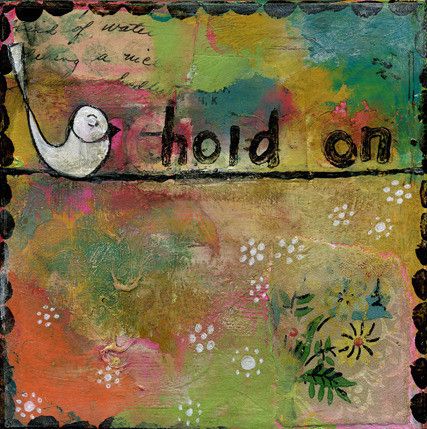
Hold On Print by Kelly Rae Roberts

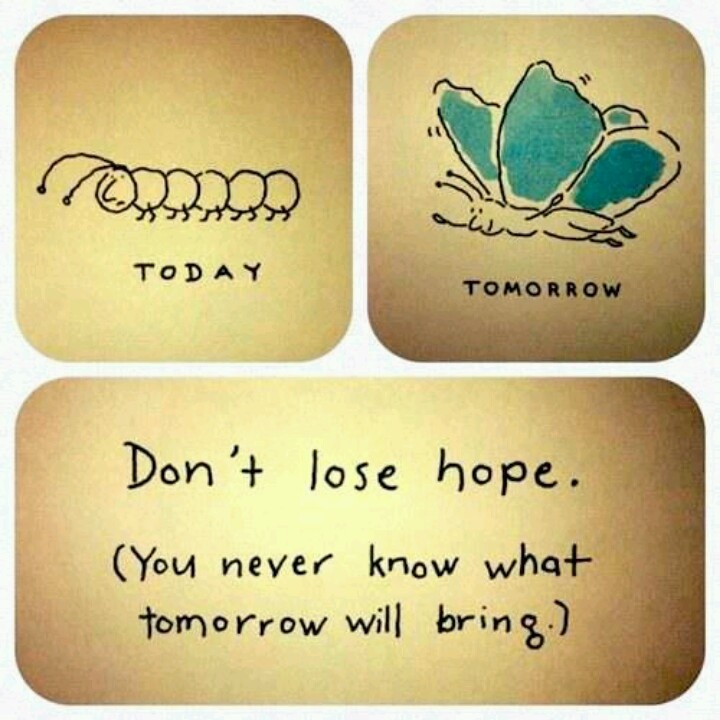
because today may have been

less than glorious

but

tomorrow

She’s really pretty, but …

The pre-teen shows up to session looking distracted.

She is usually beaming and rearing to tell me about small successes and upcoming weekend fun. When I ask her if everything is alright, she just nods absentmindedly (and not too convincingly) and bites her lips in indecision. I give her a moment, busying myself with some papers in her work-file that don’t quite need sorting but keep my gaze elsewhere.

“Can someone be your friend and not your friend at the same time?” she finally asks.

“I guess it depends. Be your friend and not your friend at the same time, how?” I respond, not wanting to assume I understood what she was referring to and preferring to give her the opportunity to explain.

“Hmm …” she nods, pauses. “I mean, like if your friend is, like, sometimes behaving like your best friend and all and you hang out together and all that and sometimes she’s mean or just ignores you or, like, goes with other people, or says things about you that are secret. Stuff like that.” Color rises in her cheeks and her eyes get bright with unshed tears.

“That is a tough one.” I state gently. “I guess I’d try to have a heart-to-heart conversation with that friend, to see what is going on.”

The girl looks startled. “But what if she never wants to be my friend anymore?” she blurts.

“Well …,” I pause, “if it were you, would you want a friend to tell you if she felt that there was something wrong between you two?”

“Yeah, but …” she begins, hesitates, “… she’s not like that.”

“How is she, then?”

“She … she’s real popular …” blush rises higher. “She’s really pretty and smart and everyone wants to be her friend …” she looks down.

Children know that wanting to be liked by popular classmates is not the best friendship seeking reason to admit to adults … However, the reality remains that popularity matters, and that especially at that age the social hierarchy easily translates into all manners of self-acceptability and relative self-worth. Whether one follows the ‘most popular’ crowd or not, it is difficult to not yearn to be among the ‘chosen few’ of the perceived best clique and the popularity it bestows.

I wait.

“… you see, she doesn’t need me to be her friend. I just try to ignore it if she’s mean because if I told her it was not okay or to not share private stuff and such, she’d just like, walk away and not be my friend anymore … and her friends won’t either …”

“I see,” I note. “This does feel like it would be a tough spot. Though it does make me wonder what kind of a friendship it is if someone ignores you if you tell them what you think or feel.”


She nods, picks at a chipped piece of nail-polish on her ring finger. It is dark blue, not the usual pastels that this girl seems to prefer. I have a guess why this color now, but I keep it to myself. I give her another moment. Kids need time to formulate their feelings into thoughts, let alone to get their courage up to share what may bring critic from adults or have them feel vulnerable.

“She likes dark blue, you know,” she adds, quietly picking at the nail-polish. “She said that all her friends like it, too, because it is the coolest …”

“Hmmm… ” I offer, my hunch confirmed.

“I don’t think she’s a very good friend,” the girl whispers, then looks up at me, confused by her own words and their implications. “But … but how can she not be a good friend and be so popular? I mean, everyone wants to be with her and get invited to her sleepovers or stuff so doesn’t this mean she is nice?”

“Good question,” I respond. “There are all kinds of reasons people can be popular and why others want to be close to them: sometimes it really is because they are nice and fun to be with, and other times it may be because they are famous, or rich, or can get them things, or it makes those who are allowed to be with them feel important …”

“She’s the prettiest girl in the whole grade!” she interrupts me, “… she has the coolest clothes and a whole walk-in closet in her own suite at home and they even have a movie room with a popcorn machine in it.” She blushes again. “She’s really pretty,” she adds quietly, “but I don’t think I actually like her … it is just … that it feels nice to be in the popular group and have other girls know you are cool and stuff …”

She looks up at me then, decisive. “Maybe I don’t need to be her friend,” she says. “I mean, I don’t hate her or anything, she’s not like, horrible. She can be nice sometimes … but sometimes she doesn’t care … and she tells secrets like they are jokes and it’s not really funny. I don’t like that. My friend Brianna is different. We always have fun and I can tell her things and she won’t tell on me. I think Brianna is a good friend for real.”

I smile.

She smiles back, then spreads her hands on the table and looks at her dark blue fingernails. “And you know what? I don’t like this stupid dark blue color, either. It is nice on Alison, but my hands like light purple better …”

friendship