Reclaimed Royalty


https://naamayehuda.com/wp-content/uploads/2019/03/7d39a-co.jpg

Lord O’Neill’s Cottage, Ram’s Island (from article in the Dublin Penny journal – 1830s) 


He’d come from royalty. Or at least from those who should’ve been but history had been too blind to realize their value. He’d seen promise in his older brother James: a lust for power and a need to force his will onto others. But James hadn’t shown enough self-preservation for a prince. A pity … but at least it left no issue of seniority.

Since childhood the conspiring doctors tried to claim him ill with “grandiosity.”

His mother failed to see. “We come from farmers, Thomas. Always have.”

Perhaps she truly believed her forefathers were but serfs to the O’Neills, but he knew better. He’d seen himself in the drawing, and it fit what he’d always known: He was destined for more, a royal progeny.

He’d take the island by force. It’ll make them realize it was past time he reclaimed what was his by rights, even if forgotten by history.


For What Pegman Saw: Northern Ireland


Out Played

Photo prompt: © Anshu Bhojnagarwala


“It’s an effing eyesore.”

“I don’t care.”

Martin balled his fists but Susan just gazed at him.

She said nothing but he knew: Raise a finger on me and off to jail you go. The judge was clear: Anger-Management or prison. Martin took the former but could swear Susan’s infuriating behavior intended to get him the latter.

He inhaled slowly before turning away. “When Sanitation fines us,” he growled, “it’s all yours to pay.”

“Fine,” she shrugged. “Though I think they won’t.”

He glared. “Why? Got connections?”

“Nope,” she patted the rotting piano. “I’ve registered it as street art.”


For Rochelle’s Friday Fictioneers


When The Ice Breaks

greenland icebergs-933003_1920

Photo: Barni1 by Pixabay


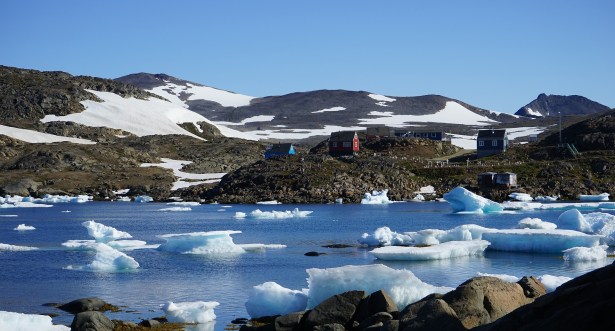
He said he’ll be home when the ice breaks.

And every day she waited, one baby tugging at her skirts and another growing restless under her heart, and tried to not look at the field of crosses planted right outside her window. Reminders of the many who the frigid sea or dark winters or the loneliness of this place at end of the world had claimed.

Some days she hated Greenland. The endless nights. The gnawing cold. The monotony of the same few faces and the bickering that eventually picked open old scabs and gauged new hurts for the next arctic dark to revisit.

Other times she couldn’t fathom living any other place. Summer’s endless light. The sparkle on the water. Pups, babies, and not-so-babies frolicking. The wide spaces full of breath and warmth that thawed old sorrows into joy. It felt like coming home.

Will he?


For What Pegman Saw: Greenland


The One Place

Photo: Sue Vincent


She ran and wouldn’t stop till she got there.

It didn’t matter that she had a stitch in her side or that something hard in her backpack kept slamming into her ribs or that the lower branches of some trees slapped burning licks against her cheeks.

She would not stop.

At last she saw a glimmering reflection and the slight opening in the dense woods that signaled she was almost there.

Her attention drawn to the sight ahead, she missed a crawler root and fell hard. She lay there, the breath knocked out of her and pain coursing through her body where it hit the ground. A gnarly stump poked out of the earth not two inches from her eye. It would have done real damage.

She was almost too miserable to care but her eyes still filled with tears. For the pain. For the helplessness. For the exhaustion. For so much more she could not find the words for and couldn’t afford to. Not yet.

She had to get up or she’d never move again. The backpack pressed heavy against her and she couldn’t help but remember other weight pinning her down. Unwelcome. Uninvited. More tears sprung. Then sobs that came from someplace between her diaphragm and belly button and competed with the stitch already jabbing through her chest. It was too much. It had all been. Too much.

Finally, after what seemed a decade, her breath calmed and she found strength to push up to her elbows, then her knees, then up to lean against a tree and shift her weight gingerly onto each leg.

Nothing broken. Or nothing broken that would prevent her from getting there. Her elbow throbbed and she was bleeding from scratches on her face and a badly skinned palm. There would be more abrasions underneath her pants where a tear bloomed red at the knee. But she was up, and some burden had lifted in the crying, even if it left her heart hollow with sorrow and echoing with despair.

She filled her lungs with a long breath and a tardy sob escaped to join the others but then her body shuddered one last time and she steadied.

She walked on. Not running now, just dogged determination.

The forest peeled away to reveal the clearing. The pond glowed and the purple light remained as she’d remembered. Lush greens licked the muddy banks and a clump of cattails whispered in an almost nonexistent breeze. The tree, too, was still there, just as it had been before: it’s bark missing in places, it’s silvery leaves rustling as the very breath of the place coursed through it from root to leafy tip.

“I’ve come back,” she breathed, and touched her scraped palm to the exposed trunk. Skin to blood to skin.

An echo filled her chest and she knew it knew her, and the relief made the jagged hole in the center of her self heal some.

This was the one place she never felt completely alone in.

She’d last left it thinking that her old life would not chase her to the new, and she had tried – for longer than she thought she could endure – to pretend that she no longer longed for what she had believed in and had given up. She could give it up no more.

“Will you help me?” she whispered. “I’d forgotten how.”

And the tree rustled and a ripple ran across the water and into her core, and her body softened so completely that she slid to sit leaning against the trunk. Welcomed. Invited. Warmed.

She’ll sleep. And she will dream. And she will wake to find the way back to herself. To her true realm in her rightful time.


For Sue’s WritePhoto prompt


Unabashed Bash

red-velvet-cake-3960016_1920

Photo: Fawaz Sharif


She would not apologize for throwing a party to celebrate her last menstruation.

“Oh, but I will have a bash, if only to bash the preconceived notion that we women have any reason to be bashful about our body’s machinations,” she declared when her husband paled at the idea and her sons bloomed into a matching shade of pink.

“We gals bleed for a good chunk of our lives,” she pressed on, ignoring the slight green hue that crept onto her sons’ faces. “It is the blood of life, the blood of disappointment, or relief, or missed opportunity … but it is our blood, made by our bodies and relinquished so new lining can accept a future product of intercourse.”

“Mom …” her eldest groaned, but she silenced him with one of her ‘looks’ and glared a warning at her youngest, who appeared ready to chorus. At seventeen and sixteen they had squirmed through several variations of “the talk” in their lives, and would survive this one, too. Especially as they were old enough to be instrumental in causing a female’s monthly cycle to not cycle … If they were capable of ravishing girls’ bodies with more than their eyes, they should be able to stomach the realities of what girls’ bodies are capable of, as well as what women both endure and celebrate.

“I’m not going to force you to be here for the party,” she clarified. The vivid relief on all three of her menfolk’s faces was hilarious even if she couldn’t help being somewhat insulted. “What I will not do is lie about what this party is for.”

Her body had reached a milestone, and she wasn’t going to pretend it was nothing worth a mention. Not when the two young men (and the one which had preceded them but never made it through to birthing) were proof of the very miracles that female bodies – like her own – had been capable of till now. This called for proper celebration.

She rummaged in her bag and pulled out a scribbled-on napkin. “Let’s see. I’ve made a list. There will be invitations, perhaps shaped like uteri, or like tampons. I hadn’t decided.”

Now that her attention was no longer fully on them, her sons eyed each other and began to beat a slow but determined retreat. She raised an eyebrow in their direction and did not challenge them, but when her husband deigned to follow his offspring, she tapped the seat next to her in more order than invitation.

He sat.

He’d learned long ago that anything to do with “women’s time” was best not argued with or over. He hadn’t the foggiest idea what it would be like to have a period (or be pregnant or lose one or give birth or nurse babies, for that matter), and he wasn’t sure he wanted to have more of an idea of any of it. Certainly not the bloody business, which always gave him the queasy willies. So he kept his mouth shut and nodded at what he thought were appropriate intervals as his wife kept on with her planning monologue.

It did not stop his mind from sending fervent prayers that Carrie or Michelle or Linda, or anyone with double-X chromosomes, and therefore far more suited for such planning, would stop by or call and rescue him from being his wife’s audience.

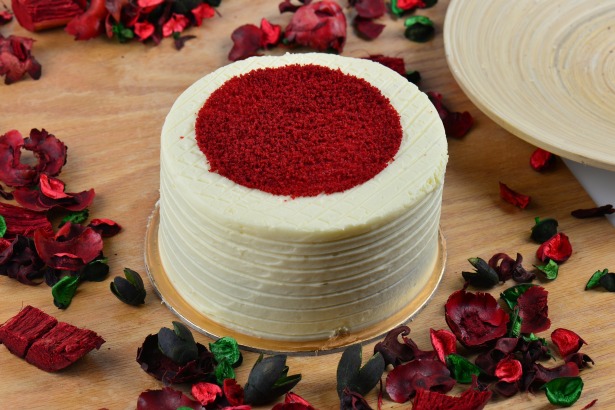
“So,” she enthused, “for the cake? What do you think? Red velvet?”

His favorite. Well, not anymore.

He didn’t think he’d be able to touch the stuff again.


For the SoCS prompt: abash/a bash/bash


Black Friday

Photo prompt: © CEAyr


“We’ll call him Friday,” Emmaline stated.

Roger glanced up. They’d just left the restaurant and he had urgent emails to check. “Call who?”

“Him.” She pointed toward the bike, which was parked across the alleyway between a bush and a wall.

He squinted and frowned simultaneously. Emmaline’s cryptic tendencies were sweet sometimes but annoying most other times.

He saw no one. His frown deepened. A stupid black cat perched on his bike’s seat, fur puffed as if it had just stuck a paw in a socket.

“See?” Emmaline laughed. “He adopted our bike on Black Friday. Let’s call him Friday.”


For Rochelle’s Friday Fictioneers


Ice Maiden

castell-deudraeth-portmeirion-wales-p

Photo: Castell Deudraeth in Portmeirion, Wales


“My room is haunted,” Daria mentioned over toast and jam.

Margaret rolled her eyes and Daria stopped chewing.

Margaret sighed. Vacation or not, her twin was sure to find drama someplace.

“Honest, M! Something kept whispering ‘Aber Iâ’. What does that even mean?”

“Ice haven, Miss,” their waitress manifested with more tea, Welsh rolling heavy on her tongue, “also, glacial estuary.”

“And?” Daria pressed.

“There used to be a mansion on these grounds, Miss. In the 1700s. Was called ‘Aber Iâ’.”

“See?” Margaret looked pointedly at her sister. “You must’ve heard someone say it and it stuck in your mind.”

“Someone said it in my room!” Daria insisted. “All night!”

The waitress shifted uneasily. “What room are you in, Miss?”

Margaret glared.

“Might be the bwbach, see?” the young woman fiddled with her apron. “She can be restless sometimes but she’s never done no one any harm.”


Trivia:

  • bwbach — ghost or phantom in Welsh
  • Aber Iâ — Ice Haven or Glacial Estuary in Welsh. Also the name of an old mansion that used to stand on the grounds of what is now Castell Deudraeth, a hotel in Portmeirion Village, Wales.


For What Pegman Saw: Portmeirion Village, Wales


The Key

Photo Credit: Sue Vincent


Practically everyone but the real-estate agent had been against him purchasing the place.

“That heap of rot is a death trap,” his friend Tomas had said.

“It is haunted,” Fran had shuddered. “You’ll get murdered in your sleep and become another ghost, just like them.”

Others hadn’t been much subtler:

“The place is a wreck!”

“This monster will eat up all your money and spit you out broke and homeless.”

“Are you out of your effing mind?”

“Gosh, Dude, you need a shrink!”

To be fair, the last two statements were probably true. … Not that this stopped him from finding ways to manage all these years without a shrink. Not that there weren’t times during the first year in the house, when the old thing seemed intent on falling about his ears and his bank account skied a Black Diamond toward zero, when he didn’t wonder whether his mental health was sliding south just as precipitously.

But he’d held on to his bootstraps and soldiered on. In part to not lose face but mostly because he had indeed sank so much of his limited assets into the house that there was no way out but through. He gave up his rental apartment in town and erected a tent in the middle of the mansion’s living room where the roof leaked the least. He uncovered the well and hauled out buckets of muck before clean water once more found purchase. He cleared paths through the overgrown hedges and the man-height weeds that overtook what had been a lawn around the house. He scraped moss and mold off of stone walls. He evicted pigeons, rats, squirrels, countless spiders, and a skunk that made sure her discontent lingered. He discovered woodwork under paint, a carved gate under briars, a clubfoot tub under rubble, and a door to a hidden passageway behind a rotting cabinet.

Here and there a friend would agree to help with this or that, and twice he’d hired someone with engine-muscle to lug out things that needed more than human-power. But most his friends couldn’t help (and some refused to ‘enable’ what they declared an insanity), and hiring anyone ate big bites out of a budget that wasn’t hefty to begin with. So he buckled down and did much of the work himself, making small but steady dents in a mountain he did not think would ever yield to order. The list of things left to do only kept growing: parts of the roof needed repair, the kitchen floor needed replacing, the electric lines were too ancient to hold power, the pipes leaked, and the sewers were more roots than flow. The work was Sisyphean.

And still … between moments of sheer desolation and utter despair, he realized that he was actually sleeping soundly for the first time in his life. A smile would sneak onto his lips as he sanded this or patched up that or cleared another mess of spider webs or thickets. He hummed an ear-worm for a whole weekend and no one shushed him for not being able to carry a tune.

It was as if he’d accepted the house and its flaws, and the house in return had accepted him. He felt happy. He felt at home.

The realization stunned him.

Though he wouldn’t have been able to articulate it at the time, he came to understand that the reason he had been drawn to purchasing a run-down estate with overgrown grounds in the middle of a god-forsaken forest, was in part because of memories of another building surrounded by a tall stone fence: the “Home” that never truly was one and yet had been the only model he’d had.

He’d accumulated more moments of abject misery in the “Home” than he ever wanted to recall. Countless nights yearning to be old enough to leave … even as he’d feared the day he would be made to do so.

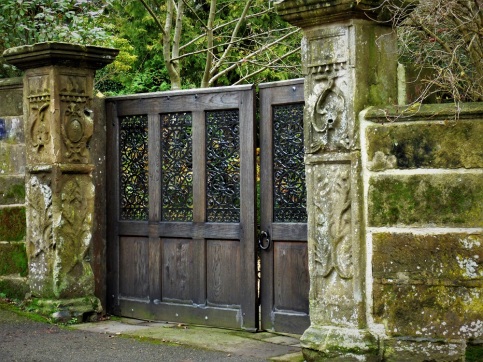
This long-neglected house with its aged stone fence and beautiful wide gate, was his. No one could tell him he’d aged out and could not stay. No one could tell him that his bed is needed to make room for someone else, or that it was time for him to fend for himself and no longer rely on the charity of others to feed and clothe and put a roof over his head.

It didn’t matter that the repairs would take years and that most of the rooms would not be usable for just as long. It didn’t matter that he didn’t have a clear plan for what he’d use all these rooms for. What mattered was that this old place was real. That it was full of history and memory. That it stood firm onto the ground and offered to be the roots he’d otherwise have no way to lay claim to. This house was him. Healing it was the key to who he could become.


For Sue Vincent’s Write Photo prompt invitation


Merry-Go-Round

Photo prompt © Jean L. Hays


“Used to be a zoo,” Ol’ Joe stuffed his cheek full of chewing tobacco. No frowning from Mama could make him give it up.

I gazed at the empty parking lot. We kept the market open by sheer willpower and another mortgage.

Mama often argued it was money down the drain, but Pops would shake his head. “History is a merry-go-round, Penny. It’ll come back. We just have to hang in there a little longer.”

Then the two of them would look at Ol’ Joe, and I knew: closing the business would kill him. Grandpop’s life was tied into Route 66.


For Rochelle’s Friday Fictioneers


The Perfect Shoes

20190224Photo Courtesy of Susan Spaulding


She came across them at the thrift store, squashed in a box along with moth-eaten scarves, a pair of slacks with holes that could tell many stories, two helplessly dented hats, and some fabric scraps.

She was about to lift a shoe to ask about the price when the proprietor glanced in her direction. “Those are by the box,” he drawled. “Take it or leave it. No picking.”

“How much?” She swished her hand inside the box and shrugged, worrying he’d overcharge her if he detected interest.

“Thirty.”

Her eyebrows hiked up on their own accord. The shoes alone were worth ten times as much.

“Twenty, final offer,” he misinterpreted her gesture.

She gazed into nearby containers till her thrumming heart settled down and she could pour something less jello-like into her legs.

“I’ll take it.”

She carried the box to the car fully expecting to hear the shopkeeper’s voice calling her back to point out a mistake. No call came.

Finally at home, she rescued the shoes, stuffed them with tissue-paper, and placed them reverently under Great-Great-Grandma’s bridal gown. Family lore was that she’d had big feet and had to wear men’s shoes. Those were a perfect match.


For Susan’s Sunday Photo Fiction