Window Washing

Photo prompt @ A. Noni Mouse


Her husband thought she loved to cook, which she did, but not exactly. He thought she liked the cleaning up after, which she did not, or not for the reasons he believed.

She didn’t correct him. It worked right fine for her that he would sigh contentedly after they had finished eating, and then transfer his happy belly to the den to read the paper or watch some TV.

Washing up gave her the perfect place.

Her neighbor, body glistening, exercising in the room he’d made into a gym, its window facing her sink.

She thought of it as dessert.


For Rochelle’s Friday Fictioneers


Ruby Rudder

cosmin-serban-PUPVs0bIU3I-unsplash

Photo: Cosmin Serban on Unsplash


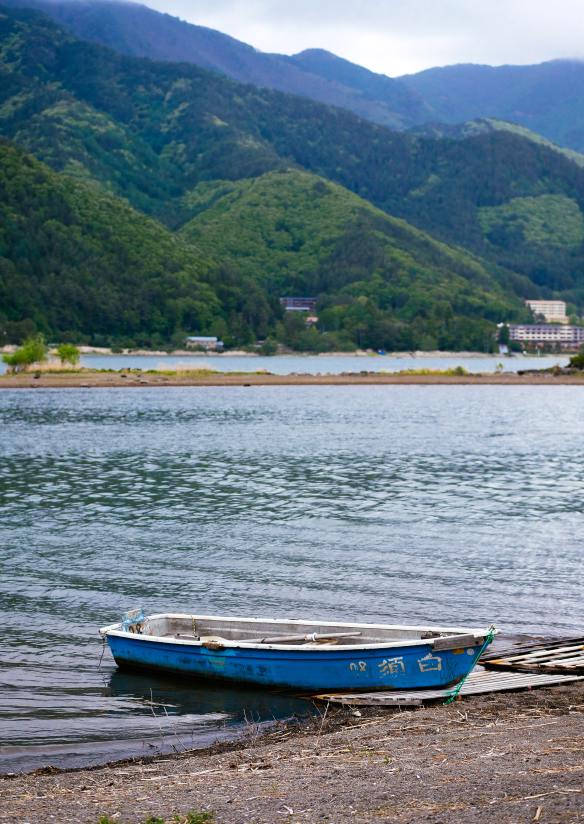
The boat was old and holey, but that did not matter. They never intended for it to be sea-worthy. Haruto didn’t like to get his feet wet, and Miyu had seen enough leave for the waves who did not return. Neither one of them had a hankering for sea-sickness or for gutting fish or for seaweed tangling the rudder and weighing down the nets.

They had a different goal instead.

The neighbors raised collective eyebrows when the couple hauled the vessel, hull protruding in the air, baring barnacles and showcasing slime.

Haruto and Miyu just nodded, plopped the boat against the workshop’s wall, and disappeared into it without a word of explanation.

They didn’t owe it to anyone and they didn’t know how well the end result would be. Better to keep mum until they saw for themselves how well the idea translated from a dream to action. And the neighbors’ bafflement was fun.

For days they sawed and sparked and banged and nailed. One morning the boat got swallowed by the workshop with only a small bit of the aft sticking out. The next day it was the other end. The smell of primer and varnish and paint permeated the air.

The neighbors mused and wondered. A few doors down the street, Mrs. Adachi placed bets with Mr. Chinen.

Holes were dug in the backyard. A mixture was poured. Poles wedged in.

Mrs. Adachi’s bet went up. Mr. Chinen raised his.

Then one early morning there was a new commotion. Ropes and pulleys, a few curses, far too many bangs.

The neighbors came out. Offered a hand.

By the time breakfast was ready, the boat was securely perched like an awning over a diamond of poles. A hammock strung below, shaded but for a dapple of golden strips of sun. The rudder, painted ruby, pointed to the stars.

And for the next year, Mrs. Adachi was going to have the benefit of Mr. Chinen washing her car. …


For RDP Tuesday: Ruby


Nailed It

stable-door CrispinaKemp

Photo: Crispina Kemp


He could never abide a wiggle.

Not a wriggle. Not a waver. Not the smallest bit of leeway.

Give an inch they’ll want a mile. He was one for nipping any jiggle in the bud.

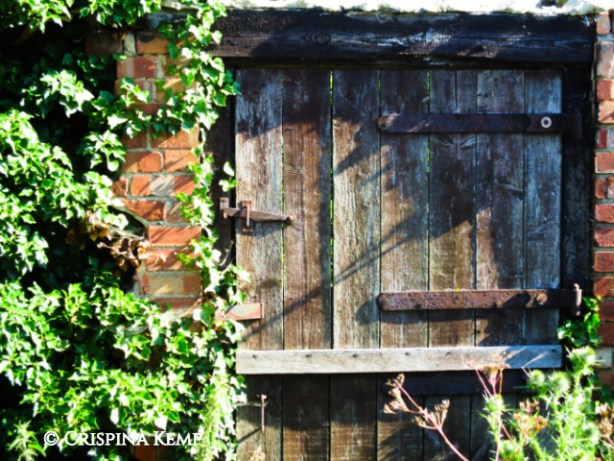
Sure, the place was old, but it was built a-sturdy, and it stood the test of time. A war. A drought. A famine. Years could lend a touch of wrinkle, but that was no excuse for creaky hinges or a swinging that was anything but right.

Doors should no more need replacing than the people who had built them. Neither ought be done away with when they’re ripe.

So at the very start of wobbling, he cut a bar to measure, took the hammer and the odd-and-ends crate, and firmly nailed the wood across the geriatric slats.

Not unlike the way the surgeon had patched his hip and clinched his femur on to that.


For Crispina’s Crimson’s Creative Challenge


The Longest Walk

Photo: Sue Vincent


She rose with the sun, her brow still damp with the essence of dream. Soon enough her feet were, too, from dew and from the small drops of silence that mornings bring.

There was little to say, and much space to accompany.

It was a good day.

It had to be.

There will be time much later on, for all the things she might still need, and all the words she may still say, and all the sorrows she no longer wished to borrow.

In the meanwhile, she walked on, crushing dandelions, breathing lavender.

The fields stretched ahead as the disc of light leaned hot against the sky. The air shimmered, dancing in the sun.

Or wavering.

It would not matter, in the long run.

She walked on.

Eventually she’d have to turn around, retrace her steps, return into the pace of tending, bending, sending, lending, fending.

And it would still be a good day.

For the dawn poured the generous morn into her, washing her, filling her, scenting her soul. Step by breath by step by breath, immersed into the longest walk her present moment could recall.


For Sue Vincent’s WritePhoto


Explained

izabelle-acheson-G4zLsxLIpAA-unsplash

Photo: Izabelle Acheson on Unsplash


She will not elucidate.

She won’t expound.

She won’t make plain.

There is, in her view, absolutely

Nothing she needs to

Explain.


There is the plate.

There are the cookies.

There was her mouth to entertain.

So, what does any of that

Have to do with dinner

Or with waiting for dessert

Again?


For RDP Tuesday: Explain


Her Reflection

silver-1 SueVincent

Photo: Sue Vincent


She walks along the dunes. There had been very little time away from others. So very few opportunities to be alone. She needs this more than air.

Morris agreed to keep an eye on the children. They were not enthused.

“He’s boring, Mama!” Ethan complained.

“Yeah, and his breath smells!” Lilly pouted.

“You don’t have to kiss him,” she replied. “And if you are bored, I can leave you some chores.”

They skulked away, displeased, but there was nothing for it, grumpy neighbor-as-babysitter or not. She knew she was becoming increasingly impatient. She did not want to cross the line into unkind.

It wasn’t their fault that Paul left. It wasn’t their doing that their dad did not see fit to shoulder any responsibility. She knew they missed him. He didn’t even think of calling on their birthdays. She knew Ethan cried for his dad in his sleep.

She almost took them with her to the dunes. Almost made it a family outing. Lilly loved running in the sand. Ethan’s eyes always lit up at the space. Like her, he loved the breeze and silence.

But she could not. Not this time.

This time she needed to replenish. For herself. For them. They needed a sane mother. She was running low on how.


She walks and breathes and ruminates and lets the worries and the sorrows stream out and flow down her cheeks and neck and chest till they evaporate.

There was a time she had hoped to have a house on the dunes. There was a time she had a dream of living in the solitary calm of gulls and tides and estuaries.

It wasn’t that she regretted having the children (marriage was a whole other story, given what non-partner Paul turned to be). She did not. Not once. She couldn’t imagine her life without them. Just for this morning, though … she needed to let be a part of herself that did not have them in its center.

She walks as if in daydream. The light shimmers and the estuary glints silver in the shrinking distance. It gives her peace. A reminder of how every stagnant-looking pool may in fact be only a pause in flow.


For Sue Vincent’s WritePhoto challenge


In Their Skin

keith-luke-dKe9GgzS8Ek-unsplash

Photo: Keith Luke on Unsplash


Eons had passed

Since when they had

Their skins

Stolen

By man.


They learned to love

The life they had

Yet dreams

Cried hope

Aground.


Till secrets told

By men at night

Got heard

And sang

Around.


And off they went

The selkie all

Safe in

Their skin,

Unbound.


For the dVerse poetry challenge: Selkie


Eventually

Photo: Sue Vincent


He spent the day lying in the field. Waiting.

Eventually someone would miss him, or wonder about how come he is so late.

Eventually they will think of sending someone to check.

For the moment, all he could do was gaze up at the skies, his leg in an angle that no leg should be in, and his breath curtailed to the smallest gasps as to limit the stabbing pain that traveled through him – like a snake’s bite and a red-hot poker combined – if his lungs filled up enough to move the lower part of his torso. He’d never been more acutely aware of how all joints connect.

A marvel, really.

And a pain.

He almost laughed at his own joke only to remember the infinite well of torture that he’s been finding over the hours he’d been this way. There was no bottom. Only crests of agony he could know and not know of, ride and fall off of, let be and let go.

In the first hour after it happened he’d been angry at himself for the stupidity of attempting to leverage boulders that should not be attempted solo. The stick, not sturdy as he’d hoped, snapped in half, sending him to the ground in an way he could not reconstruct for the blinding nausea of torment that had ensued. He didn’t know what part of his leg it was that broke, or not exactly. Raising his head even just a little led to the world spinning and a blackness closing in, and not only from the clouds that seemed to gather.

He wasn’t angry anymore. There was nothing left in him to spare on blame.

The grayness above grew heavy. It would not be long before the rain.

He’d be miserable in the muddy wet.

It would also bring people faster. They would not expect him to misread the weather. They’ll question. They’ll come.

A drop tickled his nose and he suppressed a sneeze, almost crying with desperation to avoid more pain.

A call sounded, and for a fraction of a second his heart soared. But in the next, awareness filled in: it was not a human’s.

He opened his eyes to a quartet of geese flying overhead. Wings flapping asynchronously against a rising wind.

“Fly safe,” he mouthed, eyes overflowing with misery in spite of himself. They could move. He was jealous. He was helplessly alone.

More drops fell. Tears or rain, it did not matter.

He held on to the imprint of the silhouettes against the spitting heavens.

Soon, his family will realize he hadn’t come home. Soon they’ll wonder about it enough to worry where he was. They’ll send someone.

For the moment, all he could do was breathe, and hold in all the sobs, and let the pain wash over him like rainfall.


For Sue Vincent’s WritePhoto