Radiance

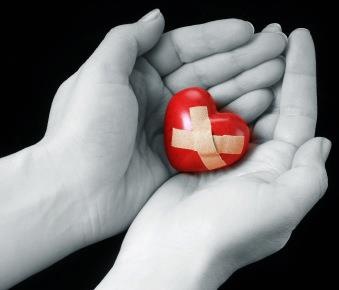
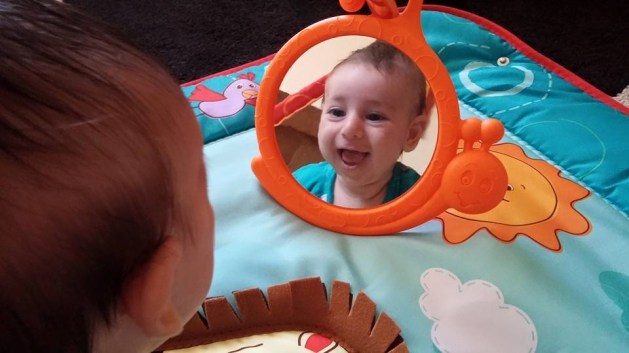
She lights up every room with her smile.

He effervescents joy in a dimple.

She casts love spells all around her.

He melts everyone to a puddle.

She makes your heart sing.

He ropes your soul in.

Their laughter makes right

Glow full bright

From a fizzle.

Their giggles shine rainbows

On sorrow

And drizzle.

They heal hope.

Luminesce peace.

They remind why it matters

We take care

To Insist.

(All photos from Pinterest)

For The Daily Post

Catapult Care

hands-and-heart

When terror strikes … All blast of cowardice, in a bluster of dark soul, empty of faith or humanity: Catapult care, not hate. Hold kindness, not panic. Seek healing, not division.

Those who attack children, who aim to maim, to kill, to harm – they aren’t powerful. Their hatred makes them weak. They hold no values. They rob the lives of others in pretense of strength. Their hate exposes the emptiness of anything they pretend to care for.

The ones who celebrate the terror’s aftermath (and sadly some do seek to) are no better. They broadcast their own weakness by aiming to amplify panic. Their words become a badge of a spirit blighted, a heart polluted, a mind infected. With hate.

Let us know it for what it is … but let us not spread it further.
Terror thrives on helplessness and violence. It feeds on panic. It seeks the refuse of division. Those are its only currencies.

But we have better ones. We have real powers.
Let us celebrate and amplify: The energies of care, healing, and kindness; the strength that comes from sharing burdens; the forces of compassion and empathy. These are the nullifying opposites of harm and violence.

Let us come together, so all those hurt and hurting be held in the light, empowered by love, supported by healing. Let us hold up the true might of humanity.

Terror cannot prevail in light, for it skulks in darkness.
It cannot prevail in courage, for it lacks it.
It cannot prevail in care, for it has none.

But we do.
And we can.
Prevail.

My love and thoughts to all in the UK, and the victims of terror everywhere. May the last breath of terror.
Soon be vanquished
Into light.
Amen.


For The Daily Post

A Way Out

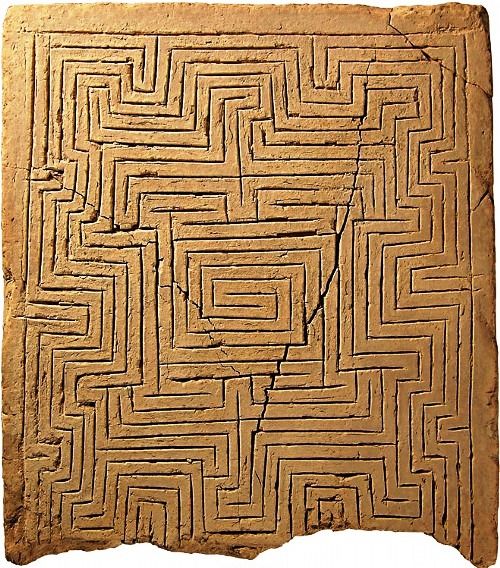
Clay Tablet Babylon Ca. 2000-1700 BC

Clay Tablet Babylon (Ca. 2000-1700 BC); SCHOYENCOLLECTION.com


“I just get lost,” she sighed. Her pre-teen face was creased with dejection.

Schoolwork is hard for her. She tries but often fails to live up not only to the expectations of her school, but also – and harder still – to her own views of perfection. She begins. Gives up. Procrastinates. Misses deadlines. Then needs to make-up what she had delayed as well as keep up with current assignments. School is a merry-go-round of stress and frustration.

“Lost how?” I prompted. Not only did I want to understand more about what she’d meant (rather than assume I knew it), but one of the things we’d been working on is expanding her ability to narrate her feelings and perceptions, explain and communicate her needs.

She glanced at me, not quite in irritation, but almost.

“I’m not being tricky,” I smiled. “I really want to understand.”

“Fine,” she sighed again. Her brow furrowed as she thought, and she reached over to the pad of paper that rested on the desk between us. Doodling can sometimes help make paths for words.

She scribbled for a moment, then her breath deepened and she flipped to a new page on the pad. “It’s like this,” she said.

She drew a labyrinthine squiggle that turned several times onto itself. Added another squiggle that sprouted from it, then another, and another. Sketched a stick figure at one end of the criss-crossed creation  and a bulls-eye at the other. Looked up at me to see if I’m still paying attention.

Very much so. I smiled encouragement.

“I have stuff to do and I think I know how, but I start doing it and then I get stuck,” she moved her finger over the squiggle till it ‘hit a wall.’ “So I go back, and I try another way … and I get stuck again,” her finger slid on top of the paper to another dead-end.

She looked up again. Her eyes were bright.

“So I get lost …” she swiveled her finger around the squiggly lines in a half-aimless, half-frantic manner. “It’s too hard. I give up.”

“I hear you. I really do.” I nodded, lifted my pen, and drew another squiggle around hers, connecting the pencil figure with the bulls-eye. “We need to find a better way. A way without a maze.”


For The Daily Post

You Better!

rainy day


He came up the stairs, looking like a cross between a drowned kitten and a frog: wet hair, clinging shirt, useless green umbrella and matching boots (with sloshy feet inside).

I smiled at him. He sighed.

“Yeah, I know,” he said, “I better …”

His father nodded.

Coded language.

I’ve heard it before.

“You better come right now!” “You better sit down quietly!” “You better not hit your brother!” “You better listen to the babysitter!” “You better not forget your homework again!” “You better not get this floor wet …”

You better? Better how?

More like “your life will be much worse, unless …”

I swallowed my own sigh. I don’t abide much by the “you better” style of communication. The dad was probably parroting the coded-directions of his own upbringing, spurred by habit, rigid expectation, his own fatigue.

“Looks like you two got caught in the downpour,” I smiled, took their umbrellas, and offered towels, a mat to put their footwear on, a plastic bag for wet things, a pair of dry socks for the boy. The minutia of a rainy day.

“He kept goofing around,” the dad grumbled. He pointed at the drenched boy in accusation, though he was only marginally less wet than his son (and had a bigger umbrella!). The father patted his arms dry, patted his son’s hair. He seemed embarrassed and glared at the errant rain drops on the floor as if they were proof of his son’s weathery misdemeanor.

“I ran because I didn’t want to get wet!” the boy retorted, eyes glistening.

“Sometimes there’s not much one can do to stay dry,” I soothed, and lifted the bag of extra child-size socks to emphasize my point. “It is raining hard and it is windy, too, so the umbrella probably can’t do much. I’d gotten soaked. Had to change.” I pointed at my clothing. “Not what I had on earlier.”

The boy threw a vindicated glance toward his dad.

“You better not give me any sass,” the parent reflexed.

The boy’s face darkened.

“You know what I think is better?” I interjected. “For all of us to come sit down and get dry and comfy …” I gestured toward the couch for the father to sit on, for the boy to take his seat by the table.

I wondered if the father was aware of just how alike his own expression was to the boy’s: a mix of combative, deferential, dejected and relieved.

The rest of the session went smoothly. By the end of it, the boy’s curls bounced back right along with his spirits. His dad’s mood improved, too, nourished in equal parts by the rain easing and the nap he’d managed to sneak in while his son and I worked.

They left calmly enough, but I’ll have to make time to speak with the parent. We spoke before on things that need discussing not in the child’s presence. I know the father means well. He’d told me he hadn’t had a close relationship with his parents. He had grown up with the threat (and frequent bite) of a switch, and he’d vowed to not repeat it. He does not raise a hand to the boy. This father wants better – the real better, not the threatened one – for his son. He’d told me he wishes for his son to be able to come to him with anything, interests or worries. Yet for now this parent’s very way of communicating stifles the possibility. He gets tripped by his own memories of what parental language ‘should be’ like. Maybe he knows no other way to exert control over a growing and often opinionated boy.

We’ll have a talk. The dad and I.

I know he wants better for the both of them.

“You better” is hardly is the better way.


For The Daily Post

Panic’s Anti-Dote

anti-dote

photo: dreamaker2.tumblr.com


There’s scare aplenty

Wide cause for alarm

A lot to frown at

Much that charters harm.

No wonder

Panic comes.

Trepidation pushes buttons of old worries

Latches through the tentacles

Of history

And ill-used charm.

It glitters daggers

Into

Masquerading stars and sun.

No wonder

Panic comes.

And yet …

Be brave

Stand firm

Lock arms

Form links

Knit facts

Raise voice

Weave hope

As panic’s anti-dote.


For The Daily Post

Empty

(Dedicated with love to the children who survived, and to those who couldn’t.)

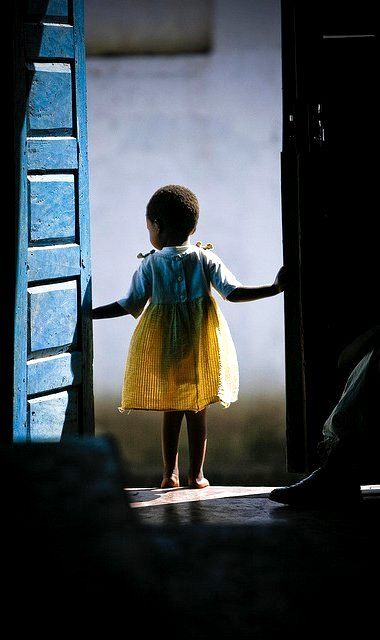
Luchenza Orphanage by photocillin on Flickr

Orphanage by photocillin on Flickr


There were no toys. There were no hugs.

There were no hands to pat wet eyes.

There were no smiles. There were no songs.

There were no calming lullabies.

There were long nights. There were cold days.

There were no comforts when one cried.

There was just time.

Immense.

Indefinite.

There was just fear.

Impervious.

Infectious.

There were blank stares.

A deafening silence.

There were human metronomes

Rocking in desperate absence.


There were no words.

There still aren’t any.

Just threads of heart

To weave the splintered

Into many.


For The Daily Post

The Blanket

diaryofaquilter

photo: diaryofaquilter.com


He took it with him everywhere: School, the doctor’s office, the park, the car, the dinner table. He carried it in hand, in the backpack, over his shoulder. It was to him a cape, a comfort, a memory of tucking in, a constancy.

It’s always been there. He couldn’t remember a time before.

Well-worn, oft-washed, much-handled.

His blanket.

Never out of sight.

He’d sit before the washing machine and watch it spinning, floppy, in a foamy sea. Later he’d guard the dryer as the blanket tumbled, already impatient to come back warm and scented into his arms.

He’d place it at the ready on the bathroom stepstool to guard him as he washed. A sentinel over his pajamas.

It waited right under the chair at mealtime, in temporary exile from his lap after his argument that the blanket could make an excellent napkin had failed.

Even at school, where he wasn’t allowed to hold it, he’d leave a small blanket-ear peeking out of his cubby; to remind him it was there, with him, waiting for the end of the school-day.

It was a coat of heart, a shroud of courage, a cover against storms of any kind.

It was almost part of him. His blanket.

Then the fire came. He was carried half-in-sleep and heavy-headed, by a man whose giant shadow painted wall-monsters against the orange flicker and the swirling smoke.

There was more flicker outside: blue and red and white and blinding. Shouts and calls and creaks and cries and movement. Yellow coats, red truck, bright door, funny mask.

And no blanket.

It was gone. To Blanket Heaven.

A spark in the sky now. A spot of cloud. A star.

Lost along with Curious George and Teddy Ben and his dinosaur car.


For The Daily Post


Do Not Be Silenced

The Childrens Holocaust Memorial Yad Vashem
The Children’s Memorial, Yad Vashem


In remembrance of times

Of horror

Never to repeat

Never to minimize:

Do not shy

Of voice

Do not shy

Of fact

Do not shy

Of holding truth

To challenge

Those who in their blindness,

In their hunger to cause pain,

Seek to deny

The cost of hate

The force of harm

The voice of those who had been silenced.

Do not be silenced.

Be brave.

Walk tall.

Remember:

Those who seek to silence

To zip history closed

To limit learning,

Can only do so

If they make you forget

The truth

Entrusted to you — to all of us —

By those who’d perished

And those who’d managed

To survive.


For The Daily Post


Small Fry

Children phototechnique.com

They may be small

They may be young

They may often get taken, transferred, pushed around.

They may get little voice

About things that affect their lives.

They may have few actual ways

To keep alive.

Their views may be ignored

Laughed at

Minimized.

Their needs may all too often be relegated

To agendas others have.

But small as they are, they are mighty

They are brave of soul

And heart.

They hold opinions

Dreams

Ideas

Insights.

Our care makes all the difference

To the future

That they hold

Inside.

For The Daily Post