Ancient Crush

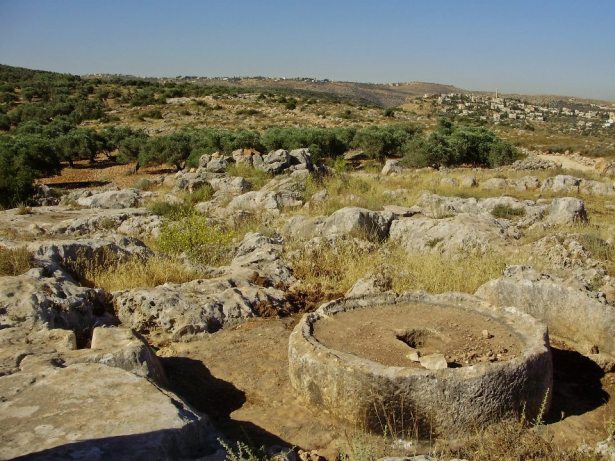
Yam lower stone for crushing olives AmitaiAsif

Photo: Amitai Asif


You’ve seen nations

Rise

And fall,

Felt oil

Extracted

From trees’ toil.

You’ve seen

The farmers

Tend the soil,

Bread dipped

To nourish

Heart and soul,

As children laughed

And played

And lived

And died

Through centuries of

War and spoil,

While you remained

Above the boil,

Till peace returns

For olives’ roil.


Note: The photo is of an ancient base stone (called “Yam” in Hebrew) of the grinding stones that are used for the first step of extracting oil from olives. A current-day olive grove can be seen in the background to the left. Olives were first domesticated about 6,000 years ago, likely in the Mediterranean basin. Documented history of deliberate oil pressing can be found as early as 4,500 years ago (around 2,500BCE).

To this day, making olive oil involves several stages of crushing and rinsing to extract the oil. In many places, olives are still harvested by hand or by beating the fruit off of the trees. The olives are then washed, and crushed by milling stones (traditionally between a bottom stone like the one in the photo and one or two mill stone that stand perpendicular to it and roll around the base stone). The millstone/s were historically moved by use of man-power or animal power, and in some places still are. The pulp is placed in woven bags or baskets, then the baskets themselves are pressed. The liquid from the press bags gets drawn into a reservoir where oil is left to settle and separate. Oil is then skimmed off and allowed to settle again, sometimes repeatedly, to remove impurities.


For the Tuesday Photo Challenge: Ancient


Perpetuity

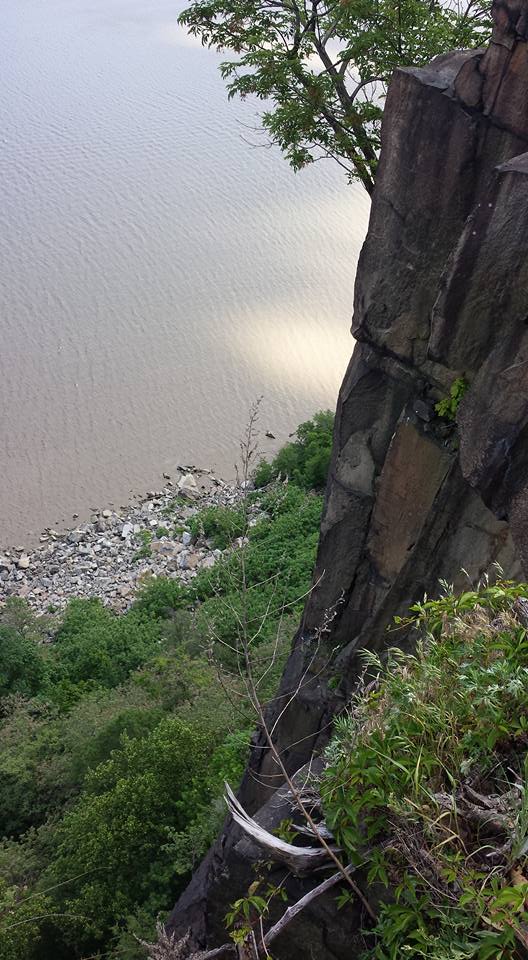
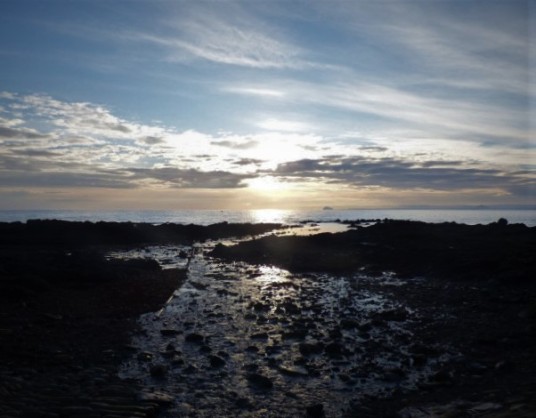
a channel of water flowing out to sea, with the sun reflecting on the water.

Photo: Sue Vincent


“You know,” she said, “this will be home.”

I looked around. Marsh and bog and semi-dry patches that high tide or rain were sure to turn completely water logged. It looked a misery.

“It will, too,” she added, even though I hadn’t said a word. She always knew to read my body’s thoughts, even when I voiced no words and moved not a muscle.

Some days it made me hate her. For my utter lack of privacy.

Other days I felt indebted beyond measure for not having to find ways to explain when words had never been accessible enough to match my thoughts with meaning. And for being seen by her when no one else seemed able to or cared to try.

“Wanna know how?” Fiona pushed a heavy lock of hair off of her eye and I knew then that she already had a plan, and that the plan was sounder than the muddy ground we stood on. I knew that gesture, that flowing move of clear-eyed determination that carried with it more than just a touch of crazy. For neither one of us was sane, but Fiona was nuts enough to get us out of scrapes I did not see a way out of. Somehow my sister, younger by three minutes and wiser by ten decades, thought ahead in moves others did not appear capable of anticipating. It had saved us, more than once, of certain death.

She was about to do so now.

“How?” I asked, though I knew she didn’t need me to.

“Stilts.”

She yanked a twig out of the soggy ground and scratched a diagram into the patch of godforsaken earth in the end of nowhere anybody, that an hour earlier I did not know existed, let alone that it belonged to us by ancestry through crumbling deeds that no one since an ancient relative had made use or taken any heed of.

“They thought the place too wet,” my sister noted as the outline of an elevated house rose like a phoenix from the lines she etched into the dirt. “But not Friar Felix. He saw the same potential that I see. The fish and clams and seaweed. The crabs. The cattails by the spring that makes the stream that gurgles out to the sea. A place to be.”

She glanced up at me and the hazel in her eyes reflected the sun’s rays along with something far older. Like a memory not of hers that nonetheless also held on to our own desperate need for belonging.

“I don’t know if he knew, Finley, but Friar Felix had bequeathed the deed to this land to his sister’s children, and to their children’s children in perpetuity.”

My sister turned her gaze onto the water and her voice dropped to a whisper in the wind.

“We are those children’s children’s children, Finley. This is our home. It will be home. You’ll see.”


For Sue Vincent’s WritePhoto Challenge


At The Window

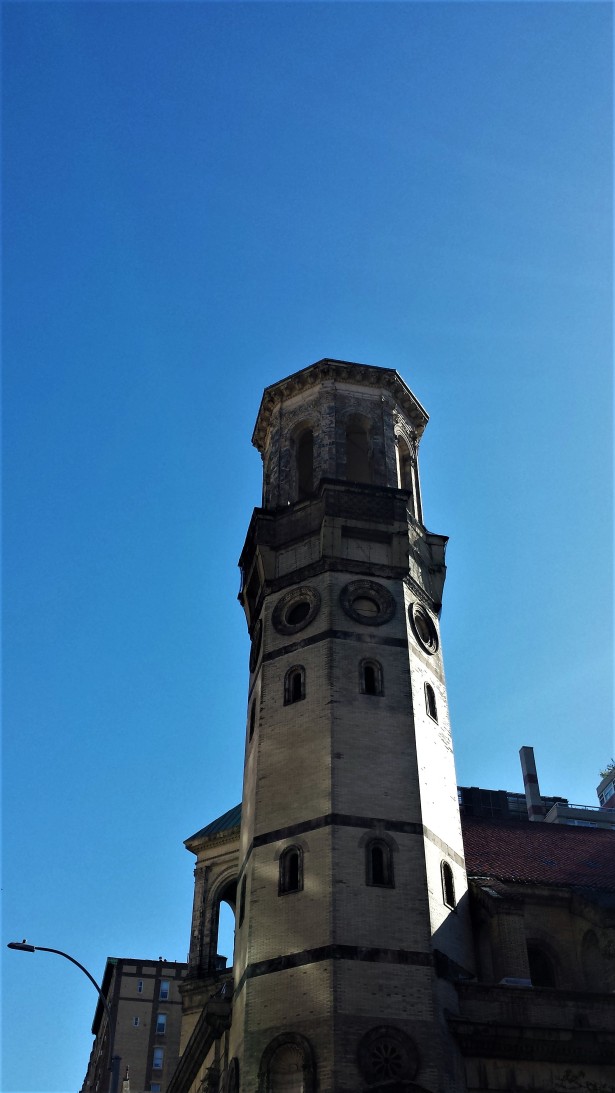
Wacton church window


She’d drag her trunk over every time she was left alone. It did not happen nearly often enough, so she faked head-hurts when her need got too great.

She’d drag the trunk over and place the foot-stool atop it. Gather her skirts and climb to stand precariously on it, balancing on tiptoes.

It was the only way to reach the window.

It was the only way to look out.

The only way to see the fields. The light upon the water in the distant pond. The green or bloom or brown or white of seasons. The birds. The trees. The world outside.

She didn’t know how long she’d have to stay confined to the Women’s Tower. Probably till she was of age to be married off and be conveyed in a shuttered carriage to the Women’s Tower in some other lord’s estate. The curse of her birth.

Highborn girl-children did not go out of doors very often. They did not spend time in the courtyard after infancy and were never unveiled or unaccompanied. Their chastity required they not be seen.

She watched the peasants’ children frolicking. She watched the girls work the fields, herd the geese, chase stray ducklings, spread seed for the hens, milk the goats, cut the hay, grind the wheat, slap cloth against the rocks at the sparkling stream. She could almost feel them breathe, though when she tried to draw breath herself it only let in suffocation. So much so she sometimes did not need to fake a head-hurt after that.

The latticed windows did not open. Two narrow slats near the corners of the tower room did respond to her mother’s lock in fine weather to allow air through cracks barely as wide as her wrist. Not that she was allowed to try and push an arm through them. It would be unseemly.

Still, she tried. Once. The marginal openings met a stone ledge’s resistance after a few inches’ opening.

Protection from invaders and wild-men, she was told.

Guarantee against escape of any kind, she thought.


For Crimson’s Creative Challenge