The Error

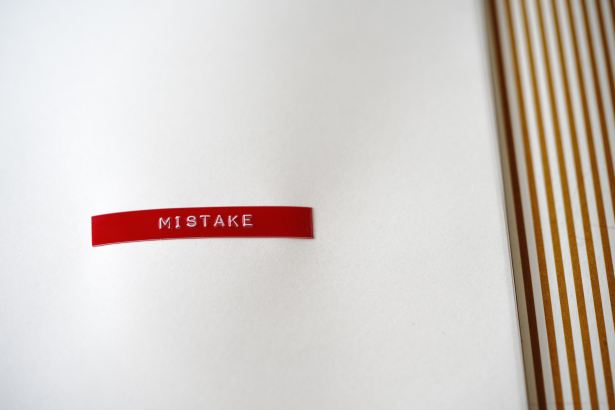
daniela-holzer-u_3rD02dmkw-unsplash

Photo: Daniela Holzer on Unsplash


She hadn’t intended for it to go this way.

She’d taken pains to be intensely selective of what she allowed. She’d researched every step, scoured barely legible ink on faded notes and prepared for every eventuality. She had kept her eyes peeled for any red-flags that should not be ignored.

She was careful.

And yet. There it was. Completely different than intended.

Her error.

She already repeated all the steps and realized her mistake. Her wonderful mistake.

It did not turn out as she’d expected.

It turned out fantastic instead.

She bottled it.

The aromatic error that will become the star perfume of the age.


For the RDP Monday challenge: Aromatic


Good Fortune

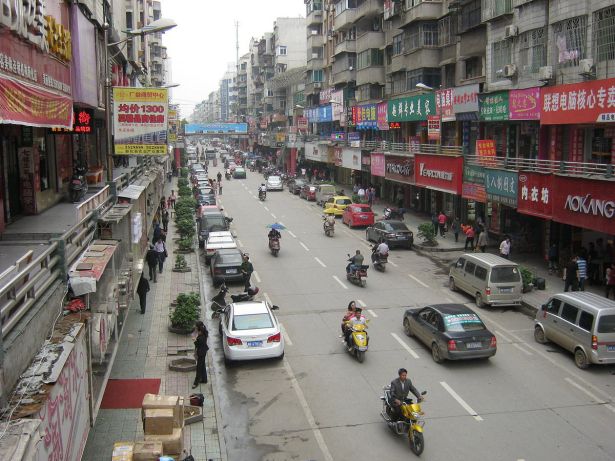
xinhua county wikipedia

Photo: Xinhua County, China (Wikipedia)


It was the busiest time.

His loneliest.

He sought good fortune in small things. Mostly because it was absent from the big ones. There was always some disaster to contend with: illness, sorrow, loss.

He was born unlucky. His mother pushed by the side of the road because he’d come so quickly. He was blamed for his rash emergence. For her illness. For her early death. Blamed in the not-so-subtle ways that used words like blades.

“You always were impatient,” his grandmother would say. “Show too-little respect.”

He knew his grandmother resented his emerging like a peasant in the dirt when she had clawed her way out of the rice-fields. He had no response.

“Be grateful that you have enough to eat,” she’d frown. “Unlucky boy.”

Xinhua offered work. He fled.

The letter said that his grandmother had died.

New Year approached. His good fortune was to spend it alone.


For What Pegman Saw: Xinhua, China


Choosing Dandelions

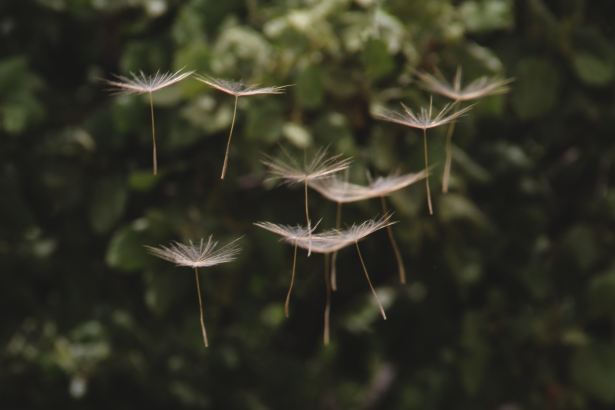
hasan-almasi-BIrL2bdlMa4-unsplash

Photo: Hasan Almasi on Unsplash


I wake and turn my back on the clock and seek the comfort of the dream that is still floating like a bubble, already fragile, above my head. It pops and disappears and there is nothing but a vague sense of something lost. I wanted to go back into it … and yet the choice, when it was made in some subterranean neurological net within my mind, was that sleep was to escape.

The day to unfold.

Still, and throughout the mundane tasks of morning, small search-parties like tentative roots into hard-packed sand, send shoots into my consciousness to try and capture whiffs of the dream. A hope that perhaps a fleeting dandelion seed of recollection will find purchase and regrow a stalk.

A place of in-between. Perhaps a corner of my mind is still in slumber. Perhaps if I find it, I will come across the dream, robust in puffy bubble-hood, still tethered to my insides, waiting to be seen.

Sometimes writing helps.

I have too much to do.

I will ignore.

Will choose to sit and breathe and let my mind and fingers wander where they may, the sands of time, the depths of grief, the dawns of days, the fluttering delights, the warmth of recognition, the sorrows of injustice. Currents of discovery of what’s already there. A sea of tethered bubbles like a field of hot-air balloons, straining at the anchors to let loose.

I wrote of a blimp just the day before.

Was that the origin or the reaction to the imagery of bobbing thoughts and fullness so tangible it turns air into rising power? Was the blimp the source or the reflection of the fragility of any skin if pulled too tight, of the leaking deflation if seams are untended, the world upended as it spirals out of flight?

I write. I breathe.

I look pointedly away from the pink sticky notes and the open documents holding forms awaiting filling for a speaking engagement and another for an upcoming presentation and a list of emails needing a response.

I make a choice.

To chase a dandelion.


For Linda Hill’s SoCS Challenge: Choices


Wait For The Light

Photo prompt: Dale Rogerson


“Can we go to the playground, Mama?”

The woman stroked the small forehead to compose herself and smiled into the over-bright eyes. “It is the middle of the night, Cara.”

“Can I see?”

The woman tucked the blankets under the child and lifted her. The bundle in her arms felt devastatingly like the infant Cara had been a handful of winters ago, and heartbreakingly almost as light again. She turned so her daughter faced the window.

“It’s dark,” the girl sighed. “I’m tired, Mama. Maybe I wait for the light?”

“Yes, Cara,” the mother whispered. “We wait for the light.”


For Rochelle’s Friday Fictioneers


A Visit From Paul

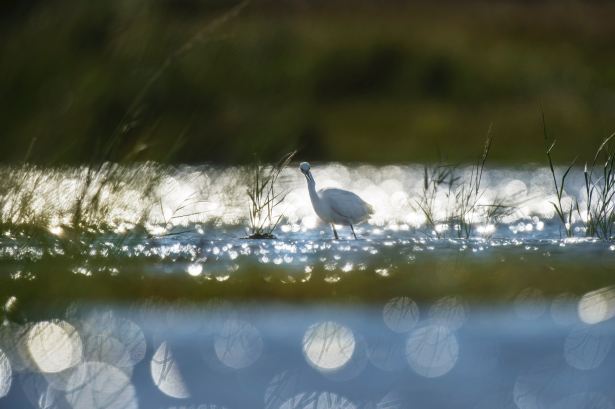
ray-hennessy-d_rIw1hircY-unsplash

Milford, Delaware (Photo: Ray Hennessy on Unsplash)


“He comes to visit,” a man’s voice jarred her out of her reverie.

She’s been watching a waterfowl in the sparkling water. It’s been staring back, she felt.

“The bird?” she turned. The speaker was a frail-looking man who still managed a bearing that stated “military.”

“If it is that.”

She glanced at the crane. The oldster sounded neither confused nor joking.

“Tell me,” she rose to make room on the bench.

The man extended a hand to shake. “Smith. US Navy.”

“Marcia,” she returned.

They used to build ships in Milford, he told her. Built the four-masted Albert F. Paul, too. Launched it from the Abbot shipyard in 1917.

“174 footer, she was,” Smith sighed. “I would’ve been onboard, you see, if I hadn’t been injured. Would’ve gone down with my mates when the Germans torpedoed her in 1942.”

“The fallen seamen,” he lifted his chin toward the bird, “they visit me.”


For What Pegman Saw: Delaware


Darn Yarn

https://crimsonprose.files.wordpress.com/2020/01/alpaca-1.jpg?w=1024&h=682


She never did like thready business.

Yet there she was, darning holes, patching elbows, sewing up dangling hems and chasing runs on stockings.

How did it ever come to that?

She squinted and held the needle to the light.

The story of her life, it was. That squeezing through the eye of the needle. Barely, barely making do. Struggling to fit another stitch before the end of her rope.

It was all wrong.

She tied the knot.

It slipped.

She tied another, hoping it would hold. Hoping that the hidden stitches she put in will keep things covered long enough to soothe the chill that ever lurked, awaiting exposed places.

Existing really should not be so threadbare.

The thin wrap of life, knit together moment by moment in complicated patterns of dropped stitches and messy mistakes.

Will it come together at the end?

She did not know, but she hoped.


For Crispina’s Crimson’s Creative Challenge #63


New Born

Photo: Sue Vincent


He was born on a blustery night to a woman who huddled on the exposed slopes with naught but the protection of three wide backs to block the worst of the wind. The men crouched, arms linked and heads down, their eyes averted from what was taboo to watch, as they hummed the low sounds of incantations meant to shield the woman and babe from the demons and their own ears from the muffled cries.

There was no midwife.

The other woman had died not a full moon prior. It was a bad omen.

There was no spirit-guide. Their leader, too, had died.

Bad omens, all.

There was only the woman, panting desperately in the dark. And the three of them: One of whom in whose hearth she’d grown, one whose hearth she shared, one who’d preceded her in her mother’s womb. And a girl-child of barely eight winters. Pale and shivering and wide-eyed, she knelt before the woman, one hand on the swollen belly, another cradling the opening for the magic and terror that no man was allowed to look upon. But she would. She was too young. But there was no one else who could.

As the night stretched and the panting shortened, he was born.

By morning, they moved on.

A fresh mound under a rock marked the space where the smell of blood still lingered. The men had dug the hole, even though it was women’s work. A concession to their circumstance. They could not wait till the girl, or woman, gathered sufficient strength for the task. It was paramount that one put distance between oneself and the afterbirth, lest the demons seek to lug the babe back into the dark. The mother, too, sometimes.

They left all that behind.

He lived his first days in almost the same darkness he’d been made in. Cocooned inside his mother’s wraps, lips close enough to her breast to suckle, rocked by the same thunder and gurgle of her heartbeat and innards.

Sometimes, much later in years, he’d remember the indistinguishable. How inside and out did not differ by much other than air and hunger and the momentary cold that blanketed him when he was whipped out to be held above the ground to release his waste.

He might’ve stayed cocooned for longer had they not found the cave.

The old man saw it first. A black tooth in the mountain-side. Large enough to fit.

They waited two days to approach it. Demons have been known to skulk in the back of dark hollows, waiting to pounce. They were too few to risk it. Let alone with a helpless morsel who couldn’t even cling.

When nothing bigger than a ferret emerged from the entry, and when hares were spotted munching languidly nearby, they knew that whatever demons might have lived there once, had since long gone.

They brought an ember to the cave. And stones for a hearth. And moss and boughs for bedding.

The girl carried water from the spring. The woman made the tea and cooked the grain from her ceremonial parcel. They ate. They drank. They slept.

By morning the men came for the baby.

They held his naked, squalling form, indignant in the cold exposure, and passed him from man to man at the entry.

His life-force squealed vitality. His lungs breathed their collective previous misfortunes to the wind. His face, first reddened then purple with rage, summoned the sun to rise and fall. Someplace a wolf returned the howl.

It was a good omen.

They called him New Born. The reincarnation of Born, the spirit-guide they’d lost along with what safety they’d had where they came from. This New Born was a cameo. He was their future. Their hope in this new home.


For Sue Vincent’s WritePhoto


For Eternity

freddy-castro-u3ajSXhZM_U-unsplash

Photo: Freddy Castro on Unsplash


He visited her grave every year on the day they’d met. Every year on the day he’d proposed. Every year on the day they’d gotten married. Every year on the day she’d passed on and left him bereft of the best part of himself.

Sometimes if he was alone in the cemetery, he’d stretch on the ground near her headstone and mouth the words she’d left him in her note. She’d given him the sealed envelope shortly after she was diagnosed. Made him promise not to open it. Until. He knew them all by heart.

The Rock cries out to us today,” she wrote. “You may stand upon me, But do not hide your face. You are and always have been my core. My spirit will no longer be bound to this body, but our souls will continue traveling together. For eternity and beyond.”


(Note: Italics = prompt quote by Maya Angelou)

For the dVerse Prosery challenge


Custom Made


“We have every kind you want. Every length. We can tailor one for you. Custom-made.”

The prospectors nodded and ambled across the display, hands clasped behind their backs. It wouldn’t do to knock anything off a peg. You never knew what could unzip itself from one of those. Bounty, sure. But just as possible was war. Or flood. Or plague.

The proprietor smiled. Not quite reassuringly. The merchandise was safeguarded against accidental activation, but there was no need to divulge that trade secret. It was best to keep a customer unsettled, a bit in need.

“Do you have any for, say, the ocean?” A woman in a too-tight herringbone suit and utterly-too-high heels, dared to voice the first request.

“We do,” Zip-location’s manager nodded sagely. “We can zip to a hurricane, or a shark-attack. Long one here would take you to the Mid-Atlantic. Last time used for the Titanic.”


For Crispina’s Crimson’s Creative Challenge #62


What Could Not Be Untold


redcharlie-O04PGFOkg-g-unsplash

Golden Gate Highlands National Park, South Africa (Photo: redcharlie on Unsplash)


“Is that where we’re going?” the boy pointed at the road snaking below. He squinted, hoping to see a car. They’ve walked long. He was tired.

“There,” his father’s finger angled higher, at the cliff. Beyond.

The boy scrunched his lips but kept quiet. Time with his ntate oa was precious. Also, at eight, he did not want to be seen as a baby who should’ve been left home with the women.

The father nodded approval. His son was growing to be obedient and mindful. It was good.

“What’s there?” the boy adjusted the Basotho blanket over his shoulder. He hadn’t been  happy to be told to bring it earlier, but was now that the sun hid.

“Rocks. Earth. Bones. Your ancestors’ homes.”

Khotso nodded. His father was a man of few words, and Khotso knew he was being trusted to understand the power of what could not be untold.


For What Pegman Saw: Free State, South Africa