Outside The Box

“Color inside the lines.”

“Re-write these letters.”

“Sit on your circle.”

“This is not playtime.”

“Keep to the right.”

“Climb the ladder, not the slide.”

There is a good reason why we direct children. We want them to learn to follow rules and obey instructions. We want them to listen. We need them to pay heed. After all, laws and guidelines are part of an orderly society and are important for maturation, regulation, and delaying gratification. Rules help maintain safety. They help define the difference between free play and guided study, between teamwork and individual projects, between creative writing and a summary of a given book or essay.

Rules and guidelines are good. It is healthy for them to be challenged and okay to keep rules even if a child thinks they are stupid or unnecessary (as long as we truly know why). Boundaries clarify what is and isn’t acceptable, where and when and how. There’s nothing wrong with structure. Or with following directions. Or with consequences when one chooses to do otherwise.

Structure is a good thing. So is knowing what’s expected. At least as long as those do not become a means to an end. As long a they are not ways to exact conformity and control, paths to making our adult life easier, roadblocks to creative thought, plugs for personality.

When we extend guidelines into demanding unified and unjustified conformity, we risk snuffing out individuality. It is then that we may end up raising robots, not children. It is then that we gag magic and bind wonder, imagination, awe.

When we say things such as:

“Elephants aren’t purple, color it gray.”

“You can’t draw two suns in the sky. There is only one.”

“Stripes do not go with polka dots. You’ll look funny. Go change.”

“This doesn’t look like Mommy–she has long hair, not short.”

“Don’t mix the Lego with the blocks.”

“You can’t just make up rules–this game has an instruction sheet.”

“People don’t eat olives with cookies.”

“Stop making things up.”

There is nothing wrong with purple (or rainbow) elephants, with three suns, pattern mix-and-match, people who look like aliens and aliens who look like mice, Legos with blocks and carton boxes and a Barbi perched on for a knight, with new rules for old games, and with plenty of made-up imagining.

Order has a place, as does chaos and unpredictability. We ask our children to tolerate our rules and limitations … it is only reasonable that we train ourselves to tolerate (even encourage!) theirs, wild as they may seem to be.

Let your child out of the box. You’d be amazed what children can achieve. How much they can create, plan, build, conjure, put together. How far their brilliant, fresh thinking, free mind can go!

Think Outside the Box!


Think Outside the Box!
The ‘other’ Oscar

A three-year-old, upon hearing that tonight is the “Oscars” resisted going to sleep. No matter what. Full tantrum ensued. When his parents tried to tell him that it was “not for kids,” he burst out crying, insisting that “it WAS for kids” and that it was not fair that they were going to “watch Oscar.”

Took them a while to understand that their little guy had every right to be cross, considering that he was thinking about … well …

The ‘other’ Oscar…

oscar sesame

Write the breathing of your heart

writebreathe

People ask me how I find the time to write. Though I know they often come from a true query, it never fails to puzzle me … For I don’t see how I could not find the time, when to me writing is like breathing. Writing is my heartbeat.

“How do you find the time to breathe?” I want to ask them back. “How do you make time to see, or hear, or learn, or live, or laugh?”

My heart beats in words. It strings them into sentences and puts them forth into the keyboard or the page. There is magic in writing, certainly. It is not something to claim to own but to allow the flow of. It has in it old life and lives that never happened or might or have not yet been found. It embroiders the fine threads of reality and mystery, interwoven as they are through the uncountable miles of words already written by those who came before: their words that I’ve read, their books that scratched their essence into my soul and changed me, the writers who forged manuscripts out of molten core, the teachers who chiseled rawness into finery, the poets who strung words into daisy chains of soul.

It is a force of nature, writing is. A cumulative tide. A mirror of what is and what could be and what still is hoped for. It is a pool of stillness and a roiling sea.

Writing does gather light from the eyes that read it. Through them it reflects the recognition of what unites all spirits, amplifies the rhythm of all hearts, connects the pace of tides, anchors the pull of moons into the hopes and dreams and grime and steepest climbs. Reading eyes infuses writing with continued life. It strengthens words that last into tomorrow. It is as it should be. Writing is meant to be read.

In its nascent state; however, writing unfurls shoots of new breath into pages for the pure joy of its birthing. It evolves for the very marvel of the stem unbending and the leaves uncurling and the buds of something that could never be imagined until it came through, come true.

“Where do you find the time to write?” I’m asked. “I wish I had the time to write, as you do,” some say. “It must be wonderful to be able to make time for writing,” they comment.

And I don’t know the answer for the ‘where’ or ‘how’ or ‘when’ questions. Nor do I have the key for finding more time (though I wish I did, with writing a vast ocean and only splattered drops finding their way into the daily grind). I do not know where one finds more time for living, when life happens to move through already, interlocking stories as we go. The wonder of the writing I do get, however. The deep gratitude for being allowed the magic in the heartbeat, in life’s pace.

“Writing is like breathing,” I want to tell them. “I can no more cease to do it than I can hold my breath. Oh, for a moment, surely, but not much more. For the words fight back and breathe me and sneak out … as they should. They are my heartbeat. The pulse that crosses time and space to hold together human thought, invention, wonder; life.”

I write because I breathe.

Why do you write?

dandelion

On the matter of chores …


chores

It’s a Speech & Language session, and as a way to make sentences involving action words and pronouns, we’re discussing chores. I ask Charlie, age five, what kind of chores he does at home; the things he does to help out.

“I no got chore!” Charlie states, proud.

“You don’t have any chores?” I ask, correcting grammar as I go.

“No!”

“Don’t you pick up your toys?” I prod, explaining. “That’s a chore.”

Shakes his head.

“Why not?” Many kids today don’t have as many chores as they can actually successfully master, but most are at least asked to pick up after themselves, to put their dirty laundry in the hamper, or their dishes in the sink. In Charlie’s case, I know for a fact that his mom and I had a discussion about adding routines and responsibilities, and that she told me she had initiated some chores with him, one being picking up his toys. So I’m a bit flummoxed about his response. I take a longer look at him–is that a little twinkle in his eye I see? I wait.

“Because I no do good,” he says after a pause. Yep, definitely a smirk. There’s a story there.

“What do you mean?” I ask, keeping my face neutral, though internally I’m already chuckling. Charlie’s a pip. Angel-faced and flaxen-haired he is indeed a good boy, but it would not do to underestimate his little mind’s cunning. Whatever this is, I know it’s going to be fun.

He grins. “Mommy say I clean up room I get stars,” he begins, looking at me intently to make sure I’m going to ‘go all adult’ on him or something and critic him; or worse–tattle to his mom.

“Okay … so your mommy said that you had to clean up your room, and that if you did so you would get stars,” I repeat what he said, both to give him a model of better language and to make sure that I understood him–his grammar leaves many holes in sentences and makes his speech less intelligible than should be at his age. It is why I’m seeing him in therapy. I keep my face smiling gently, not promising anything but hoping to still encourage him to spill the beans.

“I everyday put all stuff under bed,” he states victoriously.

“You put all the stuff under your bed instead of back where it belongs?” I prompt, grateful for years of perfecting the occasionally necessary poker-face.

Bigger grin now. This was no error. This was planned. “Shoes and shirt and toy and book and sister pajama and pacifiers she throwed (sic) on floor …” he pauses for emphasis, “and mommy no find thing no more and mommy say I no clean up good. No more have to.”

I can’t help but laugh. Charlie 1: Mamma 0.

Told you he’s an imp.

sweepbug

Adele and the Penguin–a blog to behold

Needing some guidance? Oh, have I got a great spot for you to go to!!

If your life feels upended, out of whack, overwhelmed–here’s a splendid path for you to follow–check it out: Adele and the Penguin–making sense of an upside down world, is a delightful site in general, and to top this off Adele is currently running a series of practical, spiritual, and path-enlightening entries on how to manage life’s upheaval and find light aplenty through dark tunnels of tough stuff.

Down to earth, high on spirit.

Read it! To borrow Adele’s oft expression: This is fab!

In this awesome series, there are two installments down, one to go–read them now, so you have time to mill it over before the third one makes a show.

First Installment: Challenges for today’s brave Lightworkers and Healers

Second Installment: Initiation Portals for today’s brave Lightworkers and Healers

Third one coming soon and I am absolutely sure–worth it, so be in the know!

[While you’re at the Penguin, poke around. You’ll find gems in every link. Great stuff abounds!]

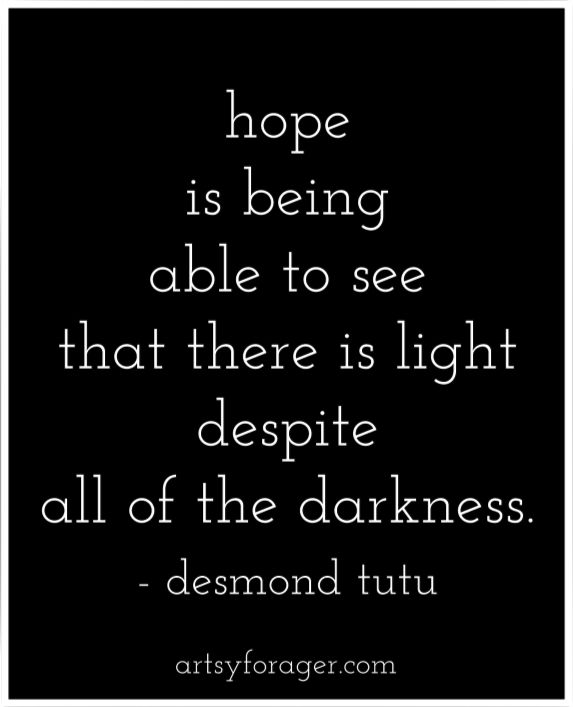
hope is d.tutu

In response to today’s entry re: portals--some thoughts, and much gratitude to the soulful words and instructing teachings of Adele (seriously, check out her website, you will not be sorry, and you’ll likely get a good laugh while you’re at it–she’s serious fun!):

So very important, Adele, and so true. For, yes … for the good to be distinct, we must KNOW what is bad, how to recognize it and how to forge a path to emerge from it into new homes. 

Like the oscillation of a pendulum, the higher we want it to go to one side, the lower it must go to the other. It cannot go up without repeatedly dipping down. We cannot soar without plummeting. It is comforting to know this is how it is done …

For light to be defined, we must know the depth of darkness. It is the bog of hopelessness that teaches the power of a ray of sunlight and a handhold. It is the horror of cruelty that magnifies an act of kindness and instills the absolute knowledge of the transforming power of empathy and love.

Let there be light in the darkness; let there be a handhold to have in the depths; let there be hope in the void; let there be help in the desperate corners of pain; let there be friendship in the loneliest places, let there be love to weave strength with in the most desolate place. Let there be new rising bright, rising wise, from the old.

Forest Portal

The Language of a Smile

smile

This may be cliche to some, but not to me. I’ve seen it. Many times.

Just the other week, I saw a group of children–preschoolers–play at the airport, in the space between gates with flights departing to globe spanning destinations.

Some among the handful of kids spoke different languages, and none of them knew each other until a moment prior. 

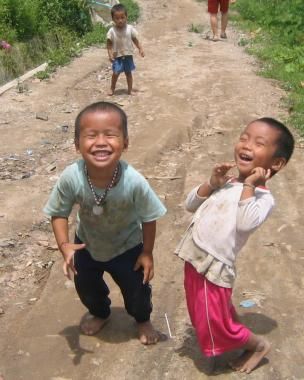
Nonetheless, there was a long wait to be had, a few empty water bottles, a ribbon to pull, and play-ready age-mates to pass the time with. So they found a way. Their giggles filled the space with the ripple of childhood joy that knows no borders, religion, nationality, language, tradition, or race.

The children babbled to each other in their own respective languages, understanding not the words but at the very least enough to go on playing, to take turns, to get a notion for a silly something that sent waves of hilarity through the lot of them …

Adults sat nearby, keeping an eye on their child with a little less wariness of each other, now that their young ones felt so at ease. After all, these were just children playing together: they were not political statements or status symbols or religious flagships. They did not carry burdens of group-mentalities or dogmas or beliefs. It was okay to just be. To share a moment. And a smile.

For the adults, too, smiled. A careful, half-lip smile, weighted by whatever notions and knowings, history and worries adults often have for those they do not know and whose language they don’t understand. A half-smile it began but it grew warmer when eyes met following a child’s antic, a cute gesture, a silly face, a giggly laugh.

Like the children, the adults smiled the same smile in every language. Or rather, they smiled in one language–the one we all recognize and know by heart. The language of humanity. The language of a smile.


Laughter Medicine

There is something utterly contagious about laughter, especially the belly-laugh of children, the hilarity of babies and giggling infants, the impossible delight of guffawing kids …

Laughter rarely fails to make me laugh!

So am sharing this video — with a practically sure-proof laughter-guarantee — in case you need some laughter-medicine today …

Baby Laughing at Torn Paper…

May no day pass without points of merry,

and may there be laughter in your heart, each night, each morning,

each precious day. 

Merry be.

Find Joy!

joy

Find joy in the places where sunshine streams inwards

Find joy in the friendships that sparkle the heart

Double over with mirth

Let belly laugh jingle

And all worry scatter

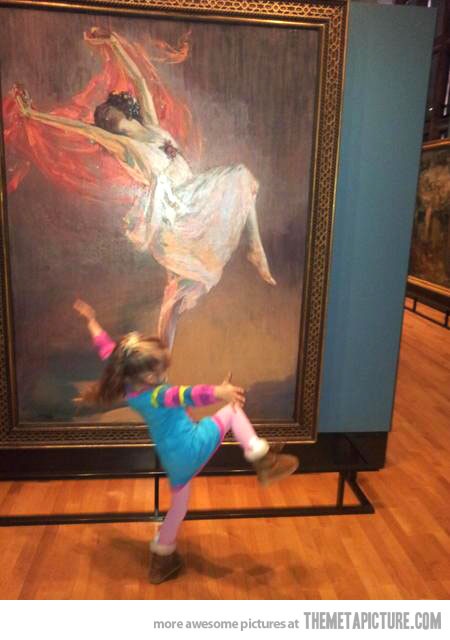
Find joy in a dance, in art, in creation

In mirroring pleasure

Where words do not matter

joy1

Find joy in belonging

In giggles with one like no other

In nature come close

And delight spilling over

joy2