Live light
Na’ama Yehuda


Na’ama Yehuda

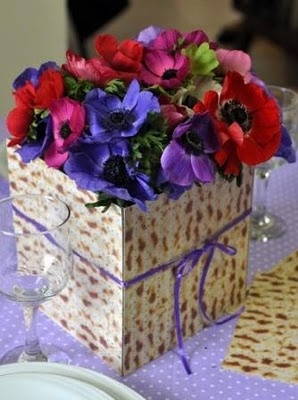
However you celebrate, note, commemorate or endure it, may this Passover–this Spring Holiday, also called the “Holiday of Freedom” herald your personal freedom from whatever binds you: worry, fret, self-critic, anxiety over judgment, unhealthy-habits, petty choices … and any manner of sticky strings-attached. May you be freed.
May this also be a time to end present day bondage. Present time slavery. Let us move to end it. Let us not look away.
Let us end trafficking in all its manifestations and myriad ‘cultural’, ‘economical’, ‘religious’, or political pretenses. Let us end the bondage of child-laborers; of girl-brides; of ‘modern-day’ slaves; of the abuse of sexual exploitation; of people forced into indentured servitude, an enduring poverty, a withheld education, and subsequent misery and desperation.
Let it be done. Over. Made no more. We are one. Let us all put forth to let our people go.
May this time of highlighting the freeing of a People from slavery and injustice of exploitation, murder, and impunity–become a springboard to reforming the similar injustices of today.
Let us no longer be appeased by looking away or minimizing (and by it passively endorsing those who–still today–consider slavery acceptable). Let the voice of freedom ring loud and clear: We shall not be content in the reality of human enslavement, cruelty, hatred, inequity, injustice and indignity. Let our people. All people. Go.
May this Passover be a passing of a threshold, a springing open the bloom of transformation and potential. Hope. Release. Rebirth. May it be, a time to Free.
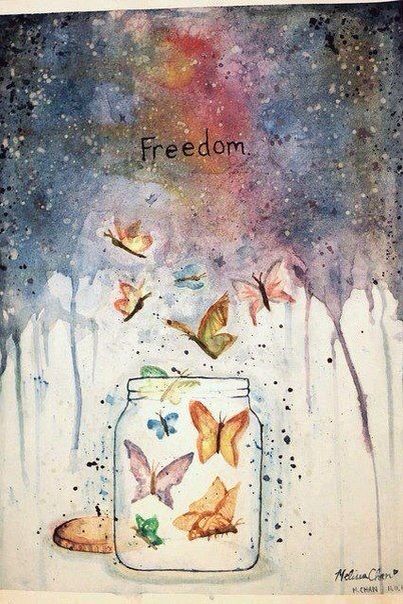

You cannot fight hate and violence with more hate and violence, any more than you can conquer darkness with more darkness. Adding darkness only increases blackness. To subtract shadow, add light.
(Na’ama Yehuda)

Dhammakaya Temple, Thailand: 100,000 Monks Praying for Peace, (Luke Duggleby)

“Are trees sad when people cut them?” The little boy came out of a week of school focus on earth, nature, resources, deforestation, and endangered animals.
“What do you think?” I returned the question. He has a reason for asking, after all.
“Yeah,” the seven-year-old sobered. “I think trees get sad because then they die and they can’t make leaves and flowers and acorns anymore.”
I nodded, sensing he has not quite finished and wanting to give him time to find the words.
A quiet moment passed, then his right eyebrow shot up the way it does when he gets an idea. Ideas for mischief, yes; but also for an answer that eluded him or a solution he did not see before. He touched the top of the table with his fingertips, and his eyes wandered over the floor, the bookcase, the closet door.
“You think maybe the trees are also not so sad,” he continued, “if people make stuff from them and then they get to be other things?”
“Um…hmm …” I noted in agreement, letting him work this through.
“Like if the tree gets to be a table or a chair or even a book then it is still important, right? But …” his young face wrinkled in too-old-for-his-age consternation, “but … maybe the trees are sad if they get burnt in the fire or something … because then they’re gone and can’t be anything anymore?”
“I see what you mean,” I offered, “but what if burning the wood helps keep people warm in the winter or cook their food?”
He brightened. “Yeah! I think maybe then the trees don’t get so sad … because they kind of make the food … ” His face got transformed once more, this time to seriously didactic, “But … but people still have to be very careful to not cut too many trees, right?”
“Right … ”
“… because the trees want to grow and be happy and also the squirrels and the birds need trees and monkeys and other things. Bugs, even. Some animals live on trees,” he instructed me, “That’s where they build their home. So people have to be careful because it is not fair to break all the animal homes and chop off all the trees to make things …” he paused. “And anyway, you can make tables from other things, too. Like plastic. Or maybe even a rock … I think …”
He quieted for a moment, his eyes wandered again around the room and rested on my bookshelves, on the National Geographic magazines on the side table, and the paper-packed folder with his work peeking out of the backpack on the wooden floor.
“I think trees really don’t mind if they get to be books, though” he added, satisfied. “Because then they can tell stories even if they can’t talk. I love trees and I love books.”
Couldn’t have said it better myself.
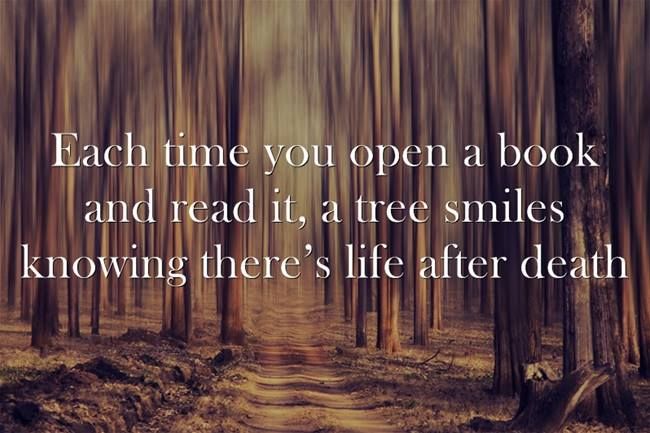

Today, find something unexpected. Learn a fact you did not know. Claim a new piece of knowledge or practice a new skill. Watch an animal you’ve never seen before. Read a bit of trivia that surprises, gives a chuckle, raises eyebrows, tickles curiosity for more.
Today, practice the experience of wonder.
Today, remember what it was–can be like, often is–to be a child.
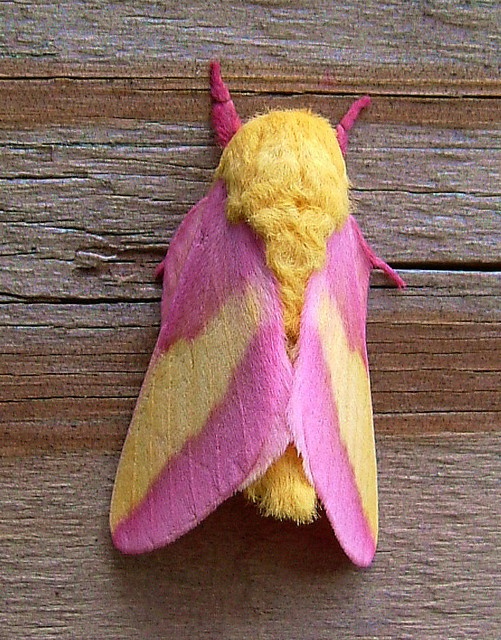
Rosy Maple Moth
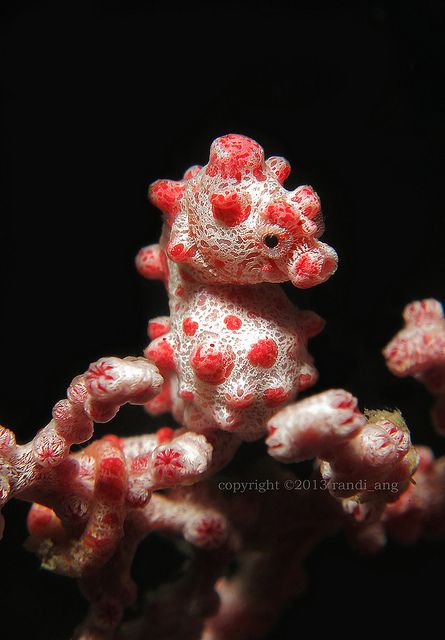
Bargibanti Pygmy Seahorse

T-Rex Trivia
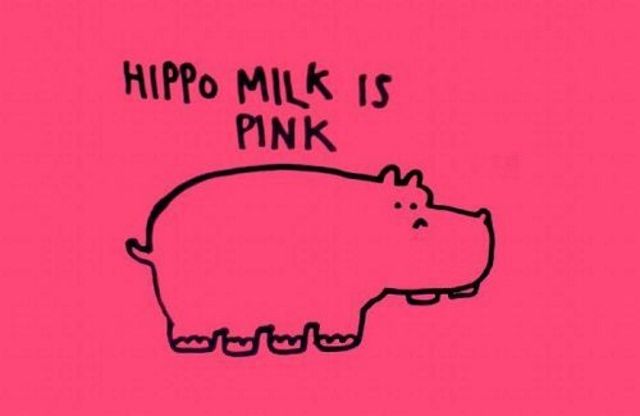
Hippo Trivia

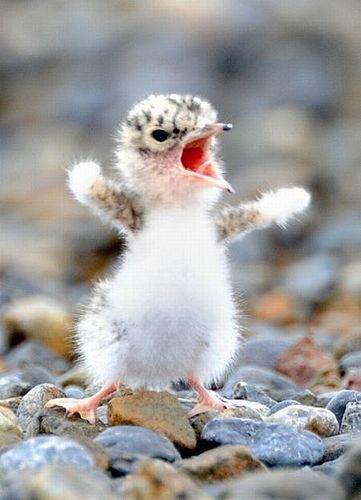
No matter how small you are or feel or think you are–live big. Yours is the only life of you, in this form, the world will ever have!
(Na’ama Yehuda)

Life rushes by.
Essential tasks tick looming.
Hardly a single second left to breathe …
Slow down … take heed …
Even in the midst of chaos,
the heavy endless canyons of dark asphalt,
and sky-high gray concrete,
even in the angry honking of a thousand yellow taxis,
in the press of harried people on the streets,
in the tasks that frustrate waiting,
in the overwhelming wish for time and needs–
Pause now.
Find perspective.
Take a moment.
Change your point of view to rise above
and slow the moment’s speed.
It’s there. Believe.
Even in the concrete jungle
There’s a wide green lung
Awaiting, present; a potential reprieve
A slower pace
A gentler space
Reminding you to pause and breathe …


Take a moment.
Take a breath.
Find your own heart’s place,
Your own soul’s space.
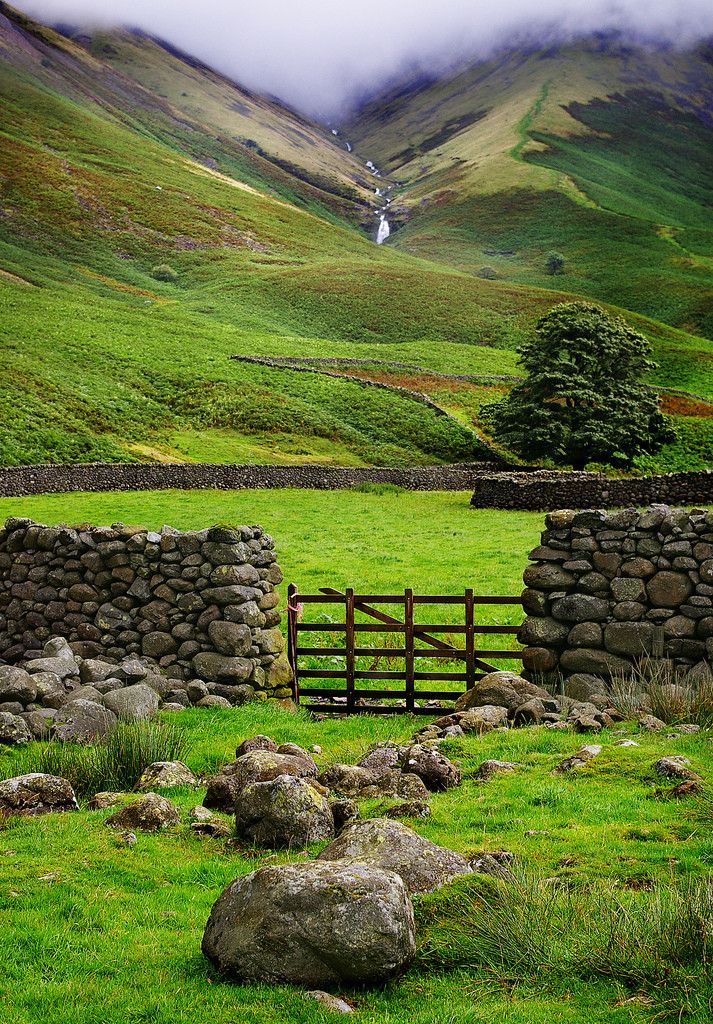


Now that sunny days sneak up
Behind cold rainy mornings
And layers get peeled open outdoors;
There’s a quickening of breath, action, planning:
Verdant peaks poke out of brown branches,
Sturdy shoots plow up from empty hard ground,
Tenacious flowers unfurl spunky petals–
Nature showing the way
To not hold back, not delay
Your own hesitant budding of hopes …
Find your path, gently plow your spirit to waken,
Stir your earth
Stow your fears,
Sow even your most tentative knowledge–
It, too, has potential for growing.
Give your dreams a good shake
Unclog plans from despair or stagnation
Stretch your soul
Clear your heart from worry, anger, dissuasion.
Plant your words in this world
Air your prayers to welcome the sun
Seek expression.
Sprinkle showers of hope upon your budding self
You will not be mistaken–
There is a world reawakened
With much worthy growth to be taken.

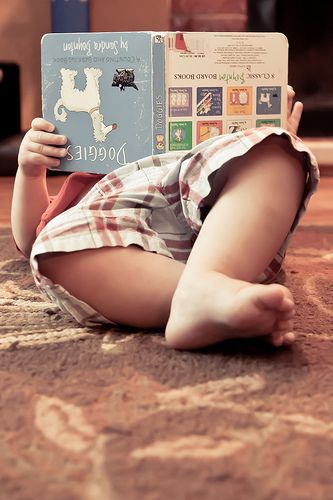
I’ve received a query from a parent: “I heard reading to children is good for them. Is it true that it helps language development? How early should I start reading to my baby and how long should I go on reading to her?–Parenting Neophyte…”
It is a good question and one I get often and love getting. It is always worthy of an answer.
Dear Parenting Neophyte,
The facts are clear: Reading to kids is great. Introducing children to books is important for language development, listening skills, later literacy, and general cognitive potential. Stories expand vocabulary, increase imagination, teach social skills, improve narrative. Reading to your children is good parenting and a good investment in their education and future.
As to how early one is supposed to start reading to children and how long one goes on doing that–the simple answer is: “as early as possible and for as long as kids would let you …”
The more detailed reply is that even newborns find interest in clear patterns and drawings, in contrasting colors, in faces (especially in faces), and pictures of familiar objects. They listen. They pay attention. They track. They make connections between sounds and experience. Unfold an accordion book when the baby is playing on the mat. In the stroller. In the playpen. Give them a soft-book to hold in the stroller or to reach for when they loll on the floor during some ‘tummy time’ (check for lead-free paints and non-toxic materials, of course–babies put everything in their mouth!). Certainly introduce picture books as part of every night routine. Talk about the pictures with your infant, point to familiar animals and items. It is not about testing how much they understand or what words they can say or point to. Rather, it is about having reading books become a link in the nightly ritual of cuddling and comfort, connection, familiarity, language, narrative, and stories.
Babies who are read to often gravitate toward books as playing objects, they leaf through, turn pages, pause, look, and ponder, even as they mouth the corners and tear out what they manage to … (all great motor and visual spatial skills, by the way). They also learn to point, to wait, and to associate pictures with words and sounds. They learn to anticipate the next picture, to predict what’s to come. They learn to trust their memory. They rarely tire of adoring the confirmation of seeing the same picture appear as it did the day prior.
For sure, the repetition can be tedious (you’ll know what I mean when your toddler asks for the same book in the two-thousandth time, and wants to read it “again” and “again” and “more time!”), but it is part of children’s normal development during infancy and toddlerhood to like things repeat. So take a deep breath and even as you introduce new books once in a while, and expand the child’s repertoire of stories, do cave in and read “goodnight moon” one more time …
As for the question of “how long to keep reading to children?” The answer truly is to do so for as long as possible. Many professionals recommend reading to children straight through middle school, and certainly throughout the elementary school years.
It tends to surprise parents when I recommend that. Very often they tell me that they’d stopped reading to the child when he or she learned how to read independently–sometimes during the first or second grade. They thought that the move to independent reading marked the end of “needing to be read to” and in fact often had reading time revert into the time of day when the child read to them … It was almost a rite of passage. A mark of moving into the reading world.
Granted, there’s still plenty of bonding potential in cuddling with your child and witnessing their reading progress. It certainly feels good to the parent to measure their child’s progress … and to a child to know their efforts are appreciated. However, being read to is a very different task than reading aloud as decoding practice. The two have very different goals and encompass very different language levels. The books children read are often matched with their decoding ability, rather than their language level. Also, even in later elementary grades, when reading skills allow children to decode most common words, books are chosen with the child’s comprehension level in mind, not necessarily their exposure to higher linguistic material.
Reading TO children is a whole other world of learning opportunity. It is primarily a listening task and allows the child to relax into the story and delve into language while losing oneself in it. Being read to opens space for a child to draw inferences about connections, context clues, idioms, character descriptions, sequence, cause and effect. It is a time for a child to consider possible outcomes, predict to himself what might happen next, check a hypothesis, internalize some of the story characters, discern who they like and who they don’t, who they may want to be, where, how, why. It opens an opportunity for discussion that is very different than the ‘reading comprehension testing’ that happens with school books or those the child reads independently. The books you read to your child become fodder for conversation and self-discovery: what did they like about the book? what did you? why did so and so do this or that? would you so the same? what is your favorite character? which is mine? how come?
Children who are read to through 8th grade, have larger vocabularies than children who are good readers but are not being read to (and we are talking vocabularies that are larger by tens of thousands of words–not just by a small margin!). As a group, they have better listening skills, better auditory processing and auditory memory skills. They have better narrative skills. They use a more varied lexicon in their own writing. They have bigger cache of idioms and expressions that they can infer meaning about. They can converse better and show wider world-knowledge.
Children who are read to tend to enjoy books better than kids who are not read to. They tend to love reading more. They choose a wider variety of books and have a wider foundation in classical literature (read: the books you read to them may not be books they’d otherwise pick up to read themselves … but having listened to them, they may get the ‘book bug’ to look for more classic literature on their own). Want another bonus? Reading to children improves connection with parents and allows children to feel comfortable talking to their parents more, and about more topics (not to mention that stories often bring up issues that they may otherwise not talk about …)
In some families, reading to each other continues as part of family time well into high-school, with teenagers taking turn in reading aloud. Sure, it may seem odd to consider teens today being gung ho about spending an hour “reading boring books aloud” and being commanded to have their thumbs idle (no music, no chat, no texting). However, for families who started early this is often a natural continuation. In families starting a little later (and it is never too late, actually), the benefits are real even if they are grudgingly (or perhaps never verbally) acknowledged. Having your undivided attention is a precious commodity (yes, you have to put down that phone, too …). Knowing you are listening is priceless. It opens yours even as you raise your child to have a more open mind.
Reading to your children builds your relationship with them while also building their relationship with themselves, their inner worlds, the world around them, and their academic and cognitive abilities. It is truly a ‘one size fits all’ intervention. There are no downsides, other than extra cuddle time, honest conversations, and the distinct possibility of difficult questions about life that literature inevitably brings up.
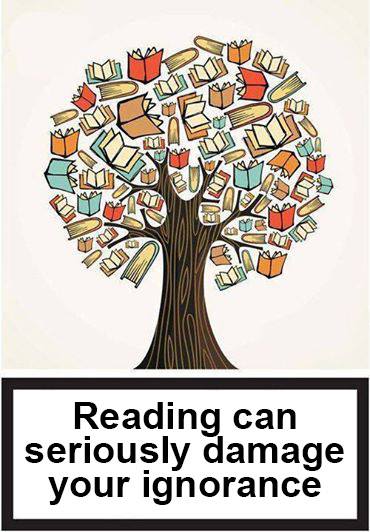
The only warning necessary is … that reading to your child can damage their ignorance …

A place to improve my writing skills, and that's all.
We're not thriving, we're creatively photosynthesizing under duress.
History of the Bloomingdale area on Manhattan's Upper West Side
A creative miscellany of mythic fantasies
a weekly flash fiction prompt inspired by google maps
A community for writers to learn, grow, and connect.
To participate in the Ragtag Daily Prompt, create a Pingback to your post, or copy and paste the link to your post into the comments. And while you’re there, why not check out some of the other posts too!
I can't sleep...
Alternative haven for the Daily Post's mourners!
never judge a girl by her weight
original fiction and rhyme
You have reached a quiet bamboo grove, where you will find an eclectic mix of nature, music, writing, and other creative arts. Tao-Talk is curated by a philosophical daoist who has thrown the net away.
A photographer's view of the world - words and images to inspire your travels and your dreams
Life in progress
Straight up with a twist– Because life is too short to be subtle!
WordPress & Blogging tips, flash fiction, photography and lots more!
Light Words
 Na'ama Yehuda
You must be logged in to post a comment.