The Lost Quartet

fishbowl


He reached into his pocket and rummaged around. “I’ve brought something to show you,” he said, eyes searching mine. “But it’s a secret …”

“Oh?” I offered.

“Well, sort of,” he shrugged as an uncertain smile worked its way into his cheeks. “I took them to school … but I didn’t tell anyone … because we’re not allowed to … The teacher woulda’ taken them away and other kids maybe woulda’ told her or asked to see them and then she’d know …”

I hiked my eyes up and nodded my expectation.

The grin grew but it still held a sheen of sad.

He pulled his fist out of his pocket and turned it so the back of his hand rested on the table, then ceremoniously uncurled his fingers.

Four grains of rice in tiny vials, strung onto a keychain ring.

“They have names on them,” he said reverently.

I squinted and reached for a magnifying glass. Handed him one.

Our heads met over the small nest of palm and he mouthed the words, more sigh than voice.  “Fee, Fi, Fo and Fum.”

A quartet recently eaten not by a giant smelling the blood of an English man but by a feline with a swishing tail who had knocked the fishbowl over and left not one golden scale behind.


For The Daily Post

Mystery Mom

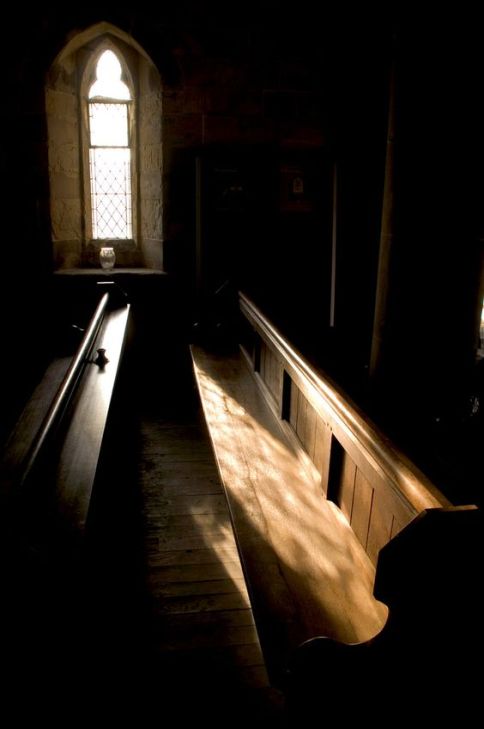
church pew AMDB7 on Flickr

Photo: AMDB7 on Flickr


She doesn’t know who her mom is. She was left as a newborn, wrapped in a piece of old bedsheet, under a pew in the church. Or so the story goes.

She spent her first year in the orphanage. Many mewling mouths and too few holding arms. She found a way to survive.

Halfway into her second year she got picked up, fussed over with odd sounds, carried out of the room that had been her world. It was confusing. It was good. It was a lot.

She has a family now. They love her. They are patient. Most of the time. They try.

She’s a big girl. Almost ten. She understands. Sometimes.

She still can’t help but wonder who she is. What made her undesirable. Why she was left, naked not only of clothes but of clues.

She still can’t help but wonder about the woman who’d had her, then left without a sound. The woman who isn’t even mist and fog of memory and yet she still is tethered to in heart and mind. Her Mystery Mom.


For The Daily Post

The Blanket

diaryofaquilter

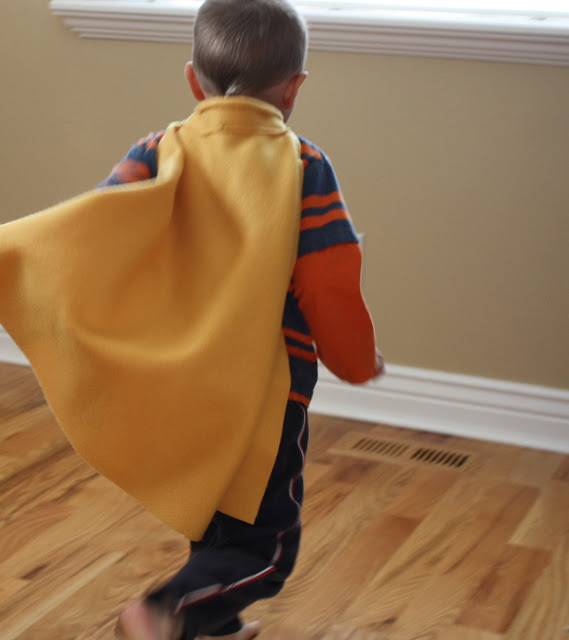
photo: diaryofaquilter.com


He took it with him everywhere: School, the doctor’s office, the park, the car, the dinner table. He carried it in hand, in the backpack, over his shoulder. It was to him a cape, a comfort, a memory of tucking in, a constancy.

It’s always been there. He couldn’t remember a time before.

Well-worn, oft-washed, much-handled.

His blanket.

Never out of sight.

He’d sit before the washing machine and watch it spinning, floppy, in a foamy sea. Later he’d guard the dryer as the blanket tumbled, already impatient to come back warm and scented into his arms.

He’d place it at the ready on the bathroom stepstool to guard him as he washed. A sentinel over his pajamas.

It waited right under the chair at mealtime, in temporary exile from his lap after his argument that the blanket could make an excellent napkin had failed.

Even at school, where he wasn’t allowed to hold it, he’d leave a small blanket-ear peeking out of his cubby; to remind him it was there, with him, waiting for the end of the school-day.

It was a coat of heart, a shroud of courage, a cover against storms of any kind.

It was almost part of him. His blanket.

Then the fire came. He was carried half-in-sleep and heavy-headed, by a man whose giant shadow painted wall-monsters against the orange flicker and the swirling smoke.

There was more flicker outside: blue and red and white and blinding. Shouts and calls and creaks and cries and movement. Yellow coats, red truck, bright door, funny mask.

And no blanket.

It was gone. To Blanket Heaven.

A spark in the sky now. A spot of cloud. A star.

Lost along with Curious George and Teddy Ben and his dinosaur car.


For The Daily Post


Jiggly Biggly Boo

There’s a special place in heaven for well-loved toys. Missing ears, tatty limbs, dangly eyes, bald patches, poke-out stuffing, stained coats. Wet tummies with mold, too.

A little one described it to me, his gray-blue eyes bright with loss.

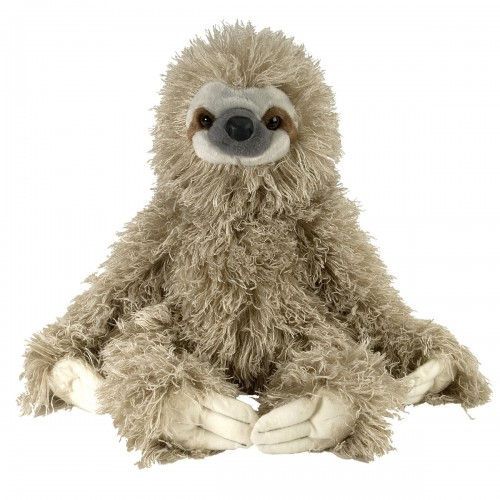
Their house had gotten damaged in a flood. Along with wet carpets and soggy couch pillows, a few unredeemable yet oh-so-precious loveables also had to be tossed out: a bunny, a teddy, and a well-hugged-sloth named Jiggly Biggly Boo.

“He got wet all the way inside him tummy,” the boy shook his curly head. “Maybe we don’t have no more towels … ” he paused, confused, then sighed. “Jiggly Biggly Boo had to go to toys heaven.”

He raised large sad eyes at me. “They have tummy towels? Him tummy got wet. He got mowed.”


stuffed-animal-sloth

Stuffed Sloth: The Discovery Channel Store


For The Daily Post

The Scent of Home

syrianrefugee-unicef-photo

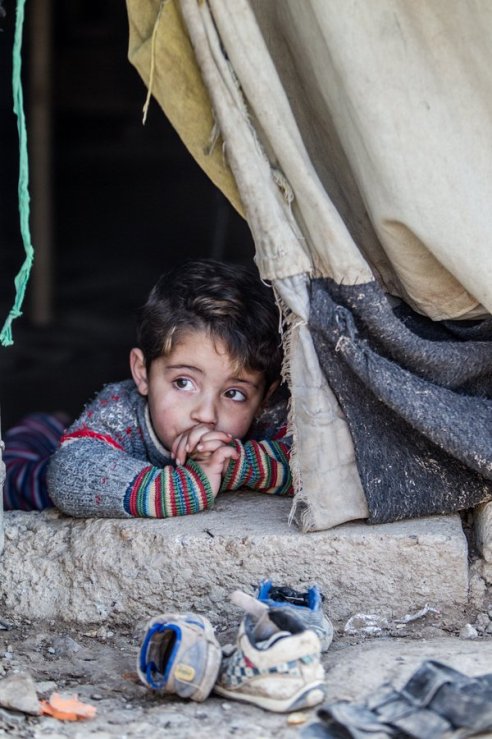
Child Refugee – Photo by UNICEF

The scent of home that she no longer has.

The spices, baking, the aromas

Of togetherness

And family

And love.

The scent of grandma,

Gone,

Killed by bombs.

The scent of ugliness

And war.

The scent of mornings

Blurred by smoke.

The scent of sea, now tainted

With the stink of gasoline

And sick

And worry.

The scent of tent

And mud

Hunger

Cold.

The scent of hope

Faint but held

In Baba’s handkerchief —

He said he’ll find them

One day

In Wherever Land.

The scent of fear

In mother’s arms

Trying to filter comfort through her own terror

Devastation. Loss.

The scent of home that she no longer has

Wafting away

In search

Of someone

Who will help

Her

Make a new one.

Her Whole Life in a Plastic Bag

three-clock-bears

Photo: threeoclockbears.com


Tamina attended first-grade in a Harlem public school. She was homeless most of that year. Her mother lost the apartment after she lost her job. Sometimes they stayed with relatives but mostly Tamina, her mother and her sister slept in shelters where they could never stay very long. They carried their belongings in thick black garbage bags, protection from the weather. Tamina used to have a teddy bear, but it got left in a shelter and her mother was ‘too tired’ to go back for it. Tamina never got it back.

Tamina had very little. Other children had a home, their own bed, place for their stuff, more stuff. So she stole. Mostly small things: erasers, crayons, hair-pins. Things she could hide in her pockets and later in her black garbage bag. If confronted, Tamina would furiously demand it “was always hers.” I suspected she often believed it and wondered if some items resembled things she once had and owning them was a link to a time when life was less overwhelming. Beyond an overall language delay, Tamina seemed confused about concepts like the difference between possessing and owning: in some shelters cots were ‘first-come-first-serve’ and while you had it, it was ‘yours’ even if it did not remain so for long. You had to ‘watch’ your stuff or have it disappear. Why could an unattended eraser not be ‘hers’?

 While children often crave things that are not theirs, Tamina’s stealing was possibly about unmet needs. Her mother was “always mad and cussing” and Tamina could not rely on her for support. Children whose ‘hungers’ are neglected seek other ways: become secretive, dissociate, numb themselves with substances, steal, hoard. These behaviors often further distance them from care and social support, when they in fact communicate confusion, loneliness, anger, loss, and shame.

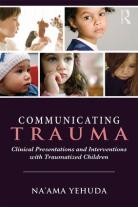
[The above is an excerpt from “Communicating Trauma” Routledge, 2015]

Communicating Trauma-Yehuda

Homelessness does not necessarily mean neglect, but the realities and causes of homelessness pose many risks, especially to children. In addition to loss and grief, there are increased health and safety risks, along with reduced access to care. Children without homes suffer insecurity, and their caregivers may be too overwhelmed to attend to their emotional needs. Depression, posttraumatic stress, illness, disability, poverty, domestic violence and other life-crises are all too common among parents of homeless children. Any one of these factors can overwhelm a parent and reduce their availability, let alone when such factors combine.

Having no place to call home–in all the forms it takes–can be distressing and occupying. It leaves children anxious and unavailable for learning. Homeless children are often wary and worried, angry or withdrawn. They are three times as likely to require special-education, four times as likely to drop out of school, and almost nine times as likely to repeat grades.

Homelessness devastates. It is crucial we work together to understand it and resolve it as well as support families in crisis and address risk factors before they reach a loss of home, hearth, and heart.


What if bad people forgot how to be bad? (An irreverent fantasy)

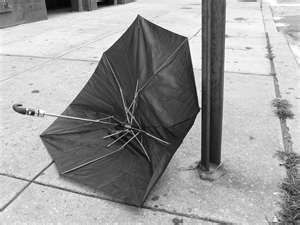
broken-umbrella

I was walking home from a meeting the other day and ran into an elderly woman with a walker and a broken umbrella. She looked lost.

I asked her if she was okay, and she shook her head. She couldn’t remember where she was going, then brightened slightly: she had a card. She dug around in her purse, broken umbrella perched over one shoulder and rain drenching her head, keys and change spilling onto the wet pavement. I held my umbrella over her, picked up the fallen items and looked at the card she held out: A senior center. I knew which one–it was quite a ways away. How did she end up so far from it?

She’d been trying to get there and must’ve taken a wrong turn. Got lost. She was flustered–she’s lived in the area a long time but couldn’t get herself oriented to what avenue was where or in what order or how far. She kept repeating an attribute of her destination. A ramp. For wheelchairs and walkers. It had a ramp. She’d been walking and looking for ramps…

I told her not to worry. I knew where she had to go and would walk her there.

On the way and as she looked for ramps and we slowly navigated in the rain that dripped over the edge of her broken umbrella and as we dodged puddles and splashing cars and potholes that snagged the wheels of her walker, she told me (and repeated the same every minute or so) she has “some dementia.” She used to be very independent and “drive all over the place” but now keeps getting confused. She said she tries to leave the house to be with people because “it is important” and because otherwise she sits home alone “and cries like a baby all day.”

My heart ached for her.

Her broken umbrella mirrored her flickering brain–she held on though it barely did what it ought to.
It took us a while to inch our way to the senior center. I kept reassuring her we’ll find the center (with the ramp). She retold me of her dementia. How independent she used to be. Of her forgetting. Her wanting to be with people. Her “crying like a baby” at home.
After I left this sweet lady safe and sound at the center (with the ramp–she was so delighted to see that ramp! Its presence a small proof of her memory still holding on to something!), I walked home and couldn’t help thinking … Wouldn’t it be helpful if instead of this little old lady, some of those who thrive on cruel manipulation, got a touch of dementia?
Irreverent simplicity.
Oh, dementia is no joke, and I did not and do not intend to trivialize it!
Nonetheless I found myself considering how safer our world would be if those who connive to hurt and harm, forgot how to … and instead became immersed in small-radius-activities of afternoon bingo and word-searches. If tyrants and terrorists of all types of violent intrusions, lost interest in victimizing or power-hunger, and instead had their world contract around organized daily existences in protective housing someplace … to be occupied with lunch and naps and no longer be capable of manipulation and scheming …
Just saying.
They would be a far more deserving audience for a bit of dementia, than this sweet woman and so many the world over whose full heart and intellect we can use.
Wouldn’t it be helpful, I thought, to have the wish-to-harm turn dull in those who relish spreading agony?
At least until the shuttle to Pluto was ready …
pluto-stamp

“A Bandaid for my heart”

She asked me if I knew about dying.

I said I knew it hurt when someone we love died.

She nodded and fiddled with the pencil, poked the tip against her finger, poked again. Again.

I wondered if she was trying to make the hurting take a form she understood through the pinprick of a just-sharpened pencil. I gently put my hand on hers.

She looked up at me, thankfully without embarrassment or worry of judgment. Feelings weren’t easy for this child, whose very early years were filled with much that couldn’t be expressed and had no wording. Her grandfather passed away right before her birth and a hue of grief lingered many months, adding to her mother’s post-partum depression. Her mother has recovered since, and the home was generally caring, but unspoken early patterns of if-you-are-quiet-you-won’t-overwhelm-mom and waiting for another’s space to open so you can have your needs met still played out often. The girl, not yet ten, was more likely to attend to others’ feelings than her own; more likely to dismiss her anguish to not distress others.

I smiled at her and she smiled back shyly. Her eyes glistened and she sniffed.

“My dad told you?”

“Your mom did.”

Her eyes flew to mine, surprised at being thought of. She took another breath. Tears slid down her cheeks.

“I’m sorry, Sweetie.” I handed her a tissue and snuck a bit of extra affection into the gesture. Just because. She noticed. Smiled the sad smile again.

Her great-grandmother died two nights before. Her father’s grandmother was a fixture in the child’s life. A rock. The one who filled the gaps, stepped in, held, held on. An elder in the best sense of the word. There was a love there that spanned generations. A special bond with this child.

It was a gentle death, the mother said. Doctors believed the grandma had passed away peacefully in her sleep. No pain. No long decline. That was a blessing, but for the child this loss still hollowed.

“I didn’t get to say goodbye,” she whispered.

“I know. I’m sorry.” I moved a strand of hair off her cheek. “You can still say it. Maybe not in the way you’d have wanted, but still …”

“Yeah,” she sniffed. Dismissed. Reconsidered. Looked up. “How?”

“Any way you can think of, almost.”

She pondered. “Dad said she can hear me. In my dreams. In my thoughts.” Her eyes probed. She wanted to believe it.

“I believe that’s possible, yes.”

“How?”

“I don’t know exactly. I just feel it. In my heart. About people I love and passed away. It feels right to me that we are still connected, that in some way they can hear me.”

Her eyes overflowed again but her face softened. “I think I’ll talk to her. Tonight, maybe. You know, just me and her.”

I nodded, smiled.

She sighed. Drew in a shuddering breath. Sighed again.

“I miss her,” she whispered. “It hurts. I wish I had a Bandaid for my heart.”

hands-and-heart


Half-Angel

What do you do with a grieving child?

You listen. You hold. You listen some more.

You offer tissues, you offer a hug. You answer lots of questions.

You nod. You tell stories. You honor the small memories told.

You come up with suggestions–or rather, embellish on those that the little one has.

You produce boxes (“too little”, “too big”, “too not-good”, “I don’t like it”, “okay, this one …”), find padding and ribbons and stickers, along with a few extra hugs.

You write what’s requested. Erase the letter that did not look perfect. Write it again. Erase. Write once more. You understand that it has to be just-so.

You provide blank paper and crayons, markers, highlighters, scissors. Play dough.

You oblige to search Google for questions your answers were not good enough, and come across five hundred other interesting things that lead to more questions. Distraction is good medicine, too.

You write down a protocol for ceremony, number the steps, change the order.

You make a headstone from tongue depressors and card stock. Give another hug.

You write the name of the departed. Erase it because it did not come out perfectly. Write. Erase. Write once more.

You draw a picture and told it “doesn’t even look like him.”

You are saved by a photo from the bowels of phone memory–a snapshot of happier times.

You give more hugs. Another tissue.

You stay with. You listen. You know that no small loss is small. That no one is truly replaceable, that loss is confusing and brings along with it the worry of losses far bigger and questions too scary for words. You don’t go where the child does not take you. You comfort, you understand.

What do you do with a grieving child?

You listen. You hug.

You promise not to forget.

You tuck the drawing in the folder (“but be careful”) to keep it safe.

And you use a tissue yourself, when the child wonders aloud if dead fish get to have wings and continues to answer himself:  “Yeah, because they have fins, so Benny was already half-angel.”

beta fish