A Stranger’s Eyes

conner-baker-dXpWscmNgXw-unsplash
Photo: Conner Baker on Unsplash


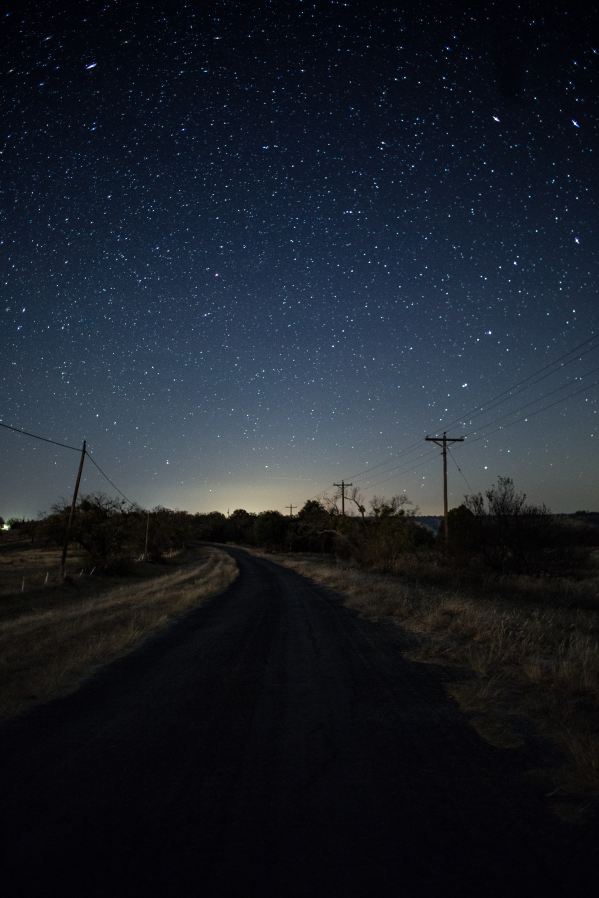
Her hand clasped the steering wheel and she fought against the tears that threatened to blur the road ahead.

The wheels whirred over miles and miles of black as the stars spread a rotating canopy over her car. A bug atop a line drawn in the sand, she was. A smidgen on the wide expanse of life under the heavens.

She won’t go back.

She could not allow it.

He had her squelched under his thumb for so long that she did not recognize her own face in the mirror. Her eyes had become a stranger’s.

“There are times,” her mother once said, “when a woman must believe herself. You may think yourself broken, but you will love again the stranger who was your self.”

She’d thought it cryptic at the time, melodramatic.

She understood now. “I’m coming home to myself at last, Mom.”


For the dVerse Prosery prompt: Love after Love in 144 words


The Keys To Happiness

alfred-schrock-IEK9fXzLZKs-unsplash

Photo: Alfred Schrock on Unsplash


Two years, and he could hardly remember how he’d managed to survive before.

The rush. The never ending tasks. The constant worry. The being pulled a million ways by demands and the dreams of others.

He’d run on fumes for months on end, then crash and burn in ways that hurt not only himself but also the ones whose lives were closest. All those bridges he’d burnt.

It was the last burnt bridge that had paradoxically saved him. It became a light from burning embers. He’d flown out to care for an ailing uncle, but in truth just to escape the consequences of another interpersonal disaster. He expected to discover his uncle, who’d been the family’s previous pariah, on death’s door. What he did not expect was to find him so content.

“Live here,” were his uncle’s last words. “Need little. Use less. The Keys saved me. Claim your turn.”


For What Pegman Saw: Florida Keys


Zen Essence

calm curl NaamaYehuda

Photo: Na’ama Yehuda


In the moment of the soft swell

Of a calm curl,

The gentle foam

Belays the power of

The waves that lift ocean liners

And cradle whales.

A breath

Before

Exhale.


Thank you, Terri, for this prompt. Perfect for today. For me, the shore is the ultimate calibrator. I took this photo in Ogonquit, Maine, quite too many years ago. Time to go back. Time to go to the beach. Any beach. For breath, for awe, for space, for zen.

For Sunday Stills: Essence of Zen


Up Or Down


She could go up

Or down

On the path

Into town.

There the low road

Awaited,

Full of snarls and

outdated.

Or she could take

The high

With its twists,

Turns,

And sighs.


She could go up

Or down

On the path

Into town.

So she paused to

Reflect,

How to best

Course correct,

And decided it

Best

To give the high road

A test.


For Crimson’s Creative Challenge


The Constitutional

Photo: Sue Vincent


“He never would’ve been out there without his hat.”

Elizabeth shook her head in suppressed exasperation. Of course her mother would find fault.

The older woman perched on the edge of the folding chair that Elizabeth and the fresh-faced health-carer had dragged over for her. The flickering episodes of weakness and disorientation had grown more frequent since Grandfather died. Perhaps it had been the shock of finding him, as her mother had, slumped against the edge of the bathtub. Perhaps it had been the letting go that followed endless years of caring for an increasingly ailing parent. Perhaps it was her mother taking on the role of family invalid.

The doctors certainly did not seem to know.

Or know the difference.

Not that Elizabeth could not understand the wish to let go. She could. Very much so.

Caring for her increasingly moody mother gave her a taste of what it had to have been like for her mother to endure the constant worry over and never-ending bitterness of a man who could no longer do what had sustained him. The amicable if somewhat taciturn grandfather had turned into a fussy, verbally cruel, bed-bound tyrant. Her mother’s father had to have become insufferable.

A little like her mother was becoming.

“They should’ve made a hat. It’s all wrong without a hat.” Her mother scowled.

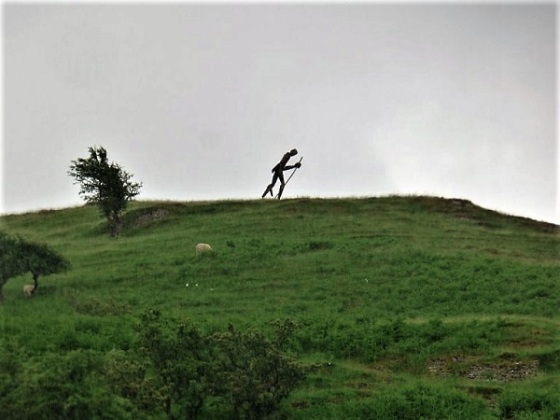
The figure on the hill leaned into the wind. Impossibly lithe and utterly determined, it embodied how Elizabeth the young child had known him. As far back as she could remember, Grandfather never missed a day of what he’d called his “constitutional.” Rain or shine or wind or hail or mist or blazing sun, her grandfather would leave on his solitary afternoon walk, returning — like clockwork — when the sun had disappeared behind the hill.

Elizabeth would wait for him, her child’s body pressed against the stone fence that bordered the estate, and watch his shadow edge on home, his walking stick as part of him as any limb could be. At some point his tweed pants would materialize at the bottom of the shadow, and in another step or two the rest of him would unveil into certainty.

By the time he’d reach the gate, his windblown face would hold a smile for her. He’d nod a welcome, compensating with it for the long wait, for the yearning that he’d take her along (he never did, nor had he taken any of his children before that), and for the fluttery worry that perhaps the shadowed figure was not Grandfather at all, but in fact an elf or ghost or some trickster’s apparition.

She gazed at the silhouette on the hill, its stride frozen forever in the time before a stroke changed everything.

Hat or not, this was how he’d want to be remembered.

“He’d stuff the hat in his pocket when the wind was high,” she whispered, her voice full of sudden sorrow. “He’d pull it out and put it on a step before he reached the gate.”

Her mother’s mouth opened in preparation for automatic argument, but then the wrinkled corners turned down as a quiver shook her chin.

“He did,” her voice a child’s in elder’s clothing. “It is exactly what he’d do.”

Elizabeth squeezed her mother’s shoulder and the older woman placed a trembling hand over her daughter’s.

“It is perfect, then,” her mother murmured. “I’d forgotten. Take me home, Lizzy. Let us allow him his constitutional in peace, now that he can once more go about it.”


For Sue Vincent’s WritePhoto Challenge


Blasted Thing

brown thread

Photo: Susanne Jutzeler on Pexels.com


“Where is the blasted thing?!”

I sighed and put the textbook down. Momma never could maintain a smidgen of patience in herself.

“I’ll get it!” I rose and walked the three steps that separated my bedroom from the eat-in area. The measuring tape was exactly where she’d left it, on the dinette.

Momma was sitting on the floor not two feet from the table, one chair upended and her own legs sprawled straight out. She was wearing one of her depressing “housecoats” and a frown to match. It was uncanny how she managed to unbutton her kindly outward appearance and shed it right along with her matching sets of slacks and blouse.

My friends never did believe me that the woman who was head of PTA, mistress of all bake sales, and Lady-Of-The-Smile in charity drives and Christmas fairs, was a terror to be mothered by.

“Here, Momma.”

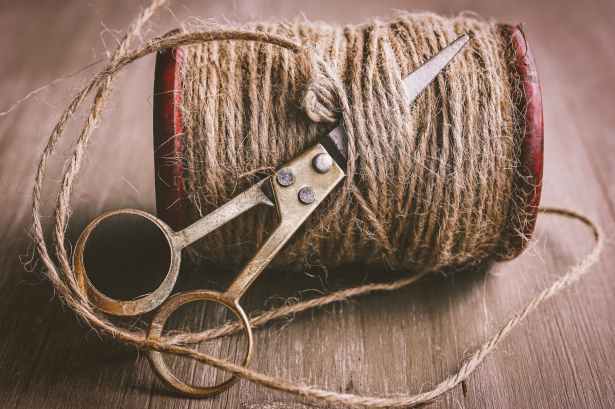
Her red-clawed hand reached for the tape. “And scissors? Did your pea brain stop a moment to consider I will need the scissors?”

She’d decided to reupholster the chairs. Again. Her idea of seasonal decoration.

We sat on pumpkins in the fall. On holly in the winter. On bunnies in the spring. On flags in July.

The curtains would be next.

I rummaged in the drawer for the scissors.

“Well?” She growled.

“They aren’t here, Momma.”

“Like hell they aren’t! Didn’t I tell you to never ever touch my fabric scissors? Just you wait till I’m done here!”

The threat had had some teeth to it while I was younger, and though she did not lift a hand to me since I’d grabbed hers in mine to hold her away two years ago — and she’d realized that my extension at five feet nine far exceeded her five foot three wingspan — the words themselves remained. And the possibility.

I kept my distance. Safer when she had a hammer nearby.

Something glinted underneath a corner of the pastel chintz.

“Can that be it?” I pointed.

She grumbled and reached for the scissors. “Just like you to hide it.”

“Can I get you anything else?” I knew better than to take the bait or argue. And I had a test to get back to studying for.

My ticket out, it was.

If I passed, I would be leaving.

I don’t care to where.


For Linda Hill’s SoCS challenge: Where


Faith in Stones

Photo: Sue Vincent


They none of them could explain when it had been built or how it had been done. The standing stones were magic enough, but the slab of solid rock perching above their heads against the laws of order and human power — it went beyond what anyone understood.

Even The Sage did not know.

And she knew everything there was to learn and some of what could not be taught yet she ascertained anyhow.

“Though I heard say …” The Sage stretched the words as every child and many an adult leaned into her speaking. It was the mid-of-day that followed the longest morning. A time of pause and story. “… that it could have been the Angel Bird.”

The elder’s wisps of hair haloed her face. The oval itself was shadowed by the relative darkness under the stone overhang.

A child shifted in his mother’s lap. An errant toddler was reprimanded. A baby’s wail was quieted by its mother’s nipple. The people settled.

The Sage lifted her chin and many eyes followed. Soot and marks of time tanned the gray expanse above.

“In her beak, the Angel Bird can carry many men into the sea. Her wings can mask the stars so fishers lose the way back to their hearths. She can lift a whale and place it on the shore to feed the people. She can bring the howling wind. She can ice the river. She can slash the fire in the skies. Yet she can also pluck a clover and carve a snowflake. She can blow a single hair off of an ailing person’s forehead and lead them back to health or to the place-of-no-more-breath. … ” The Sage paused and filled her own lungs with air. “Perhaps the Angel Bird was the one to lift the slab atop the pillars.”

“Can she take it down?”

An admonishing murmur rose. Young voice or not, saying a thing made it. Now the notion hung above them like storm-clouds. Fear thickened the air but to state the worry might make it, too.

The Sage raised her palm but let the silence linger. Her eyes wandered over the cracks and small crevices of the ancient stone.

The questioning child was not to blame. The Sage had wondered similarly herself. Had her thoughts manifested through the young one’s mind? It had been known to happen. Sometimes it was a sign of too-easy a persuasion. At other times it signaled the nascent perceptiveness of a future apprentice.

The girl met The Sage’s eyes with tears brimming at the unfairness of collective condemnation, but stared on, defiant.

The latter then. The Sage allowed a corner of her lip to twitch. She’ll take it on herself to observe the child. In the meantime the girl deserved the response that had chased away many an hour of The Sage’s sleep.

“Indeed the Angel Bird can …”

People gasped. More frowns were directed at the girl, who pulled herself straighter, pushed a mess of tangled hair off her face, and squared her shoulders.

The latter. No question now.

“And she likely will. In time,” The Sage added.

An audible inhale rippled through the group as more and more faces lifted to inspect the heavy ceiling. No longer a taken-for-granted solid refuge, but a slide-between-the-fingers sand.

“All things die,” The Sage pressed on, aware that the answer had become the opportunity for its own story. “It is no curse nor blessing. No different than the change of seasons or the leaves that bud and green and grow and brown and fall. In early summer it may seem that foliage had always been and always will be, and yet we know that time will come when the leaves will die and the branches be laid bare.”

“This is no leaf,” a woman murmured, eyes uneasily on the rock and her body curled over a nursing infant.

Several other women fidgeted and darted glances at the sunny meadow at the shelter’s side.

The Sage sighed. Panic tended to have its fingers intertwined with knowledge. She knew it better than most.

“Life requires faith,” she said. “Every person who ever took shelter under this place of magic — from the first ancestors to the persons sitting here today — accepted that it is not of our doing. Whether by the Angel Bird or a different magic, this marvel means that our people do not suffer in the rain or ice or burning sun. We did not build this. It is our home but we do not own it. The most we can do is ensure we keep it well and are not the ones to destroy it.”


For Sue Vincent’s WritePhoto prompt

Freckled

mehrdad-haghighi-27sDypkWCF0-unsplash

Photo: Mehrdad Haghighi via Unsplash


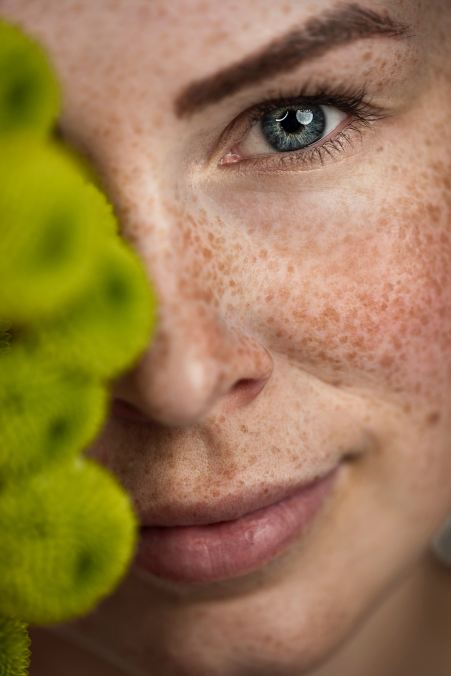
Spattered,

Scattered,

Splattered

Like galaxies

Of reversed light

Upon the expanse

Of skin.

Concentrated pigment

On the canvas

Of the body,

They speckle

Like stars

Reflected

In the negative of film.

Beloved,

They dance upon

The nose.

A freckled

Symphony

Of brown and gold.


For the dVerse Quadrille Challenge


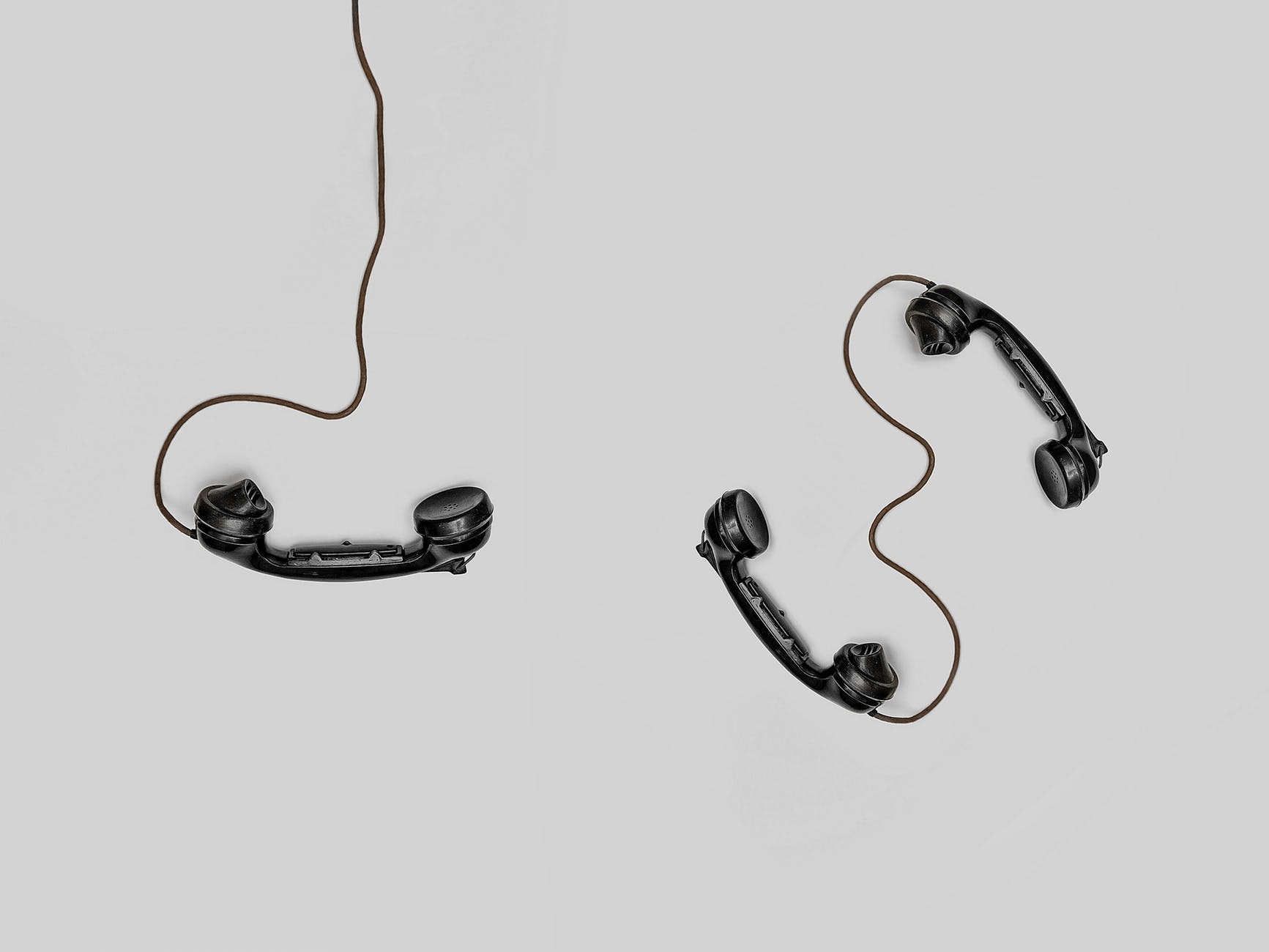
The Amateur

three black handset toys

Photo: Alex Andrews on Pexels.com


He was an amateur in

Matters

Of the heart.

Oh, he prided himself on being

An expert

Of the physiological

Domain.

And perhaps a tinkerer

In that

He was.

But he was not even

A dabbler

In intimacy.

He lacked all expertise

In the understanding of

Connection

Or trust

Or hope.


For Sammi’s Weekend Writing Prompt: Amateur in 51 words


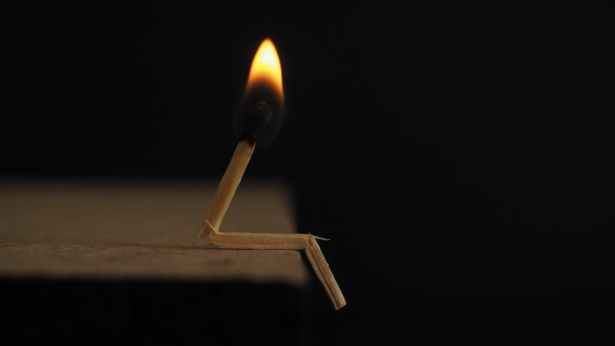
Cleaning Up

lighted matchstick on brown wooden surface

Photo Sebastian Sørensen on Pexels.com


No amount of soap and water could clean up this mess.

Even if I were to try, I wasn’t quite sure how I’d go about it, or if the effort was worth the results. Perhaps it’d be better to burn the whole thing to the ground and start from scratch.

I eyed the matches on the stove and looked at what I could no longer justify keeping around.

I wouldn’t miss most of it. Or so I had to hope.

My fingers struck a match and I held the small flame to the ring, amazed as always by how easily it grabbed hold and circled to make a blue-yellow-purple circuit of heat.

The fire leapt and danced and hissed.

I sighed.

It was time to wave good-bye. I needed a fresh beginning.

I set the kettle on to boil, sat back down, and hit “Delete.”


For Linda’s SoCS writing prompt: Clean/Dirty