
Photo: Amitai Asif
Norway fjord
Smooth as glass
Flowing cold
Through mountains’ pass.
For Cee’s Fun Foto Challenge: Smooth

Photo: Amitai Asif
Norway fjord
Smooth as glass
Flowing cold
Through mountains’ pass.
For Cee’s Fun Foto Challenge: Smooth

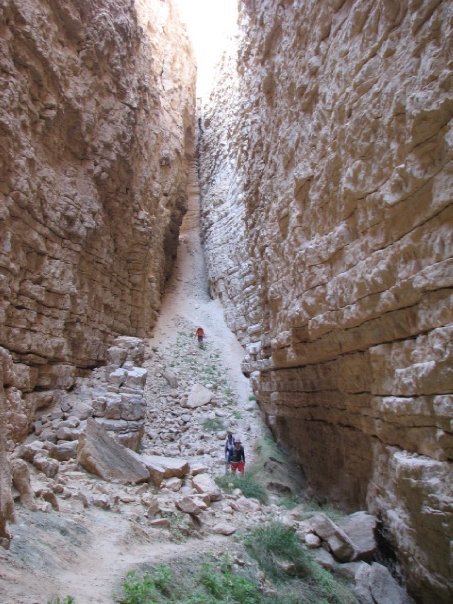
Photo: Osnat Halperin-Barlev
Layer by layer
They go back
In time,
Descending through eras
They can carefully
Climb.
What whispers
What stories
Does the wadi
Impart?
Will their souls see
The footprints
These rocks know
By heart?
For the Tuesday Photo Challenge: Layer

 Photo Courtesy of Susan Spaulding
She came across them at the thrift store, squashed in a box along with moth-eaten scarves, a pair of slacks with holes that could tell many stories, two helplessly dented hats, and some fabric scraps.
She was about to lift a shoe to ask about the price when the proprietor glanced in her direction. “Those are by the box,” he drawled. “Take it or leave it. No picking.”
“How much?” She swished her hand inside the box and shrugged, worrying he’d overcharge her if he detected interest.
“Thirty.”
Her eyebrows hiked up on their own accord. The shoes alone were worth ten times as much.
“Twenty, final offer,” he misinterpreted her gesture.
She gazed into nearby containers till her thrumming heart settled down and she could pour something less jello-like into her legs.
“I’ll take it.”
She carried the box to the car fully expecting to hear the shopkeeper’s voice calling her back to point out a mistake. No call came.
Finally at home, she rescued the shoes, stuffed them with tissue-paper, and placed them reverently under Great-Great-Grandma’s bridal gown. Family lore was that she’d had big feet and had to wear men’s shoes. Those were a perfect match.
For Susan’s Sunday Photo Fiction


Photo: Ofir Asif
Fly by
The moon
And kiss a new star
Goodnight.
Fly by
The sun
And let its light touch
Your mind.
Fly by
In play
To draw a blue skies
Outlined.
Fly high
Today
And know I’m not far
Behind.
For the Sunday Stills challenge: High flight


Photo: Simon on Pixabay
He grew up in the shadow of Sagarmatha, where people’s moods shifted with Miyolangsangma’s and with the weather on the mountain foreigners insisted on calling “Everest.”
“Sagarmatha is her palace,” Dādā warned. “The uninvited should not trespass into the realm of the Goddess of Inexhaustible Giving. She turns many back. Some die.”
Most in the village agreed, and still they sent men to guide foreigners to the summit. Faith did not pay for necessities, while the visitors, eager if unequipped for the altitude and Miyolangsangma’s moods, paid well. Surely the Goddess understood.
“Foreigners are ignorant,” the old man argued. “But you know better than to show irreverence.”
He did know better. But Dādā needed medicine.
“I’ll stop by Rongbuk Monastery,” Garvesh proffered on the eve of his first ascent. “I will get the monks’ blessing.”
“It will not stop Karma,” his grandfather sighed. “Or what may be our last goodbye.”
∞ ∞ ∞
Trivia and Glossary:
For What Pegman Saw: Mount Everest, Nepal


Photo: Atara Katz
In the game of
Standing out from
The crowd,
There is little more distinct
Than the
Distinctly
Indistinct.
For Sammi’s Weekend Writing Prompt: Indistinct in 18 words


Photo by D. Tong on Pexels.com
It was his job to be the critic.
He’d taken it on when he was but a child and there was naught by chaos all around him.
Criticizing was a way to put some order into madness, to have at least the illusion of control.
Not that he’d criticize them openly and risk the switch or belt or backhand or the things that were … well … worse.
But criticize he did.
Mostly himself.
At first as practice.
Then as habit.
Then as something he would do without even a pause to think.
Offer a knifing critic.
Of his actions. Of his wishes. Of his hopes. His thoughts. His dreams.
What had began as coping, turned a prison.
And the jailer was inside him.
The sentencing, his own.
For the SoCS Saturday Challenge: Critic(al)

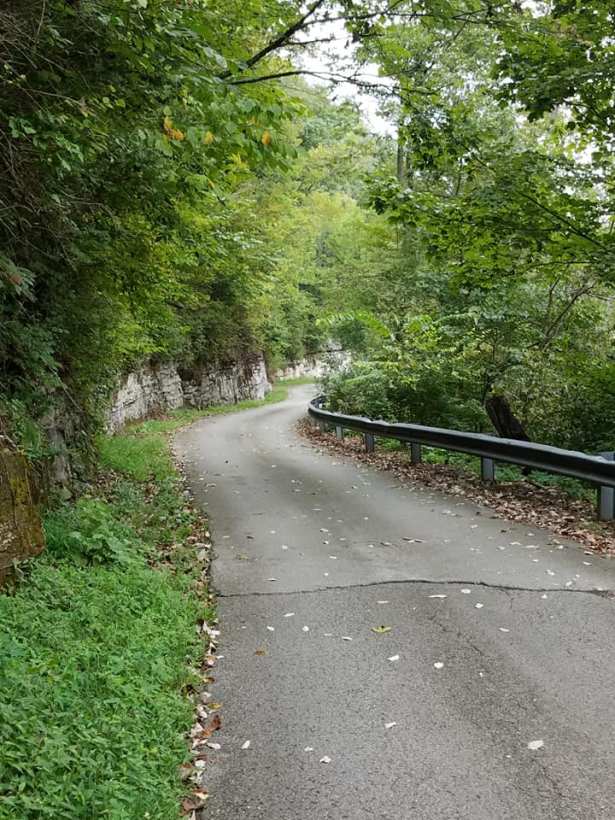
Photo: Philip Coons
Which way does this road wind?
Where to goes the crack?
Do the rocks that line the path
Hold answers
Or hold back?
For the Which Way Photo Challenge


Photo: Na’ama Yehuda
In a while
There will be all colors
Of the rainbow
And then some
More.
In a while
There will be radiant
Greens and sunny yellows
And all the different
Shades of
Purple
To show.
In a while
The monochrome of winter
Will make way for
Brightly colored
Spring
To make eyes and hearts
Glow.
For the Wits-End Weekly Photo Challenge: Bright Colors


The youngsters always met by The Pillar.
Their parents had. Their grandparents had, and the great-grands before that and on and on till time before time. It was a rite of passage of sort. A congregation-point for those just past the threshold from children to adults.
There was no timetable for how long it was before a set of youths made way for those younger still. Yet the time never seemed to be very long, no matter the outward circumstances.
In olden times such changeover was marked by many youths’ marrying shortly after adult bodies and responsibilities were taken on, as it was believed that matrimony was the lead to sensibilities. Any youths lagging behind in house-making would soon enough stop visiting The Pillar anyway, perhaps as it would feel unseemly for them to be seen hobnobbing with total greenhorns to the adult world.
In modern times, with childhoods that stretched well beyond the bounds any elder would consider reasonable, and with less children in town to nip at the heels of those frequenting The Pillar, youths nonetheless rarely mingled by it for much longer than they would’ve in the past. Just their chronological age had shifted some, from puberty to closer to the end of high-school.
Looking back, few could tell exactly what about The Pillar had drawn them to the location. Sure, the isolation allowed for some actions full-fledged adults would likely frown on (though they’d done the same — and sometimes worse — themselves), but there were plenty other isolated places to find privacy in. Blustery in winter and mosquito-swarmed by summer, the field where The Pillar stood was not exactly the height of comfort. Still by tradition or something more, the youth were drawn to it like moths to light.
It was the fairies, some whispered, magic of the Fair Folk, conjured so they could feed upon the newly discovered energies of youth, necessary to the Fairies’ sustained immortality. Others pooh-poohed the folklore, perhaps unnerved by the notion that anything but their own will had caused them to view as irresistible what later on looked quite the dreary spot.
“It was just the adventure,” the latter would grumble. “Every child in town grew up dreaming of being old enough to go to The Pillar. Of course we wanted to finally do so.”
Still they could not explain what had made them suddenly wish to visit it. Or why it had just as suddenly lost its charm.
When pressed, they’d shrug that “it’s been there as long as anyone remembers.” As if that was explanation enough.
Lore or not, the youngsters always met by The Pillar.
And there The Pillar stood. Slanted by age or forces beyond comprehension. Till another age of the earth would come.
For Sue’s Thursday Photo Prompt: Timeless

A place to improve my writing skills, and that's all.
We're not thriving, we're creatively photosynthesizing under duress.
History of the Bloomingdale area on Manhattan's Upper West Side
A creative miscellany of mythic fantasies
a weekly flash fiction prompt inspired by google maps
A community for writers to learn, grow, and connect.
To participate in the Ragtag Daily Prompt, create a Pingback to your post, or copy and paste the link to your post into the comments. And while you’re there, why not check out some of the other posts too!
I can't sleep...
Alternative haven for the Daily Post's mourners!
never judge a girl by her weight
original fiction and rhyme
You have reached a quiet bamboo grove, where you will find an eclectic mix of nature, music, writing, and other creative arts. Tao-Talk is curated by a philosophical daoist who has thrown the net away.
A photographer's view of the world - words and images to inspire your travels and your dreams
Life in progress
Straight up with a twist– Because life is too short to be subtle!
WordPress & Blogging tips, flash fiction, photography and lots more!
Light Words


You must be logged in to post a comment.