No Time

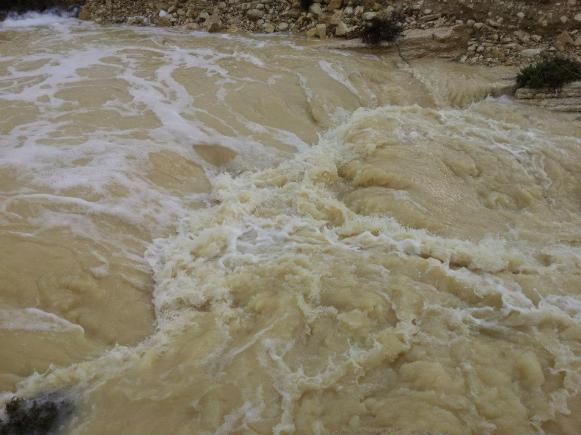
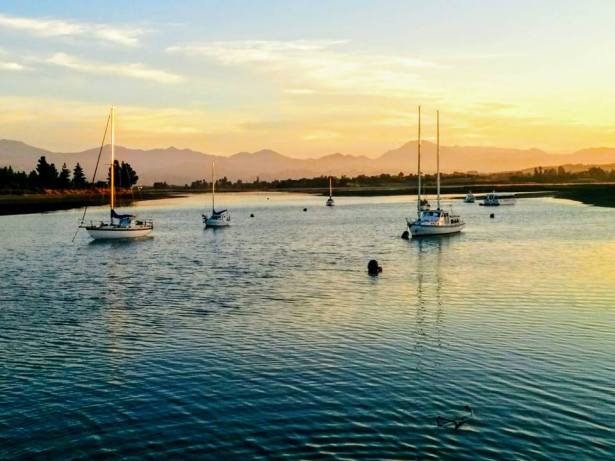
flash flood OfirAsif

Photo: Ofir Asif


She ran into the camp,

Braids streaming behind like ribbons

In wind,

Determined to be

Unbound

For a time.

The women raised their heads,

Weary from tending to

Crops and overtired babies.

This time of year was plentiful in many things but

Not in time.

“What is it, child,” her elder asked,

The rhythm of rocking the cradles of milk

And infant

Adding a lilt to her aged voice,

Raspy from smoky fires and chaff

Of time.

“Help,” the young one breathed,

And stalled,

Needy of air and flooded by sudden doubt.

“Speak up, child,” her mother snapped,

Tight with worry for a girl-child

Chased home,

And the shadows

of another time.

The camp stilled.

A baby woke in cry.

“Come help,” the lass repeated, indignant,

No longer shy.

“The creek rises and a cow is screaming

Across the arroyo.

We have no time!”


For the dVerse prosery challenge


The Farm

weston-mackinnon-nl4t7NlIurc-unsplash

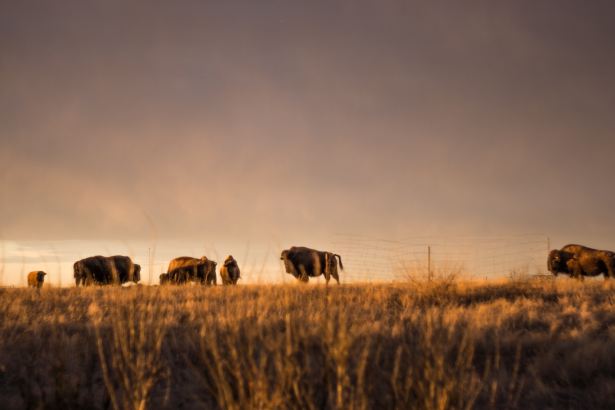
Photo: Weston MacKinnon on Unsplash; Saskatchewan, Canada


“Look Papa!” the boy’s voice rose in excitement.

“I see,” the man replied. His deep voice resonated in the small space.

“You didn’t even move your head,” the young eyes narrowed in suspicion.

“I did not need to.”

The child exhaled and shook his head and the movement reminded the man of a yearling. Impatiently straining at the edge of youth, eager to race headlong into life.

The man eased the pressure on the pedal and moved his foot to the other, stopping the car.

“I am looking now,” he smiled. “Thank you, Son.”

The boy’s eyebrows rose but he asked nothing. They watched the buffalo together, the sun and field and beasts a golden-brown.

“Is this their farm?” the boy finally asked.

“It is their home,” the man replied. “The farm came to live on it.”

The boy nodded, his ancestors evident in his soulful eyes. “They are like us.”


For What Pegman Saw


One Down

Photo: #CCC56


It wished it could put its wings down.

For once.

Or rather, once again.

It was convinced that the only thing worse than being placed under a spell was being placed under a spell while one’s appendages were … well … spread-eagled.

Sure, the effect of petrifaction was dramatic. Everyone liked a good statue. What everyone conveniently forgot (for any educated person would have read about Narnia) was that most statues that appeared life-like were actually … petrified.

In every sense of the word.

You try holding your pee for that long. And let’s not even talk about kidney stones.

Or eggs.

Or last year’s meal, still lodged.

And yet, it was the perpetual taking off that rankled more than anything. The anticipatory knots in the back of the shoulders. The wind’s lift that refused to take hold.

It was a relief when the earthquake broke a wing.

One down. One to go.


For Crispina’s CCC challenge 56


Over Barricaded

pawel-czerwinski-0lCqhJxu6D8-unsplash

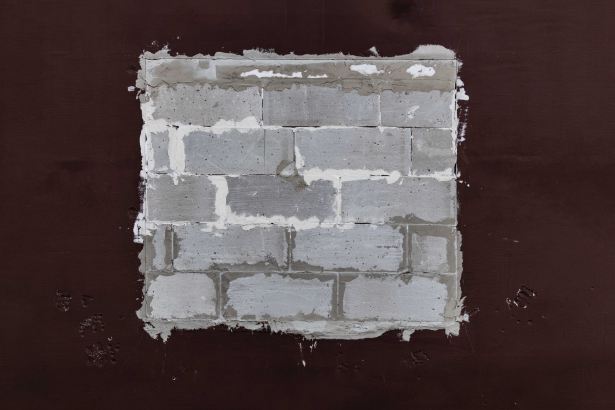
Photo: Paweł Czerwiński on Unsplash


There was a wall in there.

A barricade against the world.

He’d built it, bit by bit, from hurts and slights and bigger woes.

And hid.

Within.

Where he thought he’d be safe, and from where he could watch from a distance, reassured by barriers and gates and locks and elaborate booby-traps that made sure no one got too close.

There was a wall in there.

And a moat.

Alligators, too. For insurance.

Only that they had become hungry with the years, as less people even attempted to get near him, and therefore there was less bait.

So that he was, in many ways, imprisoned.

He’d been young when he’d built the wall, and he didn’t plan ahead. So needy of a solid barricade he’d been, that he never made a way to unlock the gate.


For Sammi’s Weekend Writing Prompt: Barricade in 136 words


The Key

michael-dziedzic-1bjsASjhfkE-unsplash

Photo: Michael Dziedzic on Unsplash


It was the key that would change everything.

He only found it because Cooper, ever disobedient, had slipped the leash and ran off the trail and into the thick of the woods. Again.

Deena thought his walks in the forest were cruel.

“It is his breed’s nature to hunt scents,” she’d inevitably complain about the leash, ruining what calm there was to be had in an afternoon walk. “How can you chain him to you when he’s meant to run where his nose leads?”

In Leigh’s view, walking the canine on paved sidewalks where there was no loam or crushed insects or chipmunk poo for Cooper to breathe, was actually far crueler. And so, like they often did when it came to disagreements, they ended up taking the easier way out by splitting the walks between them.

Deena would walk Cooper in the mornings in the neighborhood, where the most the dog could sniff was garbage cans and the occasional fellow leashed-pooch’s butt. Leigh walked him after work, and almost always in the direction of the woods, where in some ways they were both of them at home and both straining against some kind of leash.

It wasn’t perfect and sometimes it was lonely, but he preferred it that way. Quieter. With none of Deena’s nattering about minutia that he found excruciatingly boring to listen to and only slightly less indecent to ignore.

Not that he’d say that to her. Life was better when some observations were kept to oneself.

Like about keys …

He’d been running after Cooper when he tripped on an exposed root. A stream of words he’d learned while serving on a Navy ship spilled out of his mouth, when a shape manifested on the leaf-strewn forest floor. And it was as if a switch flipped and turned his mouth dumb.

He swallowed but there was nothing. His body shuddered with the memories of how quickly a mouth can turn devoid of moisture. That, too, he’d learned while serving on the ship.

He shook it off to make the involuntary shaking into an act of volition. Still his heart whooshed in his ears as he took a knee to the wet ground and reached for the key.

He didn’t know how long he remained frozen, fingers hovering without actually touching the bit of metal. Long enough for Cooper to return to investigate. Because the next thing  Leigh was aware of was Cooper’s wet nose, sniffing at the object of his master’s interest, licking Leigh’s fingers, breathing on his cheek.

“Move,” Leigh nudged the canine gently out of the way.

And Cooper, for once respectful without bribery, obeyed, and stretched with head on paws, his tongue dangling and his long body smeared with something Leigh noted to himself in passing would need scrubbing off with soap before being allowed back indoors.

“It’s the key, Cooper,” Leigh whispered. He was awed. He was aghast. “But how?”

It’s been eight years, five months, and two days since he’d lost it. On a different continent, in what felt a different world, in the middle of a battle, and not two hours after he’d sworn to his dying best friend that he would guard it with his life and bring it home to the fiance Mark had left behind.

“It was to be my wedding gift to Deena,” Mark had gasped, fighting for every breath. “She doesn’t know about it. I was waiting to tell her. It’s the key to my safe.”


For Linda Hill’s SoCS prompt: Key


Night Flight

Photo: Sue Vincent


It was the island that saved her, in the beginning, in the middle, in the end.

At first it had been the noting of it. The realization that there was a place, not large and yet separate enough as to hold its own. Like herself, if she could manage it.

She wasn’t sure when exactly the understanding settled, only that she’d come to trust that if she ever had to, she could go there. To be safe.

That knowledge had held her in the years of interim. The island was the picture that she’d scanned across her mind each night as she tried to not take notice of what was taking place in her, on her, all around her. She took herself there, in a sense, long before she actually did. She nursed her wounds with the option. It was a salve onto her lacerated soul.

Then came the end.

Or the beginning.

Of other things. Of opportunity. Of a rebuilding of what she could be and didn’t until then form into a tangible possibility.

She made her way there under darkness. She’d had all the facts by then, gathered through secreted research and observation: the distance, the temperature of the water in different seasons, the topography, the places where there had been some shelters, and the times when people weren’t likely to frequent.

It rained the night she fled. A calculated risk she took and refused to worry could backfire. To stay would have been worse. She wouldn’t, anyhow.

The chill sucked her breath but also numbed her agony. She swam. She swam. She slammed laden limbs into the water and took herself onto the island and clenched her teeth against the chatter. The crossing had taken all she had. Almost. Just almost.

For from the flicker of willpower that remained, she lit a shallow fire, and the flame sustained her through the night and into dry clothes and the final ease of trembling. By the next night she slept, and by the third she made her plans for what else she’d need to be doing.

And she laughed.

For the first time in a long time.

Because she was safe.

She was not large, but she was now separate enough to hold her own. And she was strong.

He’d look for her, but he would not risk telling others, and he would not seek her where she was. She knew.

Her father feared the water, and from the moment she’d realized how the island could offer an escape, she’d made sure he believed she feared the water, too.


For Sue Vincent’s Write Photo challenge


Sardines

Photo prompt © Fatima Fakier Deria


“We’ll never all fit,” Sultana groaned.

“Lots of room!” the driver boomed encouragement even as he tightened screws underneath the van.

“C’mon!” Mariam elbowed past her cousin and climbed onto the vehicle, parcels and a flapping hen in hand. “Next one isn’t till dawn.”

Sultana looked around as if better conveyance would miraculously manifest. None did. She sighed, grabbed her packages and hoisted the bleating kid under an arm. She squeezed aboard, the last one on, with barely room enough to sit down.

The door slammed. The goat peed, soaking her lap.

It’ll be a long ride to Jaddati’s farm.


For Rochelle’s Friday Fictioneers