Upending

libby-penner-T6hnY1p4q3I-unsplash

Brugge, Belgium (Photo: Libby Penner on Unsplash)


Some call this city “Venice of the North,” but they don’t know the other direction this town goes, and it is not one of the winds.

I know, because I’ve seen it.

Seen what lies beneath the streets, glazed over by blind eyes of tourists snapping photos, dismissed by those who should know better yet still refuse to view.

For the ones beneath need acknowledgement to manifest. Not trust, recognition.

I know, because I don’t trust them. Not one bit. And yet they are there, plain as anything: The Upenders.

They’ve been here before people, and they expect you pay respects. Their mirage is reflected in the still waters of the canals, and when you let yourself go below the floor, beyond the basement, they’ll reveal themselves. If you won’t visit, beware. For when you least expect, they’ll rise to flip yours over, resentful of a willful ignorance of Upending.


For What Pegman Saw: Belgium


Not Long Enough

dusk1 OsnatHalperinBarlev

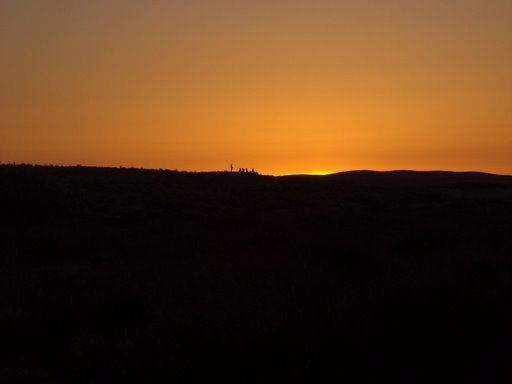
Photo: Osnat Halperin-Barlev


“It will be long enough, for a life,”

He said.

She blinked back tears

And said nothing

Because she knew that no matter

How long he would be

Around

Would not be longevity

Enough

For her.

Instead, she patted his hand and

Plumped his pillows

And fussed with the covers

Over his beloved

Form,

Once robust,

Now a shadow of itself.

The shadow smiled.

He understood.

He always had.

At his last inhale, she smiled back.


For Sammi’s Weekend Writing Prompt: Longevity in 76 words

Note: Dedicated to all tender goodbyes. Especially the final kind.


Fortified


They’d fortified the ceiling.

So they said.

The old structure needed periodical reinforcing.

So they said.

The thickness of the walls supported their claims. The deeply recessed windows. The heavy coats of paint on ancient plaster.

‘Twas all a ruse. Of course.

The false ceiling hid a warren of crawl-spaces and narrow hiding places. A stream of escaped slaves was followed by a flood of those fleeing Nazi persecution and thereafter a steady trickle of modern-day refugees.

The ceiling hid them all. Young and old. Broken and defiant. Desperate and bewildered. Men and women and the all-too-heartbreaking child.

Some stayed a night. Others for longer sheltering. Hilda had stayed the longest. A girl on arrival, she was almost a woman at war’s end. She emerged educated. In silence. In stealth. In compassion.

She became the guardian of those who followed.

Fortified with hope of one day needing it no more.


For the Crimson’s Creative Challenge

Note: Dedicated to all the heroes who — often at tremendous risk to themselves — had managed to shelter the needy, the desperate, the voiceless, and the vulnerable during times of injustice, persecution, violence, horror, and hate. To all who do so still. May we one day need to do so no more.


Side-Effects

pawel-czerwinski-2Y8ol_OBS1I-unsplash

Photo: Paweł Czerwiński on Unsplash


They said it was the best thing for it.

They hinted that to forgo discussing it will

Mean all manner of awfulness

happening

(And would, perhaps, be partially my fault

For not taking steps to fix

By listening).


They showed how it would better

Everything:

My house, my shape, my friends

My job.

May even lead to what I never had

Or always wanted

But an illness was sure

To rob.


The ad said it was the best thing for it.

A discovery deserving of a

King.

If only my eyes hadn’t left the screen

To pluck an errant string,

Which had my ears

Abandoned

To the chatter —

Which had previously lay hidden

Under sprawling beaches

And smiling people

And every beautiful

Thing —

And I heard

The actual words

That listed

All the side-effects

(from death, to heart-attack, to vomiting)

That this supposed

Miracle drug

Was likely to also

Bring.


For Linda Hill’s SoCS prompt: Flyer/Ad


Warehoused

Photo: © J Hardy Carroll


The cells were small. Sturdy enough to keep them separated. Aerated enough to keep them alive. Near enough to let them marinate in each other’s misery.

What the jailers did not foresee, however, was how they were just close enough to offer comfort. Fingers laced through fencing let them hold hands. Almost.

Oh, they moved to corners when anyone came. Pretended to hate each other. Endured each other’s fake bullying that so amused their captors.

But in the silent moments they sat close, back-pressed-through-chain-to-back. Their ‘caretakers’ warehoused them like animals, but the children’s defiance held: they remembered they were siblings.


For Rochelle’s Friday Fictioneers


Just A Crack

andrew-buchanan-2wLGsN6rREg-unsplash

Photo: Andrew Buchanan on Unsplash


“It is just a crack,” she said,

“A splinter off of perfection.”

‘Twas more than that, she understood,

Knowing what effort it exacted of her

To keep her direction,

To balance scales just so

They did not tip life

And hope

Into utter disconnection.


For the dVerse quadrille challenge: Crack


Middle Child

P1010891a

Photo: Keith Kreates


Her rooms were in the middle of the castle, hovering above the center of the river, sandwiched between two layers of guard rooms, bordered on both sides with sentinel halls.

Her residence, her very life, was perched between the woods on one bank and the manicured gardens on the other, split between one land and another, between a grand promenade entrance on one side and an into-the-wild entrance on the other, belonging to both and owned by neither. It was so by design.

Oh, she was no prisoner. She had the freedom of the castle and the pleasures of the adjacent lands. She could go riding or strolling, hunting or frolicking, visiting or picnicking. As long as she made sure to spend the exact time on either side of the river, as long as she took heed to show no favor, no preference, no prediliction.

Three of her attendants were timekeepers. One from each side of the river. One from a foreign country altogether. All three carried hourglasses and were charged with maintaining synchronicity. Disputes were rare, for they would mean a cease of all outdoor activities till the disagreement resolved, cause a strain on her well-being, tarnish their families, and lead to possible replacement. The timekeepers kept discrepancies to a minimum.

The comparable reality extended to everything: An exactly equal number of ladies in waiting from each side of the river, exactly the same number of servants, workers, soldiers, guards, and tradesmen who were allowed to live and work in, or gain access to the castle. The same number of her dresses had been made on each side of the river. Half the furniture, too.

The constant balancing act was tedious. It was also necessary.

“You are the bridge,” her governess had explained to her when — still a child — she was fed up with being shuttled across the castle mid-activity, so equal play time on the other side can be maintained. She did not want to have two of everything and be required to play with each equally. “You were born to end five hundred years of bloodshed.”

Her parents had defied odds and had sought alliance instead of massacres. They’d built a bridge over the fear and hate that endless war had fed. They’d began construction on the castle. They’d birthed her.

The people had watched and waited.

She was barely toddling when her parents’ carriage had gotten ambushed by some who’d believed that ending the alliance would enliven the centuries-old feuds. The warmongers were wrong. They’d killed her parents, but not the want for peace. People on both sides of the river came for the murderers. People on both sides worked to complete the castle-bridge and ensured the princess could be raised in its center.

It was on that day, cocooned in her governess’s lap, in the room above the river that had for generations divided her people, that she truly understood: After so much distrust, an exacting fairness had to be the glue that would hold peace till lasting trust could grow.

No betters. No less-thans. Not even the appearance of favorites.

The efforts to keep it so were sometimes so precise as to be ridiculous, but she preferred to err on the side of the absurd, rather than risk her people any harm.

She was the princess on the bridge.

Her rooms were in the middle of the castle, hovering above the center of the river, sandwiched between two layers of guard rooms, bordered on both sides with sentinel halls.

Her residence, her very life, was perched between the woods on one bank and the manicured gardens on the other, split between one land and another, belonging to both and owned by neither. It was so by design.


For Kreative Kue 238