Sometimes all life takes
is
a
new
perspective

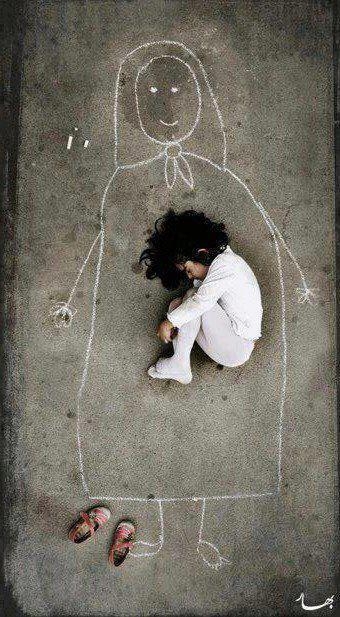
This is a fabulous, tender, truthful, healing post by a gifted psychologist, therapist, writer, and healer.
It applies to so many, in so many ways.
It is practical, heartfelt, deep and deepening.
Read. Share. Repeat.
http://adeleandthepenguin.com/struggles-and-strategies-for-the-motherless-and-unmothered/

The link below will lead you to one of the best interviews about PTSD I have ever seen, hands down.
The fact that Rachel Yehuda is my cousin is an added bonus–I am ever so proud of her: for the person she is, for the work she does, for the wisdom and empathy she imparts, for how she has literally changed the field of PTSD in the last 25 years.
(I recommend reading the transcript, not just viewing the snippet of video on the site)
Take a look. Take a read. You will be glad to have taken the time:
http://nautil.us/issue/31/stress/ingenious-rachel-Yehuda
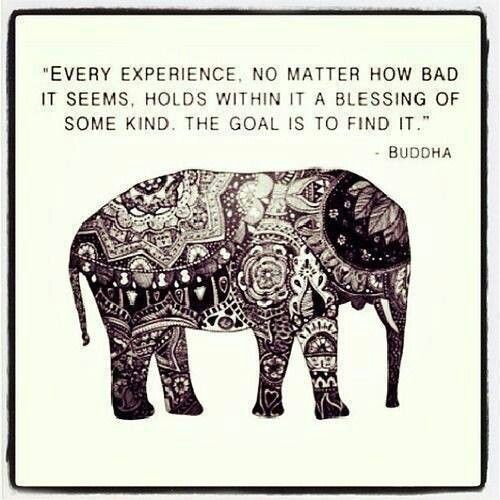

It is always good to be … in good company …
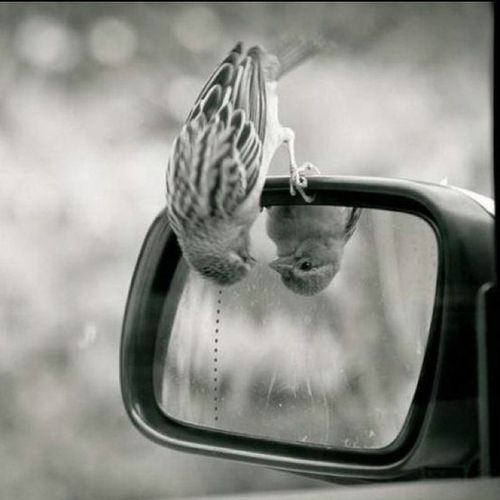
Recognize the miracle that we each are …
A teaching mirror-mirror moment, by an adorable 3 months old.
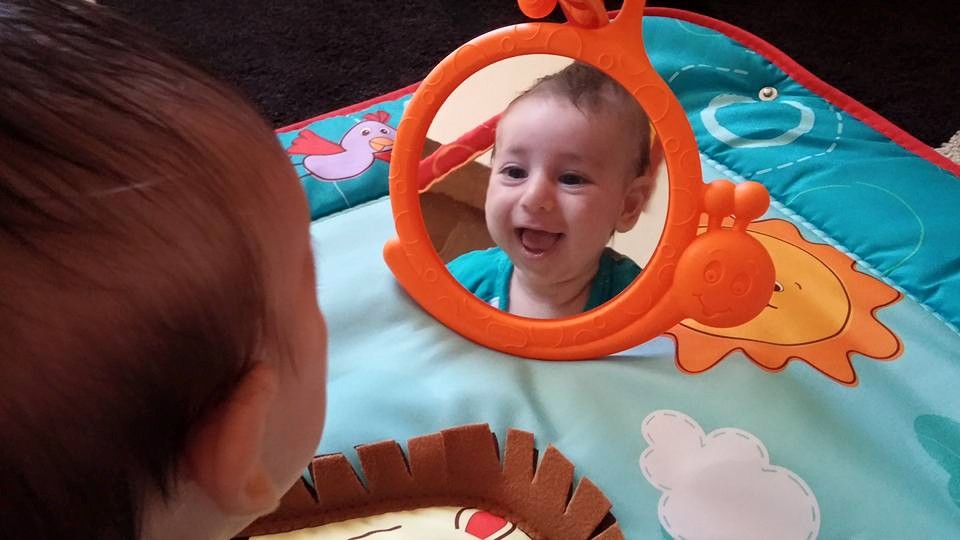
Photo by: Smadar Halperin-Epshtein

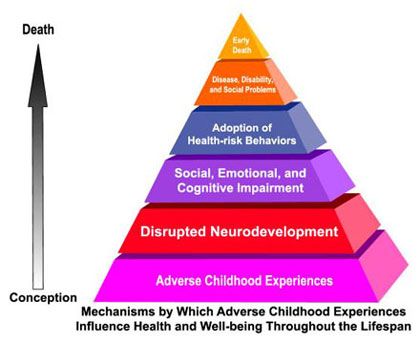
How do childhood adverse events affect development? How do they impact health? How much does it cost society to have children exposed to adverse events? What are the social ramifications? How does childhood adversity reflect in mental-health? In illness? Can we prevent childhood adverse events? Why is it worth it for society to invest in prevention and treatment of childhood trauma?
And other questions: What is more harmful: second hand smoke or childhood maltreatment? How is that reflected in funds or investment in prevention or treatment? Where does asthma come in? What can we do about any of this, anyway?
To find the answers to these questions and more, check out this amazing presentation (also available in PDF and PPT on the site–see links below).
This free resource is available due to the generosity of Frank and Karen Putnam along with their colleagues, who created this presentation in the hope that it will be widely disseminated and that it be used as an education resource for the public as well as for researchers and clinicians. The presentation details the prevalence, impact, treatment, and importance (it is highly possible!) of prevention of child abuse and neglect. The authors encourage everyone to use the presentation and share it.
The slides are available on the website http://www.canarratives.org/
To view the Power Point Show: CAN_Narrative_4-26-15-v2L4
To download the pdf: http://static1.squarespace.com/static/552ec6c7e4b0b098cbafba75/t/553e3673e4b09e094f914b8f/1430140531869/CAN_Narrative_4-26-15-v2L4.pdf

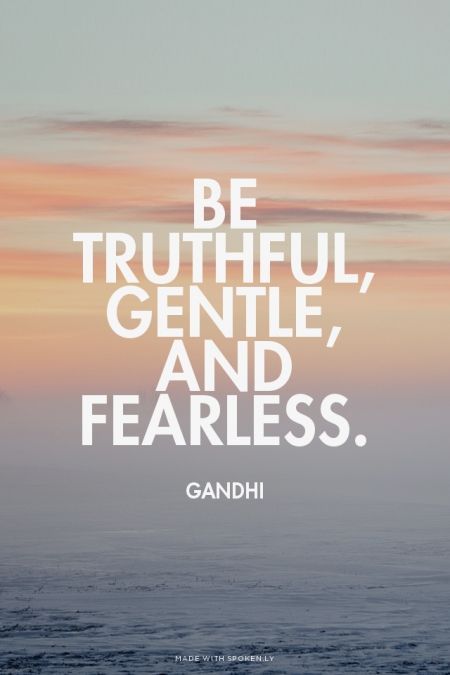
“What does it mean, to tell the truth?”
A child asked me that. As usual, they are my greatest teachers. “What do you think?” I returned the question, wondering at the child’s working hypothesis (and chickening out just a little bit–let the munchkin do the hard work …).
I got the look I deserved, and: “To not be a liar.”
“Hmm,” I non-committed. “What does it mean to lie?”
“To say you didn’t do it but you did?” he tried. “And to be mean.”
I raised an eyebrow. This kid was good at reading body language.
“Yeah, because someone else get in trouble.”
“Oh, I can see how that would not be very nice, to get someone else in trouble. Anything else lying means?”
A moment of scrunched forehead. “Is it still lying even if you pretend you didn’t do it but you don’t say?”
“What do you think?”
A sage nod. A sigh. “Yeah, it still mean. Someone still get in trouble, right? Because the teacher think its them.”
“So…” I prompted (he was doing so well on his own, I felt like my words would be interfering).
“So … telling the truth is being not mean?” he ventured. His little face was quite serious, thinking this through.
“Hmm.”
“But truth is hard,” he sighed, a six-year-old summing up centuries of philosophy. “It can get you in trouble. … you know, if you did bad things.”
He paused. “But … then you can say sorry, maybe. Maybe you won’t be in trouble. … if you’re lucky.”
“Yeah, being honest can help.”
Big brown eyes hung onto mine. “What do you think is worser, being mean or being in trouble?”
Tough one. I’m returning it to him. “What do you think?”
“Being mean.” He did not hesitate. “Being mean is worser.”
“How come?” I pushed. Curious. Enchanted by this child.
“Oh … because … being mean makes me more in trouble,” he stated. Pointed to his midriff. “With my heart.”
Old soul, big spirit, that.

A friend sent me this photo, taken 1910 … and I thought, it was the best BEST example ever, of bending the rules … (or at least those rules that make no sense beyond to those who made them … )
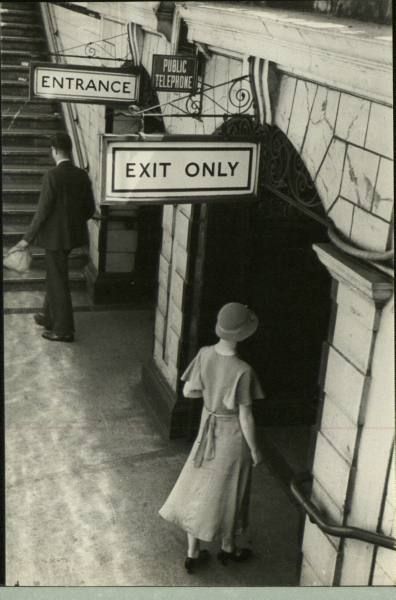
I was reminded of it today, after speaking with a young boy who complained that he got into trouble–yet again–for breaking “another of the teacher’s stupid rules.”
The boy’s mother had her mouth already open to reprimand him for using a word one ‘should not say’ in the context of one’s educators … but I gave her one of my ‘please don’t’ looks … and she took a deep breath and nodded.
“What kind of rules?” I asked.
“Stupid ones,” he grumbled. Then seeing that I was actually waiting to hear an example, he sighed. “Like not being allowed to hold our pencils while we’re reading. She keeps taking points off when I break the rule.”
“Did she tell you why she doesn’t want you to do that?”
“I don’t know,” he shrugged, “because she said so?”
I chuckled. “Fair enough … sometimes grownups say that you should not do things just because they say so … but I was wondering if she ever actually told you why. Sounds to me she maybe has a reason–maybe kids play with their pencils? Drop them a lot and it is distracting? Doodle in the books?”
The boy peered at me with a look that let me know that I have just lost about 200 points of coolness in his view along with several dozen in the IQ department. “Sometimes we’re supposed to write in our books,” he stated, “… anyway, if she said it was for that it would make sense, sort of” he added. “I don’t drop mine. I just hold it. She doesn’t want us to hold the pencils just because.”
I raised an eyebrow. “Just because?”
“Yeah,” he stressed. “She said that we don’t need a pencil in our hands for our brain to read…” the boy pouted. “How does she know what my brain needs for reading? What if the pencil reminds my brain what the letters are?”
Point made.
I actually could see how it could do that.
I told the little guy that if it helps him to hold the pencil when he’s reading, to go ahead and do so.
He looked at me, suspicious. “It’ll get me in trouble.”
“Not if you tell her that I told you it’s okay for you to keep holding it if it helps your brain.” I smiled, more than a tad conspiring.
His eyes grew large, and the grin that followed had enough wattage to light up Manhattan’s night sky.


People’s Climate March NYC — Adam Smith
Today, in NYC
And all around the world
The People’s march
For Climate, for
The world
That we live in
For the children
To whom we will leave it
For the living beings
That need to breathe
And feed
And grow.
One march
One purpose
In New York City
In Paris, London, Amsterdam
Sidney, Stroud, Zurich
Genoa, Rio, Rome
Melbourne, Munich
Brussel, Brisbane, Berlin
New Delhi, Kathmandu, Canberra
Huddersfield, The Hague, Hyderabad.
A People’s march
For the climate
For the blue marble
That holds us all together
On its surface
And that we must hold dear to
In our doings
In our hearts.

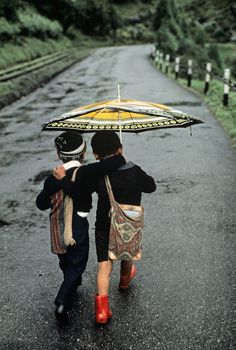
“I have a best friend!” he announced.
The little boy was a tad breathless from climbing up the stairs, but also from the excitement of the news he had to share and what it meant to him.
“You do!” I grinned. This was the first time I saw him since the summer break, and evidently this was the highlight of the boy’s current experience.
“Yes! His name is Andy and he is in my class and he has a sister and he is my best friend … my BEST-friend!” Breath, breath, grin, “we’re even the same tallness!” (delighted sigh)
“You are best friends and you are the same height?” I smiled. His joy was absolutely infectious. “This is super cool!”
I am yet to meet a child who is not delighted in friendship though it is harder to come by for some than for others. This little one had it the more challenging way. Always the smallest in his class in stature, always a tad behind in understanding, two seconds slower to get to an answer, a bit clumsy, a little late to catch a joke or ball … Remnants of the difficult beginning of his life and the deprivation that his brain endured to oxygen and possibly nutrition even before he was born; remainders of the excess of chemicals that no developing neurology should have to be exposed to. Alcohol. Narcotics. Who knows what more.
A heart the size of the Pacific, and a soul to light the universe and yet … friends did not come easy to this boy. Somehow groups formed to his exclusion. Somehow best-friends paired up without him. Most children were not unkind, just egocentric, and he was just odd enough, slow enough, different enough, to fail first-choice.
“Andy’s a total doll,” the boy’s adoptive mother confirmed. “They have been inseparable all summer. They are exactly the same height, by the way … They met at summer camp,” she paused, letting me understand. The summer day camp my little client went to was geared especially to include those who had some challenges: children whose difficulties may be invisible to most and yet no less compelling; children with sensory integration issues, with language and attention and learning and a-little-slower-on-the-uptake issues; children who often found it a little harder to keep up … or to make and keep friends.
“Yea!” the little boy jumped in, “and then he came to my class and he was new but I already know him so we are each other best-friends!”
How perfect. For once this boy–so often the follower and tag-along–was let to lead … even if he was to be a shepherd for one (for now …). For once he knew more about something or someone than others or was at the very least aware enough of it. For once he did not have to compete because the connection was already made during the summer and seamlessly continued from day-campers to schoolmates.
“Other kids can be his friends,” he noted sagely, “I have other friends, too, and some of them want to be his friends also. That’s okay. But Andy and me … we are best-friends anyway.”
Heart the size of the Pacific. Soul that lights the Universe. Eyes that twinkle to the Gods.
This little Andy, he got lucky. He got himself the best best-friend there was.

A place to improve my writing skills, and that's all.
We're not thriving, we're creatively photosynthesizing under duress.
History of the Bloomingdale area on Manhattan's Upper West Side
A creative miscellany of mythic fantasies
a weekly flash fiction prompt inspired by google maps
A community for writers to learn, grow, and connect.
To participate in the Ragtag Daily Prompt, create a Pingback to your post, or copy and paste the link to your post into the comments. And while you’re there, why not check out some of the other posts too!
I can't sleep...
Alternative haven for the Daily Post's mourners!
never judge a girl by her weight
original fiction and rhyme
You have reached a quiet bamboo grove, where you will find an eclectic mix of nature, music, writing, and other creative arts. Tao-Talk is curated by a philosophical daoist who has thrown the net away.
A photographer's view of the world - words and images to inspire your travels and your dreams
Life in progress
Straight up with a twist– Because life is too short to be subtle!
WordPress & Blogging tips, flash fiction, photography and lots more!
Light Words



 Na'ama Yehuda
You must be logged in to post a comment.