A Look Out

Photo prompt © Randy Mazie


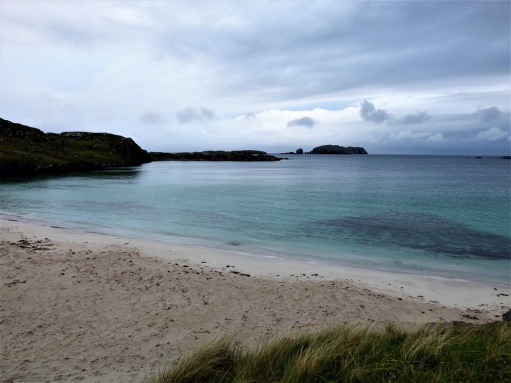
“What is this place?” My eyes were glued to the small window. Next to me Bertie shuddered and it shook the rickety bench we stood on.

“The place we’re in, or the place out there?” he croaked. We were both of us hoarse from crying, but had moved beyond fear halfway into resignation.

At least it was daytime.

“It looks deserted,” I didn’t really answer.

It’s been hours since all movement above us ceased. Hours since we woke, terrified and hungry, in this basement. The men had left us crackers. At least they didn’t mean for us to die. Yet.


For Rochelle’s Friday Fictioneers


A Bit Of Clarity

Photo: Sue Vincent

She always went to the beach for a bit of clarity.

The movement of the water on the sand brought her back into her own breath. The rush of energy reminded her of the push of arteries, the pull of veins. The predictably irregular rhythm of the surf reminded her how ebb and flow do not mean that things will be uniform. They’ll come and go. Each unique. Each set its own and inseparable from what flowed forth before and what is following.

She could count on a wave and then another and another, on the rise and fall, the crash and wash, the small detritus that each leaves and yet is part of what had been and what will be and what just is.

Like life.

Like the muddy, murky, uncertainties of everything.

Where the one thing she could trust was that another wave will come, and that even the biggest wave retreats, at some point, in wavelets of resignation. As another one rolls in.


For Sue Vincent’s WritePhoto challenge


The Proposal

Photo prompt: Sue Vincent


“You might as well open your eyes now.”

His gravely voice was somewhat amused but carried in it the edge of impatience she’d recognized from her own father. A dismissive tone that simultaneously mocked and tolerated females’ flair for the emotional while also warning said females to not mistake momentary patience for leniency.

Muriel swallowed any sign of sigh. Her body ached from three days rattling on wooden wheels over rocks and gravel and muddy ruts and unexpected pits. To make matters worse, the girl-servant who’d been her companion since childhood, hadn’t been allowed to accompany her, and the rough hands of service women who did not know her, had tied her stays too tight and left the knots digging at her ribs and the small of her back.

She’d closed her eyes in part to manage the ever present nausea of travel forced on her at the opposite direction of movement. However, a goodly bit of it was in order to allow herself at least a semblance of private space in the confines of the carriage. His eyes undressed her either way, but at least she could pretend to not see it.

Her time for privacy was up.

She forced her eyes open and nodded the politest smile she could manage at the man who would be her lord and father-in-law (and if his leering told her anything, also the master of her body, son or no son).

He scared her and his eyes were cruel, but she’d learned at a young age to hide revulsion under a lowering of lashes and to nod compliance as means to reduce inevitable harm.

“You are a girl-child, Muriel,” her mother would soothe and scold her as she gently rubbed salve onto what new welts and bruises another lashing had left on the child. “No matter what they do or ask of you, you must not disobey.”

And yet even her mother, the mistress of the manor, who embodied the balance of stately conduct and humility before her betters, sported the occasional split lip from her husband, Muriel’s father, along with other wounds in areas best left unmentioned. All a female could do was walk the tightrope in attempt to limit scope and frequency of pain.

Muriel raised her eyes to meet the heavy brow of the man who occupied the seat across from her. She calmed her voice so it not reflect her fretting mind.

“Have we almost arrived, My Lord?”

His eyes flicked to the window and she leaned to look through the opening, acutely aware that this brought her body perilously close to his lap.

The lake sprawled at the side of their conveyance, the water undulating lightly in the breeze as afternoon clouds gathered. Into it grew a spit of rock and on top it a castle, stout in stone and strong in somber presence. It was far larger than the house she’d left behind. Gloomier and more glorious, too.

She wondered how long it would be before she could once again see it from this or any vantage point. Some lords did not allow their women to leave their rooms, let alone the courtyard. Especially not the newly arrived, who might attempt to steal a path out of marriage by seeking the luring company of nymphs at the bottom of lakes.

She let her gaze linger on the castle before straightening.

“It is beautiful, My Lord,” she said.

His eyes narrowed then relaxed and she was glad she didn’t need to lie about it. He’d probably know if she had.

“Your new home,” he noted, almost kindly.

Her stomach lurched. Home or jail, there may not really be a difference. Still, as the carriage continued toward the future that this man had proposed and her father had accepted, she felt she may have passed some test that if she managed to maintain the credit of, could bring her — if not safety or protection — then perhaps a lesser measure of misery.


For Sue Vincent’s WritePhoto challenge


Keepsake

Photo prompt: http://mrg.bz/n22FGA 


He kept it all these years.

A memento of sorts. Something to remember things by. A penance, perhaps. Or a tribute. Sometimes he wasn’t sure which one it was. Or both.

Some nights he’d leave their bed, her light breath highlighting the heaviness that had kept him from sleeping, and walk to the garage just to look at it. To remind himself of what is real and what was possible and what should never once again take place.

Even if it could.

It was the only lie he’d ever told her, though in truth it had led to many more lies — of omission, of deflection, of withholding aspects of himself he could not let her know about. Not ever.

Or did he someplace hope to one day let her know?

For why else would he keep it?

Sometimes he thought that his refusal to do away with it was his way of warning. Himself. To not allow himself to fall into an illusion of what he was not. Perhaps a warning to her, too, to read between the lines of what he couldn’t tell her.

Of the damage he could do. Even in accident. To the ones he’d loved.


For the Sunday Photo Fiction challenge


Blessings and a Whisper

Photo: Sue Vincent


Lush grass now grew over the span of stones, though none had grown there in the many years when the passage of feet had mowed and flattened any seedling that had found a crack in which to nestle.

The water gurgled as it had, though, flowing like a ribbon of careless abandon underneath. Incoming. Through. Not one look back. Away.

She wondered if the fish silvering in the stream were the descendants of the ones who’d flapped among the rocks and dove out of the reach of all manner of two-legged hunters. Their instincts certainly remained the same.

Like hers.

Honed by years of flight, and generations of bare escape from calamity and disaster and all manner of two-legged hunters’ spread of misery.

For centuries the stones of the old bridge had been the thoroughfare of goods and news — both good and not — from isolated farms to the town’s market and from the town into the farms, and in that order. It had withstood war and fights and blight and playful dares and cruel shove-overs. It streamed with rain and baked with sun and creaked with ice and endured more than one direct hit of lightning. It had heard the laughter of small children and the cries of same, sometimes not much later after. Where rugged wheels and heavy hooves had carved ruts of rattling passage, now weeds took hold to cover any sign of man.

It stood deserted, and perhaps relieved, since the new and wider bridge was built a bit further downstream. The modern pathway accommodated simultaneous travel in both directions as it carried the weight of the machines that belched dark stains onto its tar.

She’d been warned against attempting to put any weight on the old bridge. They all were. “It’s held by no more than blessings and a whisper,” her grandmother had cautioned. “One step onto the wrong stone and it could collapse.”

And yet, it had outlasted both Grandmother’s life and Mother’s and seemed poised to outlast hers, as well. Perhaps blessings and a whisper were better mortar than the speeding up of time.

“And you don’t have much long to wait to outlast me,” she murmured as she walked to the water and bent to dip her palm. Cold.

As she would be, sans blessings or a whisper, before much more water churned indifferently along, passed under the bridge, and was gone.


For Sue Vincent’s WritePhoto Challenge


Contented

Photo: Sue Vincent


There was nothing wrong with her beyond that she could not abide much in the way of interference, and had always preferred the company of fair-folk and the song of wind and dust-in-light to the over-stimulating presence of other humans.

She’d gotten through the requisites of growing up: the schools, the get-togethers, the expectation of having friends, the beck and call of work one needed in order to make a living. She’d endured the close proximity when needful, but mostly let the din of people’s voices wash over her like an avalanche, while she curled up inside her mind and sustained herself on preserved pockets of precious solitude.

Most wouldn’t have believed her had she laid bare her wistfulness for isolation. Or perhaps some would have, but had never said it. She did not much care to find out which of the two or neither it was.

Three decades had passed and the half of another, before she began wondering if she’d live to see the exit of another year or self-combust under the pressure of life’s demands for what felt like constant interaction.

Then Aunt Carolina passed. She left behind a small fortune in savings bonds and an old house no one would have wanted. The latter was to be torn down and the land sold to become someone else’s problem.

Or so the estate managers thought.

Cilia fought them with a ferociousness that surprised her at least as much as it had anyone who’d ever known her. It wasn’t that she’d been a pushover till then, only that she had never found it worth the effort to try and exchange one relative discomfort with another. This was different.

This house was what she suddenly did not know how she had ever lived without.

In the end they relented after she gave up all claims to any of the funds Aunt Carolina had left. She’d get only the cottage and its contents. None of her cousins — not even Marley-the-Meddler — objected. Their share grew with her out of the pie.

The attorney warned her that the house would sooner gobble up what savings she had than be a home that could house her. “The gloomy place is centuries old,” he warned. “It doesn’t even have running water.”

“Aunt Carolina had lived there till she died,” was her retort.”She bathed. I’ll manage.”

She did much more than that.

For the first time in her life she could feel herself actually breathing.

The garden’s stone walls wrapped around her like a hug of moss and ancient patience. The cottage creaked and cracked and breathed as if it was itself alive with memories and whispered sighs of times before. And she did not have to explain to anyone how none of that was a menace. The walls held echoes of calm solitude. The garden wreathed itself in growth. The birds chirped. The kits of a fox mewled. The silence gleamed.

She knew why Aunt Carolina had refused to leave.

“We are like twins stretched over several generations,” she murmured into the fire as the wind whistled in the chimney and the elves made a racket in the trees outside her door. “You must have known, someplace, that I will need to find this. As you had, in your time.”

She stretched her feet and giggled at the big toe that the hole in her sock had liberated. A wooden box sat, heavy, in her lap.

She’d come across it in the crawlspace earlier that afternoon. She’d climbed up after a noise she thought was a squirrel’s nestlings. Instead she found a loose board, half-an-inch of dust, and a pile of rags atop a box.

“The house and all its contents,” she smiled in recollection of Aunt Carolina’s will. “I should have known you’d leave more than enough behind to keep the roof above us for another eon.”


For the Sue Vincent’s WritePhoto Challenge


Cryptography

https://crimsonprose.files.wordpress.com/2019/06/no-junk-mail-1.jpg?w=640&h=427


“How would this work, exactly?”

Jason shrugged and bent to scratch a bug-bite on his ankle, shaggy mane covering his face.

Mark narrowed his eyes. “Seriously, Man, who’d put a mailbox on a crypt?”

Jason straightened, and not for the first time, Mark couldn’t help but think of puppets with too many strings and too few fingers to operate them. Everything about Jason was too long, too lanky, too loose. It was as if someone had forgotten to tighten the screws in his friend’s joints. He’d known Jason since Second-grade, yet something about seeing his classmate’s movements in this setting, woke a bell of alarm in Mark’s belly.

He moves like a mummy, he realized. Shuddered. Shook it off.

“My Granny says some use it,” Jason replied, oblivious.

“For real?”

The tow-headed boy nodded. “Requests for revenge, mostly, she says. After all, it is the crypt of a mass-murderer.”


For Crimson’s Creative Challenge


Endless Harmony

a solitary figure on a beach against a wide ocean.

Photo: Sue Vincent


She’d never have believed the vastness had she not been there to see it.

In person.

On the edge of endlessness.

The breath of eons crashing at her feet.

The spray of ancient rhythms that had been there

All along.

Through war and storm and hope and flood and cold and warm and days like this when no one but herself was there to witness it.

She’d never have believed the power that it held, contained within each curl of wave, in every roll of whitecap licking sand.

It filled her.

With awe and ache and gnawing yearning to something that went beyond her words and into thoughts unformed, or perhaps ones made of memories in utero: the hiss, the beat, the drums of hearts.

And this.

Another memory

To merge into

In endless harmony.


For Sue Vincent’s WritePhoto (2nd week)


The Look

Atilla the tractor 1


“It is looking at me.”

“What is?” I was dozing off in the delicious sun on the first dry weekend we’d had in a while. The lush grass under me felt springy.

I thought the word was so apt. Springy. The double meaning of the season and the bouncy vivaciousness of it all.

“It is looking at me.”

I inhaled slowly with more resignation than irritation. I might’ve known this would not go as I had envisioned. While I was content to lie still and let the sounds of the birds and the hiss of the breeze and the faraway whir of a tractor in someone’s field fill and nourish me, Marlee had been tugging on grass-blades and clucking her tongue and shifting positions every three seconds.

She’s always been flighty. A flit-bit full of frown and furrow, forever on the edge of tumbling from one thing to another.

I loved it about her. She was the counter-weight to my molasses and the engine to my stasis. Her hypervigilance also made my idea of a relaxing afternoon where we do nothing, an utterly foreign thing.

Perhaps an even frightening one.

I opened my eyes. “What’s looking at you?”

“That.”

I raised myself on an elbow and scanned the field. There was no one there.

Marlee sat, violin-string-tight, eyes glued ahead.

I followed her line of sight. Nothing. Not even a bunny. Just a tractor that most likely belongs to the farmer whose land we might be trespassing on. I squinted against the glare – the cab was empty – there was no one there.

Marlee did not move.

Resigned now, I sat up and stared harder. A caterpillar undulated up a flower’s stem by my knee. A bird dove at the tractor, perched momentarily on a mirror, and flew away.

“The bird?” I chanced.

Marlee shook her head but her eyes remained trained on the vehicle. “The tractor,” she said. “That thing has eyes. I swear it blinked at me.”


For Crimson’s Creative Challenge


The Apprentice

The monochrome image shows the base of a tree with a hole, like a doorway, through its base...

Photo prompt: Sue Vincent


“It requires one step through.”

She squinted at the trunk. “I can see the other side.”

“So it would seem.”

She circled the tree and peeked through the opening. “It is as I said. I can see your legs.”

“I’m sure you believe you can.”

His calm voice infuriated her, but she knew that getting riled up will only lead to another long lesson in teaching her self-control.

She breathed.

He nodded.

She turned away from him and breathed again and then counted to ten for good measure. She could almost imagine him chuckling, though she knew he probably would not give her the satisfaction of seeing him react that way. Still, she could feel his amusement. It had been the hardest thing for her. His mild dismissing mockery. It was a constant reminder that she was a mere neophyte swimming furiously upstream in hope of getting even the smallest measure of trust, let alone recognition.

Why did he take her on when he had so little regard for her?

She circled the tree one more time. In part to move some of her agitation, but also to use the trunk as some shelter from her mentor’s scrutiny. She knew what her eyes told her: A hole in a tree, a gap she could toss a pebble through (not that she’d dare, now that he told her what it was), certainly of no size to fit a person.

She also knew that eyes can lie.

Still she resisted.

“Perhaps you aren’t ready.”

In spite of herself she felt her fingers clench. She hated when he did that. It made her feel like a child to be goaded.

Perhaps I am not, she retorted in her mind.

“Indeed, perhaps you’re not.”

Her eyes flew to meet his. She had suspected for some time that he could read her mind, and it felt like someone’s wandering hands rifling through her underwear drawer.

“I could read it in your eyes,” he noted, confirming rather than reassuring.

“What if I go through with it?” she sighed. She felt not so much resigned as she did defeated. He always got his way in the end. She could flail about and delay and prolong the path and belabor the process, but inevitably he got her to do things as he’d wanted. Half the time she thought his goal was to get her to where she would no longer resist him, while half the time she felt that the day she ceased rebelling would be the day he tell her that she’d failed completely.

Even now he did not answer till she asked again.

“You will see what there is for you to see.” He lifted his hand to indicate it was time for her to suspend all judgement, ignore her perceptions, and walk through the tree that he said was a portal.

“Is this the last test?” she fretted.

At that he chuckled. “It is never the last test …”

As she turned toward the tree she heard him add in a small voice that perhaps was made with mind, not larynx, “not for you, not for me.”


For Sue Vincent’s WritePhoto