Dreams–Fabulous exercise re-blogged

How about a dream exercise?

Check out this latest fun and fabulous post from Adele Ryan McDowell’s excellent blog:

Adele and the Penguin

http://adeleandthepenguin.com/how-about-a-dream-exercise/


And to send you happily along your way,

a little blessing if you may …


“May your dreams be filled

with laughter and play

to last you through

the merriest day!”

[Na’ama Yehuda]

merry day

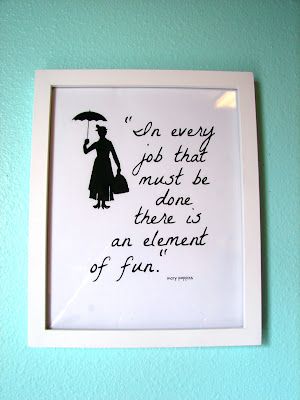
In Every Job That Must Be Done

fun

Mary Poppins said it best (and had the magic touch and all the rest …)

So I am off to find the fun …

In all the jobs that must be done …

And if I meet some trouble

Encounter bitterness, or feel a rapidly incoming frown,

I will attempt a spoonful of sugar — I hear it helps the medicine go down …


Three’s Company!

friends1

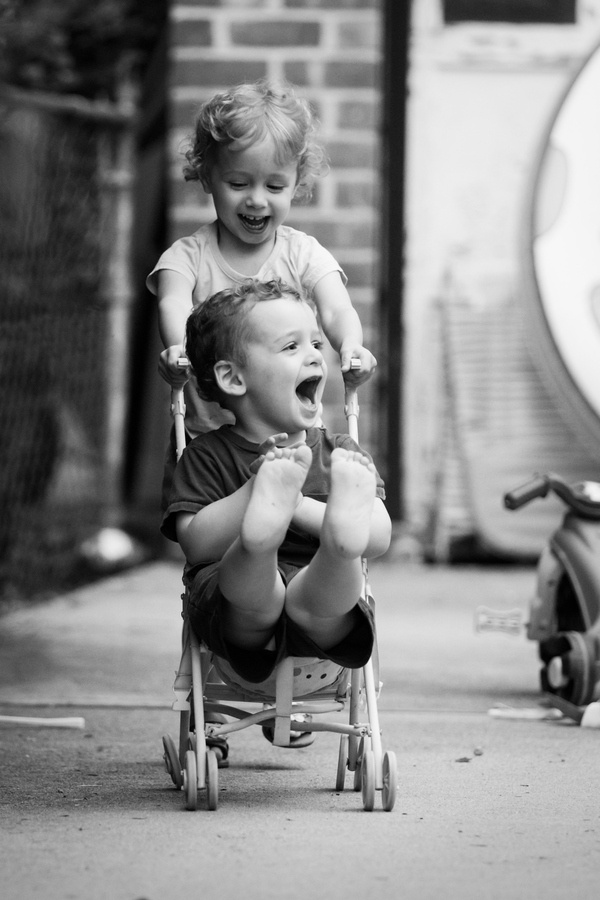
A little boy on the street this morning: “Mommy, when can I have a play-date with Bobby and Martin?”

Mommy: “You just did on Sunday. Don’t you remember? In the park?”

Little guy: “Yeah, but its already more before than yesterday!”

Mommy (chuckling): “Okay, let me call Bobby’s mom and see if you can play with him later this afternoon or tomorrow.”

Little guy (pedagogically admonishing): “Martin, too, Mommy! We’re friends together!”


Ah, friends together! Best friends are immensely and unquestionably lovely, but in my view–and this little guy’s clear statements–the third wheel theory is wildly overrated. Philosophically speaking, a third wheel can indeed offer an extra level of stability … Truth be told, there’s nothing quite like triple decker fun: gales of laughter multiplied, mischief bubbling like a shaken soda-bottle … Not too few and not too many (and if you’re a skipping gal, enough for double-dutch!)

I can see then in my mind’s eye. Three little fellas: this curly top boy, Bobby, and of course, ‘friends together’ Martin … There they go, conquering the playground and marshaling a bench for headquarters. The Three Musketeers. The Trio. The Triple Besties.

Come to think of it–when is the last time you got together for a tricycle of laughter. How long has it been since you had a play-date of ‘friends together?’

I know it’s been a while for me, and overdue for some revision. How about you?

Three’s company. Pick up the phone. Do not delay. Go play!

friends2

Outside The Box

“Color inside the lines.”

“Re-write these letters.”

“Sit on your circle.”

“This is not playtime.”

“Keep to the right.”

“Climb the ladder, not the slide.”

There is a good reason why we direct children. We want them to learn to follow rules and obey instructions. We want them to listen. We need them to pay heed. After all, laws and guidelines are part of an orderly society and are important for maturation, regulation, and delaying gratification. Rules help maintain safety. They help define the difference between free play and guided study, between teamwork and individual projects, between creative writing and a summary of a given book or essay.

Rules and guidelines are good. It is healthy for them to be challenged and okay to keep rules even if a child thinks they are stupid or unnecessary (as long as we truly know why). Boundaries clarify what is and isn’t acceptable, where and when and how. There’s nothing wrong with structure. Or with following directions. Or with consequences when one chooses to do otherwise.

Structure is a good thing. So is knowing what’s expected. At least as long as those do not become a means to an end. As long a they are not ways to exact conformity and control, paths to making our adult life easier, roadblocks to creative thought, plugs for personality.

When we extend guidelines into demanding unified and unjustified conformity, we risk snuffing out individuality. It is then that we may end up raising robots, not children. It is then that we gag magic and bind wonder, imagination, awe.

When we say things such as:

“Elephants aren’t purple, color it gray.”

“You can’t draw two suns in the sky. There is only one.”

“Stripes do not go with polka dots. You’ll look funny. Go change.”

“This doesn’t look like Mommy–she has long hair, not short.”

“Don’t mix the Lego with the blocks.”

“You can’t just make up rules–this game has an instruction sheet.”

“People don’t eat olives with cookies.”

“Stop making things up.”

There is nothing wrong with purple (or rainbow) elephants, with three suns, pattern mix-and-match, people who look like aliens and aliens who look like mice, Legos with blocks and carton boxes and a Barbi perched on for a knight, with new rules for old games, and with plenty of made-up imagining.

Order has a place, as does chaos and unpredictability. We ask our children to tolerate our rules and limitations … it is only reasonable that we train ourselves to tolerate (even encourage!) theirs, wild as they may seem to be.

Let your child out of the box. You’d be amazed what children can achieve. How much they can create, plan, build, conjure, put together. How far their brilliant, fresh thinking, free mind can go!

Think Outside the Box!

Think Outside the Box!

The Wonder of Wondering

A mom of a client tried to find a day to reschedule a session that they were going to miss next week. She could not find ‘an opening’ in her five-year-old’s schedule in the next SEVERAL weeks.
“We may have more time in March,” she murmured, peering at her iPhone screen. “No, actually, that’s when his sports club changes, so I don’t know if he’ll have time then.”

Aside from speech-therapy, which he needed because of a small deformity in his mouth which affected the clarity of his speech; this five-year-old had baseball, soccer, drama, piano, chess, guitar lessons, and tutoring (for kindergarten preparation–the latest hit in urban upper class–this mom is actually behind the curve because she ‘only’ started him at age three, and not earlier…). He also had two playdates scheduled–in the several weeks ahead, there was no time for more–one to take place at a museum and the other at a movie theater followed by a pizza place.
Al of those were activities to fit after his preschool was done at 2pm each day or on weekends. Sunday was especially busy, apparently, with double tutoring, so he “not fall behind on no school days.”

“When does he play?” I wondered aloud.

The mom looked mildly surprised at the question. “Oh, he plays a lot. He plays soccer, baseball, chess…”

I smiled. “I meant when does he have time for unstructured play, to just be in his room with his toys and use his imagination and daydream and make up stories for himself?”

The mom nodded dismissively, “Oh, yeah, I know that’s good for his development, but he’s just too busy right now. He does read, though. He’s up to level 2 now. Every night he has to read his words before he goes to sleep.”

UGH.

The wonderful power of wondering was completely lost on the mother, swept up as she was in the rush of demands an requirements, competition, check-marks, and achievement.

It made me wonder, too, about whether she herself knew how to just be, if she still remembered how to play.

Do you?

Do you set aside time for musing and refilling your tank of creativity and playfulness?

How much time does your child have for play? Does he lose himself in fantasy, imagination, and the wonder of wondering?

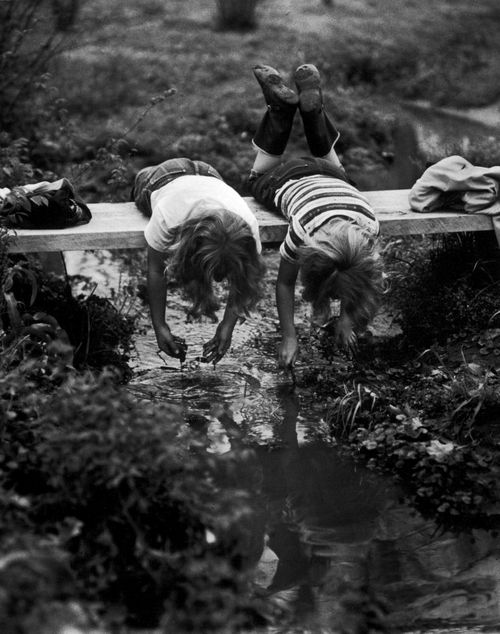
It is the job of childhood to be at play. To invent, experiment, inquire, speculate, dream with eyes wide open, animate toys, get slightly bored and think of nothing and everything, walk slowly outside and collect pieces of leaves, paper, dirt. It is the job of childhood to socialize, assign roles in joined mimicking of adult-roles and fantastic stories, negotiate with peers and make your own rules, unencumbered by adults who demand you follow the ‘rules-of-the-game’ instead.

Surely there is time a child should spend in listening, following directions, and learning. There is room for rules and consequences, routines and chores. However, losing the balance between adult-led and child-inspired, tilts childhood off its axis. How can a child who does not have the time to breathe and get a little bored, learn how to entertain himself, day-dream, imagine, be truly creative, be a child, play?

When is the last time you deeply reconnected with wonder? If you cannot say, then it is time to stop, watch a child getting lost in a bubble, let them be, and find your own path to some play.

Photo Credit to S.E.

Photo Credit to S.E.