Time Travel …

Just for fun, now that the weather is working on being presentable and the outdoors will call with sun and blue sky: a little look on how people got going in such times gone by.
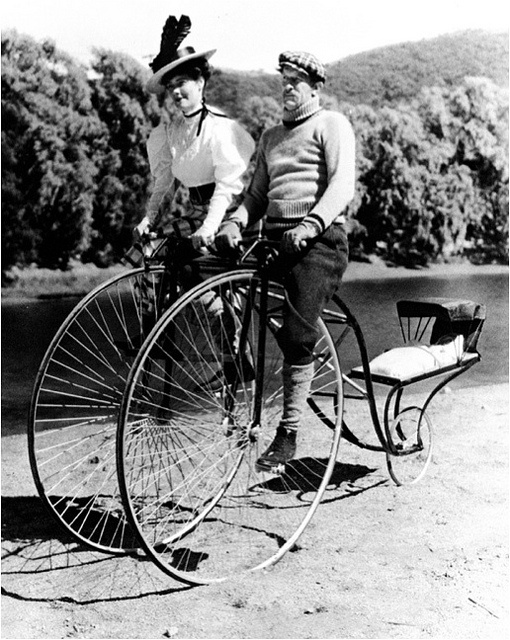
Here is the family circa 1910 and out for a ride… (she with ‘side-saddle’ seat, of course, lest propriety be harmed …)–and then there’s the ‘baby carrier’ all snug as bug in a rug in the back … (complete with pergola to keep out the sun but not much in the way of keeping the babe in if the bike goes down …)

baby 'car' seat


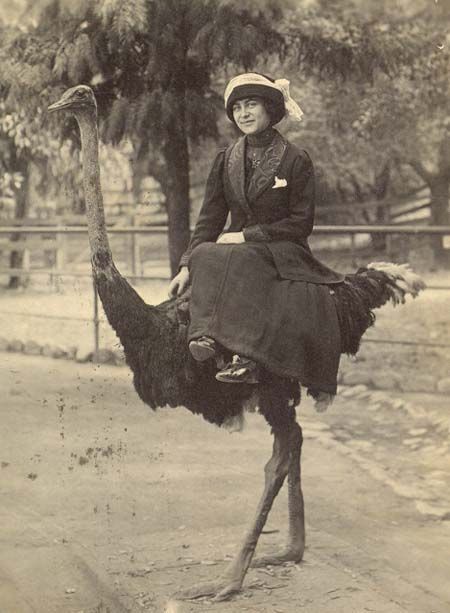
Prefer to go ‘natural’? There’s an option for that … Just not sure you will get very far or too fast before you’re in the dust …

ostrich cab


Think a bike is too risky and skirts may snag up to reveal an ankle or (gasp) a well stockinged calf? No worries–there’s technology to harness, 1916 a cutting edge craft.

scooter gal


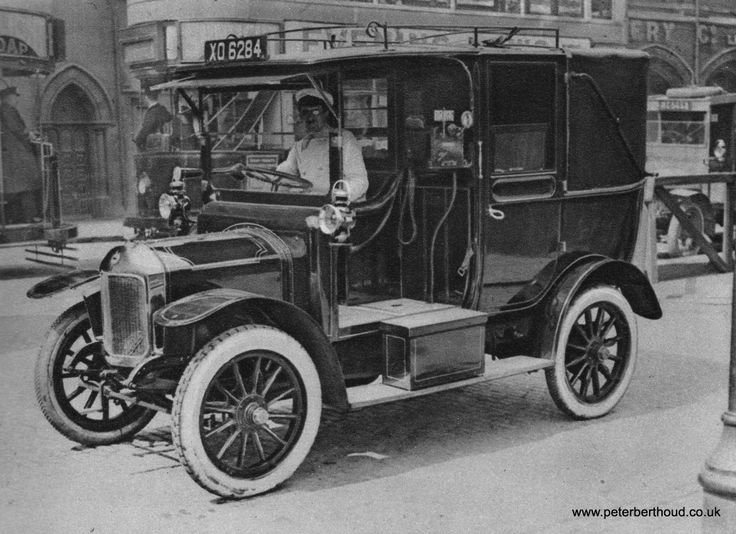
Hail a cab? Not a problem. London upped its own game, and in 1907, taxies happily came.

taxi1907


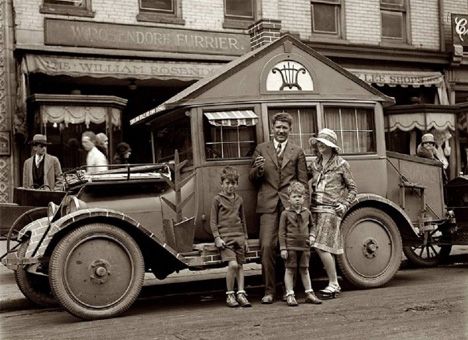
Want to live on the road? Sure–that’s swell. Mobil home to the rescue, chimney and awning as well.

mobil home


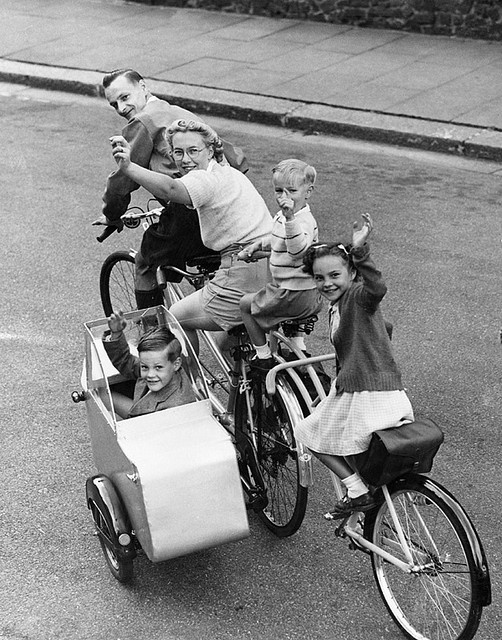
Fast forward a bit. It’s the 1950 and the family’s grown … There are three now to take along … (okay, it is not the same family, but the concept is shown …). Big improvement from high-wheels, better balance on bikes and no more side-saddle for mom (Victorians would blanch at the thighs on display, but how they paddled one legged puzzles me to this day …).

cycling family

So … by bike (or an ostrich?), by scooter or bus, by taxi or stroller or RV or a hike–get your gear up and ready and plan some fun routes: there’s a world worth exploring, and many venues to use …

Today, be Still

Today,

find a point of stillness:

brief, but precious

slight, but full

small, but luminously real.

Find a point stillness

in the balance of all things

between the breathing out

and breathing in.

stillness

(Quote by Na’ama Yehuda)

What box?!

Think outside the box!

Life’s too short to be too serious.

Be playful. Find a point of laughter. Create smiles.

Even the most functional place can tolerate some spunk, a bit of daring, a little imaginary pun.

Forget the ‘way it has to be done’–there are all manners of possibilities to explore, to reach the goal, to make it work–the journey’s just began!

Have fun!

outside box1

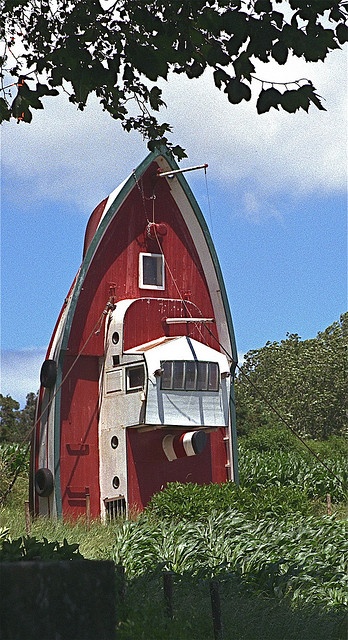
Ship-shape?


outside box3

Be a lady in a shoe!


outside box5

Potted house! (Korea)


outside box2

Chim-che-roo!


outside box4

Toasty fun!


Encourage!

encourage

How many times have you been tempted to point out what needs fixing? Wanted to highlight what is wrong, what “can use a tune-up”, what one should be doing differently, or more of, or with less drama, or with more oomph, more boldness, better self-image, assertion, courage, ease?

We have all been there, prodding someone along with good intentions (and other times with a bit of righteous indignation of “I told you so” and “no wonder you are as you are, if only …”). We see someone stuck, repeating old mistakes, mired in old pattern and fogged-up insight recognition … and we point it out–not to hurt, oh, no–only as an intended kindness. We hope a kick in the right region will do the trick this time.

We mean well, but we forget the price of shaming. We underestimate or look away from the price of boring holes in someone for the sake of our sense of having done something ‘for them’ (when we did it for our own need maybe just as much if not more). Shame stilts. It burrows. It slips whatever good intentions into the cracks between what already feels broken and has it ooze away into the void. It makes the distance from targets loom larger and comparisons ache harder.

Almost no one gets criticized as much as children do. Children bear the brunt of much correction. Often. And in what should be counter-intuitive, the very kids who struggle most with getting something right, are the ones to get the most critic for once again doing it imperfectly, for again being wrong. For not following the directions. Again. For missing something. For not listening well enough, not trying hard enough, not having the right attitude.

When criticizing them, we certainly do teach the children something: we show them we are focused on their errors, not their strengths; on the target, not the path; on the final product, no matter the effort or progress. Critic chips another bit of self-esteem and makes exuberance too pricey to risk finding. It does not build. It hollows out.

Showing the way works better. Breaking down a task to smaller steps aids faster. Pointing out what worked as a path to follow gets farther. Encouragement helps more.

Encouragement does not equal the blind empty phrasing for a mediocre effort with: “this is a masterpiece and you are always the most amazing child ever born and all you do is perfect”–kids smell the shallowness of that a mile away. Praising indiscriminately is as irrelevant as constant criticism. It is white noise. It does not help the child see where her effort mattered not lets her trust that you see a difference and even care to note the true wheat effort from off-handed chaff.

Encouraging means giving balanced credit for an honest effort. It means a fair praise that matches the magnitude of accomplishment for that child at that moment, while still providing firm support when efforts fail. It means letting the child know that you notice. That you see THEM and not only their ability relative to others, even as you help them find a better way to measure up.

Children meet plenty of critic without what we might think we ‘owe’ them as a way of caregiving. They don’t need more people holding mirrors to their flaws. The world will quite surely provide enough of that. Encourage. I’ve never met a child who cannot use a little more.

Some equate critic with being honest. With “saying like it is” and “facing reality” and “toughening up.” This is not honesty. It is boot-camp. Actual honest critic is only one that comes when the words one says (one’s tone, one’s posture–critic is communicated in much more than words), flow from a well of true encouraging. It is so only if the message is imparted with sensitivity and care that ensures it builds, rather than tears down, puts down, whittles, or compares. Only if on the heels of pointing out a place for improvement, there is the vista of all the effort put forth already, a detailing of the next step–and a helping hand.

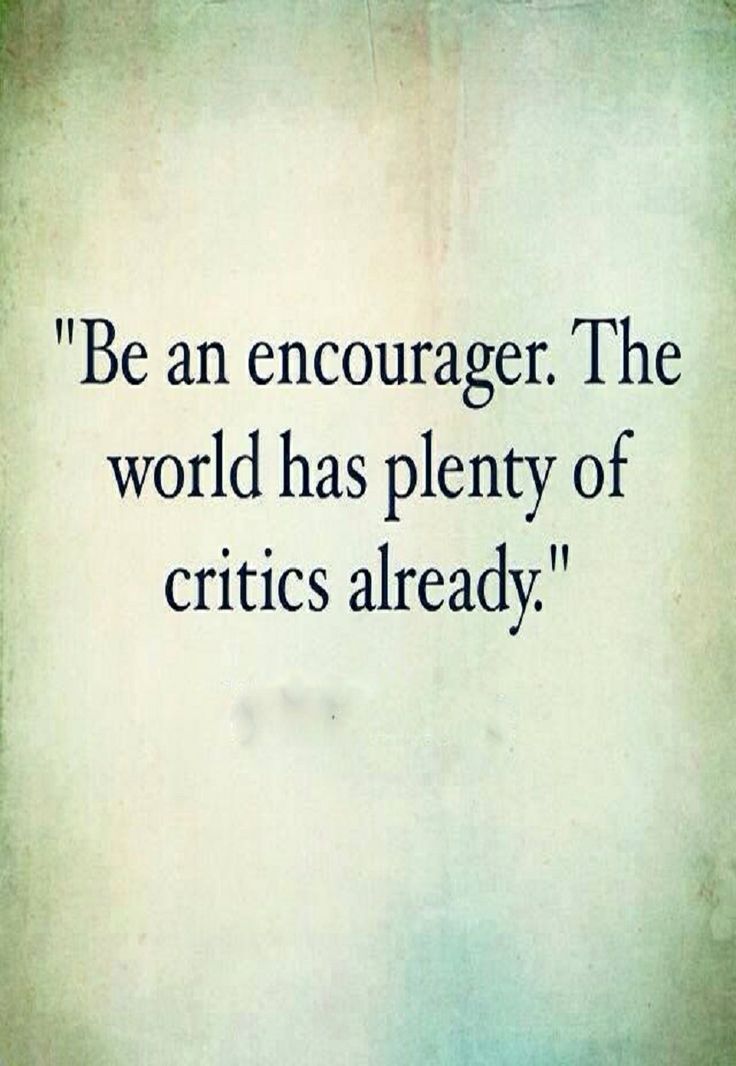
A rule of thumb: critics abound out there already. Least of them being the inner critic that you’ll instill within a child with alarming speed. Be an encourager. An honest buddy offering support along the roughest patches and a ‘that-a-girl’ when each are overcome.

Encourage. It is nourishment for growing. It is like water on parched land.

Inside Your Hug

by robert wagt

by robert wagt

She’s a dark-haired gal with doe eyes and willowy body. All arms and legs that find corners and bump into tables and spill things and break stuff and mess up what appear to be the most child-proof settings. She doesn’t want to be clumsy. It is just that her body is full of angles that don’t quite plan their movements and her brain does not quite catch up to what’s happening until it is a moment too late and the damage done.

She wants to be an acrobat or a ballerina. The graceful movement, the delicate balance, the painstaking patience–they are to her the incarnation of what she would want to be and all that she finds terribly difficult. She would do better at hip-hop, her caregiver thought at some point, only to find out that a child who cannot quite catch a ball or toss it without hitting someone or breaking a window, cannot quite coordinate her movements in an elaborately sequenced dance. The teacher all but fired her after one class. Literally too many toes stepped on.

Still, the girl dreams.

She adores delicate, filmy, whispery clothing. Her caregiver thinks it would be more practical to put her in iron-knees pants and canvas but had resigned herself to letting this elephant-in-china-shop gal wear tights and lace-edged shirts. It is an act of faith, as they last about five minutes before they don a massive stain or spring a hole (which, perhaps thankfully, the child rarely seems to notice).

This little girl is a life on steroids. A roller coaster of emotions–she is either elated or devastated, overawed or broken-hearted, eager or despairing. She tries so hard. She keeps failing, falling, disappointing. Adults frown. Teachers scold. Caregivers sigh and try to keep a restraining hand nearby.

It is difficult to make friends, or rather, to keep them. Oh, she’s never mean; in fact, she is quite sensitive at reading others’ emotions and wants to take care of their needs, real or perceived. It is just that she pulls too hard when she holds hands, she pushes when she only wants to touch lightly to call someone’s attention, she messes stuff up and breaks things, she barges into conversations, she speaks too loud.

Her official diagnoses are all kinds. Some of you who recognize the symptoms may have an idea what those could be. Some of you would know why in my work with her, we tackle symbolic language, idioms and stories, auditory memory and following directions. Why we talk about social situations and solutions, practice narrative and inferences, work with predictions, and rephrasing, identifying context clues and finding the main idea in what to her is a soup of details. Why we make charts, write bullets, jot lists, follow steps, check items one by one.

She’s a bundle of everything–stories, anecdotes, questions, observations, feelings spilling over, hands tapping, legs wagging, hair twisting, lip biting, noise making.

I love working with her.

Oh, she’s a handful–in more way than one–but that’s okay. I work with many kids who struggle with managing incoming information, who need help regulating what their body senses and require direction to make sense. Fidgety bodies don’t faze me. Nor do spilled water cups, sticky fingers, rocking on chairs or crumpled papers full of holes from erasing too hard.

What fazes me more is how some of those kids who have an alphabet soup of diagnoses and a history of testing enough to fill a filing cabinet, have internalized that something in them is somehow eternally broken or ill-fitting. How all too often adults around them have come to believe this, too. I absolutely see the places needing tending, but along with the fizzy energy, there is all too often an untapped possibility, just waiting to be helped along through less correction and more connection and an ample dose of calm.

This one? She fiddles with a top while we’re working. When she’s thirsty, I offer her a water bottle (I’m super fast at twisting on a cap …). I corral pencils, crayons, papers, tape, bits of this or that. She hums and makes popping noises while she’s writing–I don’t mind. There is enough control to manage while at school, where it can bother others. With me she can just be and is exactly and perfectly good enough. Indeed she is. She’s working hard. She’s trying even harder. She’s making small but certain steps to a less chaotic path.

And she gives great hugs. They go straight to the heart.

She asks to give one, at the start and end of every session. She wraps her arms around me and leans her head against me as we stand side-by-side. She breathes. Through my hand resting lightly on her shoulder, I can feel her body slow down some.

The other day before she left, arms still around me, she said: “You make my head feel more quiet. You don’t get mad or yell and I can think.” Then she looked up at me sideways, doe eyes filled with wisdom of those whose knowledge is hard-earned and dog-eared with practice. Her arms tightened around my midriff and she sighed: “My quiet place is right here, inside your hug. Sometimes I think about it when other people look at me mad and it helps me not feel I am bad.”

inside hug

Make Life Easier!

creativity

Practical fun! Two for one!

Life is complicated. Stuff gets in the way, falls off, gets tangled, goes missing, takes time and space and energy to organize. Thankfully, there are some very clever people who come up with supremely genius solutions to problems you maybe did not realize you even had, or that give you an ‘aha’ moment when the solution is presented.

Think you need to get a specialized gadget for every situation? Think again. Apparently you probably already have all you need, and some of it may be in your recycling bin even as you are reading, just waiting for salvation and a second chance…

Small ideas can make big sense once you see them.

Here are some simple, everyday things that can make you life simpler. Or at the very least, provide you with a smile (and smiles, as we all know, are super-efficient ways to make life instantly better!)

Simple solutions with everyday objects–click on the links below each photo to get even more ideas!

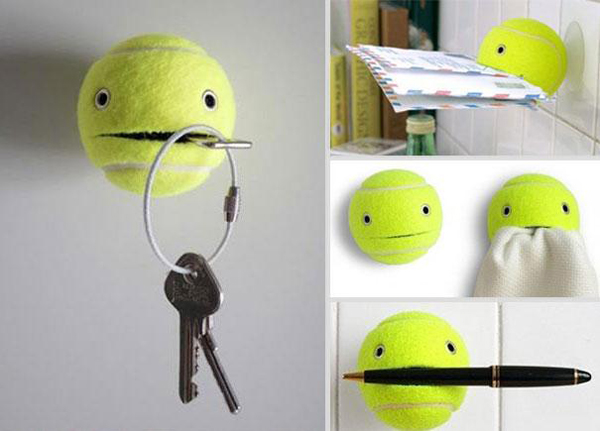
Let little Tennis serve you with a holding hand!

tennissolution

Want more ideas? Click here!


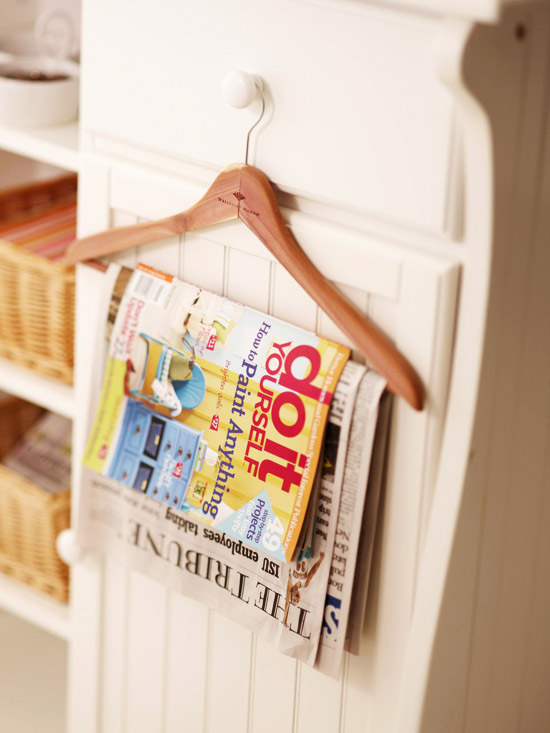
Hang on to your chosen reading material …

hangerholder

More where this came from? Click here!


Catch drill spills!

drill spill

Want more easy solutions to pesky problems? Click here!


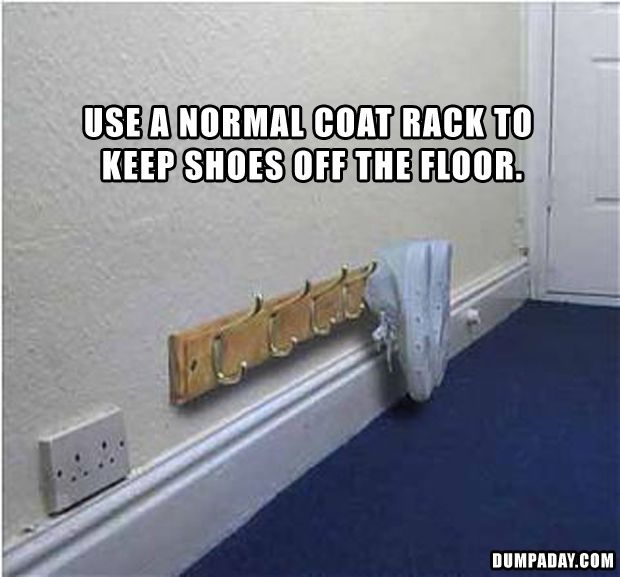
Give shoes a step up (and your floor a dirt-break)

shoes off

More fun solutions? Click here!

May your day be easy and your solutions multiply!

A Giraffe’s Goodbye

Sharing a lovely story that touched my heart and underscores tenderness and care.

We often underestimate the ability of animals–especially wild animals–to make connections and to express compassion. When they display affection, it can surprise us. Every time.

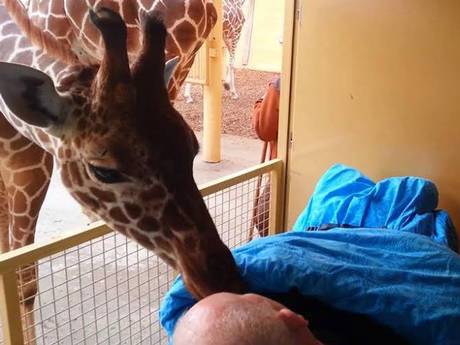
Empathy, connection, and memory of sensitive care are often associated with apes and elephants, dolphins and whales, even lions, but not very often with giraffes … Giraffes are more commonly known for their vicious kick than for their tenderness for humans … Though here they are, ‘kissing’ and nuzzling a terminally ill zoo worker who cared for them most of his adult life. They recognized him, and in their own way these lumbering and potentially deadly animals, came to say a gentle goodbye.

Giraffegoodbye1

Read the story at the Independent here!

Hello Spring!

It is spring!

cherry blossom

lambs

eggs

The birds sing, and people walk around with the odd and gladdened smile of no-more-winter, raising eyes to the blue sky.

It is Spring!

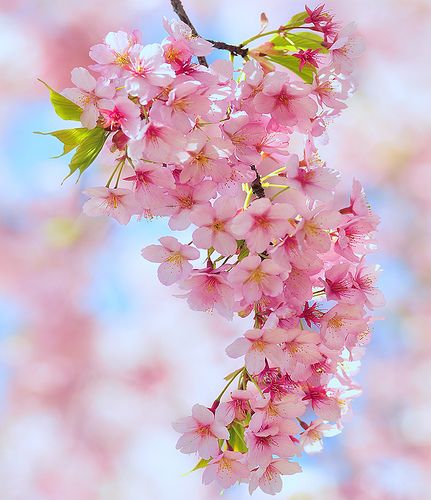
The forsythia will bloom, the cherry trees will blossom, little buds will poke their heads up from the ground without a sound to boom a verdant glow.

It is Spring!

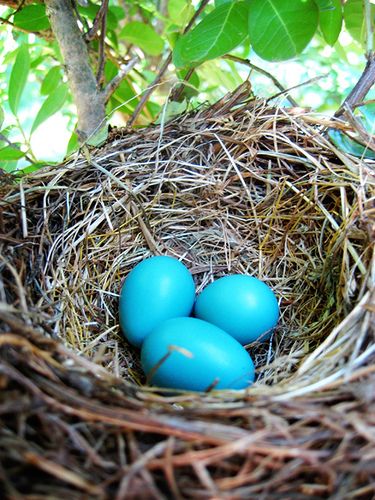
Nests will fill with fuzz and wooing birds and new twigs splendor, and perfect eggs will follow, curling hatchlings deep in dreams of endless worms.

It is Spring!

Open windows. Open jackets. Green grass reappearing under browning frost and bits of winter’s snow.

It is Spring!

Lambs will bleat, ducklings waddle, kids will scamper ‘cross new meadows, as their mothers languid, follow, sated by the younglings’ joy.

It is Spring!

Can you feel it? There’s a buzz, a distinct glitter. Light has changed–now amplified–and not only by the angle of the sun finally resuming duty, back to glory, hastening beauty.

It is Spring!

Don’t worry if some gray dreary days will come and try to turn the tide. Spring would not abide–it has come now, and it will forge paths in frozen soil to melt remaining cold.

Time’s come.

Winter has grown old. Its shift has ended. Spring sprung. Let’s welcome it aboard!

hello spring

Baby Steps

Goals drive us forward. They also hold us back.

Goals often seem too big to get to. The great idea you had the other night feels suddenly less sparkly in the morning: there are far too many steps, it will require more time than you realized, need more attention than you believe you have, more energy than you find within you.

You feel overwhelmed. Discouraged. You get stuck.

Goals are posts along a journey. It truly is not the destination that matters, but the path you take to get there, what you learn along the way about yourself, about your possibilities, abilities, the things that limit you from stretching up and over into the incredible, the fears that keep you from reaching out.

Parents ask me about their children’s therapy: “Will he ever not need help?” they want to know. “Will people ever understand her when she speaks?” They worry how long it will take, how much effort, whether they can make it; can the child.

Children, too, talk about their process. “I am not good at this,” they say. “I don’t know how to write this reading response/this essay”, “I don’t know how to understand the story or how to have the words ready in my mouth when I raise my hand.” “Will I still have to see you next year?” they ask. “Do kids sometimes see you even when they are in high-school?” they inquire, wondering in part-worry, part-hope that I will answer in the affirmative: they worry that they can still be ‘different’ by then, and hope that if so, they will not be left on their own.

“We’ll get there,” I say. “One step at a time.” It is something most of us hear plenty, and not always helpfully, and I know it is often not what parents and children want to hear from me. However, it is Truth still … even if it stirs the place inside each one of us that wants to ‘get to’ where we’re going faster, that does not want to have to do the work, that wants destinations to arrive without the journey.

“Baby steps,” I recommend, knowing that this, too, is often hard to listen to. Who wants to take even smaller steps when the target seems so far away already? BIG steps will get me there oh so much faster! But baby-steps, too, are Truth. Careful, one-foot-then-the-other passage gets us there more surely than a hop-skip-pray-you’re-still-on-the-path would.

Baby-steps aren’t slow, really. They aren’t less-than other ways of making progress. Think of it: Babies take brave steps when they begin to walk. They walk and wobble, toddle and fall and rise and try again … and when they get their footing they walk almost constantly. They put little feet on every surface, tackle stairs, grass, sand, uneven ground. They hold on to hands, grab onto what is available. They crawl when there’s no balance to be found in standing. They climb on all fours. They find a way around. They stop and look for a path behind an obstacle and then surge forward in delight when they find it. Their steps get longer, surer, less a-wobble. They accelerate. They run.

“Baby steps,” I say. Remind. Consider.

It does not mean to do go slowly. It does not mean to take too long. It means to be determined, brave, consistently in focus and yet open to an opportunity to rest and play. It means looking ahead. It means seeing the immediate requiring some climbing over and assessing whether there’s someone tall to carry you awhile if you need a break or wish for a moment of better view …

It means getting there, and finding much to do along the pathway. It makes the journey part of what it takes, and worthy in of itself.

You start with baby-steps, yes. But along the way, you learn to walk. You find your pace. You learn to hop and skip and turn and twirl and run.

You’ll get there.

All you need to do is take step one.

off i go

Parenting of another Kind…

This is a beautiful story.

Not a new story, as those go, but still freshening and as heartwarming as the day it was first aired. It tells a story that is timeless. Of kindness. Of empathy and care.

It is a story of a regular man who did something quite extraordinary and by that touched the hearts of many along the route. Literally.

This won’t take long–not even three minutes, actually–but it will make your day.

Watch and smile.

http://www.youtube.com/embed/9hnbmml8fOY