Baby Steps

Goals drive us forward. They also hold us back.

Goals often seem too big to get to. The great idea you had the other night feels suddenly less sparkly in the morning: there are far too many steps, it will require more time than you realized, need more attention than you believe you have, more energy than you find within you.

You feel overwhelmed. Discouraged. You get stuck.

Goals are posts along a journey. It truly is not the destination that matters, but the path you take to get there, what you learn along the way about yourself, about your possibilities, abilities, the things that limit you from stretching up and over into the incredible, the fears that keep you from reaching out.

Parents ask me about their children’s therapy: “Will he ever not need help?” they want to know. “Will people ever understand her when she speaks?” They worry how long it will take, how much effort, whether they can make it; can the child.

Children, too, talk about their process. “I am not good at this,” they say. “I don’t know how to write this reading response/this essay”, “I don’t know how to understand the story or how to have the words ready in my mouth when I raise my hand.” “Will I still have to see you next year?” they ask. “Do kids sometimes see you even when they are in high-school?” they inquire, wondering in part-worry, part-hope that I will answer in the affirmative: they worry that they can still be ‘different’ by then, and hope that if so, they will not be left on their own.

“We’ll get there,” I say. “One step at a time.” It is something most of us hear plenty, and not always helpfully, and I know it is often not what parents and children want to hear from me. However, it is Truth still … even if it stirs the place inside each one of us that wants to ‘get to’ where we’re going faster, that does not want to have to do the work, that wants destinations to arrive without the journey.

“Baby steps,” I recommend, knowing that this, too, is often hard to listen to. Who wants to take even smaller steps when the target seems so far away already? BIG steps will get me there oh so much faster! But baby-steps, too, are Truth. Careful, one-foot-then-the-other passage gets us there more surely than a hop-skip-pray-you’re-still-on-the-path would.

Baby-steps aren’t slow, really. They aren’t less-than other ways of making progress. Think of it: Babies take brave steps when they begin to walk. They walk and wobble, toddle and fall and rise and try again … and when they get their footing they walk almost constantly. They put little feet on every surface, tackle stairs, grass, sand, uneven ground. They hold on to hands, grab onto what is available. They crawl when there’s no balance to be found in standing. They climb on all fours. They find a way around. They stop and look for a path behind an obstacle and then surge forward in delight when they find it. Their steps get longer, surer, less a-wobble. They accelerate. They run.

“Baby steps,” I say. Remind. Consider.

It does not mean to do go slowly. It does not mean to take too long. It means to be determined, brave, consistently in focus and yet open to an opportunity to rest and play. It means looking ahead. It means seeing the immediate requiring some climbing over and assessing whether there’s someone tall to carry you awhile if you need a break or wish for a moment of better view …

It means getting there, and finding much to do along the pathway. It makes the journey part of what it takes, and worthy in of itself.

You start with baby-steps, yes. But along the way, you learn to walk. You find your pace. You learn to hop and skip and turn and twirl and run.

You’ll get there.

All you need to do is take step one.

off i go

Adele and the Penguin–a blog to behold

Needing some guidance? Oh, have I got a great spot for you to go to!!

If your life feels upended, out of whack, overwhelmed–here’s a splendid path for you to follow–check it out: Adele and the Penguin–making sense of an upside down world, is a delightful site in general, and to top this off Adele is currently running a series of practical, spiritual, and path-enlightening entries on how to manage life’s upheaval and find light aplenty through dark tunnels of tough stuff.

Down to earth, high on spirit.

Read it! To borrow Adele’s oft expression: This is fab!

In this awesome series, there are two installments down, one to go–read them now, so you have time to mill it over before the third one makes a show.

First Installment: Challenges for today’s brave Lightworkers and Healers

Second Installment: Initiation Portals for today’s brave Lightworkers and Healers

Third one coming soon and I am absolutely sure–worth it, so be in the know!

[While you’re at the Penguin, poke around. You’ll find gems in every link. Great stuff abounds!]

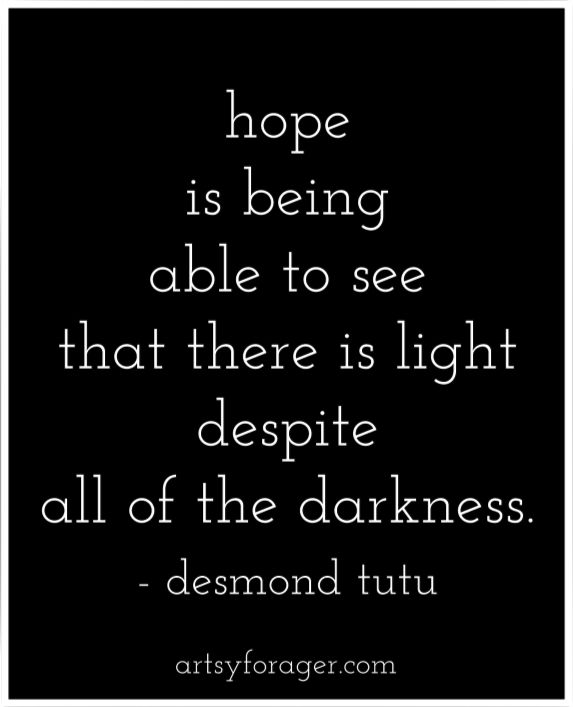
hope is d.tutu

In response to today’s entry re: portals--some thoughts, and much gratitude to the soulful words and instructing teachings of Adele (seriously, check out her website, you will not be sorry, and you’ll likely get a good laugh while you’re at it–she’s serious fun!):

So very important, Adele, and so true. For, yes … for the good to be distinct, we must KNOW what is bad, how to recognize it and how to forge a path to emerge from it into new homes. 

Like the oscillation of a pendulum, the higher we want it to go to one side, the lower it must go to the other. It cannot go up without repeatedly dipping down. We cannot soar without plummeting. It is comforting to know this is how it is done …

For light to be defined, we must know the depth of darkness. It is the bog of hopelessness that teaches the power of a ray of sunlight and a handhold. It is the horror of cruelty that magnifies an act of kindness and instills the absolute knowledge of the transforming power of empathy and love.

Let there be light in the darkness; let there be a handhold to have in the depths; let there be hope in the void; let there be help in the desperate corners of pain; let there be friendship in the loneliest places, let there be love to weave strength with in the most desolate place. Let there be new rising bright, rising wise, from the old.

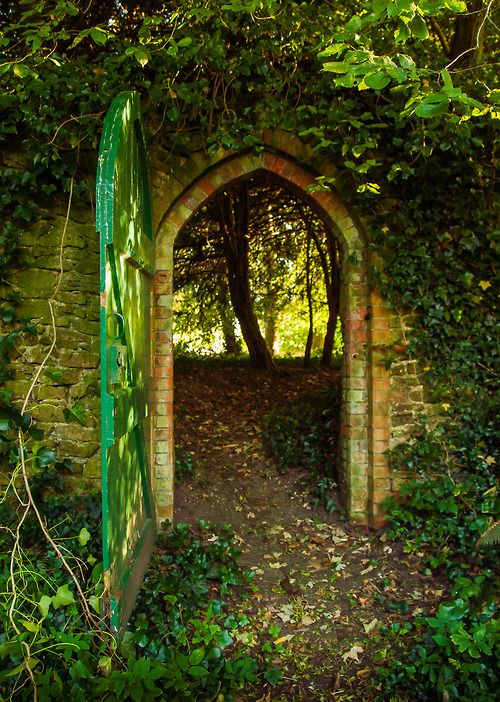
Forest Portal

Find Joy!

joy

Find joy in the places where sunshine streams inwards

Find joy in the friendships that sparkle the heart

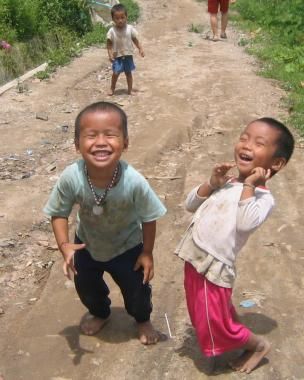
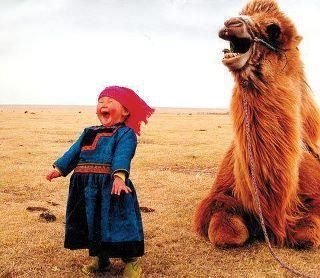
Double over with mirth

Let belly laugh jingle

And all worry scatter

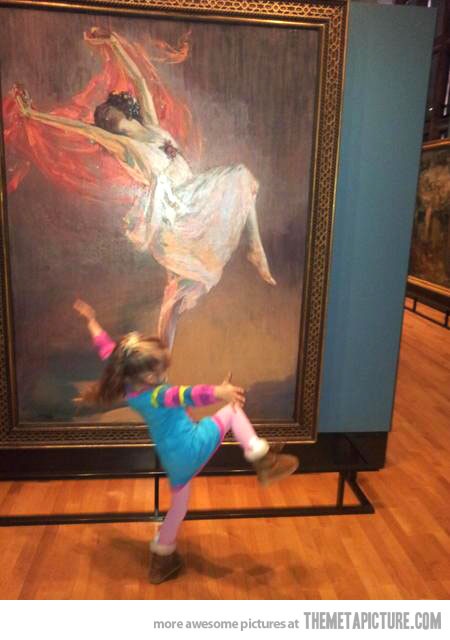
Find joy in a dance, in art, in creation

In mirroring pleasure

Where words do not matter

joy1

Find joy in belonging

In giggles with one like no other

In nature come close

And delight spilling over

joy2

Be You!

beyourself

“My life is over!” the child’s tone says it all. It has been an especially rough day. He failed a test he’d studied for, got passed over for the team he wanted to play in, and just found out he needed glasses. Oh, and that he’s allergic to dairy. The food he loves most in the world is pizza. Figures.

I could see something was wrong when he came up the stairs with shoulders slumped and legs dragging.  He’s usually content enough to come here, but today the last thing he wanted was to have to spend time after school doing ‘after-school’ learning. He likes me well enough, but in the competition between play-date, video game, movie, or seeing me, I don’t stand a chance. It’s as it should be. I get worried if children prefer coming to me to having spare time or play time or get-home-and-relax time. He’s unusually unhappy to come this time. Or rather, he’s unusually unhappy, and it shows. Make sense that it would. Am glad it can.

“And I’m never ever going to be like everyone else,” he adds, having listed the tally of difficulty, bummers and unfairness.

“Why is it good to be like everyone else?” I ask.

He returns the look I probably deserved–the one reserved for adults who ask stupid questions when they should know better and when the query is not even worthy of the effort of forming a reply.

“Okay, okay …” I chuckle, hands up in trounce. “I didn’t mean it that way. I do, however, truly think that everyone is different and that it fine and often even better that way.”

Eye roll. At least he regained enough energy for sarcasm. “Yeah, sure. But you get to be really different and you end up being weird.

Fair enough.

“And anyway,” he sighs. “I don’t have a choice. Everyone has to do the same stuff at school, and everyone is supposed to get good grades, and be popular and that kind of stuff.”

“Hmm …” (when I say less, the kids tend to say more … I wait).

“School is too hard and it is too boring. And my dad thinks I’m not trying but I am working hard. I’m not a genius or a nerd or something. I’m not good at reading and I suck at math. And science … I failed science … my dad is going to hate me when he finds out.”

I wish I could rush to reassure this boy–barely 11 and already so jaded–that he is not expected to be like everyone else, that he is not expected to excel in everything regardless of his relative strengths, that his perception of needing to be popular is not correct … or that his father would not have a reaction that would crush him. Oh, I know that the father would not hate him, but he can be critical, and he tends to view grades as the only reflection of effort. He would likely see a failed test as an immediate proof of his son not trying hard enough. Even if he does not ‘punish’ him by taking away computer time or confiscating his phone for a weekend, the disappointment alone will devastate this child.

“He doesn’t understand,” the boy adds. His voice catches and he looks away, old enough to have internalized the (mis)conception that tears are somehow yet a marker of weakness. He doesn’t want to show me how much this matters. “I studied really hard and I knew all the notes but then the teacher changed the questions. How was I supposed to know the answers to those?” the color rises in his cheeks, wetness in his eyes. He looks away again.

“I’m sorry,” I say. I mean it. “I know how hard you work and I can see how having different questions–even if it was about the same material–can make it much more difficult. It is hard to figure out what the teacher meant and what the questions are about.” He nods. This boy is not making excuses. He comes to see me because he has difficulty with retrieving information–the access to what he knows is hit-and-miss, his brain behaves more like one big dump of knowledge than a filing cabinet. Information comes in haphazardly and is later hard to recognize or organize. He is smart, and he understands the material. However, change it around and he gets lost.

The teachers only marginally understand it. His father thinks that there’s nothing wrong with his son that a bit more ‘motivation’ won’t fix. It is curious, you might think, that he is that harsh when he admitted to having had learning issues himself. Or maybe not curious at all: people can pass judgement like a hot potato–what they cannot stand to hold, they put onto another. It can be especially so between mother and daughter, between father and son. Mirrors are a painful thing for what one did not accept in oneself and sees reincarnated in their progeny.

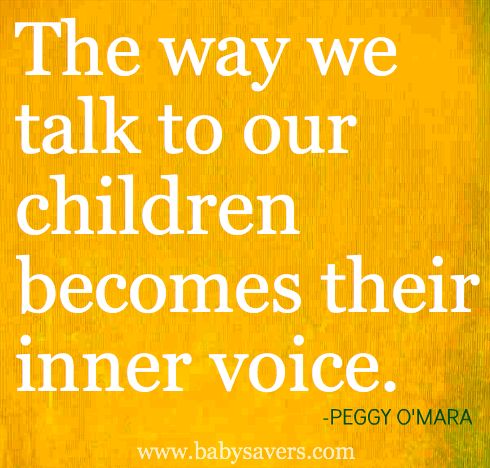
“Would you like me to speak with your father?” I offer. I’ve done it before, and it helps some, if temporarily. The father is of the opinion that I am far too soft and that kids wrap me around their little finger and I think they can do no wrong. He is not all that far from the truth, actually. I do believe that softness and kindness get farther and build better than harsh critic and demand. To his credit, the father also respects my opinion, and he does–quite touchingly–love his son. He told me once, in a moment of vulnerability, “I don’t want him to go through what I did. I want him to fit in better. To be a better student than I was. To be like everyone else.” (Yes, the boy now worries about same. Children will take on our fears and worries–they are acutely tuned in to what we think, even if we do not say it. They will know, and take it on)

The boy nods. He looks up at me then, hopefully slightly relieved–if not with the possibility of his father’s understanding, than by being believed. “If it is so good to be different,” he challenges, “what am I good in?”

“What do you think?” (my standard answer-query. I figure, if a child is asking, they already have a hypothesis in mind)

Moment of thought, pursed lips, raised eyebrow. “I’m good at drawing,” he states.

I energetically agree. The cartoons this boy can doodle put my best attempts at stick figures to shame. He smiles. He knows–as I often emphasize to the kids–drawing is not one of my strengths (five-year-olds come to my aid on a regular basis. “Let me do it for you,” the munchkins offer, “you are not very good at that…”). He smiles.

“And at snowboarding,” he adds. I nod. He began snowboarding only the winter before last, and reportedly advanced super fast from level to level. He snowboards with children several years older now. “I want to be a professional snowboarder when I grow up,” he says, the spark back in his eyes, “and wouldn’t it be cool if I drew, like, cartoons of snowboarding stuff, you know, for newspapers and maybe comics and such? I bet I could do that. Would that be awesome stuff?!”

I smile. “That is pretty cool stuff! You have got to do school work because that’s just how it is, and you have to do your best with that. But I am thinking, there are a lot of kids who would love to know to draw as well as you do, and most can’t snowboard half as well as you can.”

He grins. Proud.

“So …,” I note gently, “maybe life is not quite over … and maybe it is not such a bad thing to have some stuff where you are not exactly like everyone.”

hopeis

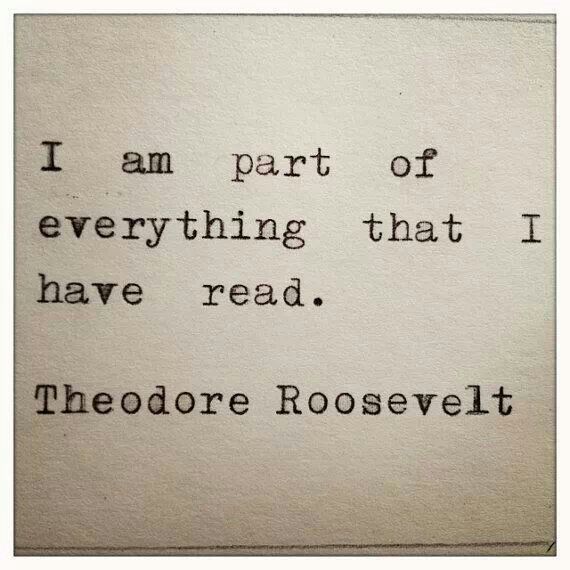
Why do YOU read?

How do you use reading? How does reading handle, challenge, comfort, startle, change, use … you?

Do you read for pleasure? Do you read when you are sad? Do you read for inspiration?

Just for school, research, work-stuff, projects? (if so then that is quite a bit depressing, really, I am sorry it is that bad …) 

Do you read for passing time? Do you read for friendship? Do you read to seek ideas? Do you read to make good use of waiting, lines, your travel? Do you read to undo boredom? Do you read because you can? Do you read to keep on current or to discover what had happened during times before your time? Do you read for imagination? Do you read to reconnect? Do you read for knowledge, wisdom, thought provoking, prayer, fate? Do you read for all these reasons and read some more for just in case?

Do you read books, magazines, publications, journals, newspapers, memos, menus, t-shirt logos, signs? Do you re-read old notebooks, older letters? Do you read your children’s homework, the funnies of another, bits of stickies left in library books by mysterious someones?

Do you read for comfort?
Do you read for hope?
Do you read to understand?

Do you read because it matters? Do you read because you must? Do you read for words you’re learning? Do you read to learn to live or to prepare better how to die? Do you read for things you did not know and need to? Do you read for what you wish you did not need to know yet should not be look away from or deny? Do you read for group discussion? Do you read to share a page? Do you read to walk along the ones who placed the letters onto page and screen and paced into your life?

Do you read a child to sleep? Do you read to calm an elder, to apologize, to woo a loved one? Do you read to spark an interest? Do you read for laughter, for redemption, a good cry? Do you read as prayer or as meditation? Do you read to find a path to bigger pictures, wider seeing, deeper meaning, brighter skies?

Do you read to find your own voice? Do you read for vision?

Or like me, do you read for all of those reasons … as well as for the simple fact that you are addicted to the human language and cannot, would not, do not want to, ever stop …?

ihaveread