Everything She Needs

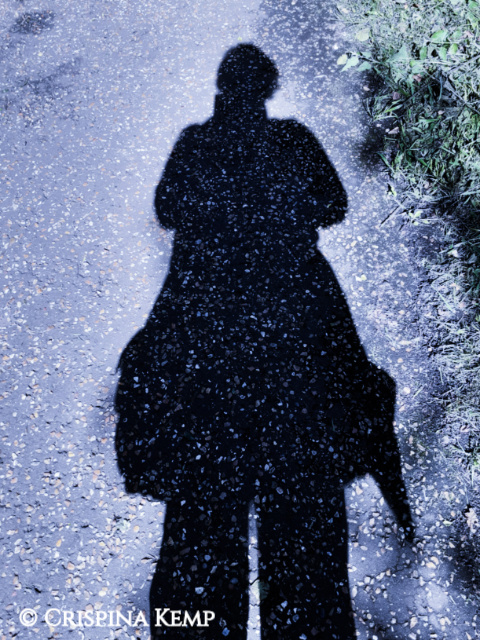
shadowed-me CrispinaKemp


She took one last look around, another in the mirror.

Waterproofs. Umbrella. Boots. A change of clothes tied around her waist. A utility apron with ration-filled pockets. Some necessaries. Her pen and notebook. Basic first aid. Matches. Tarp. The photo. And her courage, tightly wound into the center of her chest.

She was ready.

There were no roads or maps where she was going. She’d hike up then use her wits and hopefully the scent of memory, awakened, to find the place. She didn’t know how much the faded photo would help, with the quarry and the landslide and the decades passed since the plate was exposed. Still, she took it. Her soul told her that the photo did not wish to be left behind.

She walked into the dawn. She had everything she needed.

If fates smiled, she’d find the ruins of Witch Wilma’s home. Her great-great-grandma’s tomb.


For Crispina Crimson’s Creative Challenge


Clara Of The Clock

fantasy SueVincent

Photo: Sue Vincent


There were bells above the clock in the tower. A tiny room above that, with blue shutters that could close themselves to everything or open to the four corners of the world. A taller turret still above it, its naked windows whistling in the wind. And over that a peaked roof with a metal creature perched wide-winged, inviting lightening.

To Clara, this was home. The keeper of the hour and the minder of the rectory below, she was forever scaling spiral steps and ladders.

Up and down the narrow stair that spun inside the tower to the clock-room, then up and down the ladder that hiked along the breezy bell balcony to her room, and up and down again on the metal rungs that climbed the room’s wall to the turret and the vast horizons beyond.

Father Brown used to climb up and down, too, though thankfully he’d grown too corpulent to lift his body up so many stairs or hoist himself up the ladder. She did not think he would even fit through the entrance in her room’s floor anymore.

Good.

For he was never meant to fit into any of her entrances anyway.

She was better off with him too fat.

Fearless, they said she was, to live so high above the village, buffeted by winds half-way into the sky, not to mention, in total loneliness. Unnatural, they called her, to prefer the company of birds and clouds to that of other people, or a man.

They were right. About the latter.

Birds did not raise a hand to her. The clouds did not box her ears or pull her hair or force themselves inside her.

There was solitude in the small room where the air was clear and the noises of the village did not reach. Just the swish of the wind and the clarion sound of the bells and the heavy heartbeat of the clock, ticking like the heart she’d almost forgot, the heart inside the chest she must have laid a head on in the first weeks of her being and before her mother – and her life – turned cold.

Through years of misery in the orphanage, with cruelties of every kind meted by the nuns and priests and older children who sought to repay their own experienced agonies onto those smaller than them, she gazed at the part of the clock-tower she could see, and dreamed of heartbeat.

When Father Brown came to the orphanage to pick a new housekeeper to “serve God” in the rectory adjacent to the church (and tower), they lined up the girls for him to choose from. She trembled with both hope and horror.

Perhaps he liked seeing both feelings warring in her, for he let his eyes travel the length of her body before curling his finger in her direction and telling Mother Superior that “this one would do.” She had just turned thirteen.

She kept house and cooked and cleaned and tried to keep away from his fondling hands and pinching fingers and the parts under his robes. She wondered if the former housekeeper had wished to ail and had welcomed the opportunity to die.

Then again, perhaps the previous girl did not know of the tiny room above the bell-tower. She herself only found out about it when Father Brown twisted an ankle and she was required to complete a few tasks there on his behalf. She was immediately entranced. By the openness. By the freedom. By the possibilities.

The next day she went to see Mother Superior under the pretense of needing salve for Father Brown’s leg but with the real aim to have someone clothe her request in piety. “It is but a small room, but I feel nearer to God there,” she told the nun, hoping to mask her awe as faith.

“And,” she whispered, “it could be more proper for Father Brown, too, to have me in separate lodging.”

The head nun frowned in reproach then tented her fingers to consider. The rectory had only the one sleeping room, and so housekeepers slept on a pallet by the kitchen stove. Even the most pious man may need a drink of water in the night. Best to put away any Eve where she could not lead a man to sin.

“You are wicked to even have such thoughts,” Mother Superior admonished. “Perhaps it would be best to remove you to the tower.”

Clara lowered her eyes in relief.

Father Brown was farthest from enchanted with the new arrangement, but he could hardly argue with Mother Superior’s suggestion. Nor could he claim that a woman should not scurry up and down the tower ladders in her skirts when he himself had sent Clara to do so.

Oh, he made sure to let her know there was no sanctuary from him in the tower. But she focused on the heartbeat of the clock and let it speak louder than his thrusting, and she bade her time, and fed him.

He grew fat. And old. And rheumy eyed.

She grew taller. And confident. And limber in her climb. She became the sole caretaker of the timepiece, the sorter-out of the bell’s ropes, the heartbeat of the tower.

Clara of the clock.


For Sue Vincent’s WritePhoto


Not Much

OLYMPUS DIGITAL CAMERA

Photo prompt: © Jennifer Pendergast


There was nothing left to stay for.

Not much to pack, but still he managed to stuff the duffel with odds and ends. More for feel than for utility.

He won’t be coming back.

The empty cars stood, cooling, on the rails. There was an echo in his bones even with no movement. Even without any sound.

He scanned for danger. One never knew, and he had had enough surprises.

When nothing stirred, he climbed aboard. The metal floor smelled of pee and rats, but at least he’d sleep with a wall at his back tonight, a door barred shut.


For Rochelle’s Friday Fictioneers


Square One

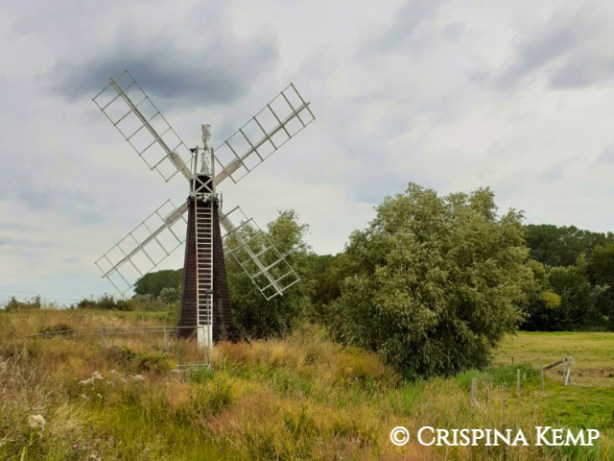
st-olaves-mill CrispinaKemp


“You’ll have to climb up there to fix it,” Shelly’s voice made clear he did not think the climbing or the fixing would do any good.

Bertie sighed. It was none of it ever simple. Not with Shelly. Not with him.

Mama prophesied it when his brother was born wrinkled, whimpering, and without a dad.

“You’ll have to watch out for him,” she’d announced to four-year-old Bertie. “You’re his older brother now.”

Then mama, too, was gone, and left them with their uncle and their scowling aunt, who did not need two more butts to wipe or wallop, and Bertie had his work cut out for him. Then, and now.

Shelly couldn’t help being pessimistic. At least Bertie had had some years of motherly love.

“It’ll work,” Bertie promised, climbed.

The windmill spun. Lights came on. Then the new cable caught and tore and they were back to square one.


For Crispina’s Crimson’s Creative Challenge


Time’s Tread

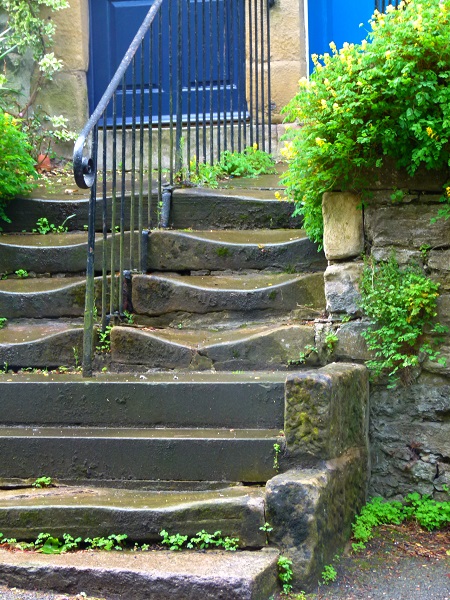
worn-steps SueVincent

Photo: Sue Vincent


She could swear the old house breathed at night. That the walls spoke.

It was the age of things, she thought.

She’d ask, but the next door neighbors gave off a distinct air of distance and her mother was too occupied with damp ceilings, leaky pipes, and bone-dry bank account. There were questions one did not bring up unless adults were in the right mindset, which was rare enough during calm times, let alone through times of grown-up strife.

So Sally kept her own counsel on the matter of whispers between bricks and words in languages that sounded just a step to the side of comprehensible. It had scared her at first to hear them, but when she set her heart to listen she came to realize that there was no malice in the voices. Or none that raised the hair on the back of her neck, which had to be good enough.

After some time, Sally thought of them as friends.

She had few besides.

A moldy suitcase in the attic spoke of travel and held the faint smells of smoke and grime and sweat. There were some clothes still in it: Petticoats holey with moth and yellowed with time; a faded dress that might have been dark blue or purple at the time; a pair of shoes with buttons, the leather wrinkled like the face of Grandam in her casket; some papers in ink-spotted writing that mice or something else gnawed on; a locket.

She fretted about the latter. She wanted to open it. She shuddered at the thought. She dared herself to do so. Hefted it. Stared at the latch. Could not bring herself to undo it. This felt more personal than the split drawers in the suitcase, with the faint brownish stains on them.

She left the locket closed. But she did find herself drawn to hold it. Dreamed of wearing it. Of the dark blue dress. Of bonnets and petticoats.

One morning, when no other dreams found space and her nights became filled with whispers, she decided to wear the locket on her necklace. The small, intricately carved metal heart felt cool against her chest. She hid it underneath her shirt.

Sally could hear her mother arguing on the phone with yet another contractor, voice shrill as she tried but could not quite keep desperate frustration out of her voice. Sally tiptoed down from the attic to the landing and slipped quietly out of the house to sit upon the stoop. The damp chilled her bottom, seeping through the fabric of her pants. She shuddered.

And it was no longer pants she wore, but skirts, dark blue, cascading around her knees and covering the indentation in the steps. Ancient, those.

The door of the adjoining house opened, and a butler poked his head, complete with white gloves and pocket watch.

“Good Morning, Miss Grenadine,” he bowed slightly in her direction.

She smiled, entranced by how neither her lips nor her eyes were her own.

“It will be a sunny one, once the mist burns off,” he said.

She nodded and plucked a petal off of her skirts. She did not quite trust her voice.

The butler bent to pick a newspaper off the stoop, tipped his head in her direction, and closed the door.

Her hand reached for the locket, which was hanging over ruffles and a row of tiny buttons. It felt warm.

“The longer you sit the further you will travel.”

She turned her head to the sound but saw no one. A crow perched on a stone across the next door’s stoop, beady eyes regarding her with something between expectation and reproach.

The bird did not open its beak but the words unfurled clearly in her mind. “Some things are better left unopened.”

The locket.

The crow nodded, reading her mind. “But that does not mean keeping your eyes shut.”

She did not understand.

“Listen. Watch. Observe. Live on.”

Riddles. Crows were known for riddles. She shook her head and looked down at her knees to see a woolen skirt, knit stockings, an apron. Her arms in sleeves.

“Visit the past, but don’t forget to leave your own steps on the stairs,” the winged messenger noted, bobbed its head. Flew on.

“Sally?” Her mother’s voice sliced through the air.

She blinked.

The crow was gone. Her legs in sneakers on the step. The stairs the same.

She rose and eyed the door, the bowed indentation in the stones that led to it. Walked down to the pavement, turned, and pressed her feet into the tread.

She climbed. Making a path for someone from another time.

“Coming, Mom!”


For Sue Vincent’ WritePhoto


Gone Swimming

Photo prompt © Jean L. Hays


She spent the day swimming, buoyed by the swell and fall of waves, kissed by the spray of salt, caressed by playful bursts of wind as silvery bodies and slick flippers dipped and slid and spun beside her.

The sun warmed the top of her head, then the tip of her nose and the crests of her knees as she turned to rest and float and face it.

It was like living in a dream.

And it was. A dream.

The stained glass in the open door a portal to what was. The ventilator sighed. She could no longer swim.


For Rochelle’s Friday Fictioneers


4T

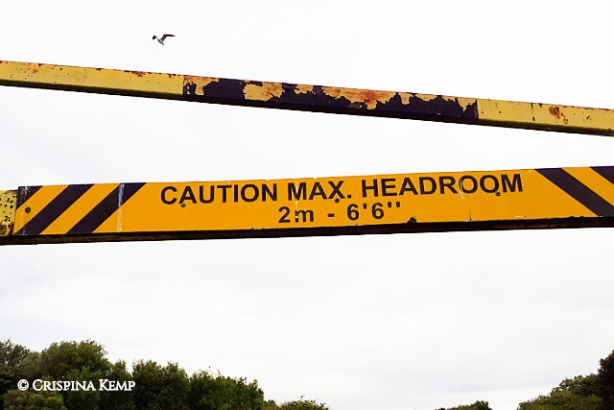
max-headroom CrispinaKemp


Luke eyed the sign ahead.

“I won’t be allowed in,” he sighed.

Sarah scrunched her forehead. “Maybe they won’t notice?”

Luke raised an eyebrow. He was 6’8″.

Of course they would notice. It was a stupid thing to say. She blushed. “I’m sorry, Luke. I mean, it’s just so unfair!”

He nodded. Such rules often were. Still many tended to accept, even embrace, ‘patriotic regulations’ … until caprice hit close to home. Or in his case, on the way back to it.

He had pooh-poohed the risk. What folly.

He wouldn’t be allowed into the City. Even though he’d been born and raised and lived there. Had committed no crime. He was banished. They’d expel him if he were still home.

The militia could shoot him on sight. Neighbors would be expected to report his presence. As of that morning, anyone above 6’6″ feet was considered a 4T security risk – Too Tall To Trust.


For Crispina’s Crimson’s Creative Challenge


Space To Roam

dark-clouds-on-a-sunny-day SueVincent

Photo: Sue Vincent


When they first left the city she was devastated.

She knew it was the better choice. That the twins’ sensitive lungs could not function in the pollution. That Mark’s temper improved whenever he had something green to look upon. That there will be less pressure on her to perform.

And yet … she mourned.

She worried that they will be terribly lonely. That the twins’ needs will drive her to distraction and that there will not be enough there to keep her mind from wandering into the darker corners of herself, especially in the days each month when she was already prone to the morose. She worried she would hate it. Hate him. Resent them.

She couldn’t have been more wrong.

The rolling meadows became an endless canvas of interest. The twins spent hours in the fresh air, content to watch the play of light and shade as clouds raced across the sky and birds fleeted and hares scampered and hawks floated languidly above. They did not cry nearly as much. They slept. They began to respond. It gave her time to know them. Their facial expressions and appetites and unexpected curiosity.

She was learning to know Mark better, too, and she liked what she was getting to know better than what she’d believed she’d liked when they first met. He was kinder since they moved. More patient. Less ashamed.

She knew he’d blamed her for the twins. For their impairments. For trying to birth two babies together and then doing it so poorly that she not only gave them damaged children, but was not likely to birth again.

In the city the children were a constant reminder of his imperfections. He was saddled with them yet found little comfort in babies who were sickly and odd-shaped and would likely never walk by his side. He was “the man with the cripples,” and though he never outright said it, she knew he resented the children for that. She knew he resented her, and that he hated his family for gifting them this exile.

But in the small estate in the middle of nowhere, surrounded by hills and bogs and streams and all manner of wild things, her husband seemed to find compassion. For himself. For her. For the children.

He calmed.

He took long walks.

He discovered fatherhood.

Neither of the twins smiled much, but when they did it would transform their wizened little faces into absolute delight.

In a moment of unexpected impulse, Mark discovered that he could make Tommy smile by spinning him high in his arms. And after that he could not get enough of Tommy’s dimple. Or Ronny’s laugh.

She could not get enough of Mark’s.

And she knew she would never forget the morning when she found Mark asleep in the nursery, draped on the daybed with the children cradled one to an arm. She loved him then in a way she did not believe possible.

So yes, when they first left the city, she had been devastated.

Yet in the vast open spaces of a fresh start, their grief diluted, they found a place to roam.

They found each other.

They found home.


For Sue Vincent’s WritePhoto


Blending In

Photo prompt: © Rochelle Wisoff-Fields


She knew from the moment she walked in that she was way out of her league. Her virgin palette was blinding amidst the well-worn, paint-that-will-never-come-off-anymore held by others. She felt blush suffuse her face and an even deeper shame at raised eyebrows and feigned disinterest. Apparently she did not even warrant curiosity. An outsider. A wannabe.

She almost up and left.

But she’d saved for months to afford the class, and she spent her last on paints and brushes.

The need to create pulsed in her blood.

She stood her ground.

Blending in or sticking out, she’d stay. She’ll paint.


For Rochelle’s Friday Fictioneers


Red Moon Riding

niklas-priddat-kqJJqamhZMg-unsplash

Photo: Niklas Priddat on Unsplash


She let the shudder travel from the roots of her hair to the nape of her neck and down her spine to the place where the calving of her body started. The skin on the small of her back awoke. She sighed.

It wasn’t the chill in the air that had her trembling, even though the breeze could explain the raised goosebumps on her skin. It was the vista that had shaken her. And the memories it sought.

Oh, this was a different place. A different time. Yet somehow these still were the same sky where a red moon rides on the humps of the low river hills spreading below it. Transporting her. The earth roiled under a tapestry of dark and starlight, of shade and voids and hidden stars. Her breath drowned in wonder and sorrow: for lost beginnings, for hopes come dawn.


Prosery Prompt: “a red moon rides on the humps of the low river hills” (Carl Sandburg’s Jazz Fantasia)

For the dVerse Prosery challenge