The Vanishing Point

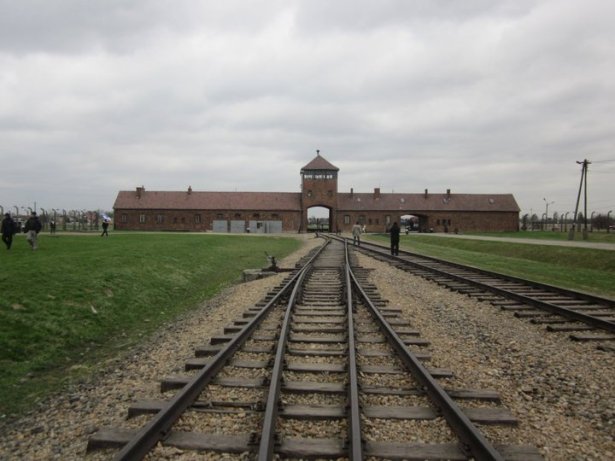
VanishingPoint ofirasif

Photo: Ofir Asif


At the vanishing point

They have passed

To be gassed,

Leaving us

To a world

That forever now must,

Not forget

How the place

Of no return

Has been crossed,

And we none are

The same

For hate’s shadow’s

Been cast.

In the name of those

Vanished

Who shall not be forgot,

We can vow to hold hope,

And let compassion

Outlast.


For Nancy Merrill’s A Photo a Week Challenge: Vanishing Point


The Boy Who Was Very Brave


left human injected with hose on white textile

Photo: rawpixel.com on Pexels.com


“Be brave,” he said, and closed his eyes to ward off at least the pain of seeing his skin pierced by sharpness.

“Just a scratch,” the nurse stated in rote-like monotone, forgetting that for this boy nothing at this point was ‘just a scratch,’ especially not with veins well worn from prodding, let alone in a child who must struggle to understand why any of this was necessary.

“Be brave,” he said again, and his voice shook, and a tear slid under his lids and traveled down the small cheek to settle on his ear like a tiny sorrow-diamond.

“I’m sorry,” the nurse pressed her lips together when the third poke failed and another scarred blood vessel rolled under her needle. She’ll have to try another site. How on earth did someone not put a port in this child yet?

“Be brave,” the boy clenched his eyes to slits but more tears fled. “Be brave.”

The nurse looked up, distressed by his determined resignation. She paused and placed her gloved hand on his cheek. “You are,” she said. “Very.”

Eyes still shut, he shuddered and she wasn’t sure if he understood. She pulled a chair to his gurney and smoothed his hair. Someone from the Children’s Home had brought him to the hospital with another flareup, but the orphanage was too short-staffed to have anyone stay with him, especially when the boy wasn’t fussy and reportedly “used to” the hospital.

As if there could be such a thing as a child being “used to” being alone in a hospital.

“You are brave,” she repeated. Her eyes stung and perhaps the emotion in her voice more than her words filtered through his bracing because his eyes opened to meet hers.

“You don’t deserve any of this,” she said. “No one does. What you do deserve is to get better, and for people to really see and understand how brave you are. You are so so brave.”

Another tear rolled toward his ear. She hoped this one wasn’t from fear but from recognizing a connection.

“I’ll be as gentle as I can,” she promised. “I know this must be awful, but I need to get a line in for your medicine. Can you be brave for me just a bit longer?”

He held her eyes before he nodded.

“Good boy. So let’s just get this over with?”

He nodded again and this time did not close his eyes but hung them on her face. He did not look away or make a sound as she flicked and poked and needled.

“Good lad,” she praised, relieved, as she finally placed the clear bandage over the IV.

He took in a long breath.

“Can I get you anything?” she lingered, wanting to do something for this boy, so small and pale and alone.

He nodded.

“Some juice or crackers, maybe? It’ll do you good to get some of these in you,” she chattered. “I bet we have some toys I can borrow from the playroom for you.”

He held her gaze.

“Can I go home with you?” he asked. “I promise to be brave for you. I’ll be brave every day.”


(*Based on a true story.)

For Six Word Saturday


Memory Jar

Photo prompt: © Priya Bajpal


“Can I take one now?”

“Breakfast first.”

Deena sighed. She ate her oatmeal and drank her milk, but her eyes kept returning to the seashell table Dad had gotten for Mom. Before. To the jar that usually stood on the mantel. Since.

Finally, Grandma rose and put her mug in the sink.

Now that it was time, Deena hung back. She remembered filling the jar, with Grandma, after the accident, when memories were fresh and both their hearts were broken.

Grandma took her hand. “Come. Reach in. Pick one, and you’ll see – the right moment with them will find you.”


For Rochelle’s Friday Fictioneers


Forgotten Foundations

deserted in the desert ofirasif

Photo: Ofir Asif


“Will he come back?” Leah peered over the wall.

Rachel pulled her younger sibling back into the shade.

“Will he?” Leah pressed.

“I don’t know,” Rachel’s voice caught. She coughed to hide her fear. She’d break if her sister became frightened. It would make everything too real.

She didn’t know where they were. A car ride preceded a long hike into the desert and the nap in the ruins. “Best thing during the heat of the day,” Dad said.

He was gone by the time they woke, deserted like forgotten stones.


For Sammi’s Weekend Writing Prompt: Foundations in 91 words

The Fence

Photo: © Russell Gayer


“We don’t go There,” Mama always warned. “Ever.”

“There” was beyond the fence. Where the embankment locked in perpetual shadows and where the yellow cliffs rose shining in the sun and where the scary things lived and mortal danger was certain to find you.

As a child I never questioned the relative flimsiness of the wire fence and how it possibly prevented such pervasive awfulness from invading the compound.

It wasn’t until much later that it occurred to me to wonder whether both the fence and its electric bite were there to keep us in.


For Rochelle’s Friday Fictioneers


The Brain As Explained By Kids

Sometimes a resource comes along that distills complex concepts so they are instantly understandable in both theory and practical applications. The three minute clip below is one.

The children in the video do an excellent job explaining the brain’s structure, function, and response to fear. They detail what fear reactions can look like in behavior, how fear affects processing, and why it is so important that we understand how behavior is, in essence, communication.

It is a brief yet fantastic resource. I hope you watch. I hope you comment. I hope you share.

Children often make great teachers. These kids certainly do! Well done, everyone!


For detailed information on the ways fear and trauma affect language, development, behavior, and communication, go to: Communicating Trauma.

Also check the Resources and Trauma and Development pages as well as the Book Chapters and Articles page on this site for additional information and resources.


For information on the organization that produced the video above, go to: Trauma Recovery Centre


If Eyes Could Speak

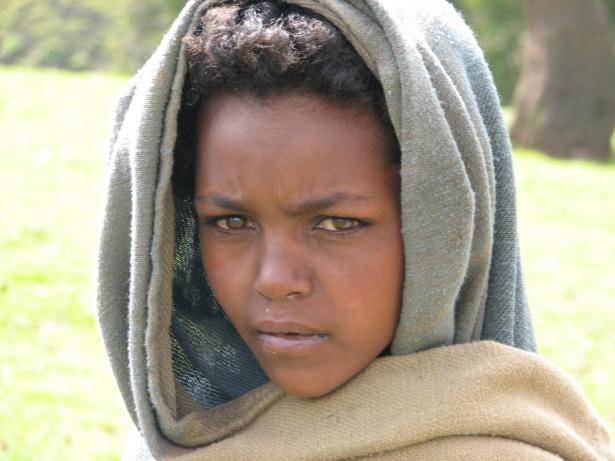
Ethiopia8 DvoraFreedman

Photo: Dvora Freedman


If eyes could speak,

They’d tell of roads

No one should take,

And hardship that

Does not build,

But breaks.

If eyes could speak,

They’d share the stories

Of long paths,

That some must walk

With shattered hearts.

If eyes could speak,

They’d share hope, too.

For being seen

Brings light into

What one must know,

And one must do.


For Nancy Merrill’s a Photo a Week challenge: Eyes


“Ian”: A Moving Story


All children want to play, including those with disabilities. However, the latter are all too often left out of playgrounds altogether, are rendered invisible to others who look through them or past them, or are bullied. This internationally acclaimed short movie, which is based on the true story of Ian, wordlessly and profoundly delivers the universal message about the inclusion and dignity to audiences young and old.

It is a must-see.


From a fabulous article about the movie from Respectability:

“All kids want to play. Kids with disabilities are no different. “Ian” is a short, animated film inspired by the real-life Ian, a boy with a disability determined to get to the playground despite his playmates bullying him. This film sets out to show that children with disabilities can and should be included.

“Ian” premiered for audiences around the world on YouTube and was broadcast in Latin America simultaneously on Disney Junior, Cartoon Network, Discovery Kids, Nickelodeon, PakaPaka and YouTube Kids Nov. 30, 2018.

“Ian” started as a mother’s mission to educate her son’s bullies on the playground—one to one. When she realized that the need for inclusion was bigger than one playground, she wrote a book and founded Fundación ian to change thousands of minds and attitudes about people with disabilities. She approached MundoLoco, a top digital animation studio in Latin America, about creating “Ian,” an animated film to deliver the message of inclusion to audiences all over the world.”

For the rest of the article on Respectability, information about the real Ian, links, and a lot more, click here: “Short film about playground inclusion wins international acclaim”