She’s really pretty, but …

The pre-teen shows up to session looking distracted.

She is usually beaming and rearing to tell me about small successes and upcoming weekend fun. When I ask her if everything is alright, she just nods absentmindedly (and not too convincingly) and bites her lips in indecision. I give her a moment, busying myself with some papers in her work-file that don’t quite need sorting but keep my gaze elsewhere.

“Can someone be your friend and not your friend at the same time?” she finally asks.

“I guess it depends. Be your friend and not your friend at the same time, how?” I respond, not wanting to assume I understood what she was referring to and preferring to give her the opportunity to explain.

“Hmm …” she nods, pauses. “I mean, like if your friend is, like, sometimes behaving like your best friend and all and you hang out together and all that and sometimes she’s mean or just ignores you or, like, goes with other people, or says things about you that are secret. Stuff like that.” Color rises in her cheeks and her eyes get bright with unshed tears.

“That is a tough one.” I state gently. “I guess I’d try to have a heart-to-heart conversation with that friend, to see what is going on.”

The girl looks startled. “But what if she never wants to be my friend anymore?” she blurts.

“Well …,” I pause, “if it were you, would you want a friend to tell you if she felt that there was something wrong between you two?”

“Yeah, but …” she begins, hesitates, “… she’s not like that.”

“How is she, then?”

“She … she’s real popular …” blush rises higher. “She’s really pretty and smart and everyone wants to be her friend …” she looks down.

Children know that wanting to be liked by popular classmates is not the best friendship seeking reason to admit to adults … However, the reality remains that popularity matters, and that especially at that age the social hierarchy easily translates into all manners of self-acceptability and relative self-worth. Whether one follows the ‘most popular’ crowd or not, it is difficult to not yearn to be among the ‘chosen few’ of the perceived best clique and the popularity it bestows.

I wait.

“… you see, she doesn’t need me to be her friend. I just try to ignore it if she’s mean because if I told her it was not okay or to not share private stuff and such, she’d just like, walk away and not be my friend anymore … and her friends won’t either …”

“I see,” I note. “This does feel like it would be a tough spot. Though it does make me wonder what kind of a friendship it is if someone ignores you if you tell them what you think or feel.”

She nods, picks at a chipped piece of nail-polish on her ring finger. It is dark blue, not the usual pastels that this girl seems to prefer. I have a guess why this color now, but I keep it to myself. I give her another moment. Kids need time to formulate their feelings into thoughts, let alone to get their courage up to share what may bring critic from adults or have them feel vulnerable.

“She likes dark blue, you know,” she adds, quietly picking at the nail-polish. “She said that all her friends like it, too, because it is the coolest …”

“Hmmm… ” I offer, my hunch confirmed.

“I don’t think she’s a very good friend,” the girl whispers, then looks up at me, confused by her own words and their implications. “But … but how can she not be a good friend and be so popular? I mean, everyone wants to be with her and get invited to her sleepovers or stuff so doesn’t this mean she is nice?”

“Good question,” I respond. “There are all kinds of reasons people can be popular and why others want to be close to them: sometimes it really is because they are nice and fun to be with, and other times it may be because they are famous, or rich, or can get them things, or it makes those who are allowed to be with them feel important …”

“She’s the prettiest girl in the whole grade!” she interrupts me, “… she has the coolest clothes and a whole walk-in closet in her own suite at home and they even have a movie room with a popcorn machine in it.” She blushes again. “She’s really pretty,” she adds quietly, “but I don’t think I actually like her … it is just … that it feels nice to be in the popular group and have other girls know you are cool and stuff …”

She looks up at me then, decisive. “Maybe I don’t need to be her friend,” she says. “I mean, I don’t hate her or anything, she’s not like, horrible. She can be nice sometimes … but sometimes she doesn’t care … and she tells secrets like they are jokes and it’s not really funny. I don’t like that. My friend Brianna is different. We always have fun and I can tell her things and she won’t tell on me. I think Brianna is a good friend for real.”

I smile.

She smiles back, then spreads her hands on the table and looks at her dark blue fingernails. “And you know what? I don’t like this stupid dark blue color, either. It is nice on Alison, but my hands like light purple better …”
friendship


Inside Your Hug

by robert wagt

by robert wagt

She’s a dark-haired gal with doe eyes and willowy body. All arms and legs that find corners and bump into tables and spill things and break stuff and mess up what appear to be the most child-proof settings. She doesn’t want to be clumsy. It is just that her body is full of angles that don’t quite plan their movements and her brain does not quite catch up to what’s happening until it is a moment too late and the damage done.

She wants to be an acrobat or a ballerina. The graceful movement, the delicate balance, the painstaking patience–they are to her the incarnation of what she would want to be and all that she finds terribly difficult. She would do better at hip-hop, her caregiver thought at some point, only to find out that a child who cannot quite catch a ball or toss it without hitting someone or breaking a window, cannot quite coordinate her movements in an elaborately sequenced dance. The teacher all but fired her after one class. Literally too many toes stepped on.

Still, the girl dreams.

She adores delicate, filmy, whispery clothing. Her caregiver thinks it would be more practical to put her in iron-knees pants and canvas but had resigned herself to letting this elephant-in-china-shop gal wear tights and lace-edged shirts. It is an act of faith, as they last about five minutes before they don a massive stain or spring a hole (which, perhaps thankfully, the child rarely seems to notice).

This little girl is a life on steroids. A roller coaster of emotions–she is either elated or devastated, overawed or broken-hearted, eager or despairing. She tries so hard. She keeps failing, falling, disappointing. Adults frown. Teachers scold. Caregivers sigh and try to keep a restraining hand nearby.

It is difficult to make friends, or rather, to keep them. Oh, she’s never mean; in fact, she is quite sensitive at reading others’ emotions and wants to take care of their needs, real or perceived. It is just that she pulls too hard when she holds hands, she pushes when she only wants to touch lightly to call someone’s attention, she messes stuff up and breaks things, she barges into conversations, she speaks too loud.

Her official diagnoses are all kinds. Some of you who recognize the symptoms may have an idea what those could be. Some of you would know why in my work with her, we tackle symbolic language, idioms and stories, auditory memory and following directions. Why we talk about social situations and solutions, practice narrative and inferences, work with predictions, and rephrasing, identifying context clues and finding the main idea in what to her is a soup of details. Why we make charts, write bullets, jot lists, follow steps, check items one by one.

She’s a bundle of everything–stories, anecdotes, questions, observations, feelings spilling over, hands tapping, legs wagging, hair twisting, lip biting, noise making.

I love working with her.

Oh, she’s a handful–in more way than one–but that’s okay. I work with many kids who struggle with managing incoming information, who need help regulating what their body senses and require direction to make sense. Fidgety bodies don’t faze me. Nor do spilled water cups, sticky fingers, rocking on chairs or crumpled papers full of holes from erasing too hard.

What fazes me more is how some of those kids who have an alphabet soup of diagnoses and a history of testing enough to fill a filing cabinet, have internalized that something in them is somehow eternally broken or ill-fitting. How all too often adults around them have come to believe this, too. I absolutely see the places needing tending, but along with the fizzy energy, there is all too often an untapped possibility, just waiting to be helped along through less correction and more connection and an ample dose of calm.

This one? She fiddles with a top while we’re working. When she’s thirsty, I offer her a water bottle (I’m super fast at twisting on a cap …). I corral pencils, crayons, papers, tape, bits of this or that. She hums and makes popping noises while she’s writing–I don’t mind. There is enough control to manage while at school, where it can bother others. With me she can just be and is exactly and perfectly good enough. Indeed she is. She’s working hard. She’s trying even harder. She’s making small but certain steps to a less chaotic path.

And she gives great hugs. They go straight to the heart.

She asks to give one, at the start and end of every session. She wraps her arms around me and leans her head against me as we stand side-by-side. She breathes. Through my hand resting lightly on her shoulder, I can feel her body slow down some.

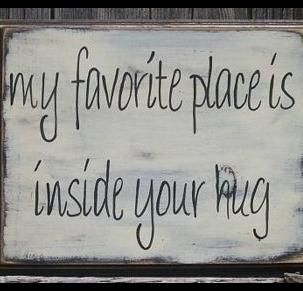
The other day before she left, arms still around me, she said: “You make my head feel more quiet. You don’t get mad or yell and I can think.” Then she looked up at me sideways, doe eyes filled with wisdom of those whose knowledge is hard-earned and dog-eared with practice. Her arms tightened around my midriff and she sighed: “My quiet place is right here, inside your hug. Sometimes I think about it when other people look at me mad and it helps me not feel I am bad.”

inside hug

Baby Steps

Goals drive us forward. They also hold us back.

Goals often seem too big to get to. The great idea you had the other night feels suddenly less sparkly in the morning: there are far too many steps, it will require more time than you realized, need more attention than you believe you have, more energy than you find within you.

You feel overwhelmed. Discouraged. You get stuck.

Goals are posts along a journey. It truly is not the destination that matters, but the path you take to get there, what you learn along the way about yourself, about your possibilities, abilities, the things that limit you from stretching up and over into the incredible, the fears that keep you from reaching out.

Parents ask me about their children’s therapy: “Will he ever not need help?” they want to know. “Will people ever understand her when she speaks?” They worry how long it will take, how much effort, whether they can make it; can the child.

Children, too, talk about their process. “I am not good at this,” they say. “I don’t know how to write this reading response/this essay”, “I don’t know how to understand the story or how to have the words ready in my mouth when I raise my hand.” “Will I still have to see you next year?” they ask. “Do kids sometimes see you even when they are in high-school?” they inquire, wondering in part-worry, part-hope that I will answer in the affirmative: they worry that they can still be ‘different’ by then, and hope that if so, they will not be left on their own.

“We’ll get there,” I say. “One step at a time.” It is something most of us hear plenty, and not always helpfully, and I know it is often not what parents and children want to hear from me. However, it is Truth still … even if it stirs the place inside each one of us that wants to ‘get to’ where we’re going faster, that does not want to have to do the work, that wants destinations to arrive without the journey.

“Baby steps,” I recommend, knowing that this, too, is often hard to listen to. Who wants to take even smaller steps when the target seems so far away already? BIG steps will get me there oh so much faster! But baby-steps, too, are Truth. Careful, one-foot-then-the-other passage gets us there more surely than a hop-skip-pray-you’re-still-on-the-path would.

Baby-steps aren’t slow, really. They aren’t less-than other ways of making progress. Think of it: Babies take brave steps when they begin to walk. They walk and wobble, toddle and fall and rise and try again … and when they get their footing they walk almost constantly. They put little feet on every surface, tackle stairs, grass, sand, uneven ground. They hold on to hands, grab onto what is available. They crawl when there’s no balance to be found in standing. They climb on all fours. They find a way around. They stop and look for a path behind an obstacle and then surge forward in delight when they find it. Their steps get longer, surer, less a-wobble. They accelerate. They run.

“Baby steps,” I say. Remind. Consider.

It does not mean to do go slowly. It does not mean to take too long. It means to be determined, brave, consistently in focus and yet open to an opportunity to rest and play. It means looking ahead. It means seeing the immediate requiring some climbing over and assessing whether there’s someone tall to carry you awhile if you need a break or wish for a moment of better view …

It means getting there, and finding much to do along the pathway. It makes the journey part of what it takes, and worthy in of itself.

You start with baby-steps, yes. But along the way, you learn to walk. You find your pace. You learn to hop and skip and turn and twirl and run.

You’ll get there.

All you need to do is take step one.

off i go

How did THAT happen?

tom looking for ball

Kids are wizards of pointing out minutia of life that can seem quite arbitrary to us. They note things we missed completely. They seem to ‘insist’ on irrelevant details like the way the plate is organized, who got to open the refrigerator this time, or what touches what. Everything takes far LONGER to do with a little one around …

In good part it may well be because their life moves slower. Time is yet to be shackled onto watches and the ticking of a schedule. They pause mid-sleeve, pondering the way light filters through the cloth, unconcerned with how rushed the morning is. They stare in wonder at a pigeon when the light changed and it is time to cross the street. They have an urgent question or need just when you finally sat down to eat.

And they notice. Everything.

They collect each leaf and pebble. There is no such thing in their vocabulary as a “quick run to the store and back” … not when there’s a big exciting world out there. There is endlessness to explore: Cracks in the pavement. Bits of paper flown by winds. Funny people. Yippy dogs. Horns and beeps and squeaks and windows with wonders and when finally at the store, multitudes of candy at eye-level … How could it be that this was not what you came all the way for? …

They teach us patience, that’s for certain.
They also teach us that time is what we make of it. That stress can catch one breath, and relaxation ride right in upon another. That one can laugh before their tears have dried and emotions coexist and flow without a judgment.
They hold a mirror to the things we have forgotten or have misplaced our truth about or have given up on trying to critically examine.

They listen. Even when they do not seem to.

More than most anything else, they note the mismatch of expression, the ambiguity of tone and matter. The odd things our mouths can say and we do not hear.

In part it is because small children are so literal. They get confused when they listen to the WORDS we say and find it not to match the words’ MEANING. Their reaction (and ensuing cuteness) can have us realize hidden ambiguity. They reflect what we once saw and now are almost blind to: how the world works even though words so often mean things they do not really mean.

Want a few examples?

A father talked about his mother looking after the children when he and his wife had to both be away. “She has a heart of gold,” he gushed. His preschooler daughter piped up and added, “no daddy, you forgot. Nana’s TEETH are gold …”

A mother had forgotten something she needed to ask me. “I’ve had it at the back of my head all day,” she sighed, frustrated. Her three-year-old scrambled up onto the couch and took a look, exclaiming, “No mamma, it is nothing there!”

“It is all politics and money,” another parent moped when a kindergarten admission did not go the way she’d hoped, “there’s absolutely nothing new under the sun!” Her almost kindergartener son looked at her sideways. “That not true, Mommy,” he said, rather accusingly. “I have new Spiderman shoes! You forgetting my new Spiderman shoes?!!”

Then there are the cats and dogs that do not really rain; the invisible pins and needles one can be on (and no wonder one’s child refuses to sit where the parent sat a moment prior!!); the feet in mouths (“You can’t do that no more, Daddy. You’re too old. You can’t reach like baby Deena!”); the bleeding hearts (think on that …); the pants on fire…

Language is a treasure trove of meaning, and learning symbolic language is a big task. It calls for the ability to hold two lines of listening: one for the words, another for the context. Children get very good at that around age 5 or so, though they get thoroughly confused before they realize that “listen to what I say” is far from straight forward.

Kids practice logic. They spend a good bit of their time making connections, figuring out how things work and what brings on what. If you pour too quickly, you spill everything. If you push your brother, mom gets cross. If you don’t stop whining, you may lose a privilege. If you mix milk with chocolate syrup magic happens and you get chocolate milk!

They get right fast at figuring out what makes what, and a never-ending list of ‘why’s helps them figure things out. They realize there are desired outcomes and less favorable ones, some adults that are easier to get things from, that there is misfortune and consequence. They get uncannily creative at hopeful attribution of fault …

They map their world into cause and effect. Into how things happen. Who does what.

And sometimes they make connections that are not quite as we would have put them. … Like the little girl with the (newly) pregnant mom, who asked quite loudly and in public: “Daddy, how did God put a baby inside mommy and didn’t tell her about it until she peed on the stick?”

The B&Bees

The B&Bees

When I Grow Up

wings

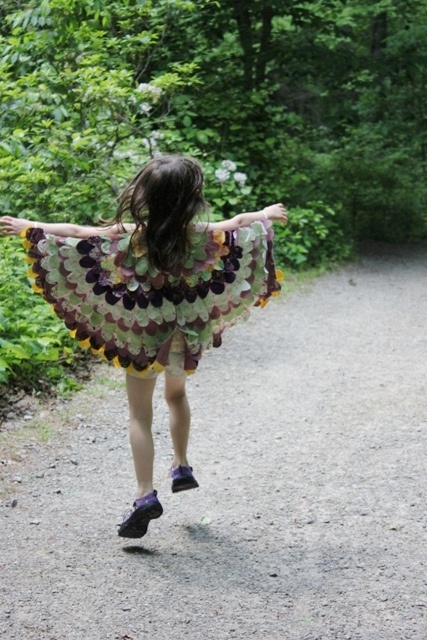
“When I grow up, I will be a bird.”

The little girl is adamant. She has made up her mind. It is final. This is what she’ll be. She’s even wearing training-wings.

It lasts about a day.

“I’ll be a batgirl fire-fightress (sic),” she announces.

“Not a bird?”

A look that shows just how impossibly slow adults can get is followed by: “No, I won’t be a bird anymore. I will be a fire-fightress.”

She is deeply disappointed with me that I did not notice the colors of her clothing all in red and yellow or the swirly bracelet around her wrist that’s meant to be the hose. She’s completely done with birds and fully involved in counting fire-hydrants, yellow helmets at the dinner-table, and nighttime fire-drills.

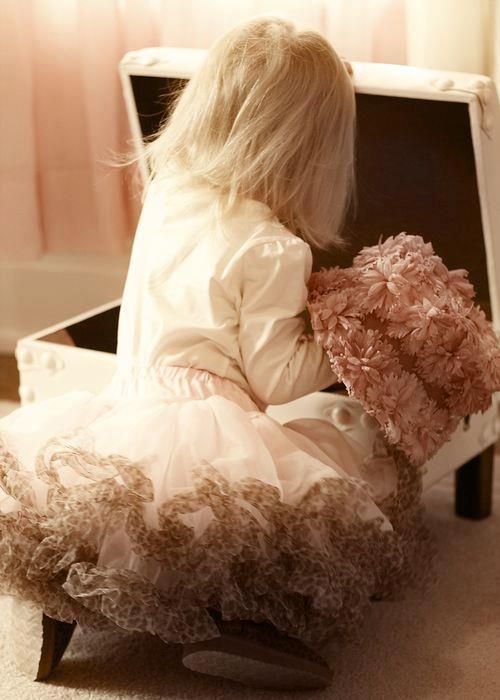
The next time she comes she is in a tutu. I feel confident for all of five seconds that I know what she is now going to be when she grows. I should have known better. She sets me straight.

“Not a ballet dancer!” she intones dismissively, noting my apparent limitations in assessing the meaning of her chosen dress. “I’m going to be a fairy. Can’t you see this is a fairy skirt?”

She’s a skier the following week. A princess the one after. A “limpic” skateboarder (a la TV competitions she watched over the weekend). A zoo-keeper. A dentist (her mother crosses fingers for that one!).

For one moment she even considers being a speech-pathologist. Then she decides that she can do better and just use stickers and markers as the president, too. “I need them for signs so they will see me,” she lisps decidedly. “And for presents. Presidents need lots of presents because it is in their name.”

She considers a plumbing career (after their bathtub floods). Becomes a pianist when she spots a broken piano on the sidewalk and bangs a (thankfully) brief concert. She’s going to be an astronaut. A doctor, too (“to fix the aliens if they get sick and to give me medicine from tummy ache”).

There is a passing mention of a police officer or maybe a model, undecided who.

She’s a whirlwind of professions. One day she’s “for sure” one thing, and the next day for sure “not THAT!” but surely just the same another.

Her parents hold on tight and let her fly. Oh, yeah, there is a pilot era, too, complete with airplanes spinning in the park and an insistence on perching on the monkey-bars’ “top top one where pilots are.”

The jury’s out on what she’ll be when she grows up. What we know in almost certainty is that it could well be what she declared today, or yesterday, or in three different periods during the past week, or will introduce in full high drama sometime tomorrow or next month.

For now, she’s a rolodex of pure anticipation. Dress-up, here she comes!

dressup

Little Emily and Her Big Soul

Little Emily will melt your heart.

Not only precociously verbal, adorable, and poised, she also has empathy, kindness, unflinching generosity, and a huge soul unconstrained by her little body.

Good for her! Good for her parents for advocating caring, recognizing empathy in their child, and sensitively giving her a way to provide a kindness. Good for Uncle Matthew, too … for first giving a haircut to the doll … (love that old trunk booster, man!)

May kindness flow so that unnecessary pain no longer finds foothold and loving actions shine like this child’s heart of gold.

http://www.youtube.com/watch?v=iwQZggdZrOo

Find A Song

She never stops singing.

She sings when she’s playing. She sings in the stroller, the high-chair, the booster, on the carpet or floor. She sings in the sandbox. She sings on the swing. She sings in bed every morning. Come evenings she’s singing to sleep. She sings in the bathtub. She sings when she’s walking. She hums with food in her mouth. She’s heard singing while deep in a dream.

She sings top chart melodies. She sings the same line for a week (drives her mama nuts, but it is what it is … all she can do is introduce another song and hope it will be picked up on a whim).

She hums nursery rhymes, sings odd jumbled phrases. She repeats parts of jingles and mangles their lines. She mashes music from a hundred places and switches song to song without missing a beat. She makes up nonsense rhymes unselfconsciously. She fills in random words as she goes.

She does not quite keep time or pitch. She does not really carry a tune.

Not one would expect her to do so. She’s not quite three-years-old, after all.

So who cares if she pauses in imperfect rhythm or raises volume in an off-pitch pipsqueak dramatic flair. She’s adorable. She lives life utterly happy. She finds music flowing in every moment and in every action. She listens, she follows, she sings.

Her humming brings smiles to the lips of strangers. It melts the hearts of loved ones. It has people raise an eyebrow in amusement and meet the eyes of others in a shared moment of delight.

She’s a wonder. In her quiet content singing she’s a teacher, too:

For can you find the music that surrounds you? Do you listen? Can you hear?

It is flying on the molecules of oxygen around us. It is weaving in and out of every atom. It bonds the flow of leaves upon the water, it jingles in the rustling of branches waiting patiently for spring. It hums the breath of every living thing.

May she never lose touch with her singing. May her inner music flow unhindered and her heartbeat always rhyme with joy. And may those who wish to keep on singing, always find their song.

singing, joy, children, naamayehuda

Bees’ Needs

bees1

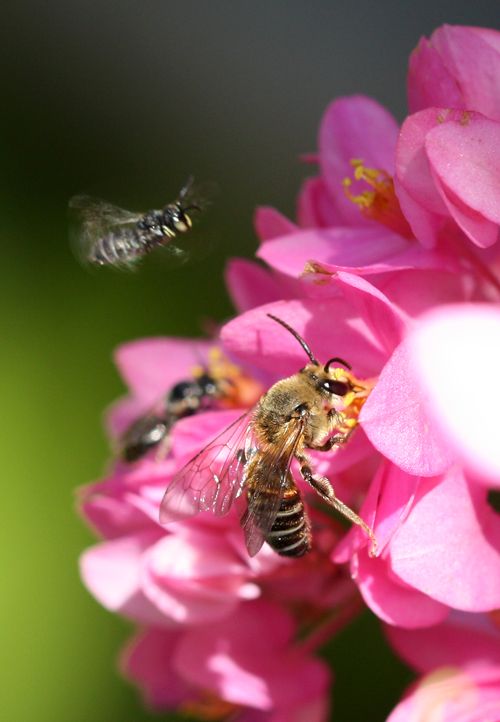
Little guy, age four, talking about flowers.
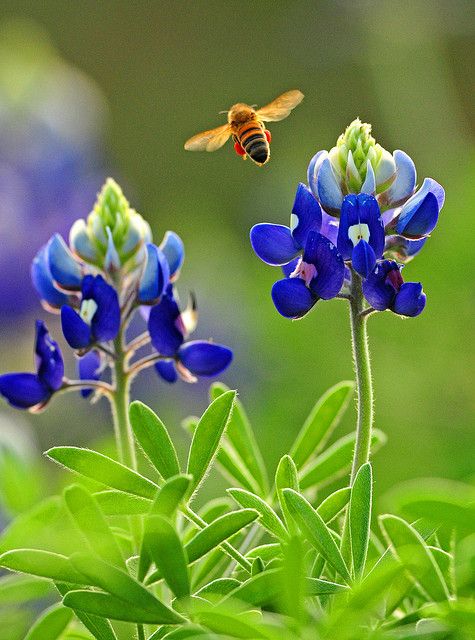
He asks: “Why do bees like flowers?”
I say: “Why do you think?”
He answers, curling intonation into a question mark: “Because they give them honey?”
I turn my own reply into a query in return: “Well, the bees make the honey, but they need something from the flowers to make it. What do you think they need from the flowers?”
Him: “The recipe?”

bees for beginners

Practically thinking …

feather

5-year-old: “When people die do they go right to heaven?”
Me : “What do you think?”
Kid: “I think maybe they go to the factory first.”
Me : “The factory???”
Kid : “Yeah. Where they make the wings.”