Night Walker

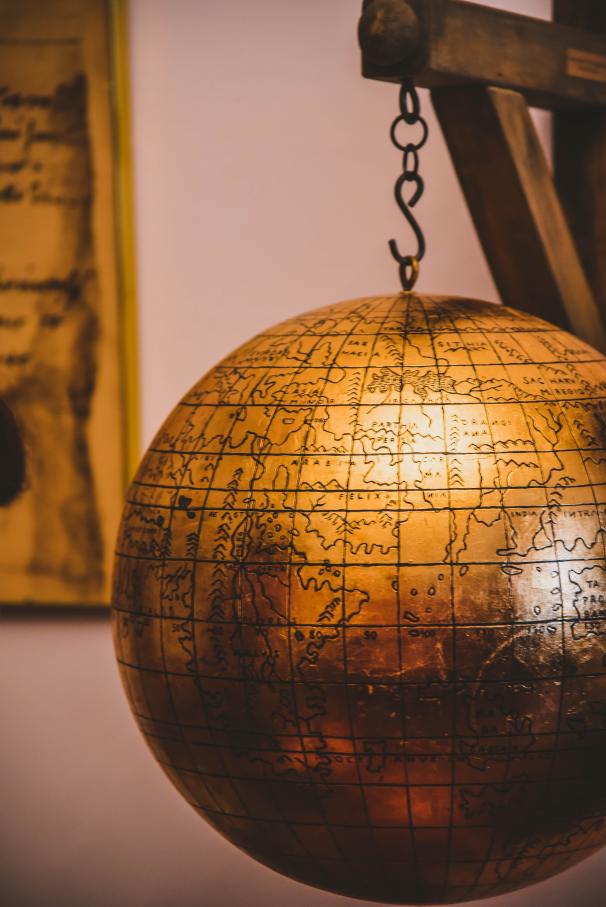
martin-adams-XtMICJ6MMJk-unsplash

Photo: Martin Adams on Unsplash


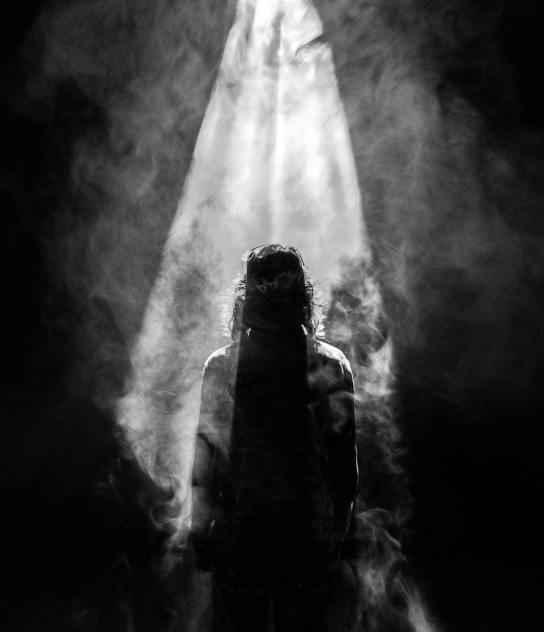
She’d appear out of her bed

As if in dream.

An apparition in their kitchen.

A small figure levitating up the stairs

From the nursery,

A flannel nightgown sweeping over the cold floor

And her bare feet.

They might’ve wondered

Why she had become

A somnambulist,

Had they not needed to keep

Any odd thing

Completely clandestine.

So they latched the front door

High,

And kept the very secret

Of her night-walking

Under the covers

Of unspoken sleep.


For the Weekend Writing Prompt: Somnambulist in 78 words


Things To Come


Perhaps it had been the mark of things to come, though till it arrived they did not know it (or, as some stated, they’d preferred ignoring the possibility).

There were so many explanations: Bad weather, a change in allocation, inability to keep up with need, aging infrastructure, decline in the number of those who knew how to fix things with handiwork instead of keyboards.

Of course, the sidewalks didn’t crumble overnight. It took years. Yet somehow people had dismissed a steady rise in ankle injuries. They merely shook their heads when accessibility was reduced to the long-legged spry. There was no outcry. After all, most people didn’t ambulate with strollers, walking-sticks or wheelchairs.

In the end it was the roller-bags that tipped the scale. What unconscionable disrepair allowed wheels to break in ways manufacturers won’t cover? People could not be reduced to lifting suitcases when they needed to go somewhere!


For Crispina’s Crimson’s Creative Challenge


A Hole In The Sky

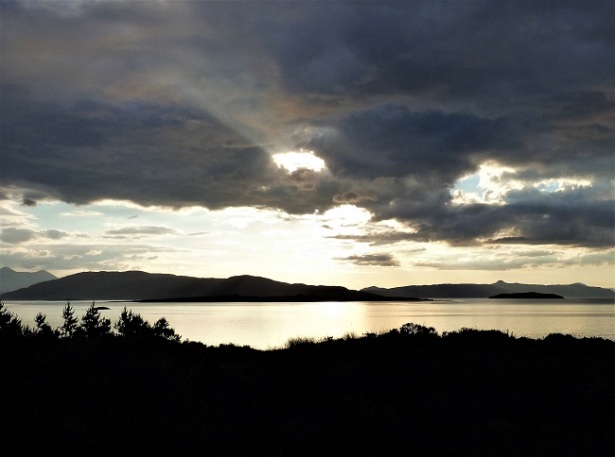
dusk SueVincent

Photo: Sue Vincent


“There’s a hole in the sky,” the child’s voice rose then hushed in part-fear, part-wonder.

“Indeed there is,” his father nodded.

The boy flicked his eyes away from the luminescent heavens just long enough to discern that his father wasn’t joking. He’d half-hoped his father would be, and his chest flooded with something like alarm when it did not seem that he was. What does it mean to have a rent in the ceiling of the universe? Would something fall through it? Would the world cave in like a shattered egg?

“Will it repair?” His voice was small.

The man put down the kindling he’d been arranging in preparation the evening’s fire. He straightened to a stand and leaned a heavy hand on the narrow shoulders of his son. Bird-like, the boy was. Fluttery and slight.

His youngest had always been a bit prone to the dramatic. The first to pick up on a change in atmosphere, the first to be reduced to tears, the first to wail at even the smallest prickling. Also the first to smile a welcome, the first to notice a green leaf peeking out of the frozen ground, the first to note the song of birds or a task well done.

He worried about such a skinless child, walking a life that did not always refrain from brushing far too crassly against tenderness. There were plenty of those who had repeatedly pressed him to be firmer with the youngster. To “toughen up the boy into a man” or “teach him how to grow a thicker skin.”

“How would I change the stripes upon a tiger?” he’d find himself replying. “Can I will a doe to become a lion?”

He could not bring himself to pain the boy as means to scar him into roughness. The child was made to be whomever he was made to be, and all a father could do was try to shepherd him toward maturity. Such as when taking the boy on this father-son hunting journey.

He squeezed his son’s shoulder and the boy raised a frightened face to meet his eyes.

“The sky will repair, Son,” he said, “though it may not go back to what it was before. For nothing can. It will move on — from day to night to cold to warmth to wind to storm. It will tear holes in clouds for sun to stream through. It will shred them to no shade. It will sew the threads together to again cover the sun. It is all as it is and all as it should become.”

The boy nodded. He swallowed down the tears that threatened, and tried to still the tremulous vibration of the world inside his mind.

“Now, as the sky does what it can,” the man handed his son a water-skin. “Let us do what we must. If you will fetch water, I will light the fire in tonight’s hearth.”


For Sue Vincent’s WritePhoto Challenge


Once Upon A Swing

Photo Prompt © Ceayr


“It’s where he comes to make a wish,” Johanna whispered over her swing’s ropes as the girls passed each other on the swing-set, ringlets flying in the breeze.

Marie’s eyes widened and she forgot to pump her legs. The old man looked like many others she’d seen. Or was he? She’s never known anyone grown who made wishes. In real life. Into a fountain. Like in stories. It made her wonder what other things in tales were true. Perhaps goblins? Or princesses?

“His wife died, you see,” Johanna added, impressed by her cousin’s reaction. “He wishes for her to return.”


For Rochelle’s Friday Fictioneers


A Bit Of Stir

mads-schmidt-rasmussen-v0PWN7Z38ag-unsplash

Photo: Mads Schmidt Rasmussen on Unsplash


She was always one to cause

Quite a bit of stir

In every entrance,

In the very way the air around

Her every move

Would shift

To agitated waiting,

For something breathless

That was not easily worded

Yet nonetheless remained

Indelibly perceived as

Inescapable.


For the dVerse quadrille poetry challenge: stir


Not Here!

KeithKreates253

Photo: Keith Channing


They had everything.

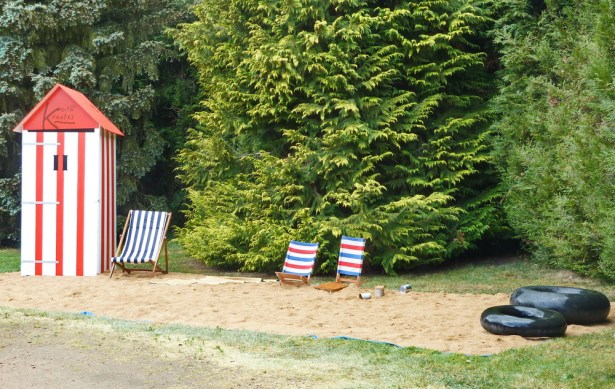
The Papa Chair. The Mama blanket. The two Cub chairs. The inner tubes: one small, one large. Even tin cans emptied to serve as sand pails in the refilled beach’s rectangle.

What a perfect day!

The lake awaited, wet and cool. The silty mud. The pebbles, the weeds to wade across or pull.

They swam. They flipped. They raced. They flopped.

The hours passed. The contents of the picnic basket made their tummies nice and full.

They rested till the water once more called.

Then one cub disappeared.

“Nicko!” they yelled, frantic with the possibility of the awfulness that might unfold.

“One moment!” the junior responded from the direction of the small structure. “I’m not done.”

Relief was quickly replaced by wonder only to be followed by surprise and whiff of horror.

“Nicko??!!?” the Mama dashed across the small beach to stop what was already well set into motion. “That’s not an outhouse! It’s my changing room! Go in the bushes! Not here!”


For Keith’s Kreative Kue #253


A Slice Of The Big Apple

Sliced apples


Sometimes the core of the issue

Can find growth in the yard

But the meat of the matter

Is what you must not discard …


Note: New York State is known for its apples. Also, New York City is called “The Big Apple” … with multitudes of people wanting to have a slice of that apple for themselves … So, though the photo may not be the ‘traditional’ way of portraying the ‘apple-appeal’ of the City, I’d like to think you’d agree that at the very least it shows it in a very digestible manner … 🙂


For the Sunday Stills photo challenge: State/City symbols

Quite Simply

zane-lee-0zTU3IJ_l3Y-unsplash

Photo: Zane Lee on Unsplash


“Quite simply,” she said,

“The very times when some in power

Are seeking to perplex you,

Are the times when you best make sure

That you are not at all confused.”


“For when what should be simple

Is deliberately made unclear,

And what’s logical is spun

Cheaply to cost dear,

It ought to signal your eyes

To remain widely open,

And your ears to insist on holding only

To the truth.”


She sighed and touched the blue print

Faded on her arm,

Seared like yesterday

In her heart and mind.


For Sammi’s Weekend Writing Challenge: Perplex in 90 words


Flecked History

wadi a dawasir M.Bin HMQ

Photo: M.Bin HMQ; Wadi ad-Dawasir, Saudi Arabia


“He is an infidel,” Abdul grumbled about his employer. “Ad-Dawasir history shouldn’t be fouled by non-believers.”

“So were your ancient ancestors,” Umm Habib noted, her fingers flying as she shaped the dough with the practiced moves of innumerable meals prepared.

The adolescent startled. Such accusation would’ve necessitated a fist-fight if it hadn’t come from his grandmother.

“Many Taghlibi remained Christians well after The Prophet came,” the old woman’s face remained placid. She didn’t need to look up to sense the anger flashing in the boy’s hereditarily flecked eyes. But youngsters’ dark moods and opinions were like moving water. Truth remained.

She plucked freshly baked bread from the earthen oven with bare fingers, tips hardened by life’s constant flames. “That history is long passed, but it bears remembering some of our ancestors even fought against Muslim, and many stayed Christian …” she paused, considering. “Before finally embracing The Prophet’s teachings and Islam.”


For What Pegman Saw: Wadi-ad-Dawasir, Saudi Arabia