Out-Wheeled

Out-wheeled NaamaYehuda

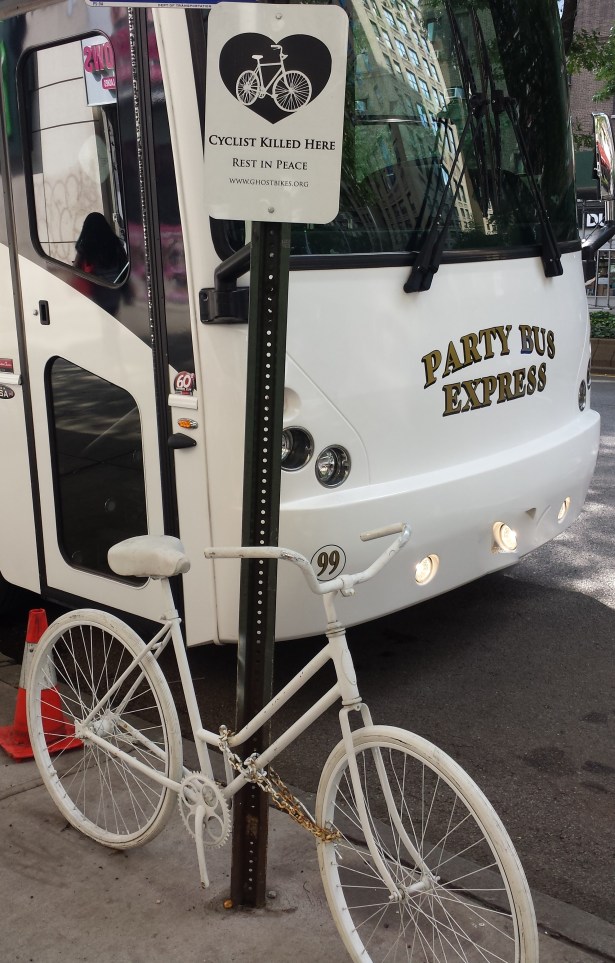
Photo: Na’ama Yehuda


At the spot

Where one heart stopped

And others pause

To ponder,

It stands

Out-wheeled into pallor

In grief

For what was lost

And what might have been

If there hadn’t the need

To mark this

Post

For a life that can

No longer

Wander.


Click here to find more information about Ghostbikes.

For Cee’s Black & White Photo Challenge: Wheels


The Place

Photo prompt: Sue Vincent


“I’ll take you to the place,” she promised.

“The place where you came from?” the boy pressed. “Your before home?”

“If it is still there,” she nodded, her eyes clouding over with something between wistfulness and worry.

She watched his eyelids flutter as he curled onto his side and into sleep. There was much to do and little time for it, and still she couldn’t bring herself to rise from his cot. It wasn’t how she thought it would be. It felt too soon. He didn’t know a thing.

Not that she really had a choice, anyhow.

The place. She wasn’t sure exactly what would happen when they got there, or what it would mean to her or to the boy she was entrusted to protect. What would her protection of him entail now that she’d been discovered?

She gazed at the child. He was hers. At least as far as one could belong to someone else, he was.

Most people thought they could not look more different than each other. Her translucent skin to his ebony, her pale eyes to his endless pools of black, her sprinkling of wispy flaxen hair to his rich dark mane. She’d kept his hair in cornrows for tidiness and practicality, but often enough she coaxed him to let her undo them so his hair rose in a magnificent halo about his head. Her princely lion of a child. They didn’t have such locks where she’d come from. He truly was one of a kind.

“Adopted?” nosier people would ask what many others thought but didn’t dare to verbalize.

“In a way,” she’d respond, knowing full well that the answer raised more questions, yet she refused to lie. For he wasn’t. Adopted. Not in the way they’d think.

He was. Just. Hers. Seeded in her before she even understood what he was or would become.

And they were as alike as any, anyhow, considering where she was really from.

A noise jarred her and she looked up to see a mouse scurry across the cabin floor. It reminded her of other footsteps: dangerous and inevitable and far less welcome.

She got up and as the night deepened she did what had to be done. Finally she secured a small bag to her bike and hoisted the still sleeping child into her lap. She wrapped a strip of sheet around them so he could remain snug against her while she pedaled.

She rode through the woods till morning lit the trees and the birds fleeted ahead of her wheels and small living things skittered into the bushes to avoid her.

They knew, she thought, that she was not of them, and neither was the boy who nestled, oblivious, with a head atop her breast.

There would be no hiding who they were. Not anymore.

The light intensified to shine beyond the sun.

There it was. The place. The bright beam.

She dismounted and her legs shook not from hours of pedaling, but from knowing.

And from failure.

She let herself be found out before he was adult enough to continue. She did not protect him long enough to fulfill the promise he held for their kind.

The ship’s beam wavered and the gears in her heart thudded as the light shimmered sorrow through her skin.

They’ll take only him.


For Sue Vincent’s WritePhoto Challenge


The Colonists

Photo: Sue Vincent


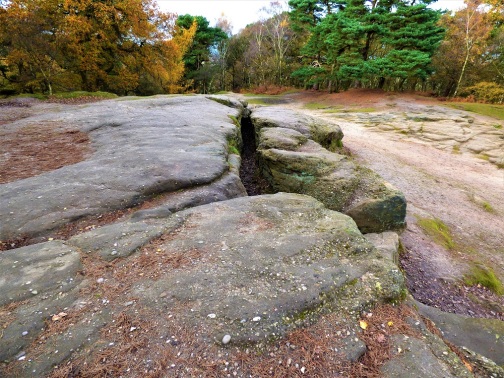
They would come out when dark was complete under a moon that was yet to be reborn.

First a scout would be sent. One not quite old enough to have their wisdom be missed, but not quite so young that they’d be careless or uninformed. It was an honor and a worry, both. For not all scouts returned, and laws dictated that no one is to follow and the outing abandoned until the next dark comes. The safety of the colony outweighed any singular life, no matter how heartbroken they were over losing one of their own or how many nightmares wracked the communal dreams for many sleeps afterwards.

Most times, blessed be the hidden stars, the scout would return safely. If they confirmed that all was as it should be, any who could walk would funnel topside through the tunnels that honeycombed their underground world, and out into the rocky canyon which was formed a million years ago by a whip of light from the stars.

The colony would climb over hills of leaves and navigate the muddy ponds at the bottom of the canyon, all in silence that only the heartbeats in their collective chests would pierce. For the predators were many and the colonists were small and peaceable. They lacked fangs or claws and were opposed to weaponry. The universe that sprawled beyond the walls of their rock canyon provided the provisions they required. They took the danger with the blessings.

Once beyond the relative shelter of the canyon walls, they’d fan out to forage and gather: edible leaves, stalks of grass for feed and weave and bedding, acorns, nuts, seeds, berries, and the occasional fallen fruit or discovered tuber that required many hands to trundle back into the tunnels where they lived.

They’d work until the elder who tracked the darkness passed the whisper to return, and they would fall in line to carry the final batches home.

The last to enter the canyon would pull a broom of leaves behind them – a gesture of traditional thanks for the sustenance, and a practical act for sweeping away many footsteps. The ancients had tunneled pathways for them to emerge into the night from, but there was no need to make those very pathways highways to decimation. They took care to not be known.

With all returned, the elders would seal the rocky door and bless it closed, and the colony would sigh relief as the rock itself would seem to whisper as it settled into slumber til the next unborn moon darkened the sky.


For Sue Vincent’s WritePhoto Challenge


Out Played

Photo prompt: © Anshu Bhojnagarwala


“It’s an effing eyesore.”

“I don’t care.”

Martin balled his fists but Susan just gazed at him.

She said nothing but he knew: Raise a finger on me and off to jail you go. The judge was clear: Anger-Management or prison. Martin took the former but could swear Susan’s infuriating behavior intended to get him the latter.

He inhaled slowly before turning away. “When Sanitation fines us,” he growled, “it’s all yours to pay.”

“Fine,” she shrugged. “Though I think they won’t.”

He glared. “Why? Got connections?”

“Nope,” she patted the rotting piano. “I’ve registered it as street art.”


For Rochelle’s Friday Fictioneers


A New Dawn

pink sunrise KarenForte

Photo: Karen Forte


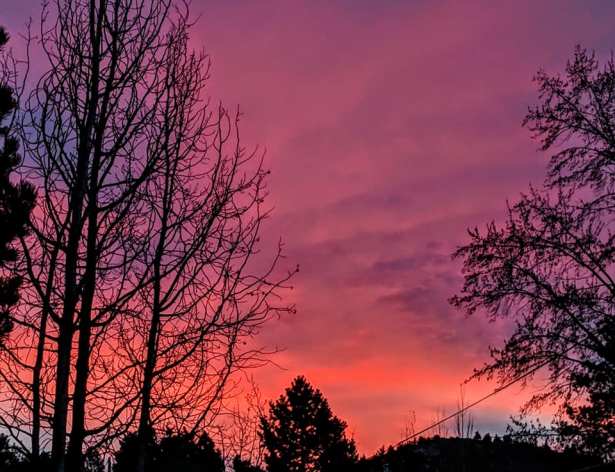
“…There’s a special beauty to the world resuming definition. I always loved pre-dawn and the gradual emergence of the world from under wraps of darkness. A hesitant light followed by a glorious brush of sunrise obliterating the black with oranges and yellows so bright you must look away and blink, only to find morning had arrived.

I walked faster now that I could see more of the ground in front of me. Brambles and tangled roots were easier to avoid and step over when I didn’t need to test every step.

Sunrise in the forest felt gentler than the ones I’d sat through on my porch. Not so much a blinding line of light across the sky as it was a filtering of color working its way from the canopies above and down the foliage, branches, trunks and finally the ground. Tired and worried, I still found myself mesmerized by the wonder of it all. Goosebumps covered my arms not only from the morning chill but also from something that felt almost like a memory: pink sky chasing blue across the ceiling of the world, the dazzled dance of dust along the shafts of molten, golden light. It felt familiar. Maybe I had seen a forest-sunrise during my own life’s dawn. …”

(Excerpt from “Outlawed Hope”)


For the Tuesday Photo Challenge: Sunrise


Black Friday

Photo prompt: © CEAyr


“We’ll call him Friday,” Emmaline stated.

Roger glanced up. They’d just left the restaurant and he had urgent emails to check. “Call who?”

“Him.” She pointed toward the bike, which was parked across the alleyway between a bush and a wall.

He squinted and frowned simultaneously. Emmaline’s cryptic tendencies were sweet sometimes but annoying most other times.

He saw no one. His frown deepened. A stupid black cat perched on his bike’s seat, fur puffed as if it had just stuck a paw in a socket.

“See?” Emmaline laughed. “He adopted our bike on Black Friday. Let’s call him Friday.”


For Rochelle’s Friday Fictioneers


Living Wild

Female Nubian Ibex Osnat HalperinBarlev

Photo: Osnat Halperin-Barlev


You have come to my

Backyard,

To my desert,

My home.

So why look

So surprised

To see me coming

Along?


Trivia:

Nubian ibex (Capra nubiana) are desert-dwelling goat species that are found in mountainous areas of North Africa and the Middle East. The wild population is considered “vulnerable” and is estimated at only 1,200 individuals. Nubian ibexes stand around 65–75 cm (2.1–2.6 ft) tall at the shoulder and weigh around 50 kilograms (110 lb). They live in rough dry mountainous terrain and are a light tan color, with a white underbelly. Males also have a dark brown stripe down the back. Nubian ibexes have long thin horns which extend up and then backwards and down. In males these reach around about 1 meter (~ 1 yard) in length while in females they are much smaller and reach around 30 cm (~ 1 foot).


For Terri’s Sunday Still challenge: Wildlife

For Becky’s Spiky Squares challenge (even though this is not strictly a square …)


The Key

Photo Credit: Sue Vincent


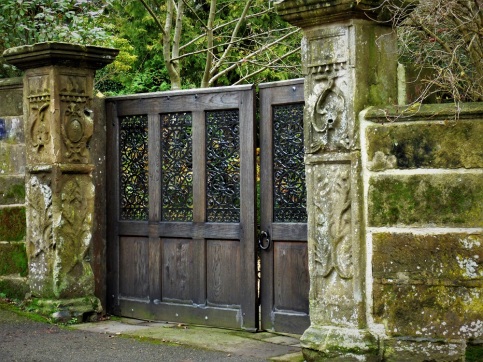
Practically everyone but the real-estate agent had been against him purchasing the place.

“That heap of rot is a death trap,” his friend Tomas had said.

“It is haunted,” Fran had shuddered. “You’ll get murdered in your sleep and become another ghost, just like them.”

Others hadn’t been much subtler:

“The place is a wreck!”

“This monster will eat up all your money and spit you out broke and homeless.”

“Are you out of your effing mind?”

“Gosh, Dude, you need a shrink!”

To be fair, the last two statements were probably true. … Not that this stopped him from finding ways to manage all these years without a shrink. Not that there weren’t times during the first year in the house, when the old thing seemed intent on falling about his ears and his bank account skied a Black Diamond toward zero, when he didn’t wonder whether his mental health was sliding south just as precipitously.

But he’d held on to his bootstraps and soldiered on. In part to not lose face but mostly because he had indeed sank so much of his limited assets into the house that there was no way out but through. He gave up his rental apartment in town and erected a tent in the middle of the mansion’s living room where the roof leaked the least. He uncovered the well and hauled out buckets of muck before clean water once more found purchase. He cleared paths through the overgrown hedges and the man-height weeds that overtook what had been a lawn around the house. He scraped moss and mold off of stone walls. He evicted pigeons, rats, squirrels, countless spiders, and a skunk that made sure her discontent lingered. He discovered woodwork under paint, a carved gate under briars, a clubfoot tub under rubble, and a door to a hidden passageway behind a rotting cabinet.

Here and there a friend would agree to help with this or that, and twice he’d hired someone with engine-muscle to lug out things that needed more than human-power. But most his friends couldn’t help (and some refused to ‘enable’ what they declared an insanity), and hiring anyone ate big bites out of a budget that wasn’t hefty to begin with. So he buckled down and did much of the work himself, making small but steady dents in a mountain he did not think would ever yield to order. The list of things left to do only kept growing: parts of the roof needed repair, the kitchen floor needed replacing, the electric lines were too ancient to hold power, the pipes leaked, and the sewers were more roots than flow. The work was Sisyphean.

And still … between moments of sheer desolation and utter despair, he realized that he was actually sleeping soundly for the first time in his life. A smile would sneak onto his lips as he sanded this or patched up that or cleared another mess of spider webs or thickets. He hummed an ear-worm for a whole weekend and no one shushed him for not being able to carry a tune.

It was as if he’d accepted the house and its flaws, and the house in return had accepted him. He felt happy. He felt at home.

The realization stunned him.

Though he wouldn’t have been able to articulate it at the time, he came to understand that the reason he had been drawn to purchasing a run-down estate with overgrown grounds in the middle of a god-forsaken forest, was in part because of memories of another building surrounded by a tall stone fence: the “Home” that never truly was one and yet had been the only model he’d had.

He’d accumulated more moments of abject misery in the “Home” than he ever wanted to recall. Countless nights yearning to be old enough to leave … even as he’d feared the day he would be made to do so.

This long-neglected house with its aged stone fence and beautiful wide gate, was his. No one could tell him he’d aged out and could not stay. No one could tell him that his bed is needed to make room for someone else, or that it was time for him to fend for himself and no longer rely on the charity of others to feed and clothe and put a roof over his head.

It didn’t matter that the repairs would take years and that most of the rooms would not be usable for just as long. It didn’t matter that he didn’t have a clear plan for what he’d use all these rooms for. What mattered was that this old place was real. That it was full of history and memory. That it stood firm onto the ground and offered to be the roots he’d otherwise have no way to lay claim to. This house was him. Healing it was the key to who he could become.


For Sue Vincent’s Write Photo prompt invitation