Irreplaceable

hu-chen-tCbTGNwrFNM-unsplash

Photo: Hu Chen on Unsplash


She could not get enough of him.

She’d spent the last few hours gazing at him as he slept.

She could spend another lifetime.

Nothing could replace the sweet contour of his back, the curve of his neck, the fists that could fly deliciously out of tempo with his kicking, the softness of his cheeks dimpled into smile.

His breath.

Joy expanded her chest and spread a warmth under her skin that flushed through her soul to fill her with a flood of well-being.

She was his forever grandmother.


Note: Dedicated to all the grandmothers and great-grandmothers. To the aunts and great-aunts. To the mothers and mothers-to-be. To the grandfathers and great-grands, to the uncles and fathers. May you know this love, for nothing can replace it.

For Sammi’s Weekend Writing Prompt: Replace in 89 words


Stone Face

Photo: Sue Vincent


She stood on the ledge and watched the edge of the world dissolve into fire.

It had been a long day, waiting. He did not come. She did not know when he could. Only that he would when he managed to get free.

As she had.

It was their place. Before. It will be their home. Now.

They’d found the small cave down the rock-face when they were still children frolicking in the waves. They’d been rolling with a large piece of driftwood one day when the currents had taken them farther than they’d expected. They’d tried to reverse course but it was futile to fight the sea. It was after reality had set in and they’d began to fret in earnest, that they’d spotted what looked like a black tooth on the jagged cliff. As Merlin tried to point to it, the log rolled, depositing the two of them into the waves and bestowing a farewell knock on Marla’s head. It had gone black behind her eyes after that.

Merlin had managed to drag her to and onto the surf-beaten rocks, scraping both of them raw in the process. He claimed the seals had helped him and she never doubted it. Nor that the seals had likely rolled the log in the only spot the two of them might’ve had a chance of getting to the shore unbroken.

They had clawed their way slowly up to the ledge, crying and more than a little frightened, only to find that what had appeared a black tooth from the sea, was in fact a cave’s mouth that was dry and deep enough to offer shelter. The marvel had calmed them enough to explore, and they’d found a precarious but doable foot- and hand-hold way to gain access up to the top of the cliff. And from there across the moors home.

They’d made a pact to never tell anyone about “Stone Face” — named for how the features could be read in the rock above the ledge. They suffered the indignities of being mocked for slipping into a whirlpool — the story they’d made up to explain their miserable condition and the lateness of their arrival home — and they endured the punishment of being forbidden from going to play in the water for the rest of that long summer, and the drudgery of extra chores.

It did not matter. Their secret sustained them. As had their rare visits to Stone Face via the barely-there climbing way. It was their refuge and all the more a miracle to them for how no one had known of it (or at least not in their lifetime, for there were signs of hearth-fires on the blackened ceiling and some stone flakes that could cut deep and might’ve been a tool in someone’s hand). It was their place of hopes and dreams and stories.

Then time came and Merlin was indentured to the Smithy, and Marla was sent off to scrub the floors and bear the fists and the bastard children of Lord Bowery, a man of no nobility in deportment or form. She tried to endure him, but the core of her rebelled against his injustices and his brutal invasions. She fled.

The Smithy’s apprentice was due to bring brackets to the manor’s door that week. She had to trust that he would find out she was gone.

And that he would come for her.

To make Stone Face, home.


For Sue Vincent’s WritePhoto: Stillness


The Bag

Photo prompt: © Ted Strutz


She stopped by to check on her elderly neighbor and saw a bulging bag on the curb. Odd. Trash-collection was two days away. Ethel could get ticketed.

She grabbed the bag. The thing was heavy! How did the ancient women lug this? She carried it up the path to the door.

“Ethel?” she knocked. “It’s Belinda.”

Silence. Was Ethel sleeping? Belinda knocked again. Waited. Rang the bell. Used her key.

There was no one home. All personal effects gone.

Heart pounding, Belinda rushed to untie the bag.

A mess of photos spilled out, scattering Ethel’s life to the ground.


For Rochelle’s Friday Fictioneers


Horse Lord

anudariya-munkhbayar-V4qmxSYcuaU-unsplash
Photo: Mongolia; Anudariya Munkhbayar on Unsplash


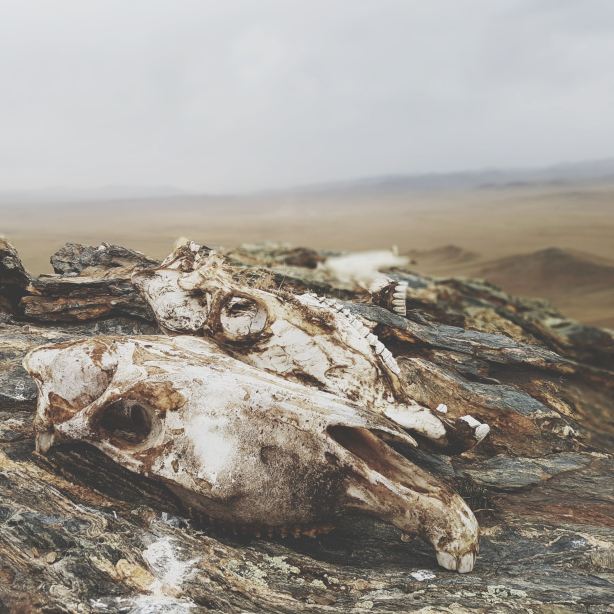
The floods had culled the herd. The fires cleansed the land of dead, returned the grasses to the dirt, where bones lay, staring at the sky, unbleached. They will not be interred.

A falcon soared above their heads. It dove and disappeared, its freedom deferred, its sight hidden under the dark small caps it let have drawn over its vision in a servitude preferred.

The stallion whinnied. The yearlings, cocky and too young to know better, had cantered up ahead. They stopped at the sound of his impatience and turned about as their obedience stirred. But the mares and foals kept close on dancing legs. The smell of smoke still in the air rendered them simultaneously docile and quick to bolt, their reason blurred.

He knew why that was. The two-legged that had fled, have returned. And the smoke curling from the nostrils of their leather dwellings rose, awakening dread.


For What Pegman Saw: Mongolia


A Path Back

Photo: Sue Vincent


She’d needed this for so long she almost did not know what to do with it. The sense of expansion felt as if it would crush her chest from the inside. The freedom felt disorienting. The quiet deafened. The freshness of the air dug splinters in her lungs.

It was the yearning, really. The slow release of what she had compressed herself into, for absolutely way too long.

Like pins and needles of a ‘fallen asleep’ limb waking up, it was. Only that this was her soul awakening, her spirit that she’d squelched into an air-tight packet and had pushed into a too-small drawer. Her way to survive.

She’d done this to herself, in a way. She realized. Sure, she could blame others for the part they played, but in the end it was her own small choices to ignore and minimize and shrug off and explain away, that slowly but resolutely coiled herself into herself, and did it so completely that she’d began believing herself to be devoid of need or want or urges to do more than what was outwardly expected.

So she’d stopped taking time for herself. She’d stopped going into nature. She’d stopped asking what she loved, or inquiring what she lost, or still required.

Till that day, when the small worm of “maybe,” fed by events that almost forced her hand, led to a gap in her calendar, and to a decision she could not quite explain to herself. A caprice, it felt, to rent a car and go — without a definite plan or conscious understanding of its meaning — into the wilder parts outside the concrete jungle that had become home.

And with the first crunch of her feet onto the leaf-strewn path, something inside her belly and right above her heart began to crack.

She let the wind carry her tears in zigzags on her cheeks. She used her sleeve to wipe her nose, as heedless as a child and as contentedly miserable. She cried because she could. She felt the ache and wronged bewilderment rise in her, slow at first, then unrestrained in its demand to be freed from the confines of denial and regret.

When she’d first left the car at the makeshift parking by the hiking trail, she thought she’d just stretch her legs a bit and perhaps take a few photos of the foliage. She didn’t realize — or perhaps she had but her spirit guarded it a secret so that, too, not be squashed — that there was far more inside her that needed a bit of stretching out. And that once out of the box that confined it, it swelled and would not be going back.

The air around her rustled and a flock of geese curved a misshapen arrow overhead, heading to a warmer clime. She spread her arms and closed her eyes and twirled a slow circle around.

She’d needed this for so long that she almost did not know what to do with it. But she was going to find out.

As the space in her chest fought to accommodate the rise of feelings, the rush of hope finally allowed her to truly inflate her lungs. The leaves around her crumbled to the touch even as more of them floated down to crown her head and shoulders. Some things in her were crumbling, too, even as others — light as golden feathers — came to rest like beacons on a path back to who she was.


For Sue Vincent’s WritePhoto challenge: Copper


The Memo

Photo prompt © Dale Rogerson


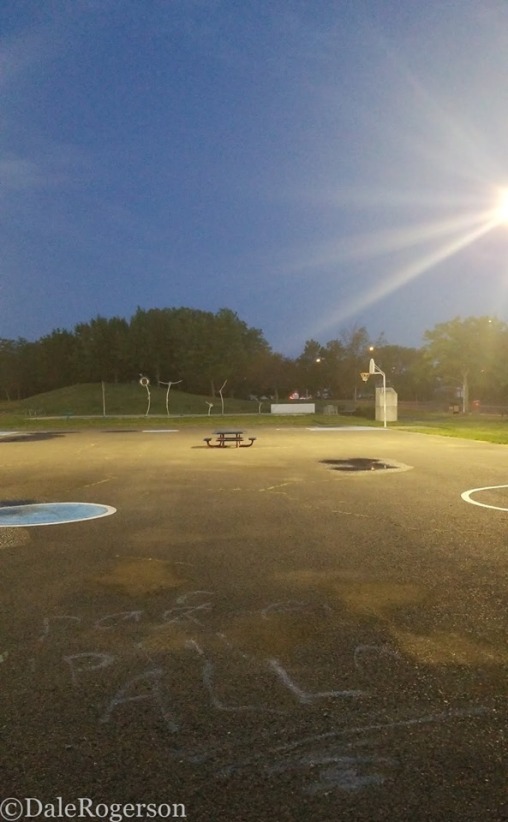
“What are these things?” Kyle pointed.

“What things?” Patty barely glanced up from the tablecloth she was wrestling for the birthday party. Forecast said “mild and pleasant” but the breeze apparently hadn’t gotten the memo.

“These,” Kyle insisted.

She sighed. Looked. Frowned. The contraptions hadn’t been there last night. Some modern art nonsense?

“Hold this,” she gave Kyle control of the tablecloth’s edges.

It looked like an assembly of pipes, but the closer she got, the less she wanted to go nearer. She checked her watch. Where was everyone?

“Mama!”

She spun at his shriek. A lumbering pipe-man had Kyle.


For Rochelle’s Friday Fictioneers


A Roof Over Her Head

3F05CE09-B54D-4C10-970E-68277D27CF31

Photo prompt: Michael Gaida @ Pixabay.com


It looked deserted from the outside, and if someone risked a broken neck to view the inside from the roof, it did not look all that more promising from that angle, either, which was exactly as intended.

It would not do to broadcast the availability of shelter when there were more who sought to ruin what was left than wanted to actually have a roof over theirs.

Better it appeared abandoned and on its last legs already.

The rules were clear: You do not venture out of the pits without permission, and never in daylight. No light allowed during nighttime. Night-vision goggles only. The internal covers at the bottom of pits, which obscured the actual bunker, were to be drawn only after the scopes ensured no one was in the perimeter. The motion sensors were examined weekly. The roof’s latches every other. They could take no risks.

Few had a roof over their heads since the cataclysm, and those who had been fortunate to find or be allowed under one, did best if they kept a low profile or they were certain to lose it. The roof. And the head.

Dingo knew all that.

He also knew that Marlee was out there somewhere, and that the only way for her to find him was for him to plant a signal she would recognize.

How, though, when he was still a Probational and wouldn’t be trusted to come topside without escort for another month?

He tossed and turned on his berth until Steven threw him out, ordering him to go jog on one of the treadmills till he got sleepy.

The common room was empty. The airlock doors blinked slowly to indicate the pit covers had been opened.

It won’t take but a moment to leave Marlee a sign.


For the FFFC photo prompt


Heidi’s Hideout

https://upload.wikimedia.org/wikipedia/commons/6/64/Heidihaus_in_Maienfeld.jpg

Photo:  commons.wikimedia.org


It was the last place she thought anyone would look for her.

Or the first. Depends.

If they knew the story of her grandmother, after whom she was named, then they’d surely make a beeline to the cottage. But most people did not know. Or forgot. And she herself hadn’t been particularly good at telling the story that as a child had made her feel bland and timid in comparison to her grandmother’s girlhood bravery and independence, and as an adult made her feel as if she was seeking to gain attention by association and not merit.

So when people asked: “Heidi, like the girl in the story?” she would just nod or shrug or at the most say, “perhaps, eh?”

She let her heritage become a secret.

Perhaps that will end up allowing her fresh air, away from everyone’s demands, at her great-great-grandpa’s ancient yet secluded Maienfeld house.


For What Pegman Saw: Maienfeld, Switzerland


A Net of Ents

Grimm AmitaAsif

Photo: Amitai Asif


“I am not going in there!”

Maxim sighed. “We must. It’s the only way.”

Stringer shook his head. “That place is haunted. Ghosts and goblins and who knows. I bet all the creepy things from the Underworld hide here, too.”

“The Underworld isn’t real.”

Stringer gave his friend a searching look. Maxim’s voice sounded a bit less certain than Stringer would have liked it to.

“Why does it have to be us, anyway?” Stringer pouted. Every cell in his body told him to flee, to leave, to get as much distance as he can between himself and this brooding, mossy, drippy, dark, tangled, creepy forest.

“Because.” Maxim lifted his chin, exposing a scrawny neck that had only gotten more birdlike in recent weeks. “Look, I’m scared, too, but even Mathilde said it was the only way.”

“She’s just an old crone,” Stringer scratched at a scab before glancing around guiltily and lowering his voice (one never knew if she might be listening and he did not fancy ending up in a cauldron), “and a witch.”

“Exactly.”

Stringer sniffed. He hated it when Maxim got the last word and even more when Maxim was right.

Mathilde was gnarly and bent and more than a little odoriferous (whether it was lack of bathing or the miasma of whatever it is she must be concocting in that iron pot that was forever perched over the fire, he didn’t know and didn’t dare ask). She was the oldest person he’d ever seen. Indeed if anyone would know about the procedure for removing spells, it would be her … and she had been clear that the one they sought to have lifted was beyond her skill.

“Only Ents,” she’d croaked and hacked up something Stringer was certain was more than just phlegm. “Ten of them. If there are even that many left. Only they can undo an enchantment net. And only if they agree, which they don’t always. Best keep your wits about ya when ya enter Old Growth. Tear a leaf and ya’d well end up lacking a finger.”

She’d stirred the pot, giving the quaking boys a full view of her three fingered hand. “That is,” she’d added, “if ya exit there at all.”

The whole way to the ancient forest, Stringer and Maxim avoided discussing the meaning or implications of Mathilde’s words. Giving it voice was too scary and they were too excited. The hunger had taken someone in every house, and winter was poised to enter empty pantries. All they could think of was what would follow if the hex broke: bowls of broth and bread and beans and oats.

Their stomachs spoke louder than their worries.

Now the edge of the forest stopped them cold.

“Did you see her hand?” Stringer tried.

Maxim nodded.

“Do you think …?”

Maxim’s tunic rose as he shrugged. “Maybe it was frostbite.”

“Yeah.” Better that. Frostbite was awful and utterly non-magical.

“Though …” Maxim’s voice shook, and still he bent resolutely to tuck the edges of his tunic into his leggings and retie his belt so it did not flap. “Best make certain we don’t accidentally trip or tear a leaf or snap off anything.”


For Linda Hill’s SoCS writing prompt: Ten, Ent, Net


Grounded

Photo: Sue Vincent


“Where did you find it?”

The boy’s face reflected his struggle: to tell the truth would be to admit he’d been doing what he oughtn’t, but to withhold the truth could mean that what needs to happen, won’t.

The woman waited. Integrity was best cultivated by one’s own appreciation of the internal equilibrium that is restored by accepting the inherent benefit of right versus wrong, and not by shaming or attempting to compel it via fear of punishment.

She knew, of course, that he’d been out of bed, and on a night when he’d already been grounded for breaking his sister’s carpentry project. All the more reason, she thought, to let him find a place to dig himself out of a hole of misdemeanors.

Some children tended to break rules all the time. Her son did not. Or at least not without what one could usually understand as good reason. That the nine-year-old had refused to say why he’d demolished Liz’s contraption, and that he did not argue when he’d been sent to his room, told her there was already more to the story than what he was willing to tell her.

The moment lingered. She let it stretch.

“Outside,” he said. He lifted his eyes to her, having crossed the Rubicon.

Displeased as she was that he broke curfew, she was proud of him for finding the courage to admit it.

“I see,” she nodded and raised an eyebrow in direction of his cupped hands.

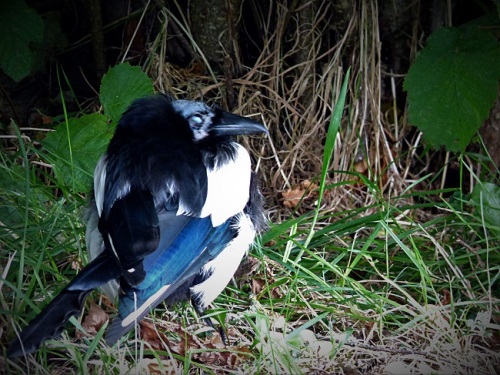
“I had to save it.” Timidity was gone now that truth was set in motion. “Liz said she was going to put it in her new cage and keep it. But it is not a pet, and it is hurt and it cannot fly and something was going to come and eat it.”

The boy’s eyes were bright with tears of righteous defiance. “I don’t care if you ground me till I’m, like, a hundred. He needed help!”

The bird wriggled clumsily in the boy’s palms and the child’s young face crumbled in uncertainty. “But … um … before you send me to my room for forever, can you please please drive me to the vet?”


For Sue Vincent’s WritePhoto prompt