Their Dream


In his dreams he sees a mansion, flanked by rows of old-growth trees, fenced by sturdy brickwork, gated by imposing wrought iron spiked by gold.

In his dreams, he sees a driveway that spells out the expectation of his wealth. He envisions sprawling gardens, floors of endless rooms, and lavish halls, and a multi-car abode.

In his dreams he sees the pools, the tennis courts, the deck, the dock, the boat.

In her dreams she sees a cottage on the edge of forest, amidst the rolling meadows heading into dunes and shore.

In her dreams she sees the cozy rooms, the closeness of the furnishing, the softness of the rugs upon the cool slates of the floor.

And when he shares his dreams and scoffs at hers and tells her that she dreams “far too small,” she knows that their shared one won’t go where they’d thought it would, before.


For the Crimsons Creative Challenge


Dressed Down

marjorie-bertrand-eyzzqAQhcjI-unsplash
Photo: Marjorie Bertrand on Unsplash


He eyed her twirling in her tutu and his heart squeezed with longing.

He wanted to do that, too. It was not fair that it was not allowed.

That only girls could.

Be princesses.

Wear dresses.

Put on make up.

Play with dolls.

Paint their nails.

He’d tried, of course, but he could tell that even those who did not outright take things from him or forbid him or call him hurtful names, didn’t really feel comfortable with his choices. There was that look they gave, the forced smile, the way they inevitably ran out of patience and gave him “other suggestions” or directed him toward “trying other things.” He was given gifts that made it clear that what he’d asked for was not acceptable and therefore required others choose for him.

He could tell his parents were ashamed.

They loved him. He knew. But they didn’t quite love that part of him. The part that he loved in himself the most. The part that he hated. Sometimes.

It wasn’t even that he didn’t like sports, or climbing trees, or making mud pies. He did. It was just that those weren’t fun without adding a bit of dance, of looking for fairies amidst the branches, or pretending that the mud pies were part of a birthday bakery for princesses.

They kept saying how “wonderful it was to have such an imagination,” but their body language told him that they’d have much preferred if his imagination didn’t quite go where it wanted to. That they would have liked better an imagination of the kind they felt was more appropriate for boys.

“Do you want to be a girl?” his sister asked. They were in her room for a tea party. She was wearing one of her ballet-princess dresses and the full set of jewelry she’d gotten from Grandma just the other day. She let him wear the crown. They pretended this made him a princess, too, but they both knew she chose the crown because it would be easy for him to take down if someone walked in.

Or say he was a king.

Sometimes he envied her so much that it carved a hole into the center of his being. The ease and confidence with which she could prance around in rustling taffeta and glittery baubles, the smiles she got when she dressed up and smeared lipstick on her face … It hurt. It hurt. It hurt.

She let him into her world, but they both know that it was not his to live in. They both knew that when her friends came for a play-date he would be excluded. They both knew that even with no dress on, and with a crown fit for a king, at any moment someone might barge in, and frown, and find a reason to ‘redirect’ him.

Her question made him cry.

Because he didn’t want to be a girl.

He wanted to be a boy who liked playing with dolls and painting his nails and having tea parties and trying on dresses and decorating mud-pie cakes for princesses.

And yet … it would have been so easy. If he were a girl.

No frowns. No shaming. No overhearing adults talk of how he needed “toughening up” or was “too sensitive” or was “definitely gay-material” or “headed in the wrong direction.” Not having to know that Mom and Dad and Grandma and Grandpa were kind of ashamed of him.

“I want to be me,” he sobbed, and fingered a dress his sister discarded and that he would give his heart to be allowed to put on without fear. “I just want to be me … and I don’t understand why it is wrong.”


For Linda Hill’s SoCS challenge: dress


Poke Practice

Photo: Sue Vincent


“I’ll flunk.”

Malinda sighed. Her brother needed an inordinate amount of putting up with.

“You’ll be fine,” she forced calmness into her voice. In part because she felt bad for him — Jerrod had always been too sensitive and too-tightly wound — and in part because she did not wish to then have even more of his perceived wounding to bandage.

“I’ve flunked it before.”

He had. Three times.

“You were younger and you were less experienced,” Malinda soothed. “Here, have some tea. It’ll calm your nerves.”

Jerrod folded his legs and lowered himself to the floor, only to spring back up and resume pacing.

“What if I don’t pass this time, either?” the youth fretted. His hair was plastered against his bony cheeks and his gray eyes appeared sunken under the woolen hood of his cloak.

Malinda took a deep breath. It was becoming increasingly difficult to believe that the morose youngster was ever the cherub-faced toddler she’d cuddled to sleep, and whose ringlets were impossible to resist poking a finger through.

Poking. … How odd that this was what her memory conjured. Or perhaps not so odd. Considering.

“Sit, Jerrod,” she repeated, putting an order behind her voice. He was not helping himself by fanning the flames of anxiety. He needed controlled calm in order to tame flame.

He sat and she handed him the wooden cup filled with steaming liquid.

“What’s in it?” his voice rose with a wariness she knew had nothing to do with the contents of the tea.

“Pine and honey. Nothing altering. You know I would not break the rules about such things.”

“Not even for me?”

His vulnerability and neediness grated. She breathed to calm herself. She could not ask of him what she did not require of herself. “Not even to you,” she emphasized. “One cannot poke fire when their own mind is on the flee.”

He blushed. He knew that. Everyone did.

“I’m scared,” he admitted, nose buried in the drink.

“I know,” she said gently. “Let the fear become the center of your gravity, then send it through your arm. Use it to concentrate your force. Fear is energy. Make it work for you.”

“Is that what you did?”

Malinda felt her eyebrows rise. People did not ask others how they’d passed their Poke Test. She was of a mind to remind her brother of the intrusiveness of his query, but she knew it would only further increase Jerrod’s sense of isolation. Perhaps others did not ask because they did not feel the need to. Obviously he did.

“Yes,” she replied, and the word brought back the trepidation she’d felt. The mix of terror and excitement, the flush of fear that became an arrow of determined indignation. She had passed. On the very first try.

She closed her eyes at the revisiting of the panic and the thrill.

She’d just completed her one-digit years and became eligible for attempting the Poke Test. To tame and manipulate fire was to be afforded the respect suitable for one who mastered the life-element they could none of them survive without. Fire was life. To know it, to master it, was a necessity and therefore a right of passage.

Some, like her, passed the Poke Test soon after turning ten. Jerrod had tried, and failed. And tried, and failed. And tried and failed again. Cowering before the flame he was reduced to tears, allowing the tongues of fire to do as they wished. He could not master it. It mastered him.

He was thirteen now. The oldest among those who were yet to conquer fire. Save for Leon, who was almost twenty but soft in the head. Even Sandra, who was blind, had tamed the blaze by twelve.

“Yes,” Malinda repeated. “I was afraid, but I turned that fear into a wand and ordered the flames to bend to my will.”

“A wand?” Jerrod’s eyes met hers, and she hoped that the glimmer she saw in them was of will-power rather than the sheen of anticipated defeat.

She nodded. The sound of bugle resonated. It was time.

“Come, brother,” she grabbed his hand and pulled him up to a stand. “Today, you pass from child to man. Go and tame the fire with your wand.”


For Sue Vincent’s Write Photo challenge


Momma Jean

Photo Prompt: © Jean L. Hays


“Don’t you go spendin’ no money!” Momma Jean announced.

In a whirlwind of industrious determination, she began rummaging through shoe boxes and ancient suitcases, closets, and plastic bags, flinging this or that onto the table.

I didn’t dare to offer help. Once Momma Jean got like this, it was best to keep out of the way.

“Now!” She finally straightened, hair askew and dust-bunnies clinging to the edge of her house-dress. My inveterate neighbor was out of breath and in her element. “You tell me what that costume look like, and I make it for you. You win first prize.”


For Rochelle’s Friday Fictioneers


Gregory Green

IMG_0202a

Photo: Keith Kreates


“You have to save me!”

She looked at him, filed her nails, and licked her lower lip thoughtfully. She said nothing.

He hated when she did that, pretended that she didn’t hear him, or that what he said wasn’t even worthy of a reaction. Sure, he leaned toward the dramatic, but that didn’t mean his feelings didn’t count!

“Daisy!” he breathed, “I know you heard me.”

She tilted her head in his direction, her nails continuing to move as if of their own volition. Truth is, sometimes he wasn’t sure they didn’t. Have their own volition, that is. These things could come at you uninvited and without warning.

“I’ll give you my special treat …” he begged. Defeated. He loved his Sunday treats.

At that she deigned to flick her lashes in his direction. She knew she won. She always did. Her patience outpaced his excitement. Every. Single. Time.

“I’ll see what I can do,” she purred.

He breathed. It was as good as done.

Once Daisy got her claws into the yarn, he would be spared the indignation of being made to wear another stupid knit thing. It took a full year from the last St. Patrick’s day for the others in the dog park to stop calling him Gregory Green.


For Keith’s Kreative Kue 234


Ablution

ales-krivec-8EfAYc6GngM-unsplash

Photo: Ales Krivec on Unsplash: Vintgar, Slovenia


The Radovna pooled itself and waited for her ablution. Still. Clear. Shattering in its beauty and perfection.

Everything she was not.

Hers was more the unfettered rush, cutting gorges, collecting all manner of debris, and lugging along tumbled things that poked their heads out of the milky froth of living.

There were no still ponds in her being.

She looked at the icicles suspended from rocks above the freezing water. They were guarding it.

From beings that did not deserve to be cleansed.

Like herself.

Hom and Boršt rose above the gorge, patient and unbending. The beech trees on the slopes, stripped bare for winter, rustled as they waited to witness her own naked skin.

Her eyes lifted to the bridge, though she expected no one on it. The area was closed to tourists in the winter. Only the locals came, alone, to seek absolution in the Radovna’s icy bowl.


For What Pegman Saw: Slovenia


Fading

Photo: Sue Vincent


They didn’t tell him he’d be seeing things.

They didn’t tell him how cold he’d be, or how alone, or how desperately he’d miss even the smallest comforts. Like a hue that wasn’t on the scale of dirty-white to sort-of-gray.

Maybe he was dying.

Was this how it would be?

He’d ask.

If he could.

They didn’t tell him he’d be unable to speak. Or that the voice he’d make would go unheard, unseen, unnoticed.

He blinked.

The stag was still there.

Perhaps real, perhaps conjured by the wish to flee combined with the worry about antlers being helplessly tangled as one tried to get away.

“You watch out,” he mouthed. Or said. Or yelled. “Don’t be fooled. Don’t be like me.”

The stag stood still. A statue. Another tree?

Then in one split second it bounded, disappeared.

Come back, he whispered. He’d never been so lonely.

He wept. He thought he did. He was so cold.

He looked at his hands. They blurred. He, too, must be fading.

Eternity.

The shadows crept near. A rumble of garbled monster-speech.

He heaved.


“Good trip?”

“He’s kind’a out of it.”

“He said he wanted to try some!”

“Yeah, but how much did you fools dump in his drink?”


For Sue Vincent’s WritePhoto challenge


Lost Halos

Photo prompt © Rochelle Wisoff-Fields


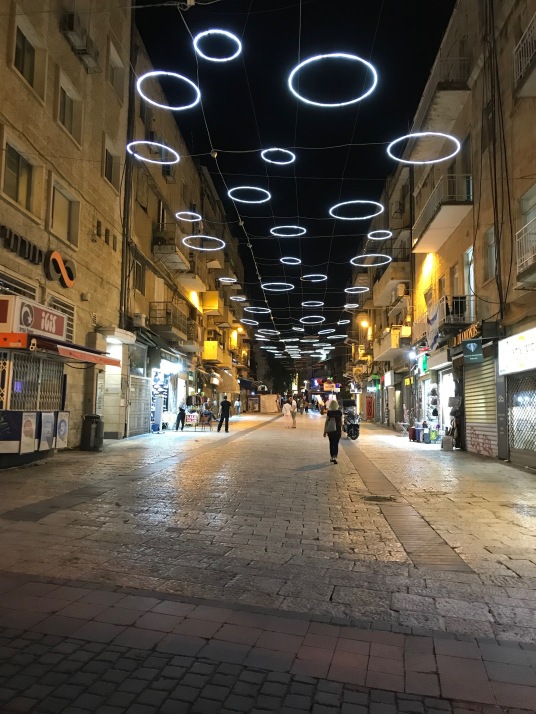
She’d been surprised to find out there was property overseas. Grandma raised her, yet no word was ever said about it.

“You should go,” Abe said. “Check it out. See about selling.”

She took Daniel with her. Heritage for him. Distraction from grief for her.

The small apartment above the Shuk was dank and cramped. Her grandmother had bought it decades earlier. Investment in the Holy Land.

“We couldn’t pay much,” the ancient tenant said, tears and wariness in her eyes, blue numbers on her arm. “She was an angel. Kept saying we were doing the mitzvah on her behalf.”


For Rochelle’s Friday Fictioneers


Become Stone

Photo: #CCC48


She crouched and tried to still her heart and limbs so the water would not give her away in wavelets or ripples.

Her teeth chattered. She wasn’t dressed for wet and the day’s sun had little warmth, none of which reached the shaded culvert.

She strained to listen.

She did all she could think of to hide her steps, but she wasn’t likely to escape the dogs. If they brought them. Oh pray please, please, that they did not. Not the dogs.

Her breath hitched and she bit down on her lip to try and swallow the sob that rode on it. The metal taste of blood filled her mouth. She heard barking. Surely the dogs could smell it. And her fear.

She closed her eyes and prayed to become stone.

She would not feel their chains, the bites, the clubs, their touch, their lashes, if she were a stone.


For the Crimson Creative Challenge


The Project

photo by David Meredith

Photo courtesy of David Meredith, photographer


“I know we can do it!”

Richard infused his voice with all the pep he could muster.

The house was a dump. He wanted to put a match to it. A tent would be better to live in. The very prospect of what fixing this wreck-of-a-building would entail had him exhausted in advance. He’d fixed homes before: this project would be measured in years, not months or weeks. He could almost see the creepy crawlies inside walls, the rot above the ceiling, the mold under the floors, the who knows what in the rafters.

He hated it already.

Who buys a house sight unseen? What on earth did she expect?

“It’ll be great!” He enthused, his arm protectively around her shoulders.

She’d been so proud to find a house that could fit them all and within their minuscule budget, further shrunken since he’d lost his job. She wanted to surprise him.

He hated seeing her devastation when they arrived at their new home, belongings and kids crammed into one truck.

“The children will learn so many skills,” he stressed. “You’ll see. We’ll go room by room and prioritize.”

“It’s a disaster,” she sniffled. Looked up. Smiled. “And I love you.”


For Sunday Photo Fiction