The Look

Atilla the tractor 1


“It is looking at me.”

“What is?” I was dozing off in the delicious sun on the first dry weekend we’d had in a while. The lush grass under me felt springy.

I thought the word was so apt. Springy. The double meaning of the season and the bouncy vivaciousness of it all.

“It is looking at me.”

I inhaled slowly with more resignation than irritation. I might’ve known this would not go as I had envisioned. While I was content to lie still and let the sounds of the birds and the hiss of the breeze and the faraway whir of a tractor in someone’s field fill and nourish me, Marlee had been tugging on grass-blades and clucking her tongue and shifting positions every three seconds.

She’s always been flighty. A flit-bit full of frown and furrow, forever on the edge of tumbling from one thing to another.

I loved it about her. She was the counter-weight to my molasses and the engine to my stasis. Her hypervigilance also made my idea of a relaxing afternoon where we do nothing, an utterly foreign thing.

Perhaps an even frightening one.

I opened my eyes. “What’s looking at you?”

“That.”

I raised myself on an elbow and scanned the field. There was no one there.

Marlee sat, violin-string-tight, eyes glued ahead.

I followed her line of sight. Nothing. Not even a bunny. Just a tractor that most likely belongs to the farmer whose land we might be trespassing on. I squinted against the glare – the cab was empty – there was no one there.

Marlee did not move.

Resigned now, I sat up and stared harder. A caterpillar undulated up a flower’s stem by my knee. A bird dove at the tractor, perched momentarily on a mirror, and flew away.

“The bird?” I chanced.

Marlee shook her head but her eyes remained trained on the vehicle. “The tractor,” she said. “That thing has eyes. I swear it blinked at me.”


For Crimson’s Creative Challenge


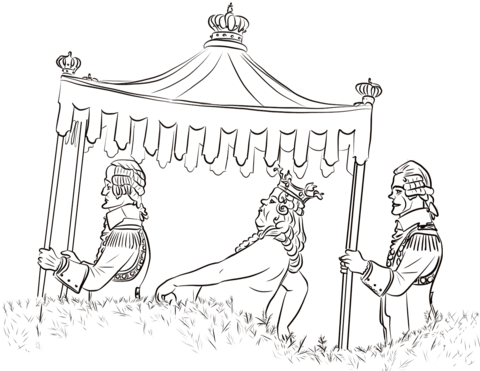
Emperor’s New Clothes

the-emperors-new-clothes-3-coloring-page

Nata Silina at Supercoloring.com


“I expect loyalty,” he stated.

A silence followed.

Shock or perhaps because

There was

No honorable way to respond.


“I need loyalty,” he repeated

With the implication clear:

You bend the knee

Or you are gone,

Swear fealty to the man

Or you’re a traitor

And an enemy to be scorned.

“You will always get honesty from me,”

Came the measured return.

“That’s what I want,” twisted the retort,

“An honest loyalty.”


As if there was such thing

As honest loyalty

To one who deemed acceptable

Only what offers

Praise and supplication,

And allows no room

For truth,

Let alone for the calling out of

The Emperor’s bare bottom

Of the barrel

Governing

Or his disregard for honor

As he dons repeated sets of

Non-existent,

Yet much lauded by him,

‘New Clothes.’


Note: As it happens, the book I’m reading and which was right by my elbow as I read the prompt … is “The Mueller Report” (w/ commentary by the Washington Post; page 296 of the book, page 35 of volume II in the report).  … And the rest, well, is history. And what will be …? We shall yet see.

For Linda Gill’s SoCS: open book, point, write


Perpetuity

a channel of water flowing out to sea, with the sun reflecting on the water.

Photo: Sue Vincent


“You know,” she said, “this will be home.”

I looked around. Marsh and bog and semi-dry patches that high tide or rain were sure to turn completely water logged. It looked a misery.

“It will, too,” she added, even though I hadn’t said a word. She always knew to read my body’s thoughts, even when I voiced no words and moved not a muscle.

Some days it made me hate her. For my utter lack of privacy.

Other days I felt indebted beyond measure for not having to find ways to explain when words had never been accessible enough to match my thoughts with meaning. And for being seen by her when no one else seemed able to or cared to try.

“Wanna know how?” Fiona pushed a heavy lock of hair off of her eye and I knew then that she already had a plan, and that the plan was sounder than the muddy ground we stood on. I knew that gesture, that flowing move of clear-eyed determination that carried with it more than just a touch of crazy. For neither one of us was sane, but Fiona was nuts enough to get us out of scrapes I did not see a way out of. Somehow my sister, younger by three minutes and wiser by ten decades, thought ahead in moves others did not appear capable of anticipating. It had saved us, more than once, of certain death.

She was about to do so now.

“How?” I asked, though I knew she didn’t need me to.

“Stilts.”

She yanked a twig out of the soggy ground and scratched a diagram into the patch of godforsaken earth in the end of nowhere anybody, that an hour earlier I did not know existed, let alone that it belonged to us by ancestry through crumbling deeds that no one since an ancient relative had made use or taken any heed of.

“They thought the place too wet,” my sister noted as the outline of an elevated house rose like a phoenix from the lines she etched into the dirt. “But not Friar Felix. He saw the same potential that I see. The fish and clams and seaweed. The crabs. The cattails by the spring that makes the stream that gurgles out to the sea. A place to be.”

She glanced up at me and the hazel in her eyes reflected the sun’s rays along with something far older. Like a memory not of hers that nonetheless also held on to our own desperate need for belonging.

“I don’t know if he knew, Finley, but Friar Felix had bequeathed the deed to this land to his sister’s children, and to their children’s children in perpetuity.”

My sister turned her gaze onto the water and her voice dropped to a whisper in the wind.

“We are those children’s children’s children, Finley. This is our home. It will be home. You’ll see.”


For Sue Vincent’s WritePhoto Challenge


At The Window

Wacton church window


She’d drag her trunk over every time she was left alone. It did not happen nearly often enough, so she faked head-hurts when her need got too great.

She’d drag the trunk over and place the foot-stool atop it. Gather her skirts and climb to stand precariously on it, balancing on tiptoes.

It was the only way to reach the window.

It was the only way to look out.

The only way to see the fields. The light upon the water in the distant pond. The green or bloom or brown or white of seasons. The birds. The trees. The world outside.

She didn’t know how long she’d have to stay confined to the Women’s Tower. Probably till she was of age to be married off and be conveyed in a shuttered carriage to the Women’s Tower in some other lord’s estate. The curse of her birth.

Highborn girl-children did not go out of doors very often. They did not spend time in the courtyard after infancy and were never unveiled or unaccompanied. Their chastity required they not be seen.

She watched the peasants’ children frolicking. She watched the girls work the fields, herd the geese, chase stray ducklings, spread seed for the hens, milk the goats, cut the hay, grind the wheat, slap cloth against the rocks at the sparkling stream. She could almost feel them breathe, though when she tried to draw breath herself it only let in suffocation. So much so she sometimes did not need to fake a head-hurt after that.

The latticed windows did not open. Two narrow slats near the corners of the tower room did respond to her mother’s lock in fine weather to allow air through cracks barely as wide as her wrist. Not that she was allowed to try and push an arm through them. It would be unseemly.

Still, she tried. Once. The marginal openings met a stone ledge’s resistance after a few inches’ opening.

Protection from invaders and wild-men, she was told.

Guarantee against escape of any kind, she thought.


For Crimson’s Creative Challenge


First Day Out

transition

Photo: Sue Vincent


It’s been a long time since she was able to hold her head up.

She knew every crack in the ceiling. Every shade of light on the walls. Every spider web.

They kept the latter undisturbed.

“Let them be,” she’d asked when the housekeeper had come in one day, armed with an upended broom. The matronly women had frowned only to have understanding effuse her face with something between pity and compassion.

“You keep ’em company, then,” the housekeeper had said.

She’d cried a little after the woman had left the room, tears accumulating small pools in her ears. In them was the relief for the small thing she could still control to protect, and the hollowing despair for how much of it she’d lost, that she begs company of arachnids.

Months passed since.

The webs accumulated. Elaborated.

The seasons changed.

She watched the spiders, and found her own cobweb to hang on to and get stronger.

She learned how to control a torso that would no longer answer to her command. She found ways to manage the awful dizziness of gravity. She made peace with her chair and its straps as her adopted exoskeleton.

And she was strong enough, finally. To hold her head up.

A gentle sun licked the edge of the gate. The mostly overcast sky offered her pallid indoor skin a needed measure of protection. A glint danced on the fence’s wall and she practically felt it.

As tender and tenacious as a spider web strand.

“I’m ready,” she smiled. “For my first day out.”


For Sue Vincent’s WritePhoto prompt


Rosie Rhymes

Ring-a-ring-a-roses KateGreenway MotherGooseNurseryRhymes 1881

Kate Greenway, Mother Goose Nursery Rhymes 1881


“Ring-a-ring-a-roses; A pocket full of posies; Hush-hush, Hush-hush; We’re all tumbled down!”

“She can play like this for hours,” Mary sighed.

Alice gazed at the child, who with arms spread wide to the sides, continued to spin about the garden’s green, dipping a curtsy at the final line before going back again to the first. Her pitch was perfect and her voice was sweet, but the bouncy ringlets and pinafore over a knee-high calico dress only highlighted the oddity.

It was adorable when Rosie was six years old. The girl was nearly thirteen.

“How’s Rosie’s schooling coming along?” Alice tried.

Mary’s smile faltered for a second before a placid screen unfurled over her face. “Just fine,” she breathed. “It’s coming along just fine, dear. Did you try the rose-petal marmalade? Mrs. Hannah outdid herself this year.”

It is like watching a wind-up toy, Alice thought. She never could get her sister to speak candidly about the child. None of them could. They all knew much was wrong, yet it was nigh impossible to discuss it. There’d been some concerns before the accident, of course, though Rosie had been very young then and much was explained away as the idiosyncrasies of an only child with an active imagination.

Then the accident happened and it was as if Mary had stopped the clock. On her own life as well as Rosie’s. The child seemed content enough, delayed and mostly mute outside of singing as she was. But how much did any of them know about the child’s true reality and potential, and how much was her mother’s doing, impeding her growth?

“Ring-a-ring-a-roses …”

Rosie’s singing rang in Alice’s ears and suddenly she could not stand it any longer.

“Mary,” she pressed, “I know this expert …”

Her sister raised a delicate hand. “We have all we need, Alice.”

Alice shook her head. “No, you don’t. I love you, and I know you love Rosie dearly, but she’ll be a woman soon … and she can’t stay six forever. Let me get the both of you some help. It’s not about trying to force her to do what she cannot, if she cannot … I mean, I know she’s a little …” her sister’s eyes stopped her. Brittle. Angry. Warning.

“… I … I can see she seems happy,” Alice inhaled and paused, hoping for a relenting crack in her sister’s eyes.

There was none.

“Indeed she is happy,” Mary clipped. “And we shall keep it this way, shall we?” She turned her head a tad, so that her eyes rested partially on the closed wing of the manor where the stone would forever be a bit dark, and partially on the child she’d frozen in time. The sweet girl who did not need to know more than what she’d known the day before she had tipped a candle onto paper and accidentally, fatally, set fire to her father’s study. “Now, about that marmalade!”


For the SoCS prompt: Rhymes with rosy


The Richness Of You

sunrise florida NaamaYehuda

Photo: Na’ama Yehuda


If a hollowing sorrow

Catches your breath in a

Hold

And then folds

Like a snail

Into what can’t

Be told …

Let the richness

Of you

Spread like gold

From a long ago story

Foretold,

Like the waves’

Gentle touch

On a morning’s

Threshold.


For dVerse’s quadrille challenge: Rich


Reflections On Reflection

Peru Reflection AmitaiAsif

Photo: Amitai Asif


If you look into the pond, you’ll see

The sky reflected,

The white clouds,

The world drenched in the beauty

Of clear water

On firm ground.

But if you’ll turn your head

From pond-life

And look around

And up

Onto the land and sky,

You will see the real world

In its worry,

In its glory,

So much bigger,

Spinning by.


For the Friday Fun prompt: Reflections


They Bowed

Photo prompt: Sue Vincent


“They bow, you see,” Mir explained.

The child held on silently to his hand.

Mir peered down at the small head, so uncharacteristically still, the red curls shining like molten gold under the sun.

The quiet lingered and Mir did not break it. More words would not change how there was only so much one could say about some things.

A bird fleeted close. A bee buzzed by. Somewhere a donkey brayed and a dog’s bark answered.

Still the child did not move.

Mir let the air in and out of his lungs mark the passage of time, even as he knew it would not be measured in the same way by the child. Nor would it matter. Time is rarely what it seems to be, anyhow.

The air shimmered. The scent of smoke wafted from someplace beyond the fields, and in it mixed the faintest hints of manure and baking bread.

A caterpillar inched its way atop a blade of grass.

“There is no wind,” the child finally noted.

“There is not,” Mir confirmed.

“Are they tied together?”

“They are holding limbs.”

The child looked at her own hand in her grandfather’s. She did not look up, but Mir could feel the connection being made as it wove a thread of understanding between the two of them, between them all.

A hush fell. Then a sudden breeze rippled through the field and whistled an unnamed sound as it passed through the stacks. The tips nodded.

The child bowed back.


For Sue Vincent’s Thursday Photo Prompt: Wicker