He’ll Do


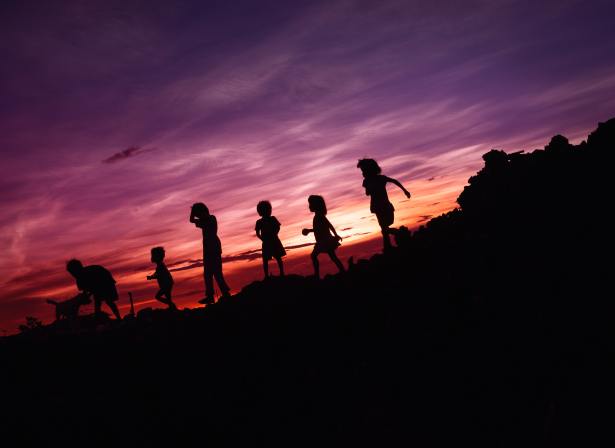
The new hay-bringer was a handsome one. Calm posture. Wild mane. Warm eyes.

The others hung back as Bella stepped forward to inspect. Molly, heavy with foal, nickered a soft warning, and Bella swished her tail in understanding. Yes, she, too, was expecting, but she was not afraid.

She advanced to within a hoof-kick-space. He stayed put, unperturbed.

He carried no fear smell. No twitchy legs. No mouth yells.

Bella lowered her head some, and he held out his hand for a sniff. Sweat. Musk. Iron. Grass. Faint carrot smell.

She shook her mane, and he laughed and reached into an opening in his leg coverings to reveal an orange section of the vegetable. Offered it on an open palm.

Bella nosed it, lipped, chewed. Good.

She approved.

She tapped her hoof and felt the air shift behind her from tension to curiosity.

He’ll do.

Perhaps he even has apples.


For Crispina’s Crimson’s Creative Challenge


A Key To The Heart

Photo: Sue Vincent


The last thing she believed was that her great-grandmother’s words had been literal.

The old woman was prone to tall tales, lore and fairies, rumors and gossip, odd potions and odder notions. There were always layers of meaning. Lessons. Some ancient moral to decipher. A hidden understanding.

As a young child, Patricia was fascinated by Gramma Gee. She would spend hours dreaming about the meaning of the words of mystery from the wizened woman who had more wrinkles than skin and whose spine bent halfway parallel to the ground.

But by the time she turned an adolescent, Patricia found the elder’s cryptic talk to be boring, dated, and annoying. She only went to visit to assuage her mother’s guilt, and even then did so without enthusiasm and for the briefest stay.

When Mom died at the end of a long illness while Gramma Gee continued living, Patricia — then a college student — stopped visiting altogether. She’d convinced herself that the old woman in the cheerless room in the old people’s home was senile and would not know the difference, but in her heart’s heart she knew that she was angry. Every day the ancient lived felt like one stolen from her mother.

Patricia wondered if her mom had felt that way after Nana died. The sudden death that bled Nana’s life into her brain had left Mom bereft and lonely. Patricia was not quite four years old at the time.

It did not seem fair. Two holes bracketed by a woman so old there could not have been a good enough reason for her to still live.

Then, on Patricia’s twenty-sixth birthday, Gramma Gee breathed her last. She’d just turned ninety-five.

She left Patricia everything: Two tattered suitcases of documents, moth-eaten blankets in a trunk that could have come out of a horror movie, a box of knickknacks, and a four-leaf clover key wrapped in a piece of leather in the shape of a heart.

“There is a key to the heart, and you can use it.”

Patricia had heard Gramma Gee say this phrase more times than she cared to remember. She’d thought it romantic at some point, then irritating.

But was it more than an expression? And if so, a key to what?

The attorney who was the executor of Gramma Gee’s meager estate was no help. A harried man with droopy spectacles and droopier hair, he had not much to tell her. “It could be in the documents,” he said, nicotine-stained fingers fidgeting for her to sign the papers on his desk and let him go handle some other oldster’s odds and ends. “I believe there’s a deed among the documents. To some house in the old country. I don’t expect it to still be standing. Most are not.”

It was mostly not.

But a section was, and part of a stair sticking out of broken walls. And the owner of the bed and breakfast nearby had a small tractor and a strong son he could lend. When they cleared away the rotten beams and tumbled stones and mounds of weeds, there was an intact part of ancient wall revealed, and more steps.

And at the end of those, a closed door. Set with a heart-shaped lock.

She had the key.

And she could use it.


For Sue Vincent’s WritePhoto challenge


The Street

robert-almonte-Hp8_AaU2Juc-unsplash

Photo: Robert Almonte on Unsplash


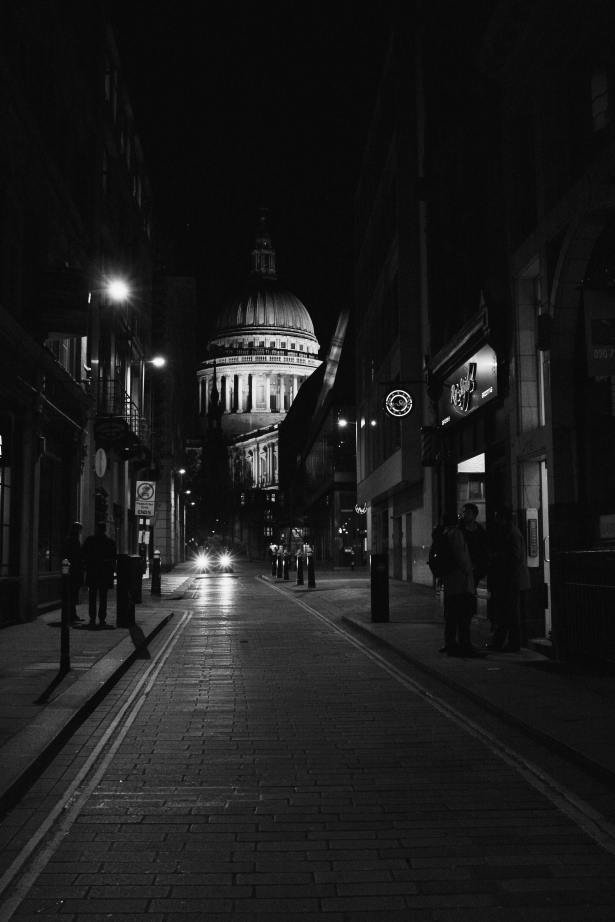
The night is not as I’d expected it to be.

The sirens are silent. The windows dark. The very air seems still.

It had been a close call. Too close, almost.

I glance at Malachi. He returns a tremulous shrug.

“Will we be alright?” I ask. I didn’t mean to say it out loud, but the words could not stay in. The sound — although barely above a whisper — boomerangs in my chest.

“We might be,” he mouths.

At least I think he does. I cannot hear much above my heartbeat thundering in my ears. Everything inside me feels tight. I don’t remember being so unnerved. Not since. You know. The other time.

“Will they return?” Fear dries my mouth.

“Who knows.”

We reach the corner and separate. The night breaths as I hurry home and we go in different directions down the imperturbable street.


For the dVerse prosery challenge

Prosery prompt: “We go in different directions down the imperturbable street” (from the poem “An Aspect of Love, Alive in the Ice and Fire” by Gwendolyn Brooks)


Enough To Share

Photo prompt © Ted Strutz


“I kept some for you.”

She offered the crumpled paper reverently.

“Why, I thank thee!” he bowed.

He unfolded the checkered waxed napkin to reveal two potato chips, one small bite of pickle, a tiny sliver of bacon, a dot of olive, a slightly bigger dot of pepper, and a few crumbs of tuna. There was even some mayonnaise for condiment. A feast.

She squatted and rocked back on her heels in satisfaction as he devoured the food. Her greasy fingers left marks on her slacks. She was oblivious. Mesmerized.

The elf licked long skinny fingers. Burped. “No beer, eh?”


For Rochelle’s Friday Fictioneers


Temptation


The sun beat on his nape and his shirt stuck to his body, too wet to do any good in absorbing the sweat that trickled maddeningly down the center of his back and soaked the waistband of his pants.

His arms ached. Granite did not easily yield.

The soft ripples of the water mocked him, parading a breeze he did not feel. The pillar blocked what small air movement could be had. To add insult to injury, the hot stone reflected the stifling heat back at him. The path was an oven.

A dragonfly skimming the river caught his eye and he paused, mallet in mid-air and chisel in position, muscles bunching under the folds of his damp sleeves.

What if? he pondered.

He shook the thought out of his mind. Let the mallet land.

Who knew what lurked under the surface of seemingly inviting water. Better hot than drowned.


For Crispina’s Crimson’s Creative Challenge


Out Of The Blue

Photo prompt: © David Stewart


The streets still shone with wet but the dome of sky stretched clear above. The wind had swept away the clouds.

She shivered even though the air was warm. Perhaps it was the damp that had her reaching for her shawl.

She hugged herself and wondered if she’d ever know whether he had left because he wanted to or because he had no other choice or because he did not know any better.

“Where are you?” she whispered.

She jumped when the fountain unexpectedly came to life and bathed the roundabout in blue.

It felt like a hello. From Hugh.


For Rochelle’s Friday Fictioneers


Treasure In The Sand

fum-bally-XN1j9bzHXoU-unsplash

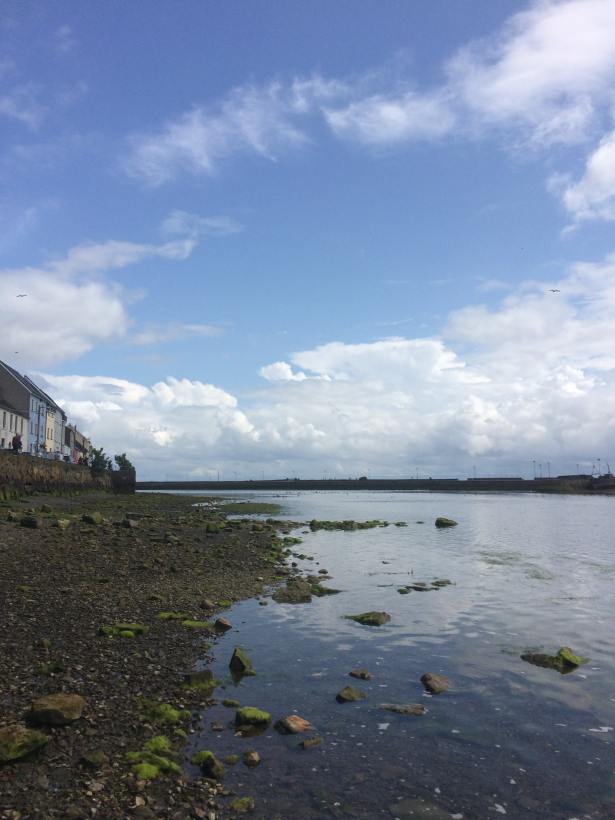
Galway, Ireland (photo: Fum Bally on Unsplash)


He leaned on his elbows and watched, periodically checking the clock and the tide-chart that hung next to it. Any moment now.

The briny air tickled a sneeze out of him, and he debated whether he had time to go fetch a handkerchief or if he could just use his shirt. Laundry day would not be for another full week. The handkerchief won. He rushed back to the window, flushing with a combination of exertion and embarrassment.

It was sobering to be faced with his own obsession.

The waves hissed and brushed against the beach. The ocean sighed. The breeze picked up. It would rain tonight. He believed his bones.

Then he saw her, walking on the exposed strip of rock-spattered sand. Her head was down, searching. She held a plastic bucket in her hand. It had seen better days.

They both had.

She was his treasure in the sand.


For What Pegman Saw: Galway, Ireland


The Reporter

sven-brandsma-jJLhSPffgJM-unsplash

Photo: Sven Brandsma on Unsplash


He reports first thing in the morning.

He reports again every night.

There’s little that could dissuade him

From being absolutely forthright.


He records every scene with a flourish.

His voice reflects every sight,

As with journalist’s flair

He spells data in ample delight.


He would not be distracted from telling,

The minutia has got to be tight.

After all, he is in potty training

And to him no discharging is trite.


For RDP Sunday: Journalist


If It Rains

javardh-Fk4QsoNaTL4-unsplash

Photo: Javardh on Unsplash


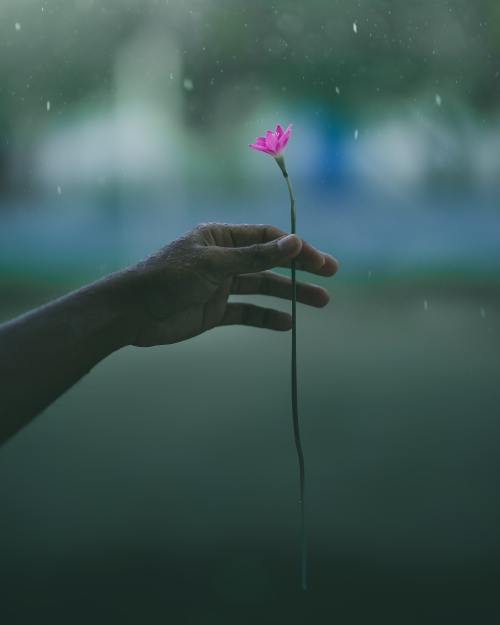
“If it rains,” she said.

“It pours,” he answered.

They laughed and touched palms

Over glass.

The barriers that divide

Not keeping them

Apart.

“And when it shines,” she said,

“It glories,” he responded.

She grinned and then the corners

Of her lips

Shook and her palm pressed

Again

Toward his

And her eyes unleashed a

Downpour of

Longing.

“Don’t cry,” he whispered.

“I’m almost ready

For the transplant.

My cells will welcome yours

Into my own.

As they had

In the womb.

It is like coming home.”


For Sammi’s Weekend Writing Prompt: Downpour in 88 words