Hang in the Balance

balance

We all hang in the balance.

Can’t you see?

Be gentle.

Be truthful.

Be fair.

Above all–be kind.

We all hang in the balance.

Do you understand?

The smallest. The heavy. The brazen. The meek. The old. The young.

We all hang in the balance.

It matters.

Above all–be kind.

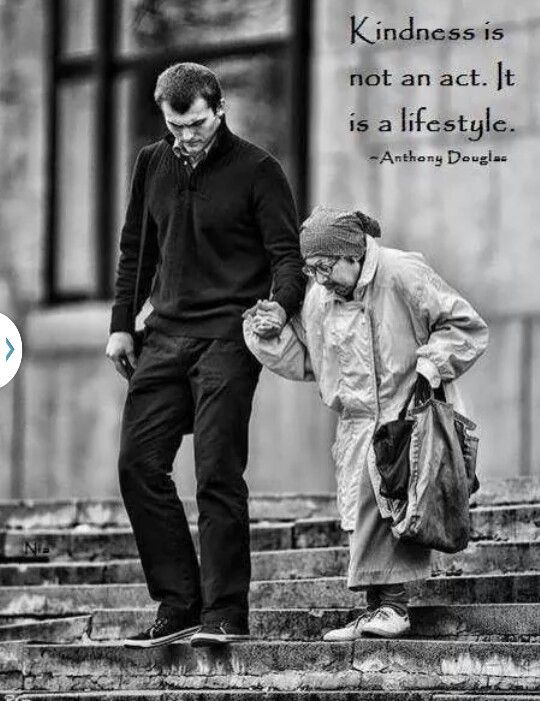
A lifestyle of Kindness

kindness1

A lifestyle of kindness.

I love that.

If more of us take it on; just imagine the world we would be living in,

the ripples of compassion we will be creating.

A lifestyle of kindness.

Can you see it growing?

Can you feel the depth of healing it can cultivate.

A lifestyle of kindness.

Oh let’s.

Let’s!

Ice Cream Empathy

The little family was heading to the crossway and in my direction as I was sitting on the bench in the sun, thirty yards from the crossway, waiting for a friend to emerge from a store. They made the prettiest picture: the father pushing a stroller, the mother to his left, holding the hand of a preschooler. The little one skipping, pigtails bouncing, dressed in pink t-shirt and purple tutu, light up sandals, little handbag full of turquoise rhinestones and the latest animated princess character; giddy with the unsuppressed delight that kids that age can have. I had me a feeling they were on their way to the ice-cream store across from the bench I was on. The excited anticipation was written all over the little face.

Steps from the crosswalk and probably noticing the commotion on the corner right behind a row of parked cars and flashing lights, the mother tried to circle to the father’s other side. Maybe she intended to put herself and the other adult as barriers to the scene on the asphalt.

There was a person on the ground ten feet away from the sidewalk, right behind the row of parked cars. Paramedics with a backboard. An ambulance. Two police cars flashing lights and directing traffic from the three lanes to just one, keeping a perimeter so the nosier onlookers not get too close to the accident. Another police man stood by a car parked sideways across one lane, talking to the driver who hit the man. There was concern in the air. I’d been sending some good thoughts when I noticed the family nearing.

The child was too short to see over the parked cars, but either the energy of the congregated people or the movement of her mother caught her attention. She stopped skipping. Stood. Tried to see. The mother stopped, as well, then tugged gently on her daughter’s hand. The child did not move. The woman stood a moment–maybe considering the benefit of picking up the child to get them moving away from the area but give the child a vantage point that could be startling. The father bent toward the little one, said something. The girl nodded and resumed walking, but her head kept swiveling toward the street and as they crossed and the cars no longer obscured everything, she slowed. The mother picked her up and rushed to make it to the other side before the light changed. To put some distance, too.

The child kept talking, the mother shook her head and spoke back, tried to turn the child in her arms to face the other way and still the child kept turning her head over the mother’s shoulder–looking at the scene on the street: the paramedics were lifting the man on the board onto the stretcher. The family walked faster now that the little one was in arms. I could sense the parents urgency in wanting to get her away.

I could hear them as they walked closer.

“So you are ready to get some ice-cream?” The father, his voice kind but a bit too loud and  strained in the slightly false cheer of worried grown ups that children always pick up on.

The girl nodded, her attention still divided. She looked back. “Why he has a big Band-Aid?”

The neck-brace. It did look like a big Band-Aid from the distance.

“They are just helping him be more comfortable,” the dad responded. The mom looked upset, walked faster.

“He has a big boo-boo?” the little girl looked again.

“Maybe. Don’t worry. They’ll take him to the doctor and make sure he’s okay.”

“He fall down?”

“Maybe.”

“I don’t want him to have a big boo-boo,” the little girl said, frowning. Then her eyes brightened. “Maybe he want ice-cream too so he feel all better.”

“He doesn’t want ice-cream,” the mother blurted as  they reached the ice-cream store and walked in.

Maybe not the kind that comes in a cone, I thought, but the energy of sweetness from this child I bet already made him feel better, even if he did not know the pigtailed gold-heart who offered it.

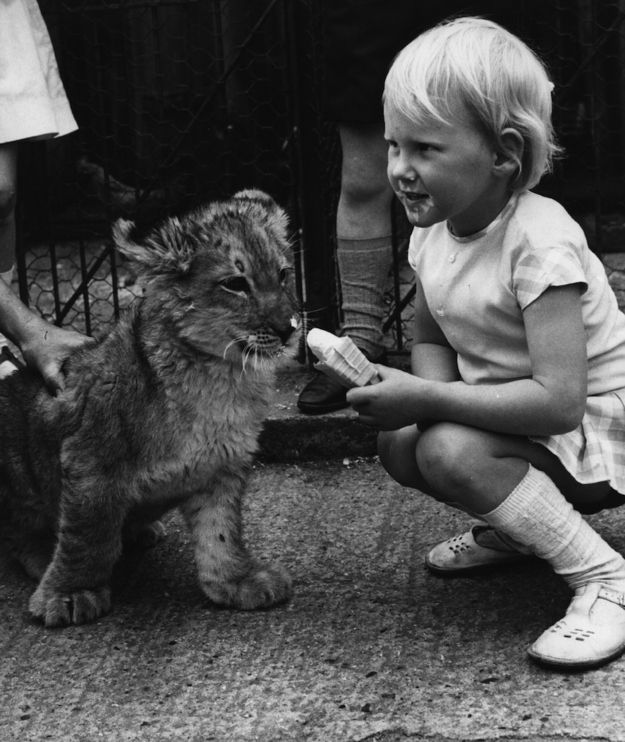
child ice cream2

Evening Standard / Getty Images 1956


Half-Angel

What do you do with a grieving child?

You listen. You hold. You listen some more.

You offer tissues, you offer a hug. You answer lots of questions.

You nod. You tell stories. You honor the small memories told.

You come up with suggestions–or rather, embellish on those that the little one has.

You produce boxes (“too little”, “too big”, “too not-good”, “I don’t like it”, “okay, this one …”), find padding and ribbons and stickers, along with a few extra hugs.

You write what’s requested. Erase the letter that did not look perfect. Write it again. Erase. Write once more. You understand that it has to be just-so.

You provide blank paper and crayons, markers, highlighters, scissors. Play dough.

You oblige to search Google for questions your answers were not good enough, and come across five hundred other interesting things that lead to more questions. Distraction is good medicine, too.

You write down a protocol for ceremony, number the steps, change the order.

You make a headstone from tongue depressors and card stock. Give another hug.

You write the name of the departed. Erase it because it did not come out perfectly. Write. Erase. Write once more.

You draw a picture and told it “doesn’t even look like him.”

You are saved by a photo from the bowels of phone memory–a snapshot of happier times.

You give more hugs. Another tissue.

You stay with. You listen. You know that no small loss is small. That no one is truly replaceable, that loss is confusing and brings along with it the worry of losses far bigger and questions too scary for words. You don’t go where the child does not take you. You comfort, you understand.

What do you do with a grieving child?

You listen. You hug.

You promise not to forget.

You tuck the drawing in the folder (“but be careful”) to keep it safe.

And you use a tissue yourself, when the child wonders aloud if dead fish get to have wings and continues to answer himself:  “Yeah, because they have fins, so Benny was already half-angel.”

beta fish

Mother’s Day–A History of Seeking Peace

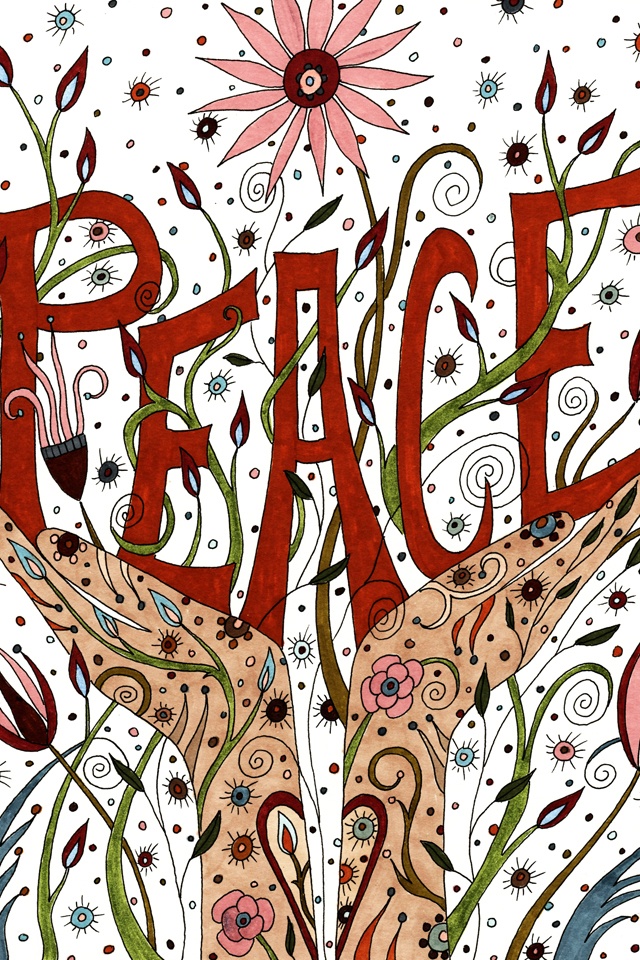
Peace is in our hands ~ artist Valerie Lorimer

Peace is in our hands ~ artist Valerie Lorimer

As we celebrate mothers of all forms and being, those carrying and bearing life, laboring to nourish and to nurture, guiding, teaching, holding, comforting, soothing, showing, listening, singing to and being with … Let us also remember where Mother’s Day originally came from and its purpose–a purpose that in its own way represents the yearning and dedication, hope and tenacity of mothering:

“let them then solemnly take counsel with each other as to the means whereby the great human family can live in peace…” (from the proclamation below)

Here is to peace. To no more carnage. To love. To hope. To no more lost children. To counsel of heart and reason. To no more war.

Mothers’ Day Proclamation / Julia Ward Howe (1870)

Arise, all women who have hearts, whether your baptism be that of water or of tears! Say firmly: “We will not have great questions decided by irrelevant agencies, our husbands shall not come to us, reeking with carnage, for caresses and applause.

“Our sons shall not be taken from us to unlearn all that we have been able to teach them of charity, mercy and patience. We women of one country will be too tender of those of another country to allow our sons to be trained to injure theirs.”

From the bosom of the devastated earth a voice goes up with our own. It says, “Disarm, disarm! The sword is not the balance of justice.” Blood does not wipe out dishonor nor violence indicate possession.

As men have often forsaken the plow and the anvil at the summons of war, let women now leave all that may be left of home for a great and earnest day of counsel. Let them meet first, as women, to bewail and commemorate the dead. Let them then solemnly take counsel with each other as to the means whereby the great human family can live in peace, each learning after his own time, the sacred impress, not of Caesar, but of God.

In the name of womanhood and of humanity, I earnestly ask that a general congress of women without limit of nationality may be appointed and held at some place deemed most convenient and at the earliest period consistent with its objects, to promote the alliance of the different nationalities, the amicable settlement of international questions, the great and general interests of peace.

(Julia Ward Howe, Abolitionist–she also wrote “Battle Hymn of the Republic”)

Julia Ward Howe

Julia Ward Howe

On Nov.7–Making Peace with Suicide–a recommended new and powerful book!

Launching November 7, 2014!

Making Peace with Suicide: A Book of Hope, Understanding, and Comfort

By: Adele Ryan McDowell, PhD

Sometimes a new book comes along that deserves a special shout out–this is one !

I am delighted to help spread the word about Adele McDowell’s new, powerful, and heart opening book.

I’ve known Adele for almost 18 years now, and she is the real deal: knowledgeable, compassionate, deeply empathetic, super-sensitive, and down-to-earth. She understands human suffering and human potential, the depths of pain and the triumphs of spirit, the reality of trauma and the tangible hold of hope.

The combination of her skill and personality make her the best person to approach and manage such a tender topic, and she does so with much heart and practical advice.

The book is filled with information and much needed explanations to one of the most heart-wrenching realities of human connection and loss. It is also filled with anecdotes, candid testimonies, and personal paths through grief and healing.


Read it!

Join the launching celebration on November 7 and be one of the first to own a copy!

Get it on November 7, 2014!

Making Peace with Suicide: A Book of Hope, Understanding, and Comfort

By: Adele Ryan McDowell, PhD

Get it on Amazon November 7! http://www.amazon.com/dp/0982117620/ref=pe_385040_121528360_TE_dp_1

About the book:

Insightful, compelling, and compassionate, Making Peace with Suicide: A Book of Hope, Understanding, and Comfort takes a good hard look at the world-wide phenomena of suicide.

This book is designed for anyone who has lost a loved one to suicide and felt that sucker punch of grief; for anyone who is in pain, walking unsteadily, and considering suicide as an option; and for anyone who works with, guides, or counsels those feeling suicidal and/or suffering the profound grief from a suicidal loss.

Making Peace with Suicide includes stories of courage, vulnerability, and steadfastness from both the survivors of suicidal loss as well as the unique perspective of the formerly suicidal. It offers shared wisdom and coping strategies from those who have walked before you. It explores the factors leading to suicide and the reasons why some do and some don’t leave suicide notes.

Making Peace with Suicide sheds light on the phenomena of suicide vis-à-vis our teens, the military, new mothers, as an end-of-life choice, and asks if addiction is a form of slow suicide. It provides a seven-step healing process and opens the door to consider suicide and the soul, the heart lesson of suicide, and the energies of suicide.

If suicidality has impacted your life, Making Peace with Suicide is a must-read! You will be guided through the unknown territory, given insights to allow understanding, stories to help you heal, and ways to make peace with a heart wide-open. Making Peace with Suicide is good medicine for the body, mind, and soul.

Praise for Making Peace with Suicide

“Suicide is one of our most painful, difficult, confusing and wounding of human experiences. Dr. Adele McDowell addresses this topic with love and beauty. She non-judgmentally restores empathy, compassion and understanding.  She courageously offers deep tending in a “place of primal pain.” And she is comprehensive, sharing the history, complexity, universality, and even positive dimensions of this mysterious act. Whether you are contemplating or have survived the attempt, lost someone to suicide, or counsel and help these populations, Adele McDowell’s Making Peace with Suicide will bring you hope, healing, compassion and understanding.”

–Edward Tick, PhD; Director, Soldier’s Heart; Author, War and the Soul and Warrior’s Return

“With sensitivity and compassion, Making Peace with Suicide explores the depth and breadth of suicide and offers insights and healing. This book is essential reading.”

–C. Norman Shealy, MD, PhD

“No topic could be more timely than suicide. This remarkable book addresses people who have contemplated ending their lives as well as those who have to deal with the aftermath of those who succeeded. But it will also be invaluable to mental health workers and military chaplains, especially those who deal with young people who have been bullied and veterans with PTSD. For such a complex topic, Dr. McDowell’s writing style is reader-friendly and the stories she presents may well evoke tears. Her wise recommendations include teaching self-mastery techniques to help people cope with the stress of a success-oriented society. I have read many books on this sensitive topic, but none with the breadth and scope of Making Peace with Suicide.”

–Stanley Krippner, PhD; Co-author, Personal Mythology: The Psychology of Your Evolving Self and Haunted by Combat: Understanding PTSD in War Veterans

“Finally. A book that explains—in the simplest of terms, in a non-sensational, non-academic manner—the phenomenal, worldwide epidemic we call suicide. If you read one book on mental illness and how it affects our world, READ THIS ONE!”

–Ginny Sparrow, Editor, American Association of Suicidology

“Adele bravely and compassionately tackles a topic that many people avoid discussing—suicide. Yet in the understanding of it, the confusion and sense of loss is greatly eased. Making Peace with Suicide is rich with insight and healing methods all intended to help heal the void we feel when we lose a loved one to suicide. It’s also written for those who are suicidal to help them understand their pain and despair, and to let them know there is always help and there is always hope. I wish I had this book to read when my best friend took her life.”

–Carol Ritberger, PhD, author of Healing Happens with Your Help: Understanding the Hidden Meaning behind Illness

“This powerful book, written by a psychologist and former suicide-hotline responder, speaks to us all, about a present epidemic, surrounded by shame, taboo and secrets. Offering many personal stories, Adele helps the reader to find peace speaking to both those who believe they’re the only person who has ever felt this desperate and to the survivors whose lives are thrown into turmoil. This excellent book, full of useful resources, is essential for everybody who feels alone with their issues of life or death, bringing greater understanding, acceptance and comfort.

–Christine Page, MD, seminar leader & author of The Healing Power of the Sacred Woman

“As a minister/therapist for more than thirty years as well as a wife who lost her military husband to suicide, I have never found a more compassionate, effective book on suicide and its aftermath. This book serves many needs and highlights the myriad ways in which suicide changes one’s life direction. I cannot say strongly enough how powerful and helpful this book is.”

–Rev. Colleen E. Brown, Unity minister

“The loss of a loved one by any means is traumatic. When the loss is by suicide, in addition to the grief of the loss itself, survivors are often left riddled with guilt, anger, shame, and endless questioning, by both themselves and by others. In Making Peace with Suicide, Dr. McDowell gently and brilliantly weaves vital suicide survivor education with comforting and inspirational thoughts and quotes, all designed to direct the reader on a path of healing, resolution and peace.  A must-read for anyone who has been touched by the tragedy of suicide and left to answer the question, ‘Why?’ ”

—Carole Brody Fleet, award-winning and bestselling author of Widows Wear Stilettos…; Happily Even After…; and When Bad Things Happen to Good Women

“A subject such as this is never easy to digest. However, with Adele’s wisdom and guidance through her experience, this is a must read. We are in a new world now. Let Adele’s wisdom guide you with her insights for a new perspective on suicide.”

–Mona Delfino, author of The Sacred Language of the Human Body


Get Making Peace with Suicide on Amazon, November 7!

The Shame Game

Last year, a preteen I worked with told me about a child in her class who began cutting herself. The classmate showed this child the  scars but swore her to secrecy.

We discussed the kinds of secrets that one should not keep (the ones that feel ‘too big’ to keep, or are about someone being hurt, or feel wrong to keep, or come from shame or guilt), who to tell (a parent, a teacher, a trusted adult, even the school nurse), and how. The girl was relieved to know that she did not have to keep this scary secret (“I get worried that maybe she’ll like, bleed to death or something and then she’ll die and it will be my fault for not telling anyone …”).

In our conversation, the reasons children self-harm also came up: to deal with difficult feelings, to express pain they don’t know how to verbalize, to feel alive, to feel numb, to ‘try and see how it feels’, to be noticed … And what to do if she ever felt the urge to hurt herself (thankfully, she said she never did feel that way, but it never hurts to give some options just in case …).

Relieved though this girl was to know she could share this secret with someone, the preteen was also worried that it will somehow become known to the other children and how it will make things worse. “Kids are already like, making fun of her for everything …” she fretted, “so, if they found out she’s like, cutting … they’d be all like, joking about it and texting and stuff ….”

Apparently the self-harming classmate–not the most attractive by other students’ standards (directly derived from society’s harsh shaming of anyone who does not adhere to a very narrow range of ‘acceptable’) was found to have confessed a crush on a boy in a higher grade … Someone found the note where it had fallen from the girl’s pocket, ‘kindly’ photographed it, and circulated it in among the students, along with some choice words about the girl’s morality (you can insert your own words here, copied from the shaming terminology of grownups toward women and girls: ugly hurtful words that are meant to cut to the core). A cascade of comments and ugliness ensued, along with catcalls, leering, and whispered words.

“Some kids even say that she’s like, you know … the ‘c’ word …”, the girl blushed in embarrassment and indignation. “She didn’t even kiss him or anything …” she said, then added urgently, “not that it would even be okay if she did let him kiss her … or, you know, stuff …”

The “if she did let him” did not escape me … nor did the outright meanness of exposing vulnerability and turning it onto some way to cause harm. The backbone of bullying.

Bullying is a very real issue, and not only in children and teens. The culture of putting down others for real or perceived differences and flaws is disturbing, and for those caught in it, it is often shattering. Bullying thrives on shaming, and shaming reflects a void of compassion and empathy. It is especially apparent on websites, news media, twitter, Facebook, and many online blogs: people behaves in ways that are purposely hurtful, narrow minded, and outright cruel; and it is somehow seen as witty and cool.

It is not cool.

It is not witty.

It is cowardly and it is heartless.

It is, really, a form of terror. Insidious and sneaky, but no less meant to cause helplessness and pain.

The truth is that bullying is not ‘fun’ or ‘funny.’ Cruelty of words is especially cowardly, and cyber-bullying is uniquely hurtful in that it can easily seem like the whole world is (and indeed can be) laughing at one’s misery. Many would cringe at the sight of someone literally cutting another person or kicking them in the groin, yet somehow cyber-bullying has become a culturally accepted means of expressing disdain and showcasing ignorance. Meanness is not frowned upon, but adopted and propagated. It should not be so. It can and must be stopped.

Some of the things people (children, but not only children) write:

“Why don’t you just kill yourself so we can be rid of you?”

“You are so ugly that you shouldn’t have been born.”

“Everyone hates you. Just go jump from a bridge or something.”

How have we let it come to that?

The conversation I had with the preteen was not unique–bullying often occupies children’s conversations. However, I was reminded of the one I had with this particular preteen as I watched Monica Lewinsky break her silence and deliver an outstandingly candid and important speech–her first public talk in 16 years. Lewinsky calls out the shame culture that allowed (and cultivated) the ugliness toward her in the late 90s, and which is all too alive and well today and still takes lives–figuratively or literally.

Monica Lewinsky survived it, but not without immense cost, and she would not have survived it had it not been for the compassion and empathy of family and friends who held her close through the awfulness.

Not everyone has people to hold them through bullying, and not everyone survives it. Even in those who do, the price is often very high.

Watch this video, and pass it along. It is important. It is worth the time.

Because the Shame Game can only be played if we perpetuate and feed it, and it will cease if enough of us practice compassion and empathy. Like the preteen who turned to me, and would not be a silent witness to pain or bullying, let us all become ambassadors for compassion and ending shaming.

Let there be no more casualties of shame, no more shattering of souls. Let us not be instruments of despair–directly or by our silence.

The Cutest Seal-Pup Rescue

The tenderness and adorableness factor of this video were just impossible to not want to share …

So glad these good people rescued this baby (even if they did at first think he was a girl … that’s okay … I don’t think the pup minded, with them making sure he was comfy and treating him ever so gently).

May tenderness lead the way.

May compassion to all being override hate, denial, apathy, and ignorance.