When I Grow Up

wings

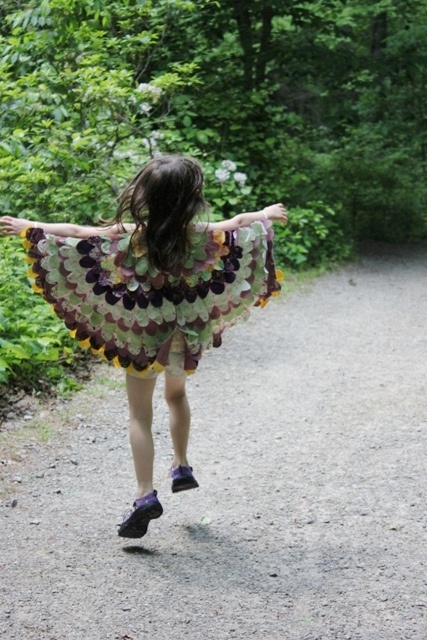
“When I grow up, I will be a bird.”

The little girl is adamant. She has made up her mind. It is final. This is what she’ll be. She’s even wearing training-wings.

It lasts about a day.

“I’ll be a batgirl fire-fightress (sic),” she announces.

“Not a bird?”

A look that shows just how impossibly slow adults can get is followed by: “No, I won’t be a bird anymore. I will be a fire-fightress.”

She is deeply disappointed with me that I did not notice the colors of her clothing all in red and yellow or the swirly bracelet around her wrist that’s meant to be the hose. She’s completely done with birds and fully involved in counting fire-hydrants, yellow helmets at the dinner-table, and nighttime fire-drills.

The next time she comes she is in a tutu. I feel confident for all of five seconds that I know what she is now going to be when she grows. I should have known better. She sets me straight.

“Not a ballet dancer!” she intones dismissively, noting my apparent limitations in assessing the meaning of her chosen dress. “I’m going to be a fairy. Can’t you see this is a fairy skirt?”

She’s a skier the following week. A princess the one after. A “limpic” skateboarder (a la TV competitions she watched over the weekend). A zoo-keeper. A dentist (her mother crosses fingers for that one!).

For one moment she even considers being a speech-pathologist. Then she decides that she can do better and just use stickers and markers as the president, too. “I need them for signs so they will see me,” she lisps decidedly. “And for presents. Presidents need lots of presents because it is in their name.”

She considers a plumbing career (after their bathtub floods). Becomes a pianist when she spots a broken piano on the sidewalk and bangs a (thankfully) brief concert. She’s going to be an astronaut. A doctor, too (“to fix the aliens if they get sick and to give me medicine from tummy ache”).

There is a passing mention of a police officer or maybe a model, undecided who.

She’s a whirlwind of professions. One day she’s “for sure” one thing, and the next day for sure “not THAT!” but surely just the same another.

Her parents hold on tight and let her fly. Oh, yeah, there is a pilot era, too, complete with airplanes spinning in the park and an insistence on perching on the monkey-bars’ “top top one where pilots are.”

The jury’s out on what she’ll be when she grows up. What we know in almost certainty is that it could well be what she declared today, or yesterday, or in three different periods during the past week, or will introduce in full high drama sometime tomorrow or next month.

For now, she’s a rolodex of pure anticipation. Dress-up, here she comes!
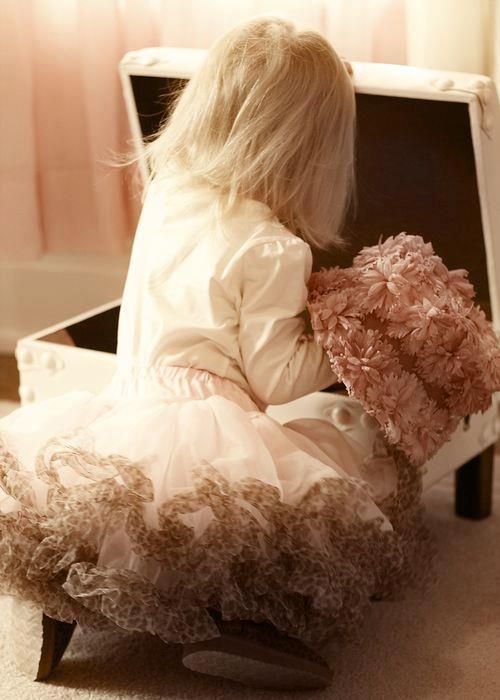
dressup

Little Emily and Her Big Soul

Little Emily will melt your heart.

Not only precociously verbal, adorable, and poised, she also has empathy, kindness, unflinching generosity, and a huge soul unconstrained by her little body.

Good for her! Good for her parents for advocating caring, recognizing empathy in their child, and sensitively giving her a way to provide a kindness. Good for Uncle Matthew, too … for first giving a haircut to the doll … (love that old trunk booster, man!)

May kindness flow so that unnecessary pain no longer finds foothold and loving actions shine like this child’s heart of gold.

http://www.youtube.com/watch?v=iwQZggdZrOo

Find A Song

She never stops singing.

She sings when she’s playing. She sings in the stroller, the high-chair, the booster, on the carpet or floor. She sings in the sandbox. She sings on the swing. She sings in bed every morning. Come evenings she’s singing to sleep. She sings in the bathtub. She sings when she’s walking. She hums with food in her mouth. She’s heard singing while deep in a dream.

She sings top chart melodies. She sings the same line for a week (drives her mama nuts, but it is what it is … all she can do is introduce another song and hope it will be picked up on a whim).

She hums nursery rhymes, sings odd jumbled phrases. She repeats parts of jingles and mangles their lines. She mashes music from a hundred places and switches song to song without missing a beat. She makes up nonsense rhymes unselfconsciously. She fills in random words as she goes.

She does not quite keep time or pitch. She does not really carry a tune.

Not one would expect her to do so. She’s not quite three-years-old, after all.

So who cares if she pauses in imperfect rhythm or raises volume in an off-pitch pipsqueak dramatic flair. She’s adorable. She lives life utterly happy. She finds music flowing in every moment and in every action. She listens, she follows, she sings.

Her humming brings smiles to the lips of strangers. It melts the hearts of loved ones. It has people raise an eyebrow in amusement and meet the eyes of others in a shared moment of delight.

She’s a wonder. In her quiet content singing she’s a teacher, too:

For can you find the music that surrounds you? Do you listen? Can you hear?

It is flying on the molecules of oxygen around us. It is weaving in and out of every atom. It bonds the flow of leaves upon the water, it jingles in the rustling of branches waiting patiently for spring. It hums the breath of every living thing.

May she never lose touch with her singing. May her inner music flow unhindered and her heartbeat always rhyme with joy. And may those who wish to keep on singing, always find their song.

singing, joy, children, naamayehuda

Missing thumb…

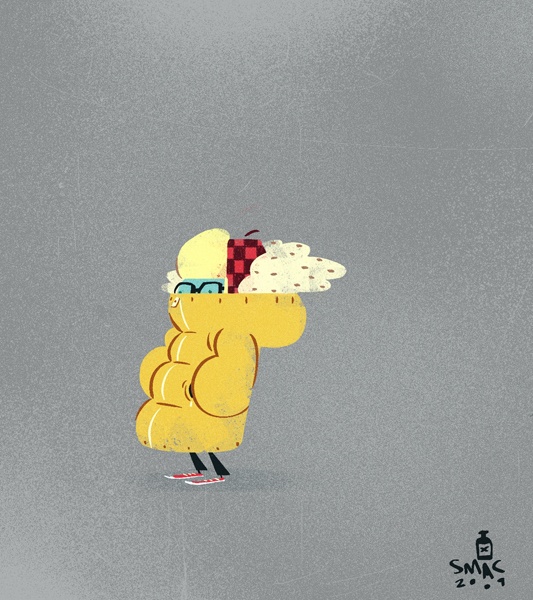
Toddler on the street–temps below freezing, and the little guy is bundled up like an onion: scarves, hat, puffy coat over hoodie and who knows what else–his little arms sticking out scarecrowishly–all you see is eyes and a tip of nose …

“Mommy, my hands went away from my body and I can’t find my thumb.”

freeze


Outside The Box

“Color inside the lines.”

“Re-write these letters.”

“Sit on your circle.”

“This is not playtime.”

“Keep to the right.”

“Climb the ladder, not the slide.”

There is a good reason why we direct children. We want them to learn to follow rules and obey instructions. We want them to listen. We need them to pay heed. After all, laws and guidelines are part of an orderly society and are important for maturation, regulation, and delaying gratification. Rules help maintain safety. They help define the difference between free play and guided study, between teamwork and individual projects, between creative writing and a summary of a given book or essay.

Rules and guidelines are good. It is healthy for them to be challenged and okay to keep rules even if a child thinks they are stupid or unnecessary (as long as we truly know why). Boundaries clarify what is and isn’t acceptable, where and when and how. There’s nothing wrong with structure. Or with following directions. Or with consequences when one chooses to do otherwise.

Structure is a good thing. So is knowing what’s expected. At least as long as those do not become a means to an end. As long a they are not ways to exact conformity and control, paths to making our adult life easier, roadblocks to creative thought, plugs for personality.

When we extend guidelines into demanding unified and unjustified conformity, we risk snuffing out individuality. It is then that we may end up raising robots, not children. It is then that we gag magic and bind wonder, imagination, awe.

When we say things such as:

“Elephants aren’t purple, color it gray.”

“You can’t draw two suns in the sky. There is only one.”

“Stripes do not go with polka dots. You’ll look funny. Go change.”

“This doesn’t look like Mommy–she has long hair, not short.”

“Don’t mix the Lego with the blocks.”

“You can’t just make up rules–this game has an instruction sheet.”

“People don’t eat olives with cookies.”

“Stop making things up.”

There is nothing wrong with purple (or rainbow) elephants, with three suns, pattern mix-and-match, people who look like aliens and aliens who look like mice, Legos with blocks and carton boxes and a Barbi perched on for a knight, with new rules for old games, and with plenty of made-up imagining.

Order has a place, as does chaos and unpredictability. We ask our children to tolerate our rules and limitations … it is only reasonable that we train ourselves to tolerate (even encourage!) theirs, wild as they may seem to be.

Let your child out of the box. You’d be amazed what children can achieve. How much they can create, plan, build, conjure, put together. How far their brilliant, fresh thinking, free mind can go!

Think Outside the Box!

Think Outside the Box!

The ‘other’ Oscar

A three-year-old, upon hearing that tonight is the “Oscars” resisted going to sleep. No matter what. Full tantrum ensued. When his parents tried to tell him that it was “not for kids,” he burst out crying, insisting that “it WAS for kids” and that it was not fair that they were going to “watch Oscar.”

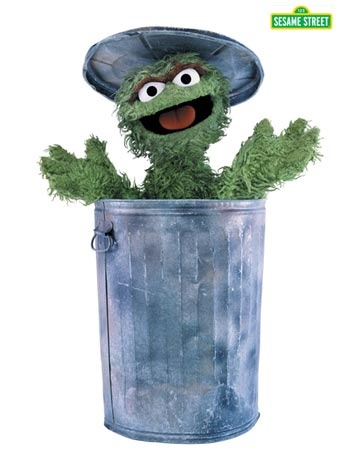
Took them a while to understand that their little guy had every right to be cross, considering that he was thinking about … well …

The ‘other’ Oscar…

oscar sesame

On the matter of chores …


chores

It’s a Speech & Language session, and as a way to make sentences involving action words and pronouns, we’re discussing chores. I ask Charlie, age five, what kind of chores he does at home; the things he does to help out.

“I no got chore!” Charlie states, proud.

“You don’t have any chores?” I ask, correcting grammar as I go.

“No!”

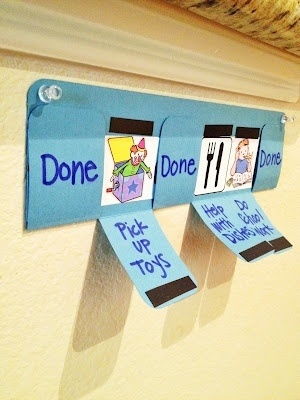
“Don’t you pick up your toys?” I prod, explaining. “That’s a chore.”

Shakes his head.

“Why not?” Many kids today don’t have as many chores as they can actually successfully master, but most are at least asked to pick up after themselves, to put their dirty laundry in the hamper, or their dishes in the sink. In Charlie’s case, I know for a fact that his mom and I had a discussion about adding routines and responsibilities, and that she told me she had initiated some chores with him, one being picking up his toys. So I’m a bit flummoxed about his response. I take a longer look at him–is that a little twinkle in his eye I see? I wait.

“Because I no do good,” he says after a pause. Yep, definitely a smirk. There’s a story there.

“What do you mean?” I ask, keeping my face neutral, though internally I’m already chuckling. Charlie’s a pip. Angel-faced and flaxen-haired he is indeed a good boy, but it would not do to underestimate his little mind’s cunning. Whatever this is, I know it’s going to be fun.

He grins. “Mommy say I clean up room I get stars,” he begins, looking at me intently to make sure I’m going to ‘go all adult’ on him or something and critic him; or worse–tattle to his mom.

“Okay … so your mommy said that you had to clean up your room, and that if you did so you would get stars,” I repeat what he said, both to give him a model of better language and to make sure that I understood him–his grammar leaves many holes in sentences and makes his speech less intelligible than should be at his age. It is why I’m seeing him in therapy. I keep my face smiling gently, not promising anything but hoping to still encourage him to spill the beans.

“I everyday put all stuff under bed,” he states victoriously.

“You put all the stuff under your bed instead of back where it belongs?” I prompt, grateful for years of perfecting the occasionally necessary poker-face.

Bigger grin now. This was no error. This was planned. “Shoes and shirt and toy and book and sister pajama and pacifiers she throwed (sic) on floor …” he pauses for emphasis, “and mommy no find thing no more and mommy say I no clean up good. No more have to.”

I can’t help but laugh. Charlie 1: Mamma 0.

Told you he’s an imp.

sweepbug

The Language of a Smile

smile

This may be cliche to some, but not to me. I’ve seen it. Many times.

Just the other week, I saw a group of children–preschoolers–play at the airport, in the space between gates with flights departing to globe spanning destinations.

Some among the handful of kids spoke different languages, and none of them knew each other until a moment prior. 

Nonetheless, there was a long wait to be had, a few empty water bottles, a ribbon to pull, and play-ready age-mates to pass the time with. So they found a way. Their giggles filled the space with the ripple of childhood joy that knows no borders, religion, nationality, language, tradition, or race.

The children babbled to each other in their own respective languages, understanding not the words but at the very least enough to go on playing, to take turns, to get a notion for a silly something that sent waves of hilarity through the lot of them …

Adults sat nearby, keeping an eye on their child with a little less wariness of each other, now that their young ones felt so at ease. After all, these were just children playing together: they were not political statements or status symbols or religious flagships. They did not carry burdens of group-mentalities or dogmas or beliefs. It was okay to just be. To share a moment. And a smile.

For the adults, too, smiled. A careful, half-lip smile, weighted by whatever notions and knowings, history and worries adults often have for those they do not know and whose language they don’t understand. A half-smile it began but it grew warmer when eyes met following a child’s antic, a cute gesture, a silly face, a giggly laugh.

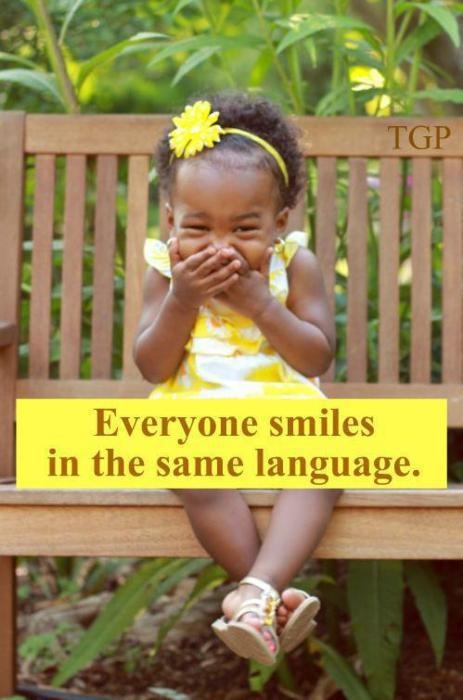
Like the children, the adults smiled the same smile in every language. Or rather, they smiled in one language–the one we all recognize and know by heart. The language of humanity. The language of a smile.