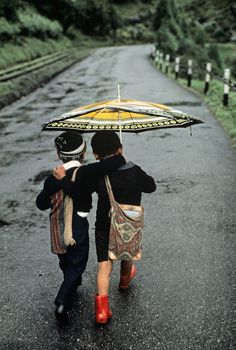
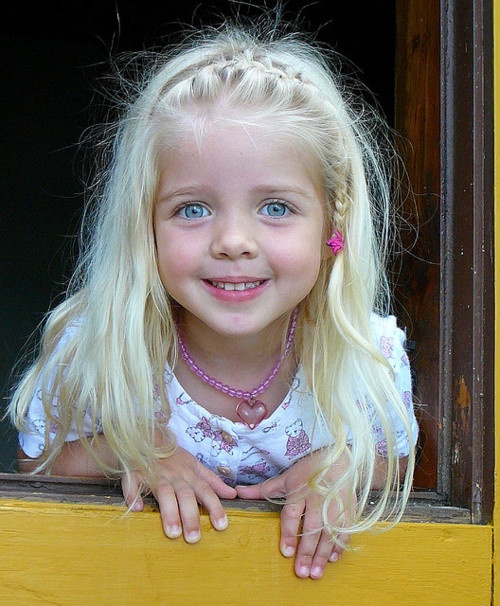
Making Friends

schoolmates

“I have a best friend!” he announced.

The little boy was a tad breathless from climbing up the stairs, but also from the excitement of the news he had to share and what it meant to him.

“You do!” I grinned. This was the first time I saw him since the summer break, and evidently this was the highlight of the boy’s current experience.

“Yes! His name is Andy and he is in my class and he has a sister and he is my best friend … my BEST-friend!” Breath, breath, grin, “we’re even the same tallness!” (delighted sigh)

“You are best friends and you are the same height?” I smiled. His joy was absolutely infectious. “This is super cool!”

I am yet to meet a child who is not delighted in friendship though it is harder to come by for some than for others. This little one had it the more challenging way. Always the smallest in his class in stature, always a tad behind in understanding, two seconds slower to get to an answer, a bit clumsy, a little late to catch a joke or ball … Remnants of the difficult beginning of his life and the deprivation that his brain endured to oxygen and possibly nutrition even before he was born; remainders of the excess of chemicals that no developing neurology should have to be exposed to. Alcohol. Narcotics. Who knows what more.

A heart the size of the Pacific, and a soul to light the universe and yet … friends did not come easy to this boy. Somehow groups formed to his exclusion. Somehow best-friends paired up without him. Most children were not unkind, just egocentric, and he was just odd enough, slow enough, different enough, to fail first-choice.

“Andy’s a total doll,” the boy’s adoptive mother confirmed. “They have been inseparable all summer. They are exactly the same height, by the way … They met at summer camp,” she paused, letting me understand. The summer day camp my little client went to was geared especially to include those who had some challenges: children whose difficulties may be invisible to most and yet no less compelling; children with sensory integration issues, with language and attention and learning and a-little-slower-on-the-uptake issues; children who often found it a little harder to keep up … or to make and keep friends.

“Yea!” the little boy jumped in, “and then he came to my class and he was new but I already know him so we are each other best-friends!”

How perfect. For once this boy–so often the follower and tag-along–was let to lead … even if he was to be a shepherd for one (for now …). For once he knew more about something or someone than others or was at the very least aware enough of it. For once he did not have to compete because the connection was already made during the summer and seamlessly continued from day-campers to schoolmates.

“Other kids can be his friends,” he noted sagely, “I have other friends, too, and some of them want to be his friends also. That’s okay. But Andy and me … we are best-friends anyway.”

Heart the size of the Pacific. Soul that lights the Universe. Eyes that twinkle to the Gods.

This little Andy, he got lucky. He got himself the best best-friend there was.

Back to School–Challenges and Hope

back to school

Back to school. Eyefuls and hearts full of children in new clothing and shiny shoes totting sparkling backpacks that are yet to be dragged, thrown, pulled, and sat on. Images of parents, some relieved for end-of-summer entertainment chores, others sorry for the loss of time together, and many more managing an alternating roller-coaster of both … Children with their own mix of dismay and anticipation: back to homework, also reconnecting with classmates and interesting new things to learn.

Back to school is a bittersweet time for most. A loss of freedom yet a gaining of routine that can often be stabilizing. A time for new beginnings and old worries. Fresh expectations and maybe the memory of disappointments. There are anxieties and stresses about friendships, best-friends, cliques, teachers, lockers, who would sit with whom in the cafeteria, fitting in. Mixed into the tetchy anticipation are all too often often nagging worries about too-difficult studies and possible overwhelm.

This time can be even more potentially stressful for children who have language-learning difficulties and past experiences of failure. For them going back to school might brings up memories of struggle and inadequacy, of confusion and all-too-frequent errors and correction. They may associate school with overwhelm and be anxious about the end of respite that summer offered. At the same time that they may still be excited about reuniting with their friends or meeting a new teacher or trying out the new school supplies in their pristine notebooks; they may also hold worry and distress that, too, needs space alongside the excitement. Mixed feelings may be difficult for these kids to explain, further adding to confusion.

Children rarely have one feeling at a time (most of us don’t, really) and the salad of emotions is frequently shifts and is difficult to tease apart. Especially so for children who have some difficulty with communication, processing, and language. It can help to let them know that it is fine to have all kinds of thoughts, worries, and emotions tumbling through their minds and bodies. Verbalizing the experience helps demystify it and helps give words to what may otherwise feel like undefined unease in the pit of little stomachs and vague distress exploding into weepy bouts and unexpected tantrums.

Back to school time can be tender, and fortunately there is much that you can do to help!

If you had not done so yet, it may be a good time for a brief ‘postmortem’ of the previous school year: What worked and what didn’t? What are they proud of? What were favorites and what was least so? What would they change if they could? What was most helpful? What would have helped? Is there anything or anyone they’d miss? Anyone they worry revisiting?

Time, too, for a heart-to-heart about this school year before it begins in earnest: What are they excited about? Does anything worry them, and if so, what it is? Who are they looking forward to meeting? Who are they not keen on seeing again? Is there anything they are not sure about? Anything about which they feel more confident? And … what do they need? How can you help?

For those for whom narrative is a challenge, it would help if you share your own back-to-school stories: The best year, the worst year, your favorites and least. What gave you joy and what causes you worry. Modeling your own mixed feelings gives permission for the child to have a mix within themselves, and provides a framework for their own descriptions. Add your thoughts and feelings about them and their new beginning: Your excitement for how much they’ve grown and your touch of sadness for the end of summer pleasures; your hopes for a good year and your wishes it would not be too stressful or too difficult.

Do not, however, criticize or bring up ultimatums. Things like “last year you did not try very hard so this year I expect you to do better …” or “you better work hard this year or there’d be no play-dates …” or “I don’t want to hear bad things from your teacher about you like I did last year …”–they wound, not help. Shame strips hope away and erodes confidence. Absolutely vent your frustrations and fears to other adults you are close to but not in the presence of the child who evokes them–you need a soft place to fall but it should not be your child who provides it for you …

No child wants to do badly in school or to misbehave. Using last-years woes (over which the child now has no control anyway) as leverage for this year demands does little to give motivation. Failure will happen–we all misstep, we all make errors, have bad days, act out sometimes, forget, neglect to follow some direction. If the child enters school afraid or disillusioned they may reach conclusions that it is not worth the try if they are already half-way into punishment …

So … be on the child’s side. Encourage. Inspire. Allow a new beginning and fresh hope and confidence. You don’t need to praise failure or ignore hardship, but you can find a way to re-frame difficulties through effort and maturation. “I know that last year was challenging at times but I am so excited to see how much you have matured this summer” and “Let us work together to make this year the best year yet both in school and at home.”

Prepare. School supplies and school clothing are important. So are arranging schedules and anticipating needs and letting the child be part of whatever decisions they can have some input for and control over. Familiarity with routines is important for any child but even more so for the child who may need help with comprehending and following cause-and-effect, sequence, and directions.

How to do it? Talk about the coming schooldays’ schedule. Point out when school starts and ends, how long things take (the school bus, getting home, homework), what other things will need to be accommodated. Discuss the merits of good sleep and healthy nutrition, negotiate (or explain) a clear a time to rise and time to go to bed, time for other tasks as needed. This arranging of routine and timetable can be made fun–life should be looked forward to and manageable–after all, there are so many amazing things to find out and adventures to be had!

To make things more concrete and minimize the need to hold all the details in memory, you can draw a visual schedule together: clocks with crucial times to follow, lists of things to do each morning and after-school, timetables for after-school activities and therapies. This preparation will be further enhanced if you review the school schedule (and any unusual things like holidays and school trips) over weekends so the child knows what’s expected and what to expect.

Make sure you leave time for the child to have unstructured play. Ensure there is some time for boredom, too. In this day and age when life is busier and schooldays long and demands overwhelming, it is difficult to fathom children given time to daydream and get bored. However, these are crucial for imagination, creativity, rest, and assimilation. Children will daydream–might as well make time for it so it does not take place in class or during homework.

Secure some time for reading and snuggles. Schedule it in. It is no less important than homework or baseball or tutoring. YOU reading TO the child, that is. Beyond the pleasure of connection and time together in story adventure, there is ample research showing it as a wonderful best way to increase their language and comprehension, to expose them to worlds beyond their own and deepen their listening. Reading to your child will enrich your connection and provide a time and place for shared relaxation as well as important opportunity for sharing what may otherwise not find a way to bubble up and be spoken of.

Preparing the school staff is helpful, too, if special accommodations or understanding are required. Consider speaking with the school ahead of time (or early in the school year) so that you limit your child needing to stand out as different or wait for accommodations. You’ll also get a sense to who the teachers are and which one may call for more teamwork and coordination than others.

Prepare yourself, as well … Not for the hardship, but for self-care. See that you not forget your own needs for good food, enough sleep, time to breathe, to exercise, to call a friend, to laugh, to cuddle. Stress is no more good for parents than it is for children …


It is a tender and exciting time, this back to school adventure of new beginnings. Even as it may awaken the frayed remnants of old worries, it offers amply opportunity for building confidence and bolstering hope. It is filled with growth and re-connection. May the cooler weather and the changing times herald soft days and brilliant colors, and may it bring on glorious learning ready to unfold.

Happy Back To School to All!

More Alike Than Different

Sharing a link below to a fabulous set of photos from around the world, of parents with their children, doing the things parents and children do best: living life, sharing smiles, bonding, comforting, playing, laughing, being, holding … loving.

The locations are almost redundant, inasmuch as they portray universality, anyway.

Because we are, all of us, far more alike than different.

May our commonality be what leads humanity going forth, and not the smallish misconception of separation. After all, what seems different is insignificant once you strip reality down to its components: care, love, connection, hope.

Click below to enjoy:

http://www.buzzfeed.com/mikespohr/incredible-photos-of-parents-from-around-the-world?bffb#48a14qb

Small Angels

beach

I was on the beach the other day, breathing in the surf and listening to the chortling of playing children, the call of gulls, the whistle of the lifeguard at too-deep-straying-swimmers, the sound of air flapping through flags and sun-umbrellas. All was calm. The late afternoon sun played hide-and-seek behind the clouds, the light strung rhythms with the shadows and made the water dance.

A woman sat nearby me. I saw her when I arrived. There was a halo of space around her, a sort of boundary that others somehow did not cross even on a fairly populated stretch of sand. She had her beach gear all in line: the chair, the sun-umbrella, the cover-up, the towel, the hat, the shades, the bottle of water in its designated armrest hollow, the requisite paperback. There should have been nothing about her to stand out from the many others on the beach, and yet there was that halo … and something amiss about it. A gloom of sort, a yearning, even. A separation that hung above her, overshadowing the light and sun. The energy of it drew my eyes to her, and I felt pulled in by her need yet uncertain how to assuage it when her posture and avoiding of eye-contact also said “leave me alone” and “don’t ask me anything.”

How does one offer support to another about whom one knows nothing and yet perceives wishes no intrusion? I’m a talkative one, and usually make easy conversation with people around me (family teens have repeatedly rolled their eyes at me for that, asking “do you have to talk to everyone …?”), but sometimes chatting feels like an intrusion and the wrong connection. So I fell back on the good thoughts alternative, sending wishes for ease. In Therapeutic Touch this is a way of using intentional compassion to gently direct some of the universal flow of life and kindness to another, with the intent of healing and restoring equilibrium in whatever way that person needs and can do at the time. It is an offering of compassion for the sake of offering it, without intrusion or attachment to the outcome of how or if it would be used.

Regardless of healing intentions and their acceptance, I hoped that whatever her heartache or process or sorrow,  that she be provided with whatever she needs for relief. If anything I offered did help, it would not be anything I was doing, anyway. Healing never is done onto another. All healing, by its very definition, is an act of making whole, of self-repair.

The surf flowed. Waves licked the sand, retreated, returned. The shadows elongated, lingered. An hour passed, dusk was arriving, some families were readying to leave, others–mostly with small ones that need to keep out of direct sun–were just arriving.

A movement caught my eye. A little guy in swim trunks to his ankles and a full head of (literally) sandy curls was traipsing purposefully on the sand. I looked up, automatically scanning for the caregiver. Protectiveness toward children is hard-wired in me and I have returned my share of wandering tykes to their minders over time. It is rarely a critic of care, really. It is not difficult to lose sight of a small person in the thick of people. Short of leashing the small ones to one’s wrist for safekeeping, all it takes is one second of head turned to tend to another child, to have a little one slip by.

No worries. This one had a watchful mama five steps behind.

I caught her eye, and we smiled at each other, connected over the shared attention to this determined little one, who not once turned to look behind him. He might have been oblivious to being followed or knew with total clarity that there were those who had his back … Maybe both. Sandy-Curls trudged on, little feet sinking in the sand with every sturdy step. He glimpsed at me as he got closer, but his eyes roamed away–I was not his source of interest, just a section of the scenery. His concentration made me smile.

It was the woman, I suddenly realized. He walked right into her ‘halo’, the several feet of space around her chair where no one–no child or adult or stray ball or gull–had yet trespassed. She looked up, surprised and not smiling but maybe curious or wondering whether he was lost, somehow, to come her way.

Oh, but he was not.

The little guy walked right up to her chair, lifted a dimpled arm, and unfurled a sandy fist. There was a shell in it. He moved his palm toward her, offering. A gift. She took it, too startled to smile. Sandy Curls nodded solemnly, then turned and walked away, toward the water and his mom. The mother and I exchanged looks, her eyebrow lifted in amusement. “He does that all the time,” she said. “Finds a shell and designates it for someone …”

He reached her and hugged her thigh and she patted his head lovingly. He looked at me then and I smiled and he grinned back, sunshine dancing in his honey-colored eyes. One hand he gave to his mother, the other he waved “Bye” at me, then turned and waved “Bye” at the woman, who still stunned waved back, now smiling–at him, at me, and his mother. Her ‘halo’ gone.

A little angel in the sand.


beach toes

For The Children

children5

For the children,

Wherever they were born and whoever they were born to

Whichever God their caregivers pray to

Whichever views they hold.

For the children,

Who hold our only future.

For the children,

Who do not know hate until its shown.

For the children,

Let us not lose hope.

For the children,

Let there be no more war, no terror, no annihilation.

For the children,

Let trafficking be gone.

For the children,

Let loss be not of own man’s hand.

For the children,

Let there be kindness

For all human kind.

For the children,

Let us find the threads that weave between us

To let them grow free, let them grow loved, let them grow strong.

children3children9children10children8children4children7

Being sensitive: A blessing or a curse?


In her great blog Adele and the Penguin, Adele Ryan McDowell posts about all manner of lovelies (well worth peeking in!). Her recent post is about sensitivity, about those of us who may be labeled “too sensitive” or “highly sensitive people.”

Adele and the Penguin

http://adeleandthepenguin.com/is-being-sensitive-a-blessing-or-a-curse/

Reading it made me think–and not for the first time (Adele’s blog posts do that–they touch the everyday in novel and eye-opening and heart-opening ways).


The highly-sensitive people thing? Yep. I can totally relate …

So can many of my little clients.

Personally I don’t see being sensitive as a bad thing. Like any quality, I think the ability itself is neutral. It is how we react to it, what we do with it, how it affects our lives, and whether it adds or detracts from the person we are and can become, that is the most important aspect of it to me.

There seems to be more good than bad in sensitivity. Creative people are often sensitive. Artists, writers, thinkers, inventors. I certainly see more positive than negative in the more sensitive children who come to see me. They perceive the world minutely, they read people amazingly well (even if they don’t always know how to verbalize it), they feel deeply.

They are also, all too often, overwhelmed. There is too much, everything, everywhere, from everyone. In reaction, they snail in, lash out, fidget, shut down, alternate being acutely perceptive and deeply numbed out. They can have spectacular tantrums, meltdowns for seemingly nonsensical slights, go from happy to weepy in a blink of an eye. They get all kinds of acronym diagnoses, sometimes rightfully, often not … They can walk through the days feeling raw, exposed, vulnerable, tender, empathetic, perceptive, disorganized and evocative.

Emotional regulation is a must for all children to learn. Without ability to do so and find a place of calm attention–they will struggle at school, in public, in getting along. All caregivers of children are tasked with the teaching and modeling of emotional regulation to the children in their lives. It is even more crucial for highly-sensitive children … who can tax even the most patient caregiver. The sensitive children need more help, much more help, to learn to regulate, to know when they need to take a break, to recognize the beginning of overwhelm and be able to apply a tool for grounding.

They need more time. To play. To rest. To think. To cuddle. To get bored. To dream. To get used to new things. To gather their courage to try. It is a luxury of time all too many of them do not get these days, in our modern world that does not make it easy to be sensitive.

Our world–and within it the education system and children’s schedules–is currently calibrated for very low sensitivity: there is information everywhere and increased pace galore. Blinking screens, beeping car horns and phone messages, jingles of all manners, multi-sensory bombardment, loud, fast, multitasking everywhere. There is stimulation all the time. Every. Where.

Wake up and rush to school, bend over homework in the car to complete what didn’t get done the night before because there was a birthday party and soccer practice. After a long day at school in a class of 30 and no recess or playground because it rained and a two hour assembly in a noisy auditorium followed by lunch in an equally ruckus lunchroom, grab your bag and gobble down dinner on the way from dance to chess before you go home and try to do homework with the TV in the background, someone angry with tech-support on the phone, the vacuum and the dishwasher rumbling along. Get a math problem wrong and dissolve in tears onto a kicking puddle of misery on the floor. It is not the math problem. It is the everything and that little bump of difficulty simply toppled tolerance. Everyday stuff mushrooming to a thunderstorm.

Sometimes I think that sensitive people may be better calibrated for slower life … for long walks from place to place, bigger nature around them, more connection with animals (and their highly regulating energies), more connection to the earth and its calming breath.

It is not how most children grow up anymore, and it is not about going back to lack of modernity (there’s much to be said for running water, electricity, and even the Internet …). However, it is about helping children–especially sensitive children–learn how to stop, pause, breathe, step away, maintain boundaries.

All children need that. Sensitive children need it even more. Their drama-streak, their tantrums, their meltdowns, their whining, begging, shutting-down are all their ways of communicating to us that they need our help to manage. That they are feeling raw and need a hug, a pause, a hand.

What to do?

First what not to do … It is not about ‘helping them grow thick skin’ or expecting them to ‘suck it up’ or ‘toughen up.’ Shame has yet to heal any sensitivity. Expecting one to be what they are not will not resolve anything other than create a distance and thicker pain, not skin.

What does work?

Try to keep things simple. Establish routines and try to maintain them reasonably consistent (we’re not talking OCD here, just predictability). Make time for quiet. At the very least relegate a certain space in the house that is off-screens: a place to read, do homework, dream. Be aware of competition–of stimuli, that is–if there is much background noise you cannot control, consider noise-canceling earphones for the child to wear when they need to concentrate. Keep it comfortable: temperature and clothing, yes, but also tone of voice and your own emotional regulation. Sensitive kids pick up on your state of mind and internalize it. It filters in. It gets under their skin. They are too young to manage your adult feelings for you … and they already have plenty of their own. Keep it soothing: quiet cuddling, snuggling together with a book or a few precious moments at the end of day, offer comfort when they are distraught. Let them know you see them, hear them, feel for their discomfort. It is real.

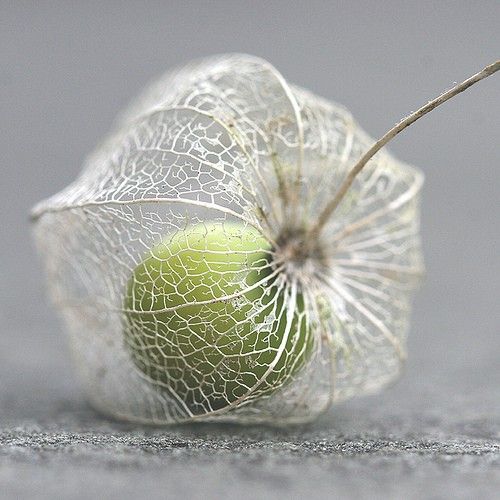
Sensitivity is like a fragile gift. It is precious, it is beautiful, it can light up the room and make for excellent potential. It is also delicate and needs some special care. It calls for careful holding in times of transition. It needs a very safe space, for sure.

Have no worries, if you treat your child’s sensitivity (and yours, if you need to) with care and … yes, sensitivity … you will not spoil them. To the contrary, you will teach them how to control and modulate their hyper-acute-perceptions. They will learn from your attuned care how to keep aware without drowning in information, how to keep empathetic without taking on other people’s needs, how to keep their senses vibrating brilliantly without becoming blinded or overwrought. They will learn from you to take time to breathe, to pause, to consider. They will recognize their own cues and clues and find ways to respond to them healthily.

They will blossom like the rare delicate beings that they are. Come fully wonderfully into their own. Sensitivity seen, understood, utilized, known.
delicate2


Swing high

To all the little girls on beaches everywhere …

Inspired by the beatific smile of one …

Remembered with much fondness today.


swing beach

Swing high.

Touch the sky.

Feel the sand 

Rushing by.

Sense the surf

Humming forth.

Hear the waves

Singing froth.

Swing on high.

To the sky.

Sun and cloud

Streaming by.

Move your heart

To the pace,

Of your legs’

Aerial race.

Swing up high.

Touch the sky.

My oh my.

Breathe and fly.

“It’s not a gift, it’s a mirror!”

Sharing this You Tube video for cuteness sake … and for the amazing little people kids are, and their language abilities, intonation, explanation, and social skills, even at that age.

She has it all figured out (though I do wonder if that mirror really did change hands come Mother’s Day …).

As for the title of the video–I disagree. I think you CAN very much trust a two-year-old! You can trust them to tell it like it is! Enjoy!

A Father’s Day Quest

hand in hand

“Everyone has a father, right?”

The question came from a little boy. Age 7. A usually cheerful child. Subdued this time.

“What do you think?” (my standard response to children’s queries, figuring they have a working hypothesis already)

“I guess. Sort of. But not exactly.”

“Hmm … want to say more about it?”

Fidget, spin a top, twirl it, drop it, lean precariously out of the chair to get it, spin again. “I think you need one. To get born.”

“Yes, that’s generally true.” I pause. I sense there’s more.

“But I think you also need one to grow up better. Kind of. I’m not sure. Only if you have a good dad, though.”

“That makes sense.”

He looks up at me, tolerant of my very vague responses. I am certainly capable of being more verbose, and he knows it. However, my sense is that he is seeking an audience to bounce ideas off of, more than he wants my actual input. At least now.

He plays with the top another minute. Tries spinning it on the handle, upside down. It falls. He frowns. “I don’t like Father’s Day.”

“I hear you. I understand. It is a great day for many but it can also be a tough day for some. Can be confusing, too.”

He nods. “Yeah …”

Fidget, spin the top, drop it, pick it up. “My mom says that my dad is the kind of person people warn their kids about.”

I know … My heart breaks for him. It should not be reality for anyone.

“I’m so so sorry.”

Words don’t quite suffice, and yet I hope he feels it comes from true compassion, that he hears I get it (even if he doesn’t need to know how well I understand).

The father lost custody because of “serious issues” that led to the mother’s sole custody for “the child’s safety.” The boy’s dad spent time–or still may be–in jail. Something to do with child pornography. The mother got custody when the boy was still an infant and he doesn’t remember his dad. The mother reassures me that the boy had been “protected all along.” A warm and caring mother, she works hard to not vilify the boy’s father even as she tries to ensure he understands enough about why he does not see his dad and most of all that it does not have to do with him not being worthy of a father’s love.

He is a happy child overall, but not without a loss. Father’s Day can be tough.

He twirls the ornate wooden top between his fingers. “Sometimes I wish I had a better dad.” His voice is matter of fact.

“I know. I wish you did, too.”

“My mom says there are many kinds of father people. That they don’t even have to be your real dad to be a little like a dad.”

I love that mom! “She’s very right. I agree with that.”

His nod is reassured. He brightens some.

“My uncle is a little bit like my dad.” His mother’s younger brother. I’ve heard the boy wax poetic about this uncle before: He idolizes the man. His eyes light up.

“He’s already in my family, right? So maybe this makes him even more like he could be sort of my dad. I mean, not really really, but in my heart …”


You betcha’, little man.

Your heart is an excellent place to collect fathering. You deserve a dad as fully as anyone!

father and child


On this Father’s day:

To you who are plentifully fathered–may it be a Father’s Day to celebrate the gift of love. The miracle of true parenthood.

And to you who seek a father. Who lost theirs. Whose fathers lost their way or lost their lives or lost their soul–may you know a sense of fathering regardless. May you recognize its quality and accept its salve into your lives. Be someone’s prince or princess. May you find the fatherhood that grows within you: the knowledge of strength, the acknowledgement of protection, of strong arms, stronger heart.


lion and cub1

Spilling the Beans …

idiom

I heard them arguing all the way up the stairs. The mom sounded consoling but confused. The little boy sounded angry, hurt.

“Why you lie?” he demanded.

“I don’t know what you’re talking about!” she countered, frustrated.

“You not suppose to lie!”

“I didn’t … oh, just drop it, will you?”

“Drop what?”

“Nothing, okay. Just climb up, we’re late already …”

Two frowning faces, one a smaller version of the other showed up at my door. The little guy took one look at his mother, letting her know that he was not done with this discussion, and announced to me: “My mommy lied!”

She shook her head, sighed.

“Let’s go in and sit down and you’ll tell me about it,” I suggested.

The story unfolded: there was a party planned. A surprise birthday party for the dad, and both the boy and his older sister were in on the plans. All very exciting.

“Actually, initially I didn’t want David to know,” the mother interjected, “I worried that he would not be able to keep it secret … but he found out, and of course he went right ahead and told my husband …”

Little David gave her a withering look. “I didn’t mean to, it slip out,” he noted, vindicated by fate. He then turned to me, righteously riled, “and anyway, my mommy lied!”

“What did I lie about? What did I say?” the mother was clearly tired of this back and forth. She looked at me, “he’s been at it since we left the house. I didn’t lie to him about anything. It’s been really ridiculous.”

“You say I spilling things and I didn’t! I was careful!”

“What did your mom say you spilled, David?” I asked, slightly amused by the exchange and the boy’s insistence, and by a suspicion that was already forming in my mind …

“Beads. She say I spill the beads. I didn’t!”

“The BEANS,” the mother corrected.

“I don’t even LIKE beans,” he snapped and rolled his eyes, and I struggled to keep a straight face.

“It’s an expression, David. To spill the beans, means to tell a secret … maybe your mom was saying that about you telling your dad about the birthday party?”

The little boy glared at me suspiciously–one never knows when adults gang up to take another adult’s side–then looked back and forth from his mom’s vigorous nodding to me. I smiled.

“But why she lie?” his voice was hesitant now. He knew that there was something he had missed.

“She didn’t lie. She used an expression. Remember when we were talking about it ‘raining cats and dogs’ when it actually meant that it was raining really hard? How it was a silly way to say that it was raining hard but it did not mean that dogs and cats were REALLY raining on us? How ‘raining cats and dogs’ is an expression for strong rain?”

A nod.

“Or when we talked about ‘giving a hand’ meaning helping someone, and how a ‘couch potato’ is someone who sits around too much watching TV and doesn’t go outside and play and move around?”

Another nod then an eyebrow started going up. A dawning. “Like ‘heart of gold’ thing being nice?”

“Exactly!”

“Oh,” he pondered. Then his lip curled up in distaste. “But why spill beans? Can’t I spill something else? I HATE beans!”

spilled the beans