Not This Way!

She doesn’t want the blue dress. She wants the red one, with the sparkles. Yes, from the laundry. Even dirty. Not wait for tomorrow. Today.

She doesn’t want socks. Her feet won’t be cold. Not even if its snowing. No socks. She doesn’t even like socks. Ever. Never. Not even the Minnie Mouse ones from Granny … well … she likes those “a little” … “sometimes” … but not today. She doesn’t like any socks today.

She doesn’t want a ponytail. Or pigtails. Pigtails are “stupid.” She wants braids. Four of them. No, not this way! She wants one big one “like Elsa” and three “baby ones.” Because.

She doesn’t want milk in her cereal. She wants chocolate milk. In a cup. With a straw. Not the green straw. The pink one. And three strawberries. Not four. Three. “Not that one. These ones.”

Her momma sighs.

“You are being difficult today.”

The girl gives a shrug, then a side glance. A giggle escapes.

The mom raises an eyebrow. She is not amused.

The child smiles enigmatically, twirls her four braids (one big like Elsa’s and three baby ones).

“So what’s this all about?” Mom asks, eyes narrowed but curious.

“It’s Ben’s fault.”

“Ben!?” The mother shakes her head. The older brother is ten-going-on-fifteen and goodness knows these two don’t always get along, but Ben had left for school before Miss Au Contraire here as much as opened an eye. “How can it be Ben’s fault?”

“Remember yesterday?” little eyebrow mirrors the parent’s, challenging. “Ben said I ‘such a terrible critic.’ So I’m practicing. To get better.”


stubborn

pinterest.com/pin/339810734368459869/


For The Daily Post

Do It Anyway

He has stage fright. The real deal.

Social phobia with all the trimmings.

Speaking in front of anyone renders him paralyzed with irrational but no less numbing terror.

Talking to a store clerk makes him sweat.

Let alone giving a speech in front of assembly.

The whole school. Faculty, too.

He trembles at the thought.

“You don’t have to do this.” His mother. She is distressed by his distress. Protective.

“But I do,” he says.

He’s scared.

Determined, too.

He asks me to teach him how “to speak even when my throat gets stuck.”

We work on it. On breath, on visualizing, on rhythm and on parsing and on tone and pitch and breath again. He practices. With me, at the mirror, with family, with a good friend.

He knows the words by heart. He wrote them. A speech about things that oh-so-matter and are so very needing-to-be-said.

“The words come into my dreams,” he tells me. “Is that weird?”

I shrug. I don’t think so. “What do you think?”

He smiles shyly. “I think they want me not to be afraid. The words. Like we are friends now, words and me.”


The day comes.

He calls me in the evening.

“I threw up twice and I trembled like crazy,” he says, but his voice is giddy. “Then I thought about the words. My words … like friends. The beads on the necklace like we practiced … and I could breathe … I was still scared but I did it anyway!”


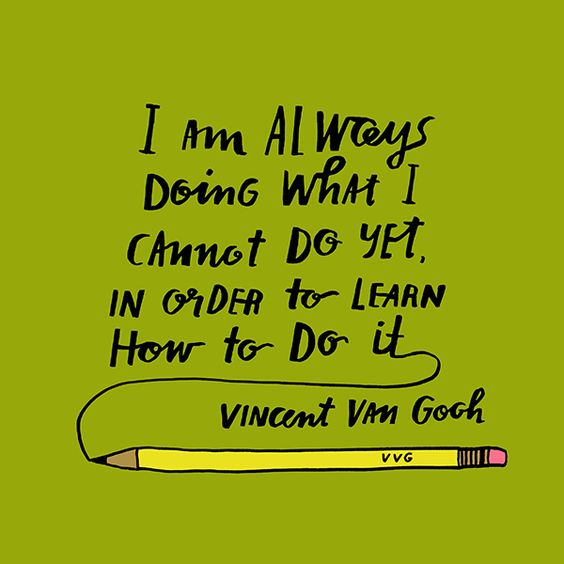
learn-how-vvg

I Know You!

As told to me by Mom-of-Three-Under-Six:

“So there we were, on our way to what feels to me like the 100th birthday party of the school year, and possibly the real cause for childhood obesity driven by absolute overload of pizza, cupcakes, sweets and other junk food … (I’m almost — almost — considering serving celery sticks, kale-chips, and wheatgrass juice in my son’s upcoming birthday. What stops me is knowing he’ll need about a decade in therapy to deal with the untimely exodus of little feet and the almost guaranteed desert of future RSVPs to his parties …).

In any event, there we  were, cranky baby squirmy in the carrier and the hand of a squirmy already-hyper-on-the-thought-of-sugar preschooler slipping in and out of mine. When we finally arrive, the door is opened by the somewhat stooped and Old-Country dressed grandma (or great-great-grand …) of the birthday boy.

My boy takes one look at her and announces, full lungs: ‘I know you! You are Nanny McPhee!!’

I think I need about a decade of therapy.”


nanny-mcphee


For The Daily Post

Ten Day!

ten-from-etsy

Photo: Etsy


She’s turning ten TODAY!

No more single digits. A two-number age from now till the foreseeable horizon of life.

She’s excited.

She is giddy.

She is a tad hesitant about transferring into a group that possibly puts her in the same category with ‘old people’ like her Momma and Papa, or me, or even — gasp — her Nana, whom she loves but is oh-boy-so-very-old …

She is turning ten TODAY.

A birthday like none prior. No turning back now that she takes the one-way step into two-digit life.

She’s shiny-eyed.

Happy with a chance of maybe.

Her mother is a little teary. “She’s growing up. I’m glad and I am sad …”

She’s turning ten TODAY.

A cake with two handfuls of  candles. A dinner of her choice. A celebration. A row of little gifts. Perhaps one for every year.

She’s pleased.

She’s shy.

She is a little frightened.

“What if I don’t like being older?”

I smile at her sweet honesty.

Her mother sighs. “… Welcome to the club.”

Her Whole Life in a Plastic Bag

three-clock-bears

Photo: threeoclockbears.com


Tamina attended first-grade in a Harlem public school. She was homeless most of that year. Her mother lost the apartment after she lost her job. Sometimes they stayed with relatives but mostly Tamina, her mother and her sister slept in shelters where they could never stay very long. They carried their belongings in thick black garbage bags, protection from the weather. Tamina used to have a teddy bear, but it got left in a shelter and her mother was ‘too tired’ to go back for it. Tamina never got it back.

Tamina had very little. Other children had a home, their own bed, place for their stuff, more stuff. So she stole. Mostly small things: erasers, crayons, hair-pins. Things she could hide in her pockets and later in her black garbage bag. If confronted, Tamina would furiously demand it “was always hers.” I suspected she often believed it and wondered if some items resembled things she once had and owning them was a link to a time when life was less overwhelming. Beyond an overall language delay, Tamina seemed confused about concepts like the difference between possessing and owning: in some shelters cots were ‘first-come-first-serve’ and while you had it, it was ‘yours’ even if it did not remain so for long. You had to ‘watch’ your stuff or have it disappear. Why could an unattended eraser not be ‘hers’?

 While children often crave things that are not theirs, Tamina’s stealing was possibly about unmet needs. Her mother was “always mad and cussing” and Tamina could not rely on her for support. Children whose ‘hungers’ are neglected seek other ways: become secretive, dissociate, numb themselves with substances, steal, hoard. These behaviors often further distance them from care and social support, when they in fact communicate confusion, loneliness, anger, loss, and shame.

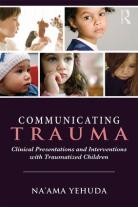
[The above is an excerpt from “Communicating Trauma” Routledge, 2015]

Communicating Trauma-Yehuda

Homelessness does not necessarily mean neglect, but the realities and causes of homelessness pose many risks, especially to children. In addition to loss and grief, there are increased health and safety risks, along with reduced access to care. Children without homes suffer insecurity, and their caregivers may be too overwhelmed to attend to their emotional needs. Depression, posttraumatic stress, illness, disability, poverty, domestic violence and other life-crises are all too common among parents of homeless children. Any one of these factors can overwhelm a parent and reduce their availability, let alone when such factors combine.

Having no place to call home–in all the forms it takes–can be distressing and occupying. It leaves children anxious and unavailable for learning. Homeless children are often wary and worried, angry or withdrawn. They are three times as likely to require special-education, four times as likely to drop out of school, and almost nine times as likely to repeat grades.

Homelessness devastates. It is crucial we work together to understand it and resolve it as well as support families in crisis and address risk factors before they reach a loss of home, hearth, and heart.


“I tried and I tried”

Everything is harder for this little one.

Her body doesn’t quite know how to calm itself. Her hands don’t always know the extent of their reach. She trips. She falls. She bumps into. She upsets the cup, the plate, the markers on the desk. It takes her longer to climb up a flight of stairs. She needs help tackling them going down. Her mouth doesn’t quite make sounds as easily as others’ can: words come out jumbled, not always the right sounds or meaning, often in a mismatched grammar and word order. Food gets messy. Swallowing’s tricky. She gags. She coughs.

But she tries.

Oh, boy, she tries.

And tries.

And tries.

She’s a perfectionist, too.

Indomitable.

Determination personified.

Everything requires repetition. Still she tries again. Again. Again. She shakes her head at any suggestion she accept the unperfected.

“I do more time,” she insists, sometimes in tears but with no less conviction.

And she does. ‘More time’ and time again and then again and then some.

And slowly, sometimes out of the mist of helpless frustration and gritted teeth and hugs and endless patience — she succeeds.

A circle that closes. A list of items in a category. An idea expressed. A multisyllabic word with no sounds missing. A full sentence with all words in attendance. A coat pulled on without assistance. A triangle traced. A tower of blocks. A pattern of beads. A banana that peels without the insides getting mashed. A sip of apple juice from an unaided cup, no spill, no cough.

“I tried and I tried,” she beams. Each time anew. Sometimes with tears still glistening from the last attempt that didn’t quite get up to her own standards. Each time there’s fire in her eyes.

“I told you I can!”

Indeed you had.

Indeed you can.

Hats off, little one.

Every. Single. Time.

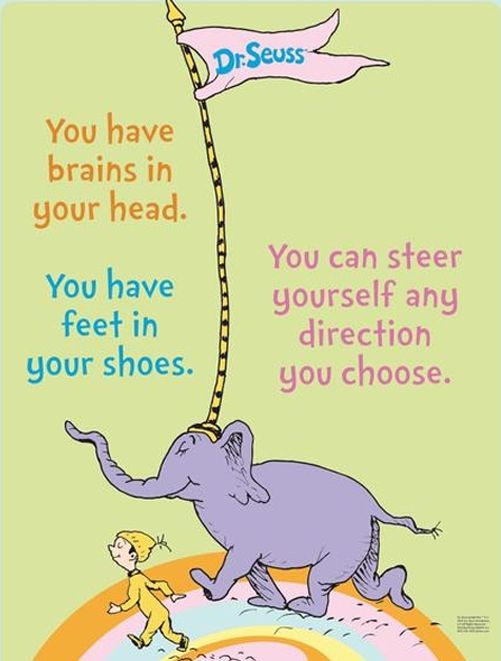
drseuss-determination


For The Daily Post


Overworked, Underplayed

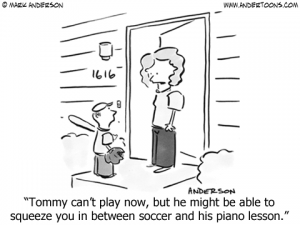
overscheduled

The mom consulted her phone’s calendar.

“She has soccer on Mondays right after school, then she has a pre-reading tutor. Tuesday she has piano after school but I can rush her to you if you have time for a session at 5:30 or so? She’ll be a little tired and maybe hungry but I can give her dinner in the car on the way here or something. Oh, actually, next month she’ll start rehearsals for her recital. Thursdays are really difficult because she has gymnastics and then they have rehearsal training, so she won’t be able to do anything before 6pm. Maybe that’s a bit too late? Fridays she has another pre-reading class. I really don’t want her falling behind. Maybe I can bring her to you after … though she has some playdates scheduled next month. Saturday she does ice-skating. …” Looked up. Sighed, “Do you work Sundays?”

The little girl is not yet five.


overscheduled-300x225

For The Daily Post


Tom’s Secret

The animation video below was chosen to lead the European Day on the Protection of Children against Sexual Exploitation and Sexual Abuse which is held on November 18.

The five-minute video had been originally launched in Hebrew, and was since translated to Russian, English, and French. It guides parents, teachers, and other caregivers in ways to identify and react to cases of sexual assault and abuse in children. It has been incorporated into learning programs in Europe, Asia, and the United States.

The clip portrays with sensitivity and clarity the reactions children often have to sexual abuse: dissociation, denial, secrecy, fear, worry, shame, and more. It also shows the behaviors children might display and which should be treated as red flags: reluctance to do things or go places they might’ve enjoyed before, irritability, sadness, refusal, lack of appetite, bed-wetting, physical complaints, etc. While these may not be specific to sexual abuse, they are often representation of distress, and need attending to.

It is a fact that most children who endure sexual abuse don’t tell. At least not directly.

It is also a fact that many parents/teachers/caregivers don’t know when to ask or how to ask or what to do or say if they find out something did take place. They may not understand how a child can seem okay, even when they are internally not okay. Even those who want to help, may not know how to go about it.

This video offers a good start.

Watch it. Share it widely.


For the Hebrew version, and more information (in Hebrew) about sexual abuse of children, and ways to identify and respond to red-flags, click on the link to an article below:

http://www.ynet.co.il/articles/0,7340,L-4880054,00.html


You going to have to wait…

stubborn
photo: pinterest.com/pin/339810734368459869/


She didn’t want to wait.

She wanted a treat NOW. Not later. Not after she finished her work. Not after session. Not after dinner.

No waiting.

NOW!

She was NOT going to move, or sit, or come, or go, or climb the stairs, or listen, or ANYTHING until she got her treat.

Which she wanted NOW.

No waiting.

Making her wait was “mean.” It was “not fair” and “not nice.”

She wasn’t having any of it.

None of her mom’s cajoling. None of her mom’s reasoning. None of her mom’s threats of consequence or punishment or loss of playdate or no TV or no iPad or no … something … unless …

I heard them argue. They were still at the bottom of the stairs. Two frustrated voices. Volume rising.

I could visualize the little girl. Arms crossed and foot stamping and lips pursed out in a pout, jaw forward in clear dismay and stubborn determination. I’d seen her do the ‘you’re not gonna make me’ before.

“Upstairs!” The mom ordered, fed up. “Now!”

“You not waiting EITHER,” the child accused, sounding vindicated. “You say go upstairs NOW. I saying go to the store NOW. I want my treat NOW!”

“Don’t be cheeky!” Mom’s voice went up an octave.

“YOU not be cheeky!”

This was devolving. I walked downstairs toward them.

Red faces, one large, one smaller, looked up at me. One in exasperation, one in challenge and a touch of “yeah … so what are you gonna do about it?”

I smiled. “Seems like I’m the one whose waiting…”

The child frowned. This didn’t quite fit her script.

“I’m not going!” she huffed.

“She won’t come up,” the mom accused.

“I want a treat NOW!” the little one dug her heels.

“Oh boy,” I lowered myself onto one of the stairs. “Mind if I sit down? Seems like you’re a little stuck. Can you tell me what’s going on?”

“She won’t get me my treat/She won’t cooperate” They spoke together.

“Are you hungry?” I asked the girl.

She regarded me suspiciously. She knew me well enough .

I raised an eyebrow in question.

“Yeah!” she raised her chin accusingly. “And mommy said we can go to the store and get a treat and now she say go up NOW. I’m not!”

“Hmm …”

“There was lots of traffic,” the mom’s chin was only slightly less raised… “I told her if there’s a lot of traffic we may not have time to stop at the store.” She turned to the girl, “maybe next time you get your stuff faster so we won’t leave so late …”

The child’s face grew angrier. Couldn’t totally blame her … this was a bit low …

“Traffic can be tough in the city,” I intervened. “We can think together about some better planning for next time but now … we have a hungry child and no snack. Good thing I have some snacks upstairs. Shall we?” I got up and offered a hand to the child, eyed the mother meaningfully.

She understood. Stayed silent.

The child narrowed her eyes at me. “What treats you have?”

Bargaining. We’re making progress.

“I don’t know. I’ll have to check upstairs. Let’s go see.”

Eyes still narrow. “What if I don’t like them?”

“I guess we’ll have to see.” (I get really boring when I’m not going to say much more…)

“But I still get a treat after.” This was demand, not query.

“This is between mommy and you, but for now, lets get something into your belly so it isn’t hungry.” I moved my arm closer and she took it. We began climbing, mom trailing a few steps behind.

“Na’ama says I can still have my treat later,” the child swiveled her head back and declared to her mother. A little victoriously.

“This is between you and mommy,” I repeated, not quite able to keep the amusement out of my voice.

“Mommy promised me a treat,” she insisted, but her legs were still climbing so I knew she was only half-combative now, making conversation.

“Yes, you told me. Too bad there was so much traffic.”

“Yeah …”

“I don’t like traffic much.”

“Me too,” she sighed.

“Me three…” Mom piped up from behind.

The child stopped, turned, giggled. “That’s not how you say it!”

“I guess Na’ama will have to help me say things better?” Mom smiled back.

“Yeah!” she liked that. She climbed energetically up a few more stairs. “But …,” she paused again. “You going to have to wait …”


New Beginning: Habit & Opportunity

opportunity

“He still won’t read.”

The mother’s voice held disappointment and frustration. Her son struggles in school and was required by teachers to read every day over the summer, but hadn’t.

“I did read!” he protested, pouted. Hurt. “I read two whole books!”

“Only because we made you read!” She retorted and turned to me. “Every day is a new excuse. He’s too tired, the book is boring, it’s too hard, he’ll read later, he hates reading, it is stupid … He’ll do anything to avoid it.”

He stomped to the chair. Sat dejectedly. I patted his arm. “I’m glad you read two whole books,” I said. “Which ones?”

He brightened. Threw a “you see?!” look at his mom, and told me. We discussed what he liked about the stories, what he didn’t. What was hard, what wasn’t. We then went over a list of possible titles to follow.

I scheduled a time to speak with the mom. Her frustrations need venting, and she needs solutions, but we can talk about her disappointment without him needing to be present.

♦♦♦

Every child is different but the complaint is not unique. Children and parents rarely battle over things that are fun and easy. It is the stuff that’s hard, confusing, boring, tedious, or appears to be of import to one side but feels less so to the other … where lines get drawn in the sand and stubborn frustration ensues.

Parents cajole. They threaten. They withhold privileges. They might use shame as ‘motivator’ by characterizing the child as lazy or ungrateful, oppositional, immature …

Not surprisingly, these tactics rarely work to ‘motivate’ learning. Nor do they solve whatever problem underlies a child’s reluctance to read: difficulty decoding, difficulty comprehending, delays in language and learning, issues with processing and retrieval, attention issues, stress and overwhelm …

A new school year is seen as opportunity for new ways of learning, new progress, new habits. Parents expect their children to enter school with gusto after a summer’s break and to give it their all. They often expect improvement of whatever issues may have been present the year prior. They verbally and otherwise communicate their expectation that the child prove himself or herself as mature and hardworking, and overcome whatever habits held them back.

A new grade and new beginning indeed offers much new opportunity for doing things differently. However, for that to happen we cannot fall back on failed methods or less-than-helpful habits. If children knew to do better on their own, they would do so already. No child wants to fail. No child enjoys the negative attention of reproach if they can get the positive attention of pride and praise.

♦♦♦

“So what am I supposed to do?” the mother asked when we met. Exasperated.

“You did the best you could last year, and this year we’ll have to work together to do better,” I replied.

She was taken aback. She didn’t expect me to include her in the assessment of last year’s difficulties …

I did not mean blame, but I did mean accountability. Parents often do the best they know, but they are often overextended themselves, and some don’t quite follow through. They may want to follow suggestions but only do so sporadically, or expect the child to take full responsibility for remembering new tasks that they themselves forget … then feel pressed to blame or require … They may get discouraged at the first sign of difficulty (not unlike the child, maybe …) and not continue to work toward new habits when the implementation hits a bump or scheduling needs to be adjusted. They may balk at taking on more responsibility in a life that may already feel too stressful (again, not unlike the child…).

Parents deserve guidance. Shame does not work any better on adults than it does on children … Parents can use encouragement, not blame. Many can benefit from reminders and a pathway to setting new habits. It is not a weakness or poor parenting to make errors or get frustrated or not follow through. People aren’t perfect. We all need help in some areas.

♦♦♦

For this boy, now in mid-grades, and often argumentative and quite fed up with “everything being too difficult”–new habits will (hopefully) include less fighting and more working together, less demand and more playfulness, less critic and more problem solving, less rigidity and more predictability, less shaming and more understanding.

Practically speaking?

  • Setting a weekly schedule where one of the parents reads TO him every night or almost every night (on the benefits of reading check: How early? For how long? ).
  • Separating the child’s own reading for decoding and school, from the parents reading TO him for literary exposure and pleasure.
  • Taking care to not make a parent’s reading time an opportunity for ‘testing’ vocabulary or memory about the story (talking about the story is fabulous, quizzing is not).
  • For books mandatory for school (but too difficult for the child’s reading level), using audio books as accompaniment to printed/electronic book. This helps the child follow the written word and assist him with decoding and comprehension.
  • Placing reminders for reading-time and having a timer he can set to ensure he is reading long enough and can do this independently.
  • Scheduling daily reading (for school and book logs) at a time that is realistic, rather than opportunistic.
  • Providing assistance with homework and/or test preparation, so that the child is not left to manage what is too difficult on his own, and ends up too stressed and exhausted to optimally process information.
  • Incorporating narrative into the day to day and offering modeling of narrative instead of requiring the child to constantly answer questions.
  • Offering a model for making time for reading. Adults who read are more likely to have children who enjoy reading.
  • Setting the child up for success, not failure: rather than focusing on a day he didn’t read or what he isn’t doing well yet, offer praise when he does do his reading without arguing; remind the child what worked before and what he can try to do again; offer solutions, not reprimand.

♦♦♦

In this new school year, what old and less than desirable habits can your child replace with brand new opportunity?

What steps can you take to help?

If you need help to formulate a plan–it is okay to ask for it. That, too, is an opportunity.

reading-extinction-buzzfeed

from Buzzfeed.com