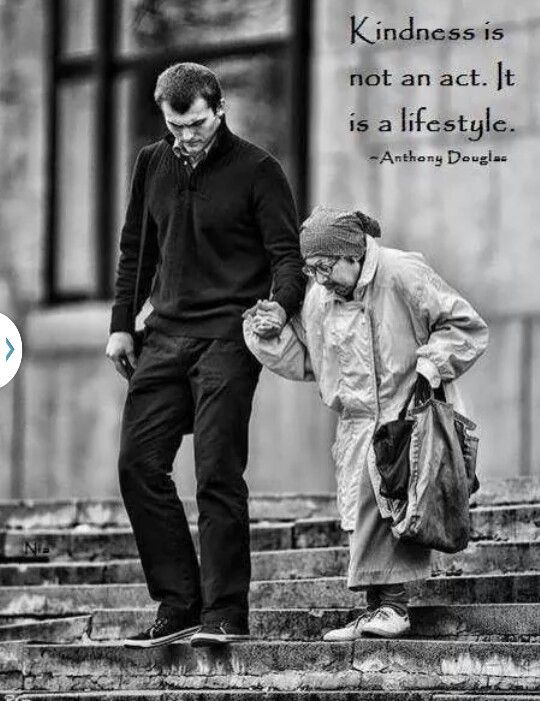
A lifestyle of Kindness

kindness1

A lifestyle of kindness.

I love that.

If more of us take it on; just imagine the world we would be living in,

the ripples of compassion we will be creating.

A lifestyle of kindness.

Can you see it growing?

Can you feel the depth of healing it can cultivate.

A lifestyle of kindness.

Oh let’s.

Let’s!

Half-Angel

What do you do with a grieving child?

You listen. You hold. You listen some more.

You offer tissues, you offer a hug. You answer lots of questions.

You nod. You tell stories. You honor the small memories told.

You come up with suggestions–or rather, embellish on those that the little one has.

You produce boxes (“too little”, “too big”, “too not-good”, “I don’t like it”, “okay, this one …”), find padding and ribbons and stickers, along with a few extra hugs.

You write what’s requested. Erase the letter that did not look perfect. Write it again. Erase. Write once more. You understand that it has to be just-so.

You provide blank paper and crayons, markers, highlighters, scissors. Play dough.

You oblige to search Google for questions your answers were not good enough, and come across five hundred other interesting things that lead to more questions. Distraction is good medicine, too.

You write down a protocol for ceremony, number the steps, change the order.

You make a headstone from tongue depressors and card stock. Give another hug.

You write the name of the departed. Erase it because it did not come out perfectly. Write. Erase. Write once more.

You draw a picture and told it “doesn’t even look like him.”

You are saved by a photo from the bowels of phone memory–a snapshot of happier times.

You give more hugs. Another tissue.

You stay with. You listen. You know that no small loss is small. That no one is truly replaceable, that loss is confusing and brings along with it the worry of losses far bigger and questions too scary for words. You don’t go where the child does not take you. You comfort, you understand.

What do you do with a grieving child?

You listen. You hug.

You promise not to forget.

You tuck the drawing in the folder (“but be careful”) to keep it safe.

And you use a tissue yourself, when the child wonders aloud if dead fish get to have wings and continues to answer himself:  “Yeah, because they have fins, so Benny was already half-angel.”

beta fish

On Summer Solstice and the balance of dark and light

summer solstics stone Ireland

As summer solstice arrives, I find myself wondering about the metaphoric increase of light and the ongoing balance of light and dark, the constant shifting from more of one to more of the other and the very brief points of apex on either. We are not meant to be static. Not the planet, not even within the same season–there is constant change. Even as summer formally begins, it begins the long path to the opposite.

Dark to me does not necessarily have the connotation of evil–though it can indeed also mean the absence of light on heart and soul levels–rather it often represents for me all that is hibernating, what is nascent and unborn, the things that await clarifying, the times of preparation, incubation, anticipation, hibernation, rest …

Dark carries in it the potential of enlightenment, the tender differentiation of color in pre-dawn, the realization of upcoming sunshine and the end of opaque unknown.

In the summer solstice, dark is at its shortest, but it is not eliminated, nor should it be. Without dark, there is no contrast. Without dark, it is difficult to find rest or space for incubating thought and creativity, for wonder and imagination, for small things needing sheltering still until they grow enough to face the light.

I am reminded of this as even in the longest day arrives, the path to increasing dark is already beginning–slow and steady from now to the winter solstice, a drop-by-drop addition to the night and its many potentials.

Don’t get me wrong, for all the sheltering potential of sapphire skies and starlit hours, I love long days. I adore the long twilight of summer evenings, the seemingly endless time to be outside in the sun. So much so that I remember wondering–as a child reading about another child’s life in Lapland–what it had to be like to live above the Arctic Circle in a summer of continuous light (only in the summer, please … the freezing cold is not something I am enamored with even considering …).

Someone I know swears by the healing properties of experiencing these dark-less days. She finds that it calibrates her body’s internal needs: she eats when hungry, sleeps when tired, works until the work is done. To her, a fortnight in the Arctic summer is a remedy for most that ails her.

Another friend who spent some of her childhood in Sweden told me that she loved it for the first two days then found it suffocating. “I’d hide under the bed and drape a blanket over the sides to get a place of darkness. I needed time to breathe some night. My brain wanted to rest.”

I can understand both the freedom that a time of continuous light allows, and the need for respite from it. For all the adoration of light–and I indeed adore it–there is the inherent balance of all things. Even my friend who prescribes Arctic summers makes time for breaks from productivity.

A sage woman once told me: “We all seek the light at the end of the tunnel, but the tunnel itself has value in leading you to it.”

May this Summer Solstice become a day of balance for you. May it support your outward creativity and your inward incubation of new being and new doing. May it hold the hint of winter in the making–the cooling and the slower pace already forming.

Happy Summer Solstice to you.

And for all who celebrate it–also a Happy Father’s Day!

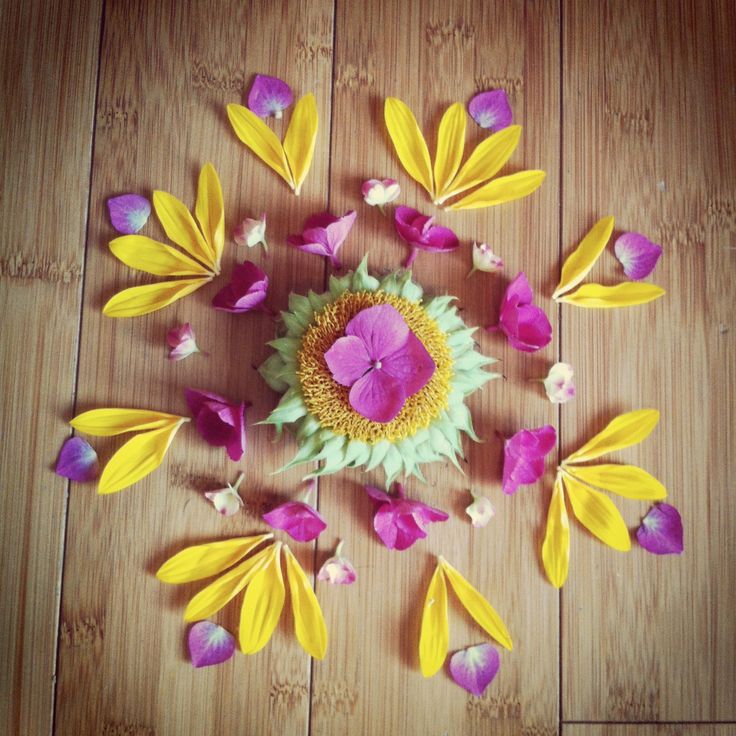
summer solstice mandala

From Pintrest: thisenchantedpixie.org


Kids and Screen Time: Data, Reality, and Possibility

ScreenTime

When I grew up, television was a very small part of daily life, and was the only screen in the house. Telephone conversations were usually brief (and attached to the wall through the cord in the main room of the house, they only allowed limited privacy). Most daily interactions were face-to-face. Social interaction with peers and siblings certainly were face to face.

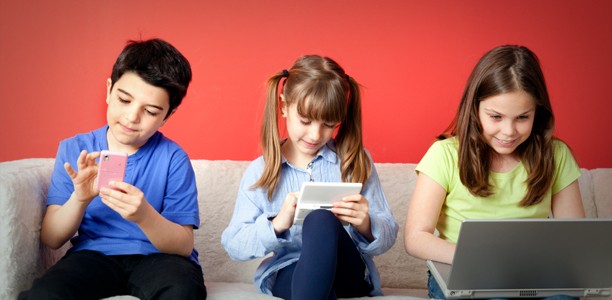
Now most homes in developed countries have several screens in different configurations: TVs, laptops, computers, tablets, phones, game consoles, DVD players, other interactive toys that come with a screen.

Children spend a lot more time facing a screen than they ever did. What is the impact of that?

Like every tool, screen media is neither good nor bad–it is HOW you used it and HOW MUCH you used it and what it DISPLACES that matters.

In this electronic age, children have more access to more education materials in quicker and more convenient ways than ever before. Media and information are powerful, but not neutral: If not taught how to discern information on the web, children do not learn how to conduct research or pick out primary source or secondary source, how to identify fact from biased blog or a complete fallacy. They may believe everything they read online–both truth and blatant misrepresentations. They need to be taught how to use information, how to cross-check, how to learn.

Education with the use of screens has replaced some of the methods of learning that were used in not-too-long-ago times. They have benefits and limitations. They can replace some older methods of research and increase efficiency and effectiveness of learning. They can connect people from far places to work together. They can bridge over differences and stigmas. However, they can also displace the interactive collaboration of listening, analyzing other people’s opinions and views, and working together interactively in real space (rather than over the internet in shared documents or through ‘attachments’ or searching to copy other people’s reports through google …).

Outside of educational screen time (i.e. the time children spend watching screens for learning, whether formal or informal), there are also the many hours a week that children spend playing or gazing at movies or music videos, or in texting incomplete sentences in stunted spelling to their friends on social media or phones. These hours often displace actual face-to-face interactions and all that comes with them: reading social cues, body language, emotions, tone of voice. Electronic communication is a poor substitute to actual interaction. Emoticons are a very crude representation of people’s facial expressions, and while they can lend ‘color’ to a message, they are not the real deal.

Children who spend too many hours staring at screens spend too few hours interacting with others and learning skills for interpersonal communication, for reading other people’s emotions and body language, for taking turns and listening.

In an article on NPR, about “Kids and Screen time–what does the research say”, researchers found that removing screen time (and effectively, the replacing of that back with social interaction and TALKING TO EACH OTHER and engaging with others), helped children be more able to recognize facial expressions. The benefits were significant even after five days of no screen time.

While some people advocate total electronics removal … I am not an advocate of removing all electronics: we live in a time where media and internet, email and web searches are enormous tools. It would be a form of social isolation to cut children off from the ability to interact with the world. However, it can be unhelpful to have too much screen time, as it displaces other kinds of social engagement that are just as important. Children do not know what they are missing when they stare at screens instead of interact with people–it is our job and responsibility as adults to help them learn to communicate and socialize.

Infants learn how to interact, how to engage, how to interpret communication and intent–through facial expression and through immediate dyadic interaction in many different settings over many interactions. It is a learning that continues throughout childhood and into young adulthood (and some may say, throughout the lifespan). We need to be mindful of not displacing personal interaction with screen time.

It is possible to do both–though that calls for moderation and boundaries (things that children need to learn, anyway). Additionally, it needs to be not only the children … adults who spend all their times staring at a little screen are displacing time of interaction WITH their children and are becoming models for what we do not want to reinforce.

There is no one recipe that would work for everyone–the right balance is different for different people at different times. What does make sense to me, is to be mindful and be honest:

  • Do not demand of your children something you do not follow yourself …

* Create windows of time when screens are not used in your home: a ‘curfew’ time for phones, or an evening a week without any electronics, a ‘no virtual communication’ weekend day, maybe decide on no electronics in mealtimes (basic politeness, that …), or on other ways to limit screen time. For everyone.

  • Make sure that you are a good model for turning off electronics and doing more than just lifting your eyes momentarily from one …

Young children, especially, are vulnerable to not developing what they SHOULD be developing. If their little faces are stuck to a screen rather than interested in another person, and if their interactions are the brief raising of eyes (or the parent’s brief raising of eyes) from a screen to nod or follow a direction; they would not learn how to engage well, they would not know to be good communicators, or listeners, or readers of social gestures, facial expressions, body-language, and signs.

This is not an either/or. Electronics and screen time, interpersonal social time: It can be an and/and, but it needs to be mindful, lest we raise a generation of children who do not how to interact … and fail them by not providing them the opportunities they needed to learn.

To read the article: “Kids and Screen Time–what does the research say” on NPR, click on the title, or click below:

http://www.npr.org/sections/ed/2014/08/28/343735856/kids-and-screen-time-what-does-the-research-say

Breath of Space

Take a breath in the streaming rays

Feel the light fill up your days

Know the sun

The dappled warmth

Sense the earth supporting

verdant growth

Hear the wind whisper stories to the grass, the fronds, the palms

and

Find the space that holds your heart inside your calm.

From Pintrest: Thailand

From Pintrest: Thailand

What is Kindness?

kindness

“What is kindness?” she asked.

“Is it being naïve?

Is it seeing no wrong in a person?

Is it looking away from the dark

Is it stepping around any shadows?”

“Not so,” said the Wise,

“Kindness is to know wrong exists and yet

also see goodness that lives right beside it.

Kindness is to call dark by name without being righteous,

to look into the voids and offer them light;

To acknowledge the shadow

and hold a hand to those in it,

compassion to those who forgot what light was.

Kindness is the courage to speak truth

and make good on promises.

It is the strength to keep one’s heart soft

when it might be easier to harden.

It is being gentle with all

without martyrdom

and without losing sight of one’s own imperfection.

It is knowing one’s own needs

and the soul’s True North.”

“It sounds like hard work,” she sighed, “this whole kindness business.”

“It is,” the Wise smiled, “as it is also

the work of all life, love, and heart;

of laughter and joy

of likeminded spirits

of light multiplied;

the gift of play

and children’s delight;

the work of Spirit,

the air of all life.

Be kind, and you would have fulfilled

all that is enough.”

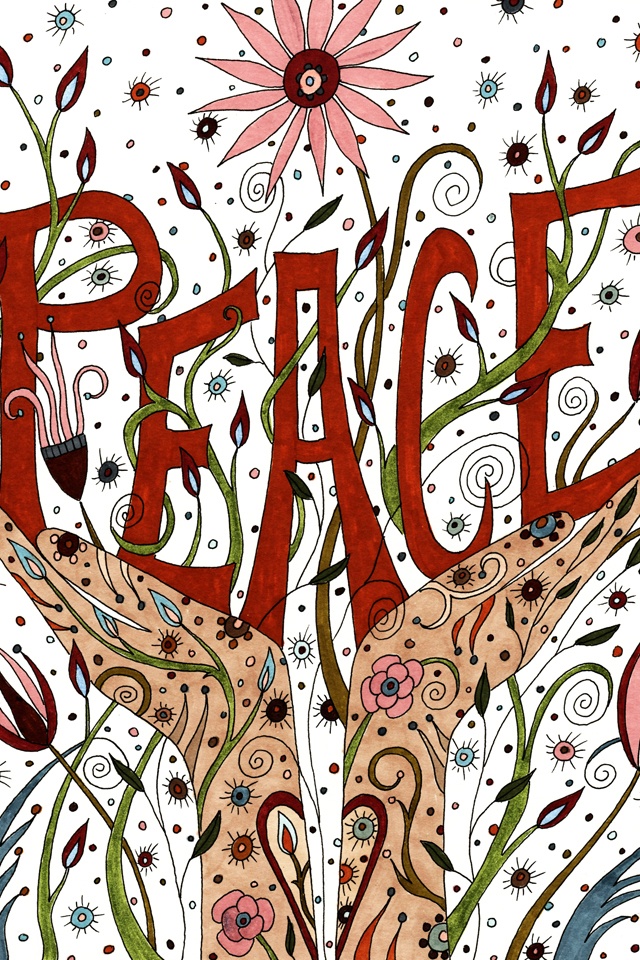
Mother’s Day–A History of Seeking Peace

Peace is in our hands ~ artist Valerie Lorimer

Peace is in our hands ~ artist Valerie Lorimer

As we celebrate mothers of all forms and being, those carrying and bearing life, laboring to nourish and to nurture, guiding, teaching, holding, comforting, soothing, showing, listening, singing to and being with … Let us also remember where Mother’s Day originally came from and its purpose–a purpose that in its own way represents the yearning and dedication, hope and tenacity of mothering:

“let them then solemnly take counsel with each other as to the means whereby the great human family can live in peace…” (from the proclamation below)

Here is to peace. To no more carnage. To love. To hope. To no more lost children. To counsel of heart and reason. To no more war.

Mothers’ Day Proclamation / Julia Ward Howe (1870)

Arise, all women who have hearts, whether your baptism be that of water or of tears! Say firmly: “We will not have great questions decided by irrelevant agencies, our husbands shall not come to us, reeking with carnage, for caresses and applause.

“Our sons shall not be taken from us to unlearn all that we have been able to teach them of charity, mercy and patience. We women of one country will be too tender of those of another country to allow our sons to be trained to injure theirs.”

From the bosom of the devastated earth a voice goes up with our own. It says, “Disarm, disarm! The sword is not the balance of justice.” Blood does not wipe out dishonor nor violence indicate possession.

As men have often forsaken the plow and the anvil at the summons of war, let women now leave all that may be left of home for a great and earnest day of counsel. Let them meet first, as women, to bewail and commemorate the dead. Let them then solemnly take counsel with each other as to the means whereby the great human family can live in peace, each learning after his own time, the sacred impress, not of Caesar, but of God.

In the name of womanhood and of humanity, I earnestly ask that a general congress of women without limit of nationality may be appointed and held at some place deemed most convenient and at the earliest period consistent with its objects, to promote the alliance of the different nationalities, the amicable settlement of international questions, the great and general interests of peace.

(Julia Ward Howe, Abolitionist–she also wrote “Battle Hymn of the Republic”)

Julia Ward Howe

Julia Ward Howe

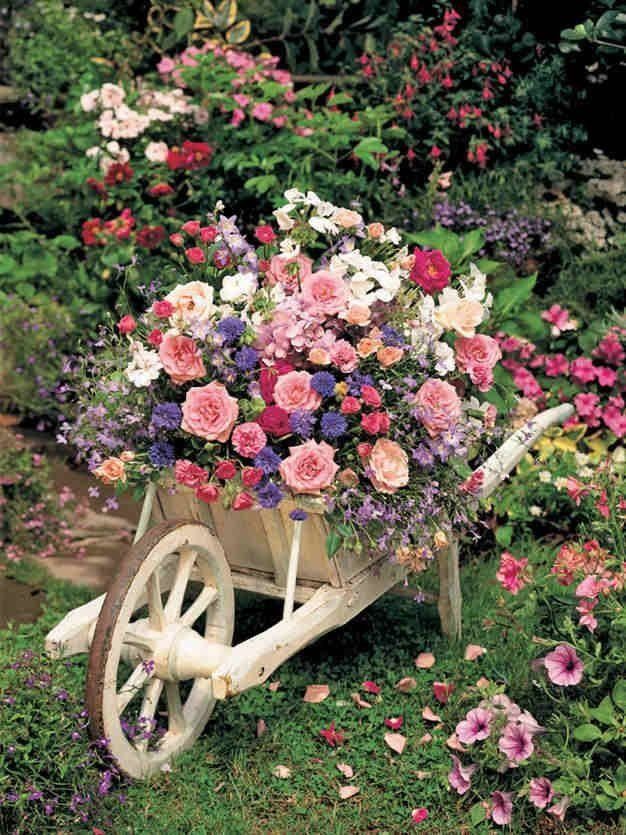
Renewal Blessing

spring wheelbarrow

As all life renewed is celebrated

in birth, rebirth, and freedom,

May your life be filled with flourish

and may color glad your heart.

May the wheels of time spin softly

taking you on sun-warmed rides,

And may you know that love, completely,

Blooms and overflows inside.