Some communications
need no words.
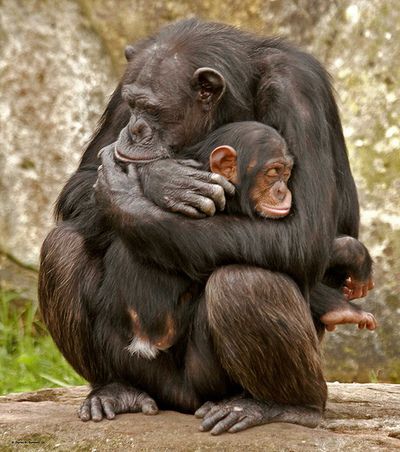

Some communications
need no words.

“For children who depend on mentally escaping into their minds to survive, imagination can become both refuge and desert island.”
(Na’ama Yehuda, Communicating Trauma, p. 148)


It is in the contrast we find highlight
In the different newness lies;
It is the contrast which awakens senses,
that opens true doors wide.

from Pintrest

The boy, five years old, had his hands deep in soft dough. “What do butterflies eat?” There was a butterfly cutter among the shapes on the table, likely the inspiration.
“Nectar.”
“From the flowers?”
“Yep!”
Silence, a bit more kneading, pulling, twisting and squeezing. This kid has such high sensitivity to textures that it took three months of work with an excellent occupational therapist before he was willing to touch the dough, let alone let it squirt between his fingers. My work with him was reinforcing the OT work in the speech-and-language contexts. Children learn much better when their body is engaged.
“What do frogs eat?” He fingered the frog cutter, put it next to the butterfly one, compared their sizes, lightly pressed the edge of the frog shape into his ball of dough.
“Frogs eat mosquitos as well as other kinds of insects: flies and gnats and such.”
“Good.”
“How come?” I smiled.
“Because mosquitos eat people alive.” His big eyes hang on me, suddenly a little scared by his own repetition of words he’d heard, “but do they really eat people?”
“Not exactly, no. The female mosquito drinks blood for her food, but only a very little bit. It is very small and it doesn’t actually eat you.”
“Oh. Yucky.”
“Yeah, I would not want to be a mosquito.”
“Me neither!” Pause. “Frogs don’t mind, right?”
“Yep.” I can see another question coming.
“Who eats frogs?”
“Snakes do. Some other animals eat frogs, too, even some people eat frogs.”
“People!?” The munchkin was simultaneously impressed and repelled. “People don’t eat frogs, do they?” he turned to his mommy. Usually, I’m an acceptable source for information, but some things require a higher authority.
The mother nodded, amused. “In France they do. Maybe in some other countries.”
“Yuck.” he relished the word. “Yucky, yucky.” He twisted his lips in contemplation, and you could see the wheels turning in the little brain behind the hazel eyes and summer freckles. “But … frogs eat the mosquitos and the mosquito eat blood from people …” he let the question dangle.
I raised my eyebrows, waited.
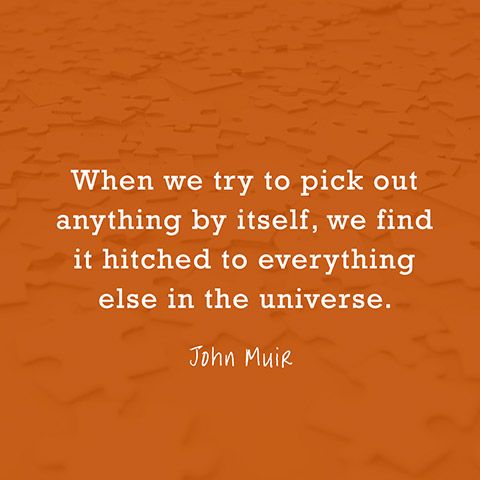
“It’s like a circle.” He breathed. “It is everything connected!”
From the mouths of babes.

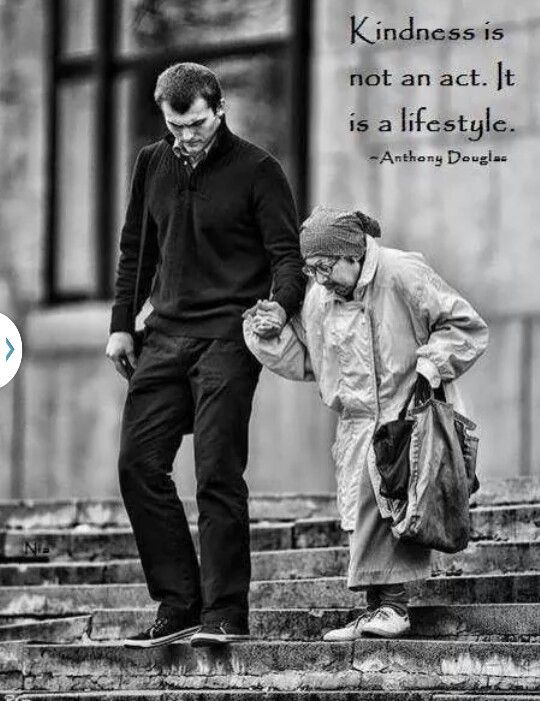
A lifestyle of kindness.
I love that.
If more of us take it on; just imagine the world we would be living in,
the ripples of compassion we will be creating.
A lifestyle of kindness.
Can you see it growing?
Can you feel the depth of healing it can cultivate.
A lifestyle of kindness.
Oh let’s.
Let’s!

This is wonderful truth. A gift, really.
The science that binds us all. The formula of healing and of hope.

Reposted from: https://suedreamwalker.wordpress.com/2015/04/15/a-letter-from-albert-einstein-to-his-daughter-about-the-universal-force-which-is-love/
In the late 1980s, Lieserl, the daughter of the famous genius, donated 1,400 letters, written by Einstein, to the Hebrew University, with orders not to publish their contents until two decades after his death. This is one of them, for Lieserl Einstein.More can be found about Lieserl here

…”When I proposed the theory of relativity, very few understood me, and what I will reveal now to transmit to mankind will also collide with the misunderstanding and prejudice in the world.
I ask you to guard the letters as long as necessary, years, decades, until society is advanced enough to accept what I will explain below.
There is an extremely powerful force that, so far, science has not found a formal explanation to. It is a force that includes and governs all others, and is even behind any phenomenon operating in the universe and has not yet been…
View original post 402 more words

The little family was heading to the crossway and in my direction as I was sitting on the bench in the sun, thirty yards from the crossway, waiting for a friend to emerge from a store. They made the prettiest picture: the father pushing a stroller, the mother to his left, holding the hand of a preschooler. The little one skipping, pigtails bouncing, dressed in pink t-shirt and purple tutu, light up sandals, little handbag full of turquoise rhinestones and the latest animated princess character; giddy with the unsuppressed delight that kids that age can have. I had me a feeling they were on their way to the ice-cream store across from the bench I was on. The excited anticipation was written all over the little face.
Steps from the crosswalk and probably noticing the commotion on the corner right behind a row of parked cars and flashing lights, the mother tried to circle to the father’s other side. Maybe she intended to put herself and the other adult as barriers to the scene on the asphalt.
There was a person on the ground ten feet away from the sidewalk, right behind the row of parked cars. Paramedics with a backboard. An ambulance. Two police cars flashing lights and directing traffic from the three lanes to just one, keeping a perimeter so the nosier onlookers not get too close to the accident. Another police man stood by a car parked sideways across one lane, talking to the driver who hit the man. There was concern in the air. I’d been sending some good thoughts when I noticed the family nearing.
The child was too short to see over the parked cars, but either the energy of the congregated people or the movement of her mother caught her attention. She stopped skipping. Stood. Tried to see. The mother stopped, as well, then tugged gently on her daughter’s hand. The child did not move. The woman stood a moment–maybe considering the benefit of picking up the child to get them moving away from the area but give the child a vantage point that could be startling. The father bent toward the little one, said something. The girl nodded and resumed walking, but her head kept swiveling toward the street and as they crossed and the cars no longer obscured everything, she slowed. The mother picked her up and rushed to make it to the other side before the light changed. To put some distance, too.
The child kept talking, the mother shook her head and spoke back, tried to turn the child in her arms to face the other way and still the child kept turning her head over the mother’s shoulder–looking at the scene on the street: the paramedics were lifting the man on the board onto the stretcher. The family walked faster now that the little one was in arms. I could sense the parents urgency in wanting to get her away.
I could hear them as they walked closer.
“So you are ready to get some ice-cream?” The father, his voice kind but a bit too loud and strained in the slightly false cheer of worried grown ups that children always pick up on.
The girl nodded, her attention still divided. She looked back. “Why he has a big Band-Aid?”
The neck-brace. It did look like a big Band-Aid from the distance.
“They are just helping him be more comfortable,” the dad responded. The mom looked upset, walked faster.
“He has a big boo-boo?” the little girl looked again.
“Maybe. Don’t worry. They’ll take him to the doctor and make sure he’s okay.”
“He fall down?”
“Maybe.”
“I don’t want him to have a big boo-boo,” the little girl said, frowning. Then her eyes brightened. “Maybe he want ice-cream too so he feel all better.”
“He doesn’t want ice-cream,” the mother blurted as they reached the ice-cream store and walked in.
Maybe not the kind that comes in a cone, I thought, but the energy of sweetness from this child I bet already made him feel better, even if he did not know the pigtailed gold-heart who offered it.
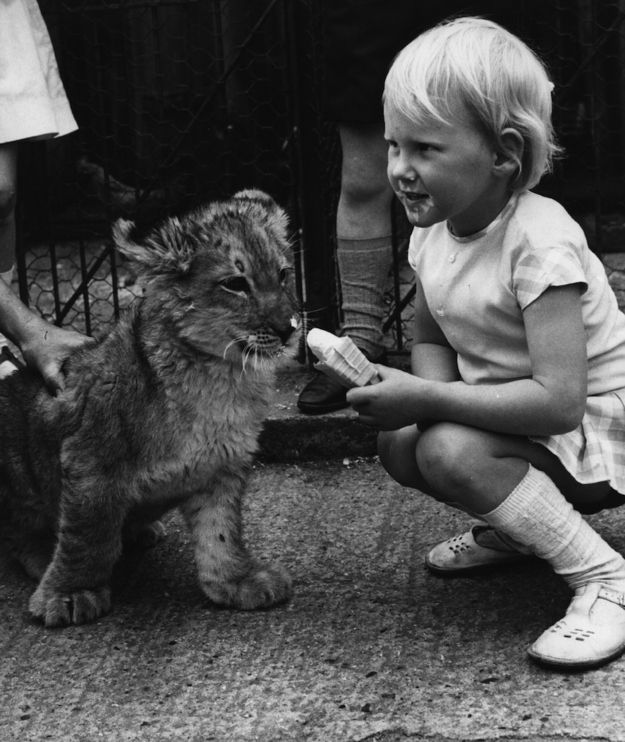
Evening Standard / Getty Images 1956

It is always good to be … in good company …
Recognize the miracle that we each are …
A teaching mirror-mirror moment, by an adorable 3 months old.
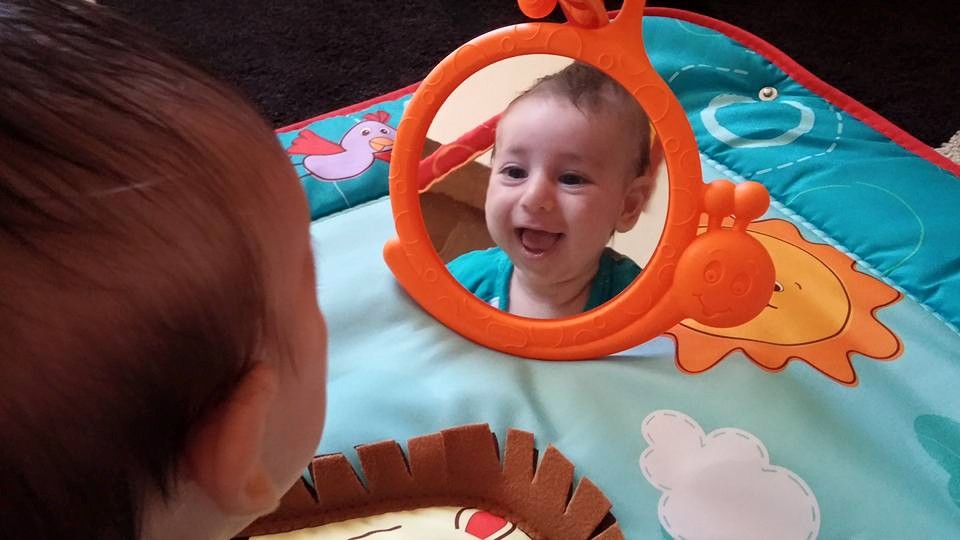
Photo by: Smadar Halperin-Epshtein

What do you do with a grieving child?
You listen. You hold. You listen some more.
You offer tissues, you offer a hug. You answer lots of questions.
You nod. You tell stories. You honor the small memories told.
You come up with suggestions–or rather, embellish on those that the little one has.
You produce boxes (“too little”, “too big”, “too not-good”, “I don’t like it”, “okay, this one …”), find padding and ribbons and stickers, along with a few extra hugs.
You write what’s requested. Erase the letter that did not look perfect. Write it again. Erase. Write once more. You understand that it has to be just-so.
You provide blank paper and crayons, markers, highlighters, scissors. Play dough.
You oblige to search Google for questions your answers were not good enough, and come across five hundred other interesting things that lead to more questions. Distraction is good medicine, too.
You write down a protocol for ceremony, number the steps, change the order.
You make a headstone from tongue depressors and card stock. Give another hug.
You write the name of the departed. Erase it because it did not come out perfectly. Write. Erase. Write once more.
You draw a picture and told it “doesn’t even look like him.”
You are saved by a photo from the bowels of phone memory–a snapshot of happier times.
You give more hugs. Another tissue.
You stay with. You listen. You know that no small loss is small. That no one is truly replaceable, that loss is confusing and brings along with it the worry of losses far bigger and questions too scary for words. You don’t go where the child does not take you. You comfort, you understand.
What do you do with a grieving child?
You listen. You hug.
You promise not to forget.
You tuck the drawing in the folder (“but be careful”) to keep it safe.
And you use a tissue yourself, when the child wonders aloud if dead fish get to have wings and continues to answer himself: “Yeah, because they have fins, so Benny was already half-angel.”


The little boy was beaming yesterday.
“You know what?” he said, having barely parked himself on the little chair in my office.
“What?” I pretended.
“I’m SO happy.”
“You are!” I exclaimed, smiling. Even a boulder would see that the little guy was delighted. Delighted and relieved, actually.
“Now my parents can be my REAL parents!” he gushed. He sobered then–this boy does not take family for granted. Abandoned at birth with visible deformities, trundled through foster care homes and more losses, and finally finding an adoptive home with parents who were dedicated to him and where he was cherished. “If something happens to Daddy …” he paused, “then Papa will still be my father.”
He reached for my hand, excited and a little scared at what he just stated, momentarily overwhelmed by the proximity of both loss and hope. It took a lot of love to get this boy trusting that his home was a ‘forever home’ and that he was really wanted; and sometimes worry still snuck in, triggered by the destabilizing challenges of very real uncertainty.
Such as when he needed surgery and only one of his adoptive parents was allowed to escort him to the operating room, because only ‘legal guardians’ could, and the law did not allow both his parents to adopt him, only one. Daddy was recognized as his parent. Papa was not. It scared him that people could say that Papa was somehow not his real father, that other people could — again — decide about his life.
Or when his legal parent was away on business and the new school guard gave the boy’s papa trouble picking him up because there was no official note on file indicating that he was among the ‘approved caregivers.’ It took a tense while to locate the classroom teacher to confirm that this man that the boy called “Papa” was indeed one of his parents and had collected the boy from school before. For several days later this little boy refused to go to school. He insisted on waiting for Daddy to return. He was scared that school people won’t let Papa take him home.
Now in my office, this little boy fiddled with my bracelet, as children often do when they are feeling a little tender but need to be the ones establishing how much connection to allow. “Sometimes at nighttime I have bad dreams … about having to go back to foster care.” He looked up at me, dark eyes like deer in headlights, hair framing his little face in a frizzy halo.
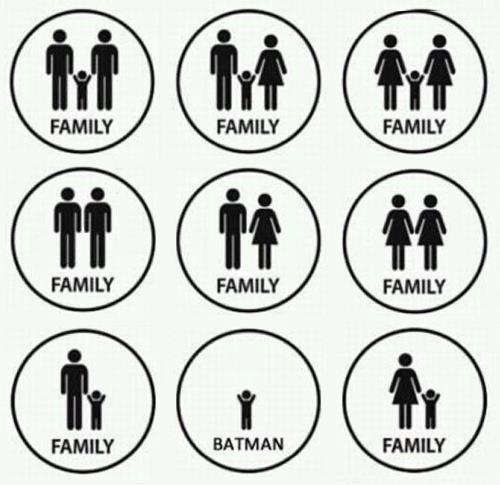
I squeezed his hand gently. He looked at his papa, who was sitting quietly with us, his own eyes bright, and allowing his son–son in all ways but legally until now that the Supreme Court declared the constitutional right for equality in marriage and family–the space for these complicated feelings.
The boy reached out for his father and received a hug. “It is going to be more safer now, right?” the boy asked, face buried in his father’s shirt.
“Sure is,” the father planted a kiss on his son’s head, who at not yet six years old was already a veteran of too many worries. “Your home is with me and Daddy. We are a family, you and Daddy and I.”
“And Priscilla!” the boy added in reassured indignation. “You forgot Priscilla!”
His father chuckled. There was no forgetting Priscilla the ever-into-something dog. “Of course, Priscilla is part of our family, too!”
The boy snuggled into his father’s hug another moment. Sighed contentedly. Peeked at me and smiled. “The judges said that my Papa can also be my father now. Like my Daddy. Forever and ever and ever and ever.”

A place to improve my writing skills, and that's all.
We're not thriving, we're creatively photosynthesizing under duress.
History of the Bloomingdale area on Manhattan's Upper West Side
A creative miscellany of mythic fantasies
a weekly flash fiction prompt inspired by google maps
A community for writers to learn, grow, and connect.
To participate in the Ragtag Daily Prompt, create a Pingback to your post, or copy and paste the link to your post into the comments. And while you’re there, why not check out some of the other posts too!
I can't sleep...
Alternative haven for the Daily Post's mourners!
never judge a girl by her weight
original fiction and rhyme
You have reached a quiet bamboo grove, where you will find an eclectic mix of nature, music, writing, and other creative arts. Tao-Talk is curated by a philosophical daoist who has thrown the net away.
A photographer's view of the world - words and images to inspire your travels and your dreams
Life in progress
Straight up with a twist– Because life is too short to be subtle!
WordPress & Blogging tips, flash fiction, photography and lots more!
Light Words



You must be logged in to post a comment.