Remotely Social

Heidi House AtaraKatz

Photo: Atara Katz


She’d have preferred to not have even as much contact with others as the job required, but the alternatives were worse, and she couldn’t argue with the benefits:

A roof over her head.

Supplies.

A stipend for the necessaries.

The most-days-solitude.

Granted, there were days when she could feel the walls press close around her and the vistas felt airless. She’d scan the horizon, then, wondering when someone would stop by that she could talk to. Vulnerable in her need, her fingers would reach for the radio, yearning to hear a voice that was not her own, and she’d make some excuse about checking the weather or changing the date of the next airdrop.

And yet she could not wait to end the conversation – if that was what one could call the brief exchange with the dispatch to arrange a fly-by or a stop-drop of supplies – so the last of the vowels could evaporate into the quiet.

Human contact suffocated her.

Its lack bore holes into her soul.

It was untenable, and all she could do is try and find some semblance of balance between loneliness and overwhelm.

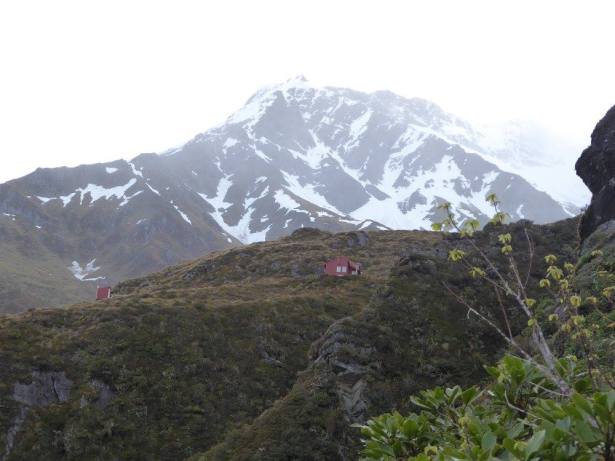
There were no roads to the respite cabin, only footpaths, or for those who braved the crosswind, a rocky field in which to try and land a chopper. The nearest town was a hard three-days trek through the mountains.

Once in a while she’d see a shepherd who’d misread a storm and sought shelter. Sometimes another ranger would stop in during an upkeep task, to resupply or send an update to headquarters. Those were hardy, silent persons like herself, who welcomed a warm bowl of soup, a place to dry their clothes, and a break from the wind, but needed little in the way of clucking.

The trekkers, for whom the respite cabin was intended, thankfully limited themselves to the brief season when the weather was most forgiving. Her outpost was stationed on what was a remote route even for the most intrepid hikers, and yet some evenings in midsummer the small cabin would be bursting at the seams with chatter and the smell of unwashed feet, damp shoes, and giddy overconfidence. The bunks slept eight. To have even three occupied felt to her like eighty.

The trekkers would all leave in early morning, bellies full of oats and faces flushed with sleep, and she would not know if their eagerness was for the day’s exertions or to get to where they could safely gossip about the agonies of trying to wrest a word out of the reticent resident ranger.

She’d grow skinless by the time fall brought with it a piercing cold and the relief of rarer human sightings.

It would be weeks into winter before her fingers reached for the radio, pining to hear another person’s word.

So she was not prepared for the knock that came, an hour into night in early winter.

There was no storm. No ranger’s late arrival. No shepherd.

Just a youth. Half-frozen and her belly swollen, and in her eyes a look that pleaded urgent need even as it warned to keep a distance.

It could have been herself.

Fifteen years back.


For the SoCS prompt: Social


Endless Harmony

a solitary figure on a beach against a wide ocean.

Photo: Sue Vincent


She’d never have believed the vastness had she not been there to see it.

In person.

On the edge of endlessness.

The breath of eons crashing at her feet.

The spray of ancient rhythms that had been there

All along.

Through war and storm and hope and flood and cold and warm and days like this when no one but herself was there to witness it.

She’d never have believed the power that it held, contained within each curl of wave, in every roll of whitecap licking sand.

It filled her.

With awe and ache and gnawing yearning to something that went beyond her words and into thoughts unformed, or perhaps ones made of memories in utero: the hiss, the beat, the drums of hearts.

And this.

Another memory

To merge into

In endless harmony.


For Sue Vincent’s WritePhoto (2nd week)


Left Behind


They walked around, eyes wide, not touching anything.

“It’s like a museum,” Lilly breathed.

“Only with ghosts,” Samantha shuddered.

Lilly shot her a warning glance and slid her eyes toward Mikey. As it was the boy woke up screaming every night.

This was the first intact house they’d seen. Well, almost intact. It had a roof, walls, and shutters that had protected some of the windows. It even had a wood-burning stove. They needed the shelter more than any ghost might, and Mikey didn’t need additional terrors.

She forced a smile. “Let’s find some water and make tea, shall we?”


For Rochelle’s Friday Fictioneers


The Look

Atilla the tractor 1


“It is looking at me.”

“What is?” I was dozing off in the delicious sun on the first dry weekend we’d had in a while. The lush grass under me felt springy.

I thought the word was so apt. Springy. The double meaning of the season and the bouncy vivaciousness of it all.

“It is looking at me.”

I inhaled slowly with more resignation than irritation. I might’ve known this would not go as I had envisioned. While I was content to lie still and let the sounds of the birds and the hiss of the breeze and the faraway whir of a tractor in someone’s field fill and nourish me, Marlee had been tugging on grass-blades and clucking her tongue and shifting positions every three seconds.

She’s always been flighty. A flit-bit full of frown and furrow, forever on the edge of tumbling from one thing to another.

I loved it about her. She was the counter-weight to my molasses and the engine to my stasis. Her hypervigilance also made my idea of a relaxing afternoon where we do nothing, an utterly foreign thing.

Perhaps an even frightening one.

I opened my eyes. “What’s looking at you?”

“That.”

I raised myself on an elbow and scanned the field. There was no one there.

Marlee sat, violin-string-tight, eyes glued ahead.

I followed her line of sight. Nothing. Not even a bunny. Just a tractor that most likely belongs to the farmer whose land we might be trespassing on. I squinted against the glare – the cab was empty – there was no one there.

Marlee did not move.

Resigned now, I sat up and stared harder. A caterpillar undulated up a flower’s stem by my knee. A bird dove at the tractor, perched momentarily on a mirror, and flew away.

“The bird?” I chanced.

Marlee shook her head but her eyes remained trained on the vehicle. “The tractor,” she said. “That thing has eyes. I swear it blinked at me.”


For Crimson’s Creative Challenge


Home Idyll

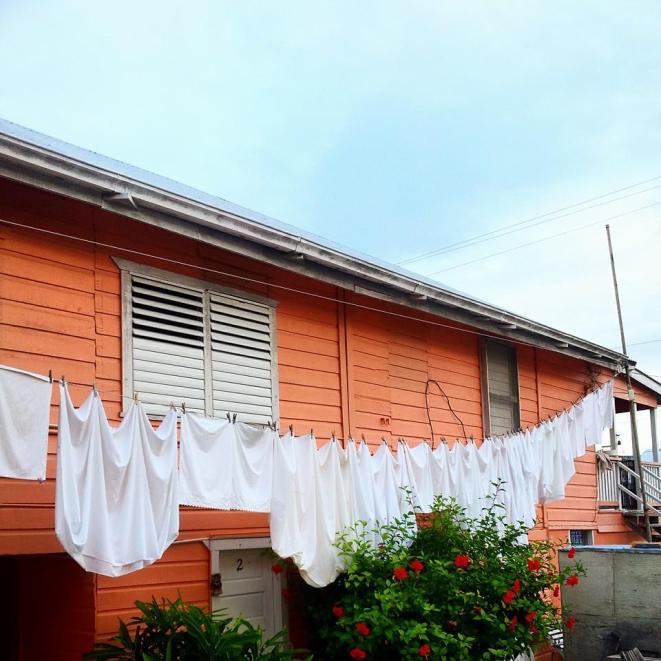
Belize InbarAsif

Photo: Inbar Asif


She leaned against the painted wall and exhaled a sigh of relief.

She was finally home. Hardship over. She was free. All was going to be as she needed it to be.

The freshly laundered whites fluttered in the sea breeze and the rush of waves sang in her ears. A dun puppy yipped at a bird. The baby slept at her feet.

“Have you eaten?” Grandmama called, a loving voice on the wind.

“I’m coming,” she smiled and bent to lift the bassinet.


For Sammi’s Weekend Writing Prompt: Idyll in 84 words


Emperor’s New Clothes

the-emperors-new-clothes-3-coloring-page

Nata Silina at Supercoloring.com


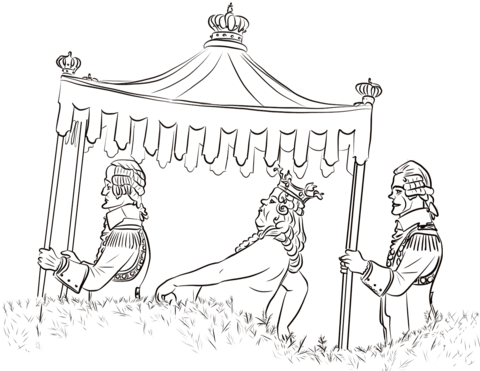
“I expect loyalty,” he stated.

A silence followed.

Shock or perhaps because

There was

No honorable way to respond.


“I need loyalty,” he repeated

With the implication clear:

You bend the knee

Or you are gone,

Swear fealty to the man

Or you’re a traitor

And an enemy to be scorned.

“You will always get honesty from me,”

Came the measured return.

“That’s what I want,” twisted the retort,

“An honest loyalty.”


As if there was such thing

As honest loyalty

To one who deemed acceptable

Only what offers

Praise and supplication,

And allows no room

For truth,

Let alone for the calling out of

The Emperor’s bare bottom

Of the barrel

Governing

Or his disregard for honor

As he dons repeated sets of

Non-existent,

Yet much lauded by him,

‘New Clothes.’


Note: As it happens, the book I’m reading and which was right by my elbow as I read the prompt … is “The Mueller Report” (w/ commentary by the Washington Post; page 296 of the book, page 35 of volume II in the report).  … And the rest, well, is history. And what will be …? We shall yet see.

For Linda Gill’s SoCS: open book, point, write