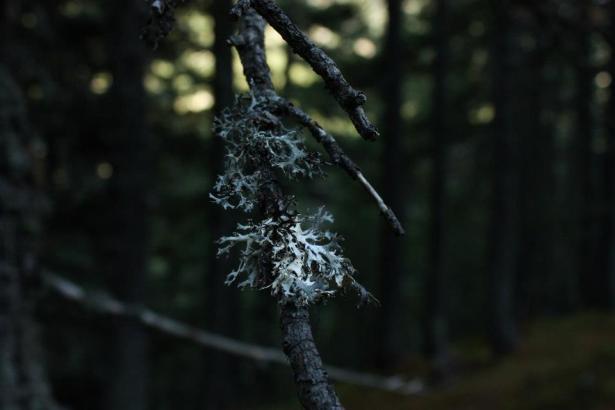
A Net of Ents

Grimm AmitaAsif

Photo: Amitai Asif


“I am not going in there!”

Maxim sighed. “We must. It’s the only way.”

Stringer shook his head. “That place is haunted. Ghosts and goblins and who knows. I bet all the creepy things from the Underworld hide here, too.”

“The Underworld isn’t real.”

Stringer gave his friend a searching look. Maxim’s voice sounded a bit less certain than Stringer would have liked it to.

“Why does it have to be us, anyway?” Stringer pouted. Every cell in his body told him to flee, to leave, to get as much distance as he can between himself and this brooding, mossy, drippy, dark, tangled, creepy forest.

“Because.” Maxim lifted his chin, exposing a scrawny neck that had only gotten more birdlike in recent weeks. “Look, I’m scared, too, but even Mathilde said it was the only way.”

“She’s just an old crone,” Stringer scratched at a scab before glancing around guiltily and lowering his voice (one never knew if she might be listening and he did not fancy ending up in a cauldron), “and a witch.”

“Exactly.”

Stringer sniffed. He hated it when Maxim got the last word and even more when Maxim was right.

Mathilde was gnarly and bent and more than a little odoriferous (whether it was lack of bathing or the miasma of whatever it is she must be concocting in that iron pot that was forever perched over the fire, he didn’t know and didn’t dare ask). She was the oldest person he’d ever seen. Indeed if anyone would know about the procedure for removing spells, it would be her … and she had been clear that the one they sought to have lifted was beyond her skill.

“Only Ents,” she’d croaked and hacked up something Stringer was certain was more than just phlegm. “Ten of them. If there are even that many left. Only they can undo an enchantment net. And only if they agree, which they don’t always. Best keep your wits about ya when ya enter Old Growth. Tear a leaf and ya’d well end up lacking a finger.”

She’d stirred the pot, giving the quaking boys a full view of her three fingered hand. “That is,” she’d added, “if ya exit there at all.”

The whole way to the ancient forest, Stringer and Maxim avoided discussing the meaning or implications of Mathilde’s words. Giving it voice was too scary and they were too excited. The hunger had taken someone in every house, and winter was poised to enter empty pantries. All they could think of was what would follow if the hex broke: bowls of broth and bread and beans and oats.

Their stomachs spoke louder than their worries.

Now the edge of the forest stopped them cold.

“Did you see her hand?” Stringer tried.

Maxim nodded.

“Do you think …?”

Maxim’s tunic rose as he shrugged. “Maybe it was frostbite.”

“Yeah.” Better that. Frostbite was awful and utterly non-magical.

“Though …” Maxim’s voice shook, and still he bent resolutely to tuck the edges of his tunic into his leggings and retie his belt so it did not flap. “Best make certain we don’t accidentally trip or tear a leaf or snap off anything.”


For Linda Hill’s SoCS writing prompt: Ten, Ent, Net


A Map Of Reminiscing

timothy-holmes-MJHyqdJ0rrw-unsplash

Green Gardens trail in Gros Morne National Park, NL (Timothy Holmes on Unsplash)


They’d come to Gros Morne every summer. On “Dad Week.” Camp in a tent that always leaked but Dad wouldn’t replace, every patch and glued seam a map of reminiscing. They’d spend days on the meadows, walk the volcanic beach, go down to Old Man’s Cove.

Sal loved all of it. Even the chill and wet and constant hunger (for there was always more Dad aspired to catch than what he’d actually manage to). Sal never complained. He’d give up everything to breathe the ocean and make up stories about pirates in the coves. He’d even downplay the painful rash and sneezing (they never did find which wild-flower he was allergic to, and he didn’t want to, afraid Mom would say he couldn’t go).

Erosion closed his favorite trail, but not his memories.

He gazed at the ocean and wondered if Dad, whose mind was fading, still had his.


For What Pegman Saw: Newfoundland & Labrador, Canada


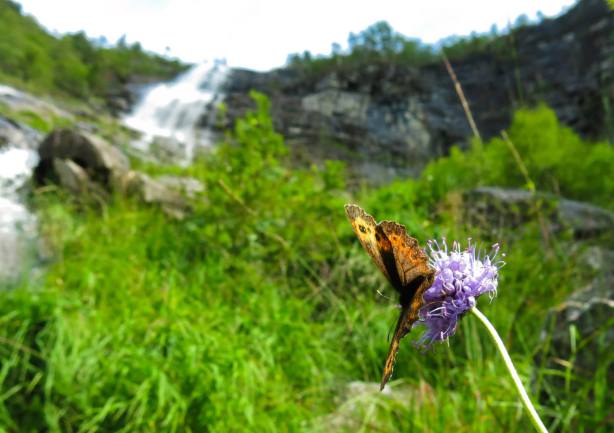
Delicately

Delicate AmitaiAsif

Photo: Amitai Asif


She flitted gently by his head.

The slight bow noted, the sorrow that was there

But perhaps not heard.


She knew he had to hold himself up

All this time

That it was the only way

He’d learned.

And yet she could discern the hidden

Effort that it took

To rise against the gravity,

In times where drought of hope

Returned

Again and again and again.


She understood the energy required for

Making the Herculean appear effortless,

To constantly correct

The wobble under

Winds and strain.


She hovered for a moment

Letting a space of permission

Manifest

Before she landed, feather-weighted and,

Delicate

On his chest.


For Sammi’s Weekend Writing Prompt: Delicate in 106 words


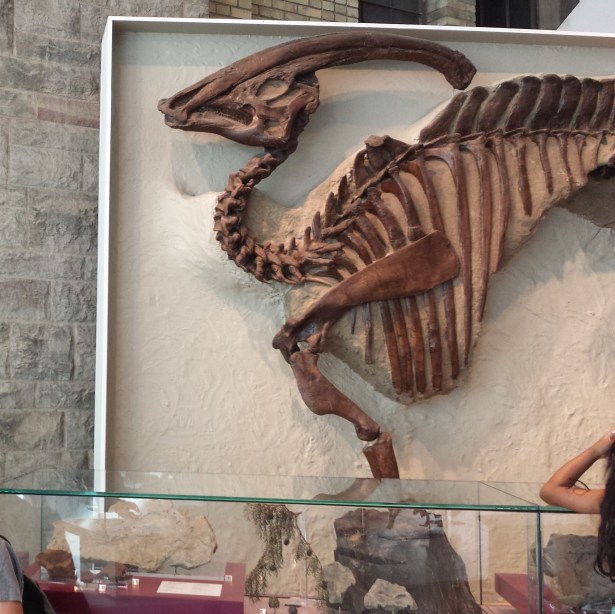
Pharaohsaurus

Pharaohsaurus NaamaYehuda

Photo: Na’ama Yehuda


“It looks like a pharaoh,” the boy commented.

“Hmm …” the girl leaned her elbows on the display case to take a photo. Dinosaurs weren’t Pharaohs, but her little brother was obsessed with anything Egyptian, so it was easier to agree. Took long enough to drag him out of that wing of the museum and into what she really wanted to see.

“Do you think the pharaohs saw one of these and it gave them the idea?”

She sighed. “There were no dinosaurs left at the time of pharaohs.”

“It’s not what I meant!” His nudge made her take a photo of a piece of plaster instead of the fossil bones. “Maybe they found something like this one.”

“Stop it!” She hissed. They’d be told to leave if they fought.

“Sorry.” He was, only sort of. “Is it called a ‘pharaohsaurus’?”

She rolled her eyes.

“Well, it should!”


For Sammi’s Weekend Writing Prompt: Museum in 147 words


Taking Tea

coffee or tea AmitaAsif

Photo: Amitai Asif


“Every pot can be

A teapot

But not all of them can make

Sufficiently

Good tea,”

He said, and fussed

And set the bag

To rest

On the edge

To breathe

For me.

“I’ll take coffee,”

Said the mother,

Contrary just because

She had the right

To be.


For Sammi’s Weekend Writing Prompt: Teapot in 48 words


Where It Broke Out

Photo: Sue Vincent


“This is where it broke out.”

Bender shaded his eyes from the glare and squinted at the black patch on the meandering snake of ice.

“Tis a mighty small one, then,” he noted.

Roman frowned. “That hole is bigger up close. And anyway, you should’ve seen the length of it.”

Bender shrugged and took a few steps closer, daring Roman to do the same. The ice crunched under their feet, a staccato to their accelerating heartbeat.

They would be punished for walking here. The Winter Gods had taken too many who strayed onto what masqueraded as solid ground but was in fact bog fairies lurking beneath frosted fronds. Even in summer these flats were dangerous, full of sinkholes and swampy ponds that sucked at your feet and then leeched out your blood. Children were outright forbidden from entering the bog.

Which made the space all the more alluring to boys who had to prove bravery and test the lore.

For there was a boy, the stories told, who got swallowed by a sinkhole only to be adopted by the creek and made half-human and half-snake. He could breathe both in the air and underwater, and came to hunt in winter, when other snakes were slowed by cold.

Some had said they’d seen it, slithering among the silver plants by dusk and dawn. Some even claimed to have escaped its grasp — for the half-boy-half-snake had arms that ended in sharp claws held close to it’s lower body as it undulated silently toward its prey. One man had four parallel scars upon his calf that he said were the proof of his escaping the creature.

Roman said he’d seen it, slipping out of the ice.

Bender never could trust Roman’s sight, influenced as it tended to be by what his friend wished to see but often did not. Still, to say so would be showing him a coward … so … Bender took another step, crunching deeper into the foreboding land.

Behind him, Roman breathed out clouds of exhalation accentuated by shorter puffs of terror. “Perhaps it had gone back in already,” he whispered.

“Yeah,” Bender gasped in barely masked relief. “Must have. After all, it is almost full light. Nothing for it but for us, too, to head back.”


For Sue Vincent’s WritePhoto prompt

In Between

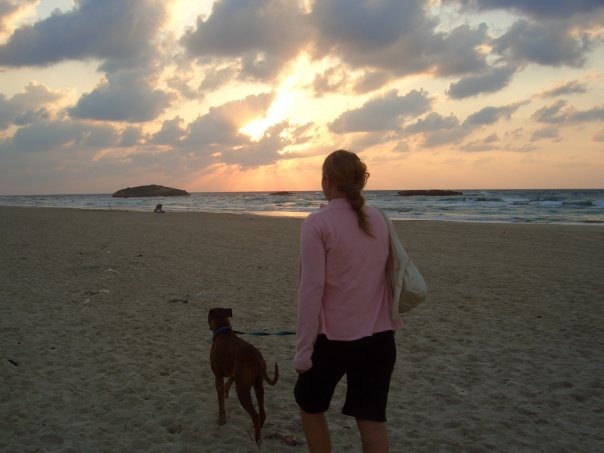
walk at sunset

Photo: D. Freedman


In between the wish for more

And need for less

She paused to let the breeze pass

Through

And transform her

From the rushing steps that never seem to

Gain foothold

On life,

To the tranquility of what is

Yet

to be left

Behind.


For the dVerse poetry quadrille challenge: tranquility


A Stranger’s Eyes

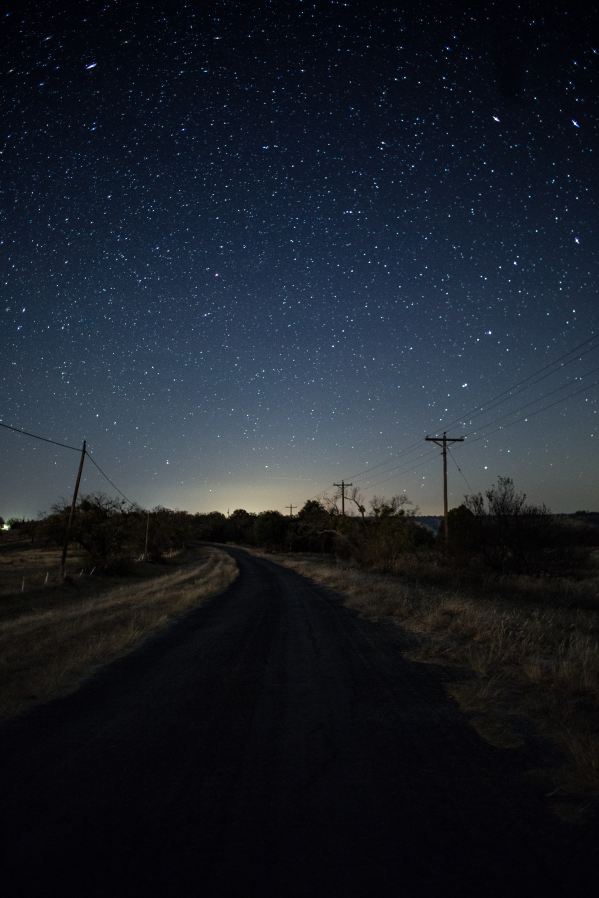
conner-baker-dXpWscmNgXw-unsplash
Photo: Conner Baker on Unsplash


Her hand clasped the steering wheel and she fought against the tears that threatened to blur the road ahead.

The wheels whirred over miles and miles of black as the stars spread a rotating canopy over her car. A bug atop a line drawn in the sand, she was. A smidgen on the wide expanse of life under the heavens.

She won’t go back.

She could not allow it.

He had her squelched under his thumb for so long that she did not recognize her own face in the mirror. Her eyes had become a stranger’s.

“There are times,” her mother once said, “when a woman must believe herself. You may think yourself broken, but you will love again the stranger who was your self.”

She’d thought it cryptic at the time, melodramatic.

She understood now. “I’m coming home to myself at last, Mom.”


For the dVerse Prosery prompt: Love after Love in 144 words


Collateral Damage

sharon-mccutcheon-AuPRHJe8Mhs-unsplash

Photo: Sharon McCutcheon via Unsplash


“They’re collateral damage,” he said, and gestured toward the flash of news images across the screen. “It’s not anything personal against them.”

He shrugged as if his words explained all of what happened. Of what continues to take place.

“They never should’ve put themselves in this situation,” he added, perhaps because he’d perceived my incredulous stare as an invitation to explain further, or perhaps because someplace, somehow, he felt ashamed. That is, if he was capable of shame, which as the evening dragged on I found myself increasingly doubtful of.

I glanced at Brenda, whose dinner plate seems to have become her world. Her absconding only made me angrier, but the boulder in my throat allowed no sound. I shook my head.

“Well, they could’ve stayed where they were,” he retrieved a comb out of his pocket and proceeded to slick back his salt-and-pepper hair, and the outrageously incongruous act against the reality of utter misery, somehow released my breath.

“They are children!” I choked on the word, but the rest tumbled out behind it as if afraid to become lodged again. “They could not make the decision to stay. They had no choice where to be born. Or who they were born to, or whether or not to put themselves in any situations.”

He continued to groom himself with the comb and I fought the urge to grab his arms and toss away the thing, one of the many things, the children were denied.

“Their parents should’ve taken better care of them,” he added blandly.

I took in a deep breath. “Even if that was true, which it is not in the vast majority of the cases, how does that make it acceptable for others to deliberately traumatize these children further?”

He raised an eyebrow in disdain to signal that my upset was the overreaction. “If their parents stayed in their own countries,” he stated sedately, “instead of coming here, the children wouldn’t get locked up. It’s simple, really. If a person doesn’t want their kids to suffer, they should not do certain things.”

“So now we’re talking like the mafia? Threatening people with harm to their kids?”

“Calm down,” he drawled. “Now that people know their kids wouldn’t have it easy here, perhaps they’d think before they decide to make their kids into collateral damage. If they did as they were told and stayed wherever it was they belonged, none of this would have to happen.”

I inhaled and glared at his wife, the colleague whose silence at the face of cruelty made her increasingly less of a friend. Her eyes scanned the wall someplace not quite behind my head.

“So you approve of terrorizing children,” I stated, my fingers groping for my purse. Her birthday dinner or not. I was done. “This is exactly what mafia does.”

He actually cackled. “They’re the mafioso. It’s their fault if their kids are cold and wet and getting hurt. What did they expect, crumpets and tea?”


For Linda Hill’s SoCS writing challenge: co-