Green Magic

Small child in tight braids under sticker-emblazoned helmet, hands holding on to pink scooter handles, stands at park’s entry: “Mommy, see the trees!”

Mom (typing one-handed on smartphone while pushing the child’s scooter with the other): “Yes, honey, very nice.”

“MOMMY!” 

Mom, still on automatic: “Don’t yell, sweetie. I’m right here.”

The kid glances upwards, stamps: “No you’re not.”

Slightly startled, Mom looks up. Frowns, puzzled.

“You in the phone!”

Quick blush. “Sorry hon. I had to return that email real fast.”

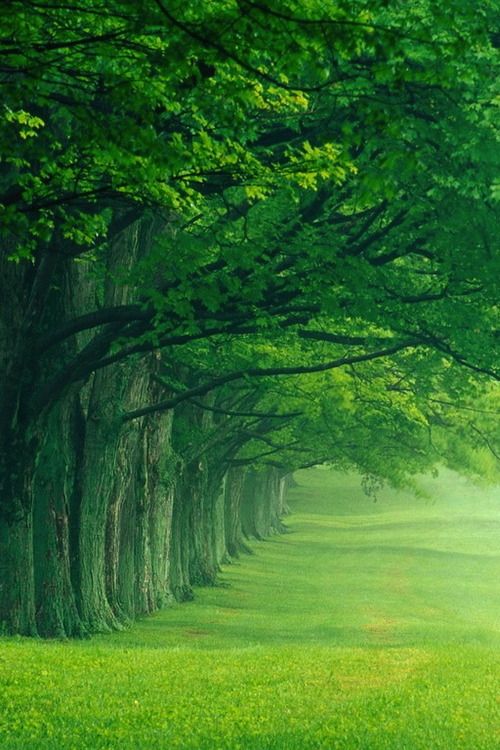
“But you missing the best part! Look at the trees, Mommy! They didn’t have leaves and now they have green magic all over! The green magic won!”


Take a look outside!

Take a walk. Find a bench. Breathe in spring.

And you’ll see … just how right:

The green magic made a most magnificent entry.

Luxuriously verdant

It utterly, certainly, brilliantly won!

green magic

Life Lived

life lived2

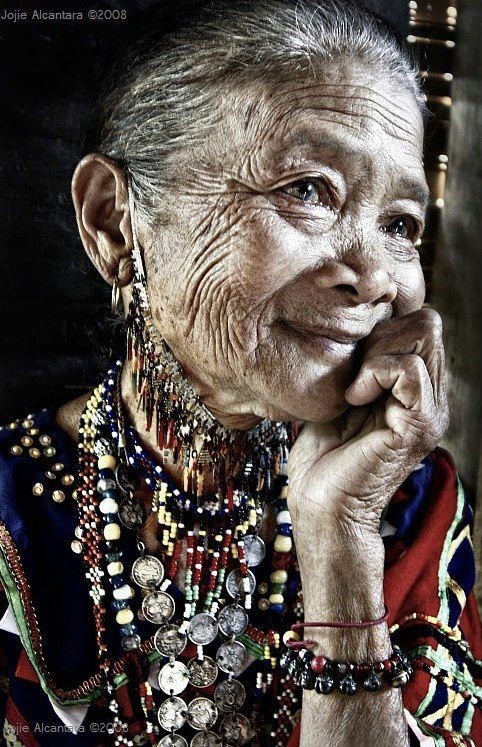
There’s immense beauty in life lived. In every wrinkle bought by time and much expression. It is evident, open, there to see. There is beauty in the well-lined faces of elders. In our own. They are pathways earned by living. Furrows sewn by memory and feeling. Intricate etchings of how one came–and still comes–into one’s own, how spirit’s grown.

A little boy of four told me the other day: “My granny is very pretty. She has lots of lines all over her face like spider webs because she’s old. She gets more lines every year for her birthday. I like her face. It is so soft and her eyes love me.”

There is history to tenderness and respect for the older. Many native traditions venerate their elders and hold their wisdom in high interest and regard. They know that life leaves marks, and most of them are well-earned knowledge. The lines upon a person’s face reflect not decline or oddly shameful claims of “one’s age showing” but rather are a mirror to a person’s wisdom, depth, growth.

Many of us have lost the Way, in modern times. In the rush to seek erasing life from our expressions, we’re urged to look away from those who forged before, who cleared the paths, who taught us all we know. We are expected to see wrinkled faces as what we should fear becoming. It is our own life we deny when we do not accept that we would none of us be had it not been for the elders’ lives, how it is now our history. The aged’s perspective is what holds our own horizon steady. They know of corners we do not yet see for we are in too low a vantage point, compared. Their faces show it. Maps of living. Losing sight of it is losing part our ourselves, of what we may have the blessing to become sometime later be.

The little boy who sees his granny’s life etched in the softness of her face and the love in her eyes–he gets it. His priorities are calibrated. He sees the beauty of life lived, not the images peddled by companies seeking fortunes by telling people lies: that life reverses, that years should not be seen, that age that shows is somehow shameful and wrinkles should be believed to depict a worn-out living, unworthy of respect. The opposite is real, and this child’s vision is clear, aligned with Truth: that the paths we walk become a part of us. That our beauty lies in our compassion, in what we learned of ourselves and others, in how we live. Beauty is not measured in complexion or in how well we do in life’s erasing.

If only more could see. The beauty of life lived. Reflected.

I am someplace in early middle years. Not nearly old enough to spider-web, but in the place where I receive a few new gifts of wrinkles for each birthday, and hopefully some of the wisdom they can depict of some experience. I see them, welcome into my visage: laugh lines, small remembering of oft expression, better understanding of the interplay of gravity on time and skin.

The same little boy looked at me the other day, his eyes full of inspection, his young forehead creased lightly in concentration. He searched my face. Lifted a hand to my cheek. “You have some wrinkles, too,” he noted. That’s pretty.” He sighed. Satisfied. 

life lived1

life lived

Beautiful Like Me!

She came dancing up the stairs, ecstatic, barely able to contain her smile. And she was a sight to behold:

Pastel rainbow tutu skirt over purple denim and red t-shirt with a sparkly princess on it (and a few star stickers), pink tennis shoes (with rainbow laces), green and yellow polka-dot socks (with frilly tops), rainbow-loom bracelets on both wrists, three plastic beads necklaces (one with 1/2 inch hearts interspersed), five hair pins (with various glittery bits and in various states of sliding off), shimmery hair ties holding two droopy pigtails of dark brown corkscrew curls. A smile as wide as the ocean. And a periwinkle clutch, princess stamped and glitter splattered.

Joy incarnated.

She went directly to the long mirror, struck a pose. Her mother chuckled–the last thing her daughter looked at before leaving home was their mirror. The girl stops to admire her reflection in store windows, too.

“I’m so beautiful!” the little one noted in delight.

She was not referring to her features or her body–chubby cheeked, dimpled, lisping, and lovable all over. The beauty was in the gestalt effect of her composition. Hers is aesthetic enjoyment rather than self-adoration.

Her ensemble changes week to week, varied shades of glorious. Never her elation. The wells of her joy are bottomless, oh, the endless possibilities of pleasing presentations!

She’s a walking fashion statement. She’s as happy in oversize overalls and chunky boots (with sparkly necklaces and mismatched socks). No one would be surprised if she ends up an artist, designer, or otherwise eclectic. She’s her own being already. Absolutely comfortable in her skin. Contagiously delighting in her creations.

Yesterday, she twirled around before of my mirror. Swung her arms, touched her necklaces, straightened an errant rainbow lace, wrapped a ringlet around a finger. She grinned throughout.

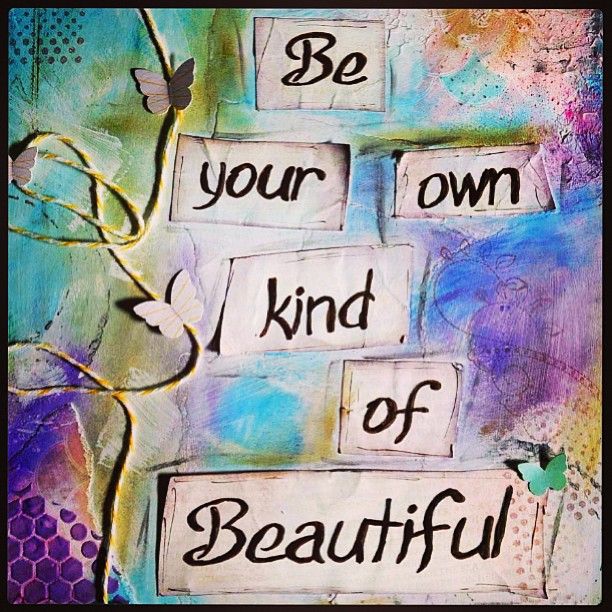
“I’m so beautiful,” she sighed, satisfied, “I am beautiful like me!”

beautiful1


King of the Red Train

A small boy today shared last night’s dream:

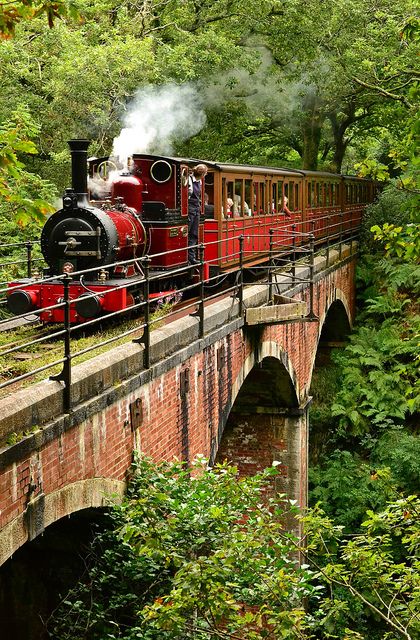
“I was the king of the red train. Red is the best. It was even more longer (sic) than the subway and another subway and another subway and it was going very fast like a cheetah and I wasn’t scared because I was the king of the red train.” (slowing to explain) “The king is the boss of the train and the whole country.” (picking up speed again) “And all the people were happy because the train was going so much fast (sic) and that’s very good. You know why?” (pausing, waiting for my query before continuing elatedly) … because they were going to get home before their ice cream melted!” 

train

Just Like Daddy

A boy, age 4, stating proudly: “When I grow up I’m going to be just like my daddy. I’m going to put ties on by my whole self and a suit and I’m going to have a (sic) iPad and two iPhones even three and be busy and go to work everyday …”

He pauses, and a little frown climbs up his young forehead … He takes a breath, and continues, a little less enthusiastically: “yeah, I’m going to go to work …”

He pauses again, reconsiders. Looks up at me, a tad concerned. “Can grownups go to work and … um … play?”

just like daddy

“All kinds of upset”


The young girl stomped up my stairs red-faced, eyes shining with unshed tears, her usually tidy light hair disheveled, one pigtail-holder dangling dangerously close to losing hold. She slammed her book-bag on the floor, pulled at her coat sleeves and sat huffy by the table, arms crossed.

“What’s going on?” I asked.

“Nothing.”

Well … I was far from convinced … It seemed more like anything but.

“Sure looks like something is going on …” I offered, “you look upset, and you usually don’t just throw your bag on the floor and sit down … ”

“Sorry,” she mumbled and reached over to right the bag, not seeming particularly enamored with me, either.

“Oh, I don’t care about the bag,” I stated, realizing I could have certainly worded myself better. “I was just saying how you looked upset. I know that when I feel like tossing a bag onto the floor like that it is usually because I’m feeling upset.”

“Yeah.”

I waited.

“So I’m upset, okay?!”

The I said what you wanted me to say, so are you happy now? tone was evident, and it made me smile.

Wrong move. The girl’s forehead darkened. “What? So it’s funny?”

“No! Not at all!” I back-paddled, volume of smile lowered considerably. “I was smiling with affection. You don’t have to talk about any of this if you don’t want to. I’m just sorry that you are having a rough day.”

Silence. The child backed into the chair, progressively slumping as if all the air leaked slowly out of her. I waited. When she said nothing, I placed my hand on the table close to her, offering support. She looked up at me, unhooked one arm and played absentmindedly with my bracelet, then took my hand, and looked up again. Her green-gray eyes were brimming now and I could see that there were two trails of dried tears already on her cheeks, prepared to shuttle the incoming ones.

“I hate it when everyone tells me what to be!” She blurted, voice choked.

“Yeah,” I said softly.

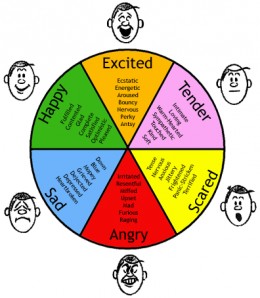
“I am upset!” She stated. “A lot! All kinds of upset. Remember how we worked on feeling words and synonyms and opposites and all that stupid nonsense?”

I smiled. I did remember. Of course I did not think that any of it was even close to nonsense (especially not ‘stupid nonsense’ …), but I didn’t think being persnickety would help and so I kept my mouth shut about that.

“Well,” she half-smiled, realizing. “Sorry … not stupid nonsense, but sort of. It was really boring … but, anyway … I’m also feeling really annoyed and irritated. Disgusted, too. All part of upset, isn’t it?”

“Aha,” I confirmed, figuring that as she was doing a really good job herself, the best I could do was keep myself from interfering or thinking I knew what she wanted me to say.

“So I am. Upset. Angry. Frustrated. Whatever. Why do adults get to make decisions about my life? It is my life, not theirs!” She looked up at me, her pretty face now more sad and disappointed than angry. Putting feelings into words often does that … Verbalizing helps emotions clarify and flow.

“I’m sorry,” I said. I did feel sorry. I hate seeing children upset, and I know how helpless kids can feel sometimes–some of them absolutely all too often and this particular child more often than I’d like her to.  I also felt proud of her. For a girl who not too long ago had very few words with which to describe anything, let alone her own feelings, this was seriously wonderful progress.

“My mom says I can’t go to sleep-away camp,” she finally spat out, letting go of my hand in dejection and curling back into herself. “She says that ‘I need the summer for catching up with schoolwork’ … What about what I need? What about if I need a break?” The tears cascaded now, the unfairness of it all flooding her.

I sighed. This was going to be the girl’s first time at sleep-away, and she was looking forward to the four-week-adventure for just about forever. Her cousin and a good friend were also planned to go to the same “sports and fun camp”, as she called it, and it had been my impression that the parents were naturally wary to have their little girl away for the first time, but still supportive. Whatever brought this on, I did not think that canceling the camp was a good solution, and certainly not for supposed academics.

She looked up at me, suddenly suspicious. “Did you tell her that I need to stay home to do school work all summer?”

I certainly did not, but even before I could say anything, she took a breath and shook her head, “I know you wouldn’t, though. You always say playing is important, too. You don’t even like homework for kids with long schooldays. I heard you tell my mom that, on the phone …” she looked up mischievously, imparting a secret. “Don’t tell her … she doesn’t know … but I listened on the other line …”

I chuckled. Eavesdropping is not the most polite thing, even if I couldn’t say I blamed her for being curious to know what was being discussed when the topic was herself.  Talking about boundaries and appropriate behavior could wait, however.

“You’re right,” I said. “I do think playing is important. As important as learning. Sometimes even more important. I’m not sure why your mother said what she did, but if you’d like me to, I would speak to her about the summer camp. In fact, I want to know from her what this is all about.”

Hope dawned behind the tears. “You’d tell her I should go?”

This got another chuckle. Smart cookie, this one. “Well … I certainly think it is a good idea to have a break, and personally I would like to see you going, but parents have all kinds of considerations … I would like to speak to your mother about this but I don’t know that I will tell her that you ‘should’ go.”

“Okay …” she deflated some. “I wish you would tell her, though. She’d have to send me there if you say so.” Sigh. Shrug. The child finally unzipped and emerged from her coat (I was wondering how long she was going to let herself be cooked, with the heat on in the room besides). She hung the coat on the back of her chair and moved an arm–slightly defiantly, I thought–over her eyes and cheeks. Why bother with a tissue when there is a sleeve nearby … and when she can thereby show her discontent for my not promising to order her mother around some …

I smiled, and she smiled back, blushing slightly. Kids know when we see through them (though we are sometimes far less perceptive when they see right through us!).

We went on with our session, but before she got picked up by her babysitter the girl stopped me mid-sentence as I was discussing a task we were completing. “You won’t forget to talk to my mom, right?”

“I won’t,” I promised.

“I mean, don’t forget to tell her I was really annoyed and angry and frustrated and all kinds of upset about it!”


You bet’cha, little one. And so well done … No way I would forget, and me all kinds of proud of you for that …
 

Feelings


Three’s Company!

friends1

A little boy on the street this morning: “Mommy, when can I have a play-date with Bobby and Martin?”

Mommy: “You just did on Sunday. Don’t you remember? In the park?”

Little guy: “Yeah, but its already more before than yesterday!”

Mommy (chuckling): “Okay, let me call Bobby’s mom and see if you can play with him later this afternoon or tomorrow.”

Little guy (pedagogically admonishing): “Martin, too, Mommy! We’re friends together!”


Ah, friends together! Best friends are immensely and unquestionably lovely, but in my view–and this little guy’s clear statements–the third wheel theory is wildly overrated. Philosophically speaking, a third wheel can indeed offer an extra level of stability … Truth be told, there’s nothing quite like triple decker fun: gales of laughter multiplied, mischief bubbling like a shaken soda-bottle … Not too few and not too many (and if you’re a skipping gal, enough for double-dutch!)

I can see then in my mind’s eye. Three little fellas: this curly top boy, Bobby, and of course, ‘friends together’ Martin … There they go, conquering the playground and marshaling a bench for headquarters. The Three Musketeers. The Trio. The Triple Besties.

Come to think of it–when is the last time you got together for a tricycle of laughter. How long has it been since you had a play-date of ‘friends together?’

I know it’s been a while for me, and overdue for some revision. How about you?

Three’s company. Pick up the phone. Do not delay. Go play!

friends2

Tree Life


“Are trees sad when people cut them?” The little boy came out of a week of school focus on earth, nature, resources, deforestation, and endangered animals.

“What do you think?” I returned the question. He has a reason for asking, after all.

“Yeah,” the seven-year-old sobered. “I think trees get sad because then they die and they can’t make leaves and flowers and acorns anymore.”

I nodded, sensing he has not quite finished and wanting to give him time to find the words.

A quiet moment passed, then his right eyebrow shot up the way it does when he gets an idea. Ideas for mischief, yes; but also for an answer that eluded him or a solution he did not see before. He touched the top of the table with his fingertips, and his eyes wandered over the floor, the bookcase, the closet door.

“You think maybe the trees are also not so sad,” he continued, “if people make stuff from them and then they get to be other things?”

“Um…hmm …” I noted in agreement, letting him work this through.

“Like if the tree gets to be a table or a chair or even a book then it is still important, right? But …” his young face wrinkled in too-old-for-his-age consternation, “but … maybe the trees are sad if they get burnt in the fire or something … because then they’re gone and can’t be anything anymore?”

“I see what you mean,” I offered, “but what if burning the wood helps keep people warm in the winter or cook their food?”

He brightened. “Yeah! I think maybe then the trees don’t get so sad … because they kind of make the food … ” His face got transformed once more, this time to seriously didactic, “But … but people still have to be very careful to not cut too many trees, right?”

“Right … ”

“… because the trees want to grow and be happy and also the squirrels and the birds need trees and monkeys and other things. Bugs, even. Some animals live on trees,” he instructed me, “That’s where they build their home. So people have to be careful because it is not fair to break all the animal homes and chop off all the trees to make things …” he paused. “And anyway, you can make tables from other things, too. Like plastic. Or maybe even a rock … I think …”

He quieted for a moment, his eyes wandered again around the room and rested on my bookshelves, on the National Geographic magazines on the side table, and the paper-packed folder with his work peeking out of the backpack on the wooden floor.

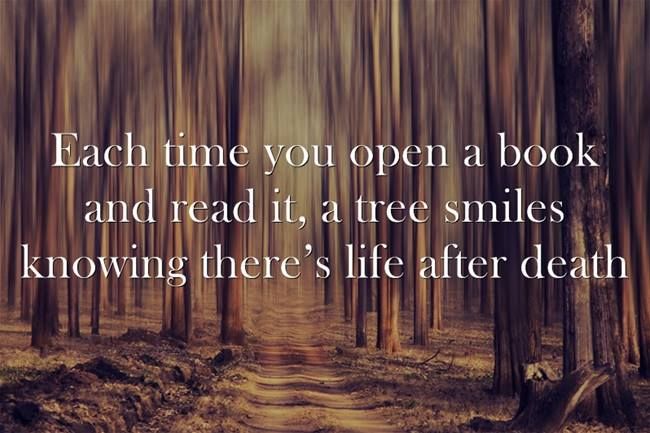
“I think trees really don’t mind if they get to be books, though” he added, satisfied. “Because then they can tell stories even if they can’t talk. I love trees and I love books.”

Couldn’t have said it better myself.

treelife

Kids’ Logic

Kids have been known to say the most amazing things. They can come up with stuff that leaves jaws hanging. Make connections we did not see coming. Expose language ambiguities that we no longer hear, and make expressions a never ending study in explaining why we did not mean the words we said even though we very much did mean what we said …

Kids can also give the most hilariously brilliant unexpected answers.

Here is a compilation of answers from 25 kids whose responses on tests, quizzes, assignments and schoolwork prove that they are awfully literal, completely out to lunch on what’s inquired about, totally impish, wholesale Smart-Alec’ish, or a combination of the above …

whatended

Read more and enjoyhttp://www.viralnova.com/awesome-kid-answers/#VGpIS22CscTiyxSg.99

Thank you ViralNova.com for this delightful collection!