Shine

fall back clock

From Etsy

She looked at me with sparkles in her eyes: “My Granny’s coming tomorrow!”

I smiled.

“We going to have so much fun!” Her eyes shone. “Granny is my favorite grandma ever forever!”

“You’re excited she’s coming,” I stated.

The child gave me the “that’s-the-understatement-of-the-year-look.”

The mom and I exchanged glances and laughed.

“Can you imagine her as a teenager?” the mom noted, chuckled. “She’s practicing the eye-roll already …”

The little girl transferred “the look” to her mom, but only half-heartedly. They were both of them quite giddy with the prospect of the visit. The grandma lives out of the country but the bond is evident. I often hear tales of simultaneous cookie-baking on both sides of the Atlantic, bedtime stories on FaceTime, and daily checking-ins. Now Granny will manifest in real life, and Mom’s eyes–an only child herself–were just as shiny as her daughter’s.

“She going to stay in my room,” the four-year-old danced on her feet, shoes alight with strobes and glitter. “I have the best comfy bed for her …” she lowered her voice in exaggerated gossip-conspiration, “because she old … but …” she glanced at her mother, maybe aware of the weight of possibility or maybe remembering the source of the added information, maybe both, “…she not dying yet. She just a little bit very old.”


For The Daily Post: Shine


Tom’s Secret

The animation video below was chosen to lead the European Day on the Protection of Children against Sexual Exploitation and Sexual Abuse which is held on November 18.

The five-minute video had been originally launched in Hebrew, and was since translated to Russian, English, and French. It guides parents, teachers, and other caregivers in ways to identify and react to cases of sexual assault and abuse in children. It has been incorporated into learning programs in Europe, Asia, and the United States.

The clip portrays with sensitivity and clarity the reactions children often have to sexual abuse: dissociation, denial, secrecy, fear, worry, shame, and more. It also shows the behaviors children might display and which should be treated as red flags: reluctance to do things or go places they might’ve enjoyed before, irritability, sadness, refusal, lack of appetite, bed-wetting, physical complaints, etc. While these may not be specific to sexual abuse, they are often representation of distress, and need attending to.

It is a fact that most children who endure sexual abuse don’t tell. At least not directly.

It is also a fact that many parents/teachers/caregivers don’t know when to ask or how to ask or what to do or say if they find out something did take place. They may not understand how a child can seem okay, even when they are internally not okay. Even those who want to help, may not know how to go about it.

This video offers a good start.

Watch it. Share it widely.


For the Hebrew version, and more information (in Hebrew) about sexual abuse of children, and ways to identify and respond to red-flags, click on the link to an article below:

http://www.ynet.co.il/articles/0,7340,L-4880054,00.html


You going to have to wait…

stubborn
photo: pinterest.com/pin/339810734368459869/


She didn’t want to wait.

She wanted a treat NOW. Not later. Not after she finished her work. Not after session. Not after dinner.

No waiting.

NOW!

She was NOT going to move, or sit, or come, or go, or climb the stairs, or listen, or ANYTHING until she got her treat.

Which she wanted NOW.

No waiting.

Making her wait was “mean.” It was “not fair” and “not nice.”

She wasn’t having any of it.

None of her mom’s cajoling. None of her mom’s reasoning. None of her mom’s threats of consequence or punishment or loss of playdate or no TV or no iPad or no … something … unless …

I heard them argue. They were still at the bottom of the stairs. Two frustrated voices. Volume rising.

I could visualize the little girl. Arms crossed and foot stamping and lips pursed out in a pout, jaw forward in clear dismay and stubborn determination. I’d seen her do the ‘you’re not gonna make me’ before.

“Upstairs!” The mom ordered, fed up. “Now!”

“You not waiting EITHER,” the child accused, sounding vindicated. “You say go upstairs NOW. I saying go to the store NOW. I want my treat NOW!”

“Don’t be cheeky!” Mom’s voice went up an octave.

“YOU not be cheeky!”

This was devolving. I walked downstairs toward them.

Red faces, one large, one smaller, looked up at me. One in exasperation, one in challenge and a touch of “yeah … so what are you gonna do about it?”

I smiled. “Seems like I’m the one whose waiting…”

The child frowned. This didn’t quite fit her script.

“I’m not going!” she huffed.

“She won’t come up,” the mom accused.

“I want a treat NOW!” the little one dug her heels.

“Oh boy,” I lowered myself onto one of the stairs. “Mind if I sit down? Seems like you’re a little stuck. Can you tell me what’s going on?”

“She won’t get me my treat/She won’t cooperate” They spoke together.

“Are you hungry?” I asked the girl.

She regarded me suspiciously. She knew me well enough .

I raised an eyebrow in question.

“Yeah!” she raised her chin accusingly. “And mommy said we can go to the store and get a treat and now she say go up NOW. I’m not!”

“Hmm …”

“There was lots of traffic,” the mom’s chin was only slightly less raised… “I told her if there’s a lot of traffic we may not have time to stop at the store.” She turned to the girl, “maybe next time you get your stuff faster so we won’t leave so late …”

The child’s face grew angrier. Couldn’t totally blame her … this was a bit low …

“Traffic can be tough in the city,” I intervened. “We can think together about some better planning for next time but now … we have a hungry child and no snack. Good thing I have some snacks upstairs. Shall we?” I got up and offered a hand to the child, eyed the mother meaningfully.

She understood. Stayed silent.

The child narrowed her eyes at me. “What treats you have?”

Bargaining. We’re making progress.

“I don’t know. I’ll have to check upstairs. Let’s go see.”

Eyes still narrow. “What if I don’t like them?”

“I guess we’ll have to see.” (I get really boring when I’m not going to say much more…)

“But I still get a treat after.” This was demand, not query.

“This is between mommy and you, but for now, lets get something into your belly so it isn’t hungry.” I moved my arm closer and she took it. We began climbing, mom trailing a few steps behind.

“Na’ama says I can still have my treat later,” the child swiveled her head back and declared to her mother. A little victoriously.

“This is between you and mommy,” I repeated, not quite able to keep the amusement out of my voice.

“Mommy promised me a treat,” she insisted, but her legs were still climbing so I knew she was only half-combative now, making conversation.

“Yes, you told me. Too bad there was so much traffic.”

“Yeah …”

“I don’t like traffic much.”

“Me too,” she sighed.

“Me three…” Mom piped up from behind.

The child stopped, turned, giggled. “That’s not how you say it!”

“I guess Na’ama will have to help me say things better?” Mom smiled back.

“Yeah!” she liked that. She climbed energetically up a few more stairs. “But …,” she paused again. “You going to have to wait …”


New Beginning: Habit & Opportunity

opportunity

“He still won’t read.”

The mother’s voice held disappointment and frustration. Her son struggles in school and was required by teachers to read every day over the summer, but hadn’t.

“I did read!” he protested, pouted. Hurt. “I read two whole books!”

“Only because we made you read!” She retorted and turned to me. “Every day is a new excuse. He’s too tired, the book is boring, it’s too hard, he’ll read later, he hates reading, it is stupid … He’ll do anything to avoid it.”

He stomped to the chair. Sat dejectedly. I patted his arm. “I’m glad you read two whole books,” I said. “Which ones?”

He brightened. Threw a “you see?!” look at his mom, and told me. We discussed what he liked about the stories, what he didn’t. What was hard, what wasn’t. We then went over a list of possible titles to follow.

I scheduled a time to speak with the mom. Her frustrations need venting, and she needs solutions, but we can talk about her disappointment without him needing to be present.

♦♦♦

Every child is different but the complaint is not unique. Children and parents rarely battle over things that are fun and easy. It is the stuff that’s hard, confusing, boring, tedious, or appears to be of import to one side but feels less so to the other … where lines get drawn in the sand and stubborn frustration ensues.

Parents cajole. They threaten. They withhold privileges. They might use shame as ‘motivator’ by characterizing the child as lazy or ungrateful, oppositional, immature …

Not surprisingly, these tactics rarely work to ‘motivate’ learning. Nor do they solve whatever problem underlies a child’s reluctance to read: difficulty decoding, difficulty comprehending, delays in language and learning, issues with processing and retrieval, attention issues, stress and overwhelm …

A new school year is seen as opportunity for new ways of learning, new progress, new habits. Parents expect their children to enter school with gusto after a summer’s break and to give it their all. They often expect improvement of whatever issues may have been present the year prior. They verbally and otherwise communicate their expectation that the child prove himself or herself as mature and hardworking, and overcome whatever habits held them back.

A new grade and new beginning indeed offers much new opportunity for doing things differently. However, for that to happen we cannot fall back on failed methods or less-than-helpful habits. If children knew to do better on their own, they would do so already. No child wants to fail. No child enjoys the negative attention of reproach if they can get the positive attention of pride and praise.

♦♦♦

“So what am I supposed to do?” the mother asked when we met. Exasperated.

“You did the best you could last year, and this year we’ll have to work together to do better,” I replied.

She was taken aback. She didn’t expect me to include her in the assessment of last year’s difficulties …

I did not mean blame, but I did mean accountability. Parents often do the best they know, but they are often overextended themselves, and some don’t quite follow through. They may want to follow suggestions but only do so sporadically, or expect the child to take full responsibility for remembering new tasks that they themselves forget … then feel pressed to blame or require … They may get discouraged at the first sign of difficulty (not unlike the child, maybe …) and not continue to work toward new habits when the implementation hits a bump or scheduling needs to be adjusted. They may balk at taking on more responsibility in a life that may already feel too stressful (again, not unlike the child…).

Parents deserve guidance. Shame does not work any better on adults than it does on children … Parents can use encouragement, not blame. Many can benefit from reminders and a pathway to setting new habits. It is not a weakness or poor parenting to make errors or get frustrated or not follow through. People aren’t perfect. We all need help in some areas.

♦♦♦

For this boy, now in mid-grades, and often argumentative and quite fed up with “everything being too difficult”–new habits will (hopefully) include less fighting and more working together, less demand and more playfulness, less critic and more problem solving, less rigidity and more predictability, less shaming and more understanding.

Practically speaking?

  • Setting a weekly schedule where one of the parents reads TO him every night or almost every night (on the benefits of reading check: How early? For how long? ).
  • Separating the child’s own reading for decoding and school, from the parents reading TO him for literary exposure and pleasure.
  • Taking care to not make a parent’s reading time an opportunity for ‘testing’ vocabulary or memory about the story (talking about the story is fabulous, quizzing is not).
  • For books mandatory for school (but too difficult for the child’s reading level), using audio books as accompaniment to printed/electronic book. This helps the child follow the written word and assist him with decoding and comprehension.
  • Placing reminders for reading-time and having a timer he can set to ensure he is reading long enough and can do this independently.
  • Scheduling daily reading (for school and book logs) at a time that is realistic, rather than opportunistic.
  • Providing assistance with homework and/or test preparation, so that the child is not left to manage what is too difficult on his own, and ends up too stressed and exhausted to optimally process information.
  • Incorporating narrative into the day to day and offering modeling of narrative instead of requiring the child to constantly answer questions.
  • Offering a model for making time for reading. Adults who read are more likely to have children who enjoy reading.
  • Setting the child up for success, not failure: rather than focusing on a day he didn’t read or what he isn’t doing well yet, offer praise when he does do his reading without arguing; remind the child what worked before and what he can try to do again; offer solutions, not reprimand.

♦♦♦

In this new school year, what old and less than desirable habits can your child replace with brand new opportunity?

What steps can you take to help?

If you need help to formulate a plan–it is okay to ask for it. That, too, is an opportunity.

reading-extinction-buzzfeed

from Buzzfeed.com


Stressful Situations Simulation: A resource

Below is a good resource and simulation of stressful situations that can be immensely helpful to parents and caregivers. I especially recommend the ones involving “Family Support”: “Calm Parents, Healthy Kids” and “Building Family Bonds.” These scenario simulations inform, teach, and actively guide parents and caregivers through various scenarios of interactions with toddlers in commonly challenging situations.

The resource can be invaluable information for parents and caregivers who are inexperienced and/or may have had less than good enough parenting themselves, and who may not know how to facilitate clear, supportive interaction with their own children, especially under stress. The simulation is presented in a non-shaming, educational way, and provides the participant with an active role in choosing different ways of responding … and being able to see the possible reactions to them … It also allows the participant to ‘re-do’ situations so they can experience how better choices can bring better results …

Practicing is important for any skill, let alone for skills one needs to apply in stressful situations. The very way our brain processes information is affected when we’re stressed, so it helps to already know what to do beforehand. Also, our own stress and how we manage it gets communicated and passed onto children in our care. This makes it doubly important to learn and practice (and then be able to model) new skills when one is calm and in neutral situations–as this simulation allows one to do.

Calm, informed caregivers help raise calm, healthy, competent kids. This can help!

I highly recommend you take a look and see:

https://conversationsforhealth.org/#conversations

bubble happy


On The Matter Of Monsters

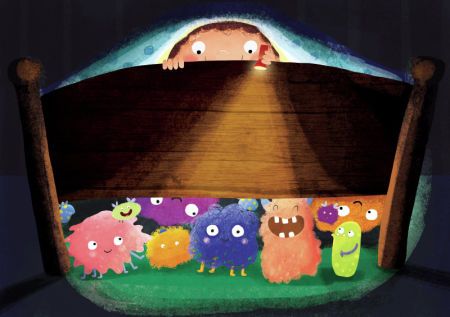
Angelika Scudamore - monsters under bed scene

http://www.angelikasillustrations.com: “monsters under bed scene”


Zane’s mother looked exhausted. I asked her if all was well.

“He won’t go to sleep unless I’m with him, he is taking forever to fall asleep and waking me up several times every night,” she sighed. “It is exhausting.”

“How come?” I asked, looking from the preschooler to his mother.

“It’s the monsters,” he chirped to clarify.

“For the hundredth time, Zane,” his mom exasperated, “there is no such things as monsters and there are certainly none in your room!”

“Is too!” his lower lip tightened in determination then began to tremble.

Zane’s mom took in a long breath and mouthed a silent “help.”

I smiled gently. The matter of monsters comes up often. Many young children–especially between four and six years of age–go through a period where they fear monsters. Under the bed, in the closet, behind the curtains/desk/wardrobe/chair, camouflaged among the stuffed animals on the top shelf … At the age where imagination and reality can merge and the veil between what’s real and what could be is thin, many children find the dark ominous and fear the parting with parents for the night and being left to their own thoughts and imagination. They are often too young to verbalize what it is they fear, exactly, but the feelings are still there: scary, dark, sneaky; the territory and making of monsters.

Scared or fearing to become so, they plead, coerce, and cry for their parents to stay and make sure they are okay.

Some are reassured by the adult checking under bed or dressers. For others, securing the closet door closed can suffice. However, for many, the fear remains in the ‘what if’ category: “what if the monster comes later?”, “what if the monster opens the door?”, “what if it is invisible and you can’t see it?”, “what if it just pretending to be my shoes but it will scare me later?”

Perception, reality, and belief make a sticky trio; and declaring monsters nonexistent rarely helps. To many children–as with Zane–this only makes the fear grow further and adds frustrated loneliness onto it, making nighttime doubly scary.

Zane’s mother needed her sleep. Zane needed his to feel safe. It was time to bring out the ‘big guns.’

I looked at the boy. A messy head of curls, brown piercing eyes under thick brows, a smattering of freckles on a button nose, wide lips, and a tongue that likes to slip out during speech and activity regardless of whether its presence is required (the tongue thrust being the main reason he sees me for speech-therapy).

The little boy regarded me. He needed to ascertain whose side I was on. “I have monsters,” he announced, “under my bed.”

“Yikes,” I replied. “This sounds scary.”

He smiled and turned to glare victoriously at his mommy.

She looked at me with uncertainty.

“You also see monsters!?” he checked, suddenly a bit wary of the possibility. Monsters being real is one thing. Monsters being REAL is quite another.

“Nah,” I shook my head. “But you say you do, so maybe they are there.”

He nodded quickly.

“What do they look like?” I wondered aloud.

“I don’t know!” he exclaimed. “They are hiding under my bed and it’s dark.” He followed that obvious fact with an ‘adults-can-be-so-thick’ look.

“Oh.” I demurred. “What if you turn on the light?”

“You can’t see them in the light. They do magic.”

“Hmm…”

“If I go to sleep by myself they will come and get me,” he warned. “Mommy says they not there but they are.”

“Well then,” I breathed. “I’m not in your house and I haven’t seen them, but just in case they are there, have you tried telling them you don’t want them there?”

“They don’t know English,” he responded.

“They don’t?” I let my voice rise some.

“No!” he explained, “they only speak Monster.”

“Hmm…”

He nodded sagely.

“…and they eat children,” he added for emphasis, then his eyes grew big with fright at the possibility of his own words and he backpedaled, “…um, maybe … if they really hungry.”

“We can’t let that happen,” I said.

He nodded again, reached for my hand.

I squeezed his little palm in reassurance. Children may be small but their fears can still be big, and their imaginations; bigger.

“Good thing we know what to do,” I stated.

He looked at me hopefully.

I pursed my lips in contemplation. “Have you tried Monster Spray?”

“Monster Spray?” This sounded intriguing.

“Yeah. They hate the stuff. Makes their noses itch.”

His eyes grew again, this time with wonder. He looked at his mom, clearly expecting her to know everything there is to know about sprays and all manner of remedies.

She raised her palms up in bewilderment and gave me an ‘I hope you know what you are doing’ glare.

“It works every time,” I reassured both of them.

“What’s Monster Spray?” Zane asked. “Mommy, you have to listen, too,” he ordered. “Because you didn’t learn it yet.”

I swallowed a chuckle. I was waiting to see how he would get back at her for not believing him that monsters waited under his bed waiting to eat children (maybe … if they really hungry…).

“It’s a spray and it makes monsters go away. It smells the same as an air freshener or perfume. The monsters don’t know the difference,” I said meaningfully. Mom’s eyebrows lifted and the corner of her month twitched a bit. Good. One aboard.

“Like in the bathroom?” Zane’s eyes narrowed suspiciously.

“Sort of. Doesn’t have to be the same one, though. You can pick any scent you like. They hate all of them. Makes their noses itch. Here is what you have to do. You listening?

He was.

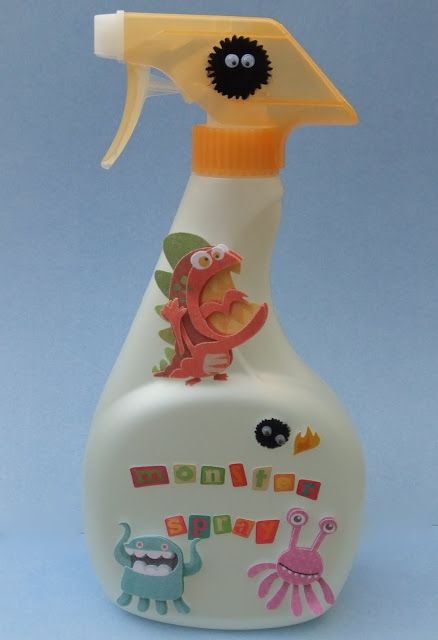
“First, you find a spray that smells good to you. Mommy can help you choose. Next you make a sign that says “Monster Spray” and you tape it on the bottle …”

He nodded in approval. It was important to label things. Especially when it came to monsters.

“…and before you go to sleep you spray a bit under your bed, and if you want you can spray a little in the air, and that’s it. If the monsters are there they will say: ‘Oh, no, Monster Spray, we better come another day!’ and they’ll go away.”

Zane’s jaw hung open in delight. “For really?”

“Yep,” I nodded. “Works every time. If there are monsters there, they’ll run away from the monster spray.”

“What if they come tomorrow?”

“If they come another day, they’ll have to deal with more monster spray … and they’ll say: ‘Oh, no, Monster spray …”

“… better come another day!” he completed, his eyes shining.

“So we’ll have to do this forever?” Zane’s mom. I could sense her wariness about committing to nightly spray-bottle battles till Zane was in college.

“Oh, no,” I clarified. “You see, once you do it a few times, if the monsters come again they will say: ‘Oh no, more Monster Spray; we better go another way.’ They hate this stuff so much, they will tell all their monster friends to go another way!”

“Better go another way!” Zane clapped his hands, intoning, “Oh, no, Monster Spray; better go another way! Hey!” he paused, “Spray-way!” he lisped. “It rhyme!”

“It does indeed!”

“Spray, spray, go away,” Zane sang to himself and doodled as I explained the ‘anti-monster process’ to his mother.

Any scented spray would work. Body mist or freshener or even bottled water with some essential oils, vanilla extract, or lavender for scent. The scent will help Zane remember that the ‘Monster Spray’ is working, and can make associations to feeling safe and in control. I recommended keeping the spray bottle within reach, in case he woke at night and needed a ‘booster squeeze.’

As we returned to speech-sound practice, we spent part of the session making a label with the words “Monster Spray” on it, complete with a drawing of a dark-green/red/black blob (“that’s the monster, but you can’t see it because it is under”) and a figure in a cape holding a spray bottle like a sword (“that’s me, because I am super-Zane”).

The progress report the following week was that the monsters had such itchy noses the first time Zane used the newly minted spray on them, that they declared right away: “Oh, no, Monster Spray; Better go another way.” When a few monsters did not get the memo and tried their luck a few nights later, Zane spritzed them and they reportedly scuttled away to warn all others that: “Zane has Monster Spray, better go another way!”
monster Spray1

Half-Angel

What do you do with a grieving child?

You listen. You hold. You listen some more.

You offer tissues, you offer a hug. You answer lots of questions.

You nod. You tell stories. You honor the small memories told.

You come up with suggestions–or rather, embellish on those that the little one has.

You produce boxes (“too little”, “too big”, “too not-good”, “I don’t like it”, “okay, this one …”), find padding and ribbons and stickers, along with a few extra hugs.

You write what’s requested. Erase the letter that did not look perfect. Write it again. Erase. Write once more. You understand that it has to be just-so.

You provide blank paper and crayons, markers, highlighters, scissors. Play dough.

You oblige to search Google for questions your answers were not good enough, and come across five hundred other interesting things that lead to more questions. Distraction is good medicine, too.

You write down a protocol for ceremony, number the steps, change the order.

You make a headstone from tongue depressors and card stock. Give another hug.

You write the name of the departed. Erase it because it did not come out perfectly. Write. Erase. Write once more.

You draw a picture and told it “doesn’t even look like him.”

You are saved by a photo from the bowels of phone memory–a snapshot of happier times.

You give more hugs. Another tissue.

You stay with. You listen. You know that no small loss is small. That no one is truly replaceable, that loss is confusing and brings along with it the worry of losses far bigger and questions too scary for words. You don’t go where the child does not take you. You comfort, you understand.

What do you do with a grieving child?

You listen. You hug.

You promise not to forget.

You tuck the drawing in the folder (“but be careful”) to keep it safe.

And you use a tissue yourself, when the child wonders aloud if dead fish get to have wings and continues to answer himself:  “Yeah, because they have fins, so Benny was already half-angel.”

beta fish

A Forever Family

The little boy was beaming yesterday.

“You know what?” he said, having barely parked himself on the little chair in my office.

“What?” I pretended.

“I’m SO happy.”

“You are!” I exclaimed, smiling. Even a boulder would see that the little guy was delighted. Delighted and relieved, actually.

“Now my parents can be my REAL parents!” he gushed. He sobered then–this boy does not take family for granted. Abandoned at birth with visible deformities, trundled through foster care homes and more losses, and finally finding an adoptive home with parents who were dedicated to him and where he was cherished. “If something happens to Daddy …” he paused, “then Papa will still be my father.”

He reached for my hand, excited and a little scared at what he just stated, momentarily overwhelmed by the proximity of both loss and hope. It took a lot of love to get this boy trusting that his home was a ‘forever home’ and that he was really wanted; and sometimes worry still snuck in, triggered by the destabilizing challenges of very real uncertainty.

Such as when he needed surgery and only one of his adoptive parents was allowed to escort him to the operating room, because only ‘legal guardians’ could, and the law did not allow both his parents to adopt him, only one. Daddy was recognized as his parent. Papa was not. It scared him that people could say that Papa was somehow not his real father, that other people could — again — decide about his life.

Or when his legal parent was away on business and the new school guard gave the boy’s papa trouble picking him up because there was no official note on file indicating that he was among the ‘approved caregivers.’ It took a tense while to locate the classroom teacher to confirm that this man that the boy called “Papa” was indeed one of his parents and had collected the boy from school before. For several days later this little boy refused to go to school. He insisted on waiting for Daddy to return. He was scared that school people won’t let Papa take him home.

Now in my office, this little boy fiddled with my bracelet, as children often do when they are feeling a little tender but need to be the ones establishing how much connection to allow. “Sometimes at nighttime I have bad dreams … about having to go back to foster care.” He looked up at me, dark eyes like deer in headlights, hair framing his little face in a frizzy halo.

I squeezed his hand gently. He looked at his papa, who was sitting quietly with us, his own eyes bright, and allowing his son–son in all ways but legally until now that the Supreme Court declared the constitutional right for equality in marriage and family–the space for these complicated feelings.

The boy reached out for his father and received a hug. “It is  going to be more safer now, right?” the boy asked, face buried in his father’s shirt.

“Sure is,” the father planted a kiss on his son’s head, who at not yet six years old was already a veteran of too many worries. “Your home is with me and Daddy. We are a family, you and Daddy and I.”

“And Priscilla!” the boy added in reassured indignation. “You forgot Priscilla!”

His father chuckled. There was no forgetting Priscilla the ever-into-something dog. “Of course, Priscilla is part of our family, too!”

The boy snuggled into his father’s hug another moment. Sighed contentedly. Peeked at me and smiled. “The judges said that my Papa can also be my father now. Like my Daddy. Forever and ever and ever and ever.”

family