“I am SO bad at history,” she stated bitterly. “I hate history.”
After letting in a bit of sympathy and a bit of gentle urging, she pulled out a stapled test striped broad with red–remarks, circled words and crossed out answers–the teacher’s mutilation. A large C dominated the top of the page. She threw the paper on the table, her face a salad of emotions: regret, embarrassment, disgust, disappointment, sadness, frustration, despair, shame.
“I’m not taking this home,” she said. “Can you keep it in my file here instead?”
“How about we look at the test together,” I offered, skirting the question.
She frowned (kids always pick on adult evasive maneuvers …) but nodded grudgingly. We went over the questions and her answers. She was actually almost correct on most, just not quite as the teacher wanted. The girl misinterpreted directions on a couple but wrote accurate facts; misplaced a number on a date; confused an ambiguous passive tense and so got the answer wrong (trick question, that one was); wrote the wrong sequence of correctly memorized events …
The teacher gave no quarter for mistakes of any kind, no leeway. The red marks slashed through the test in an assured hand of criticism. To add insult to injury, the bottom of the second page read “Try harder next time” … harshly assuming that the effort was what lacked, rather than skill or speed of processing.
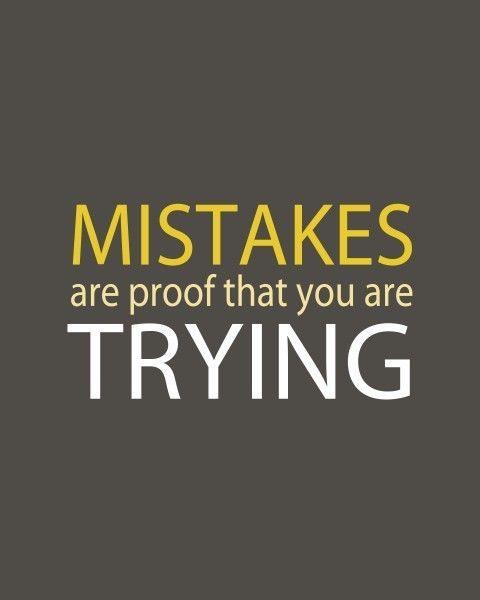
In effect, the mistakes were very good proof of trying. They were signposts of the effort put in by a child who finds memorizing difficult and worked hard to understand the unfurling of what happened to whom where and when and why. She knew the material, even if the test plumbed all her weak spots and completely ignored the many things she studied.
Comforted some by the validation of her work, she calmed, vindicated that she wasn’t “bad at history” and bolstered by understanding that while the teacher had the right to take off points for errors, there were many places where knowledge came through, if imperfectly.
For the rest of the session we worked on attending to test questions: identifying exactly what was asked, highlighting important words in questions and directions, re-wording it if necessary, reading all the answers before settling on the best one, writing down key-words. Strategies for testing.
In the end she left with the offending graded test in her backpack, ready to take it home and armed with the understanding of what she did right, not only what came out wrong. Still disappointed, she was at least no longer ashamed.
“I think Ms. J sure does loves red,” she noted, a bit of snark in her voice but humor finally restored. “Maybe someone should get her a green marker …”
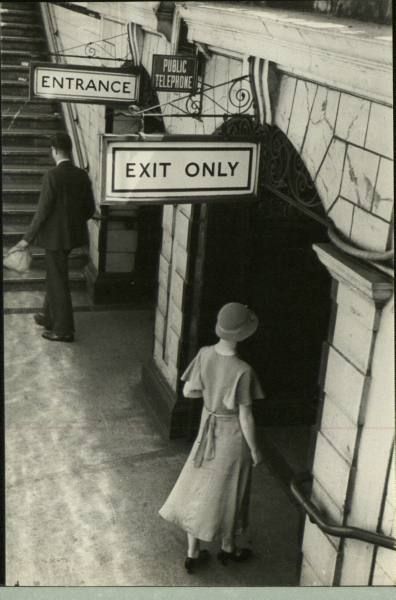
A friend sent me this photo, taken 1910 … and I thought, it was the best BEST example ever, of bending the rules … (or at least those rules that make no sense beyond to those who made them … )
I was reminded of it today, after speaking with a young boy who complained that he got into trouble–yet again–for breaking “another of the teacher’s stupid rules.”
The boy’s mother had her mouth already open to reprimand him for using a word one ‘should not say’ in the context of one’s educators … but I gave her one of my ‘please don’t’ looks … and she took a deep breath and nodded.
“What kind of rules?” I asked.
“Stupid ones,” he grumbled. Then seeing that I was actually waiting to hear an example, he sighed. “Like not being allowed to hold our pencils while we’re reading. She keeps taking points off when I break the rule.”
“Did she tell you why she doesn’t want you to do that?”
“I don’t know,” he shrugged, “because she said so?”
I chuckled. “Fair enough … sometimes grownups say that you should not do things just because they say so … but I was wondering if she ever actually told you why. Sounds to me she maybe has a reason–maybe kids play with their pencils? Drop them a lot and it is distracting? Doodle in the books?”
The boy peered at me with a look that let me know that I have just lost about 200 points of coolness in his view along with several dozen in the IQ department. “Sometimes we’re supposed to write in our books,” he stated, “… anyway, if she said it was for that it would make sense, sort of” he added. “I don’t drop mine. I just hold it. She doesn’t want us to hold the pencils just because.”
I raised an eyebrow. “Just because?”
“Yeah,” he stressed. “She said that we don’t need a pencil in our hands for our brain to read…” the boy pouted. “How does she know what my brain needs for reading? What if the pencil reminds my brain what the letters are?”
Point made.
I actually could see how it could do that.
I told the little guy that if it helps him to hold the pencil when he’s reading, to go ahead and do so.
He looked at me, suspicious. “It’ll get me in trouble.”
“Not if you tell her that I told you it’s okay for you to keep holding it if it helps your brain.” I smiled, more than a tad conspiring.
His eyes grew large, and the grin that followed had enough wattage to light up Manhattan’s night sky.
Last year, a preteen I worked with told me about a child in her class who began cutting herself. The classmate showed this child the scars but swore her to secrecy.
We discussed the kinds of secrets that one should not keep (the ones that feel ‘too big’ to keep, or are about someone being hurt, or feel wrong to keep, or come from shame or guilt), who to tell (a parent, a teacher, a trusted adult, even the school nurse), and how. The girl was relieved to know that she did not have to keep this scary secret (“I get worried that maybe she’ll like, bleed to death or something and then she’ll die and it will be my fault for not telling anyone …”).
In our conversation, the reasons children self-harm also came up: to deal with difficult feelings, to express pain they don’t know how to verbalize, to feel alive, to feel numb, to ‘try and see how it feels’, to be noticed … And what to do if she ever felt the urge to hurt herself (thankfully, she said she never did feel that way, but it never hurts to give some options just in case …).
Relieved though this girl was to know she could share this secret with someone, the preteen was also worried that it will somehow become known to the other children and how it will make things worse. “Kids are already like, making fun of her for everything …” she fretted, “so, if they found out she’s like, cutting … they’d be all like, joking about it and texting and stuff ….”
Apparently the self-harming classmate–not the most attractive by other students’ standards (directly derived from society’s harsh shaming of anyone who does not adhere to a very narrow range of ‘acceptable’) was found to have confessed a crush on a boy in a higher grade … Someone found the note where it had fallen from the girl’s pocket, ‘kindly’ photographed it, and circulated it in among the students, along with some choice words about the girl’s morality (you can insert your own words here, copied from the shaming terminology of grownups toward women and girls: ugly hurtful words that are meant to cut to the core). A cascade of comments and ugliness ensued, along with catcalls, leering, and whispered words.
“Some kids even say that she’s like, you know … the ‘c’ word …”, the girl blushed in embarrassment and indignation. “She didn’t even kiss him or anything …” she said, then added urgently, “not that it would even be okay if she did let him kiss her … or, you know, stuff …”
The “if she did let him” did not escape me … nor did the outright meanness of exposing vulnerability and turning it onto some way to cause harm. The backbone of bullying.
Bullying is a very real issue, and not only in children and teens. The culture of putting down others for real or perceived differences and flaws is disturbing, and for those caught in it, it is often shattering. Bullying thrives on shaming, and shaming reflects a void of compassion and empathy. It is especially apparent on websites, news media, twitter, Facebook, and many online blogs: people behaves in ways that are purposely hurtful, narrow minded, and outright cruel; and it is somehow seen as witty and cool.
It is not cool.
It is not witty.
It is cowardly and it is heartless.
It is, really, a form of terror. Insidious and sneaky, but no less meant to cause helplessness and pain.
The truth is that bullying is not ‘fun’ or ‘funny.’ Cruelty of words is especially cowardly, and cyber-bullying is uniquely hurtful in that it can easily seem like the whole world is (and indeed can be) laughing at one’s misery. Many would cringe at the sight of someone literally cutting another person or kicking them in the groin, yet somehow cyber-bullying has become a culturally accepted means of expressing disdain and showcasing ignorance. Meanness is not frowned upon, but adopted and propagated. It should not be so. It can and must be stopped.
Some of the things people (children, but not only children) write:
“Why don’t you just kill yourself so we can be rid of you?”
“You are so ugly that you shouldn’t have been born.”
“Everyone hates you. Just go jump from a bridge or something.”
How have we let it come to that?
The conversation I had with the preteen was not unique–bullying often occupies children’s conversations. However, I was reminded of the one I had with this particular preteen as I watched Monica Lewinsky break her silence and deliver an outstandingly candid and important speech–her first public talk in 16 years. Lewinsky calls out the shame culture that allowed (and cultivated) the ugliness toward her in the late 90s, and which is all too alive and well today and still takes lives–figuratively or literally.
Monica Lewinsky survived it, but not without immense cost, and she would not have survived it had it not been for the compassion and empathy of family and friends who held her close through the awfulness.
Not everyone has people to hold them through bullying, and not everyone survives it. Even in those who do, the price is often very high.
Watch this video, and pass it along. It is important. It is worth the time.
Because the Shame Game can only be played if we perpetuate and feed it, and it will cease if enough of us practice compassion and empathy. Like the preteen who turned to me, and would not be a silent witness to pain or bullying, let us all become ambassadors for compassion and ending shaming.
Let there be no more casualties of shame, no more shattering of souls. Let us not be instruments of despair–directly or by our silence.
“I think life is moving too fast. I can’t keep up.”
My friend’s face on the chat’s screen was drawn. She has been through some hectic times. Her father fell and broke his hip two weeks before, cascading into issues that required not only the logistical reorganization of everyday life from an independent elder to someone who would not be likely to return to his home of 60 years; but also the emotional and psychological support for both herself and her father at this sudden change. An active retiree, her father was usually out and about, fishing, carpentering, flirting with a few old ladies at the retiree club he frequented. My friend lived only 15 minutes away, and visited often, but he rarely asked for her help. When he did, she suspected it was more as a point of connection and to let her “feel needed” than due to actual need for her assistance.
One burnt light-bulb later, and it all changed.
Life’s pace for both of them shifted. Her father’s life turned mostly idle, his days passing with him sedately in his bed, or at most in a wheelchair. Where he had counted months and weeks and days in plans and projects; he now counts hours as he waits for meals, physical therapy, and his daughter’s calls and visits. For my friend, life sped to calculating minutes into which to fit things. She juggles her job and two children, her home and preparing it for winter, the recent flooding of her basement, coordinating the care for her father, orthodontist appointments for one son, college applications for another, all while trying to manage the stress and grief and worry without losing so much sleep that she is no good in the morning.
Things do not let up. Her father is to be discharged from the nursing home very soon, and he will need a long term placement where he could continue to get care now that other systems in his body have decided to give in to old age. To top things off, she just found out there is a problem with her car that will require her to leave it for repairs for several days. The logistics of a simple car rental outdid her just the night before.
“I can’t keep up,” she stated, sadly shaking her head.
“Maybe you don’t need to–or at least, not with everything,” I suggested.
She glared at me a moment. Then her eyes softened–she knows I understand a bit about overwhelm. “How?” she asked, voice shaking now, maybe with just a hint of hope that there can be a way off of the roller-coaster and into calmer rides. “How, when it all needs to get done …”
We brainstormed, and she realized that she had accumulated quite a few vacation days. The original plan was to use the lot for a cross-country trip with her kids–and her father–but these plans may well change some anyway. It could do more good to take some of those days now. Even three days off would give her time to check out retirement-homes in the area without the stress of rushing from work to try and get catch administrators before they left for the day. It would allow her to learn more about the financial and logistical burdens her father will now face and what support can be made available. No less importantly–a few days off will give her just a bit of time for herself.
She decided to take four, luxuriating in the concept of creating time.
The realities to juggle did not change but her pace did. She found a way to slow it just a tad to give herself some sense of traction. Renting that car no longer seemed so daunting. She laughed that she would see if they had one in red, just because she always wanted do drive one that color. She friend relaxed just knowing there’d be an opportunity to catch up, pay bills, cook everyone’s favorite fall stew, drink her coffee sitting down, take a bubble bath.
“I forget,” she noted before we hung up our Skype connection. “I think so much about making sure everyone else has time to decompress, that I get squashed and do not notice until I am frantic.”
“So many of us do,” I told her. “I think this is where we can hold a mirror for one another and remind each other how to find a better pace.”
I am no longer worried about my friend. She found her balance, as she had helped me find my own once in a while. We do that for each other, calibrating pace.
Life rushes. We all rush on, attempting to catch up … But for today, may you find your best pace. A place to pause, a breather in the midst of life’s amazing and yet often tiring long race.
To participate in the Ragtag Daily Prompt, create a Pingback to your post, or copy and paste the link to your post into the comments. And while you’re there, why not check out some of the other posts too!
You have reached a quiet bamboo grove, where you will find an eclectic mix of nature, music, writing, and other creative arts. Tao-Talk is curated by a philosophical daoist who has thrown the net away.


















 Na'ama Yehuda
You must be logged in to post a comment.