The Project

photo by David Meredith

Photo courtesy of David Meredith, photographer


“I know we can do it!”

Richard infused his voice with all the pep he could muster.

The house was a dump. He wanted to put a match to it. A tent would be better to live in. The very prospect of what fixing this wreck-of-a-building would entail had him exhausted in advance. He’d fixed homes before: this project would be measured in years, not months or weeks. He could almost see the creepy crawlies inside walls, the rot above the ceiling, the mold under the floors, the who knows what in the rafters.

He hated it already.

Who buys a house sight unseen? What on earth did she expect?

“It’ll be great!” He enthused, his arm protectively around her shoulders.

She’d been so proud to find a house that could fit them all and within their minuscule budget, further shrunken since he’d lost his job. She wanted to surprise him.

He hated seeing her devastation when they arrived at their new home, belongings and kids crammed into one truck.

“The children will learn so many skills,” he stressed. “You’ll see. We’ll go room by room and prioritize.”

“It’s a disaster,” she sniffled. Looked up. Smiled. “And I love you.”


For Sunday Photo Fiction


The Bag

Photo prompt: © Ted Strutz


She stopped by to check on her elderly neighbor and saw a bulging bag on the curb. Odd. Trash-collection was two days away. Ethel could get ticketed.

She grabbed the bag. The thing was heavy! How did the ancient women lug this? She carried it up the path to the door.

“Ethel?” she knocked. “It’s Belinda.”

Silence. Was Ethel sleeping? Belinda knocked again. Waited. Rang the bell. Used her key.

There was no one home. All personal effects gone.

Heart pounding, Belinda rushed to untie the bag.

A mess of photos spilled out, scattering Ethel’s life to the ground.


For Rochelle’s Friday Fictioneers


The Memo

Photo prompt © Dale Rogerson


“What are these things?” Kyle pointed.

“What things?” Patty barely glanced up from the tablecloth she was wrestling for the birthday party. Forecast said “mild and pleasant” but the breeze apparently hadn’t gotten the memo.

“These,” Kyle insisted.

She sighed. Looked. Frowned. The contraptions hadn’t been there last night. Some modern art nonsense?

“Hold this,” she gave Kyle control of the tablecloth’s edges.

It looked like an assembly of pipes, but the closer she got, the less she wanted to go nearer. She checked her watch. Where was everyone?

“Mama!”

She spun at his shriek. A lumbering pipe-man had Kyle.


For Rochelle’s Friday Fictioneers


A Roof Over Her Head

3F05CE09-B54D-4C10-970E-68277D27CF31

Photo prompt: Michael Gaida @ Pixabay.com


It looked deserted from the outside, and if someone risked a broken neck to view the inside from the roof, it did not look all that more promising from that angle, either, which was exactly as intended.

It would not do to broadcast the availability of shelter when there were more who sought to ruin what was left than wanted to actually have a roof over theirs.

Better it appeared abandoned and on its last legs already.

The rules were clear: You do not venture out of the pits without permission, and never in daylight. No light allowed during nighttime. Night-vision goggles only. The internal covers at the bottom of pits, which obscured the actual bunker, were to be drawn only after the scopes ensured no one was in the perimeter. The motion sensors were examined weekly. The roof’s latches every other. They could take no risks.

Few had a roof over their heads since the cataclysm, and those who had been fortunate to find or be allowed under one, did best if they kept a low profile or they were certain to lose it. The roof. And the head.

Dingo knew all that.

He also knew that Marlee was out there somewhere, and that the only way for her to find him was for him to plant a signal she would recognize.

How, though, when he was still a Probational and wouldn’t be trusted to come topside without escort for another month?

He tossed and turned on his berth until Steven threw him out, ordering him to go jog on one of the treadmills till he got sleepy.

The common room was empty. The airlock doors blinked slowly to indicate the pit covers had been opened.

It won’t take but a moment to leave Marlee a sign.


For the FFFC photo prompt


Heidi’s Hideout

https://upload.wikimedia.org/wikipedia/commons/6/64/Heidihaus_in_Maienfeld.jpg

Photo:  commons.wikimedia.org


It was the last place she thought anyone would look for her.

Or the first. Depends.

If they knew the story of her grandmother, after whom she was named, then they’d surely make a beeline to the cottage. But most people did not know. Or forgot. And she herself hadn’t been particularly good at telling the story that as a child had made her feel bland and timid in comparison to her grandmother’s girlhood bravery and independence, and as an adult made her feel as if she was seeking to gain attention by association and not merit.

So when people asked: “Heidi, like the girl in the story?” she would just nod or shrug or at the most say, “perhaps, eh?”

She let her heritage become a secret.

Perhaps that will end up allowing her fresh air, away from everyone’s demands, at her great-great-grandpa’s ancient yet secluded Maienfeld house.


For What Pegman Saw: Maienfeld, Switzerland


Grounded

Photo: Sue Vincent


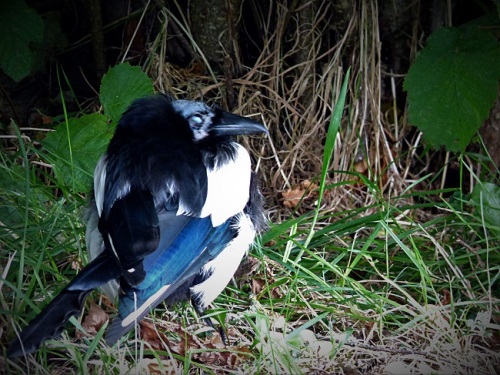
“Where did you find it?”

The boy’s face reflected his struggle: to tell the truth would be to admit he’d been doing what he oughtn’t, but to withhold the truth could mean that what needs to happen, won’t.

The woman waited. Integrity was best cultivated by one’s own appreciation of the internal equilibrium that is restored by accepting the inherent benefit of right versus wrong, and not by shaming or attempting to compel it via fear of punishment.

She knew, of course, that he’d been out of bed, and on a night when he’d already been grounded for breaking his sister’s carpentry project. All the more reason, she thought, to let him find a place to dig himself out of a hole of misdemeanors.

Some children tended to break rules all the time. Her son did not. Or at least not without what one could usually understand as good reason. That the nine-year-old had refused to say why he’d demolished Liz’s contraption, and that he did not argue when he’d been sent to his room, told her there was already more to the story than what he was willing to tell her.

The moment lingered. She let it stretch.

“Outside,” he said. He lifted his eyes to her, having crossed the Rubicon.

Displeased as she was that he broke curfew, she was proud of him for finding the courage to admit it.

“I see,” she nodded and raised an eyebrow in direction of his cupped hands.

“I had to save it.” Timidity was gone now that truth was set in motion. “Liz said she was going to put it in her new cage and keep it. But it is not a pet, and it is hurt and it cannot fly and something was going to come and eat it.”

The boy’s eyes were bright with tears of righteous defiance. “I don’t care if you ground me till I’m, like, a hundred. He needed help!”

The bird wriggled clumsily in the boy’s palms and the child’s young face crumbled in uncertainty. “But … um … before you send me to my room for forever, can you please please drive me to the vet?”


For Sue Vincent’s WritePhoto prompt


Heads Up

Photo from Morguefile


“I never got a chance to get ready!” Tuttie moaned, trying helplessly to wriggle so her mane fell as it ought.

“Shush! I’m trying to watch.” Tussock grumbled.

“Tuttie, your tuft looks fine!” Tilly quipped.

“No, it doesn’t. It’s all blowing in the wind.” Tuttie retorted. She was ever so particular about the way her threads flowed.

“Of course it would move,” Tussock bristled and tried to stand in attention as the clouds flew on the breeze. “When has it ever not been windy here?” Tuttie was annoying, but it irritated him even more that Tilly always perked up to soothe her fussy sibling’s fronds. She should get s spine instead of bowing to every mood. And why did he have to get planted right between these two, anyway?

“You in the periphery, stop swaying like a bunch of leaflets and stand up taller.” Topknot’s voice meant business. “Heads up now. It is almost time.”

The assemblage quieted. It was time for the sun to cross the horizon at the top of the tallest tree. A yearly passing when their ancestors’ fluff could climb aboard the golden orb’s mighty ship, and be carried to their eternal rest beyond the sea.


For the Sunday Photo Fiction prompt


A Map Of Reminiscing

timothy-holmes-MJHyqdJ0rrw-unsplash

Green Gardens trail in Gros Morne National Park, NL (Timothy Holmes on Unsplash)


They’d come to Gros Morne every summer. On “Dad Week.” Camp in a tent that always leaked but Dad wouldn’t replace, every patch and glued seam a map of reminiscing. They’d spend days on the meadows, walk the volcanic beach, go down to Old Man’s Cove.

Sal loved all of it. Even the chill and wet and constant hunger (for there was always more Dad aspired to catch than what he’d actually manage to). Sal never complained. He’d give up everything to breathe the ocean and make up stories about pirates in the coves. He’d even downplay the painful rash and sneezing (they never did find which wild-flower he was allergic to, and he didn’t want to, afraid Mom would say he couldn’t go).

Erosion closed his favorite trail, but not his memories.

He gazed at the ocean and wondered if Dad, whose mind was fading, still had his.


For What Pegman Saw: Newfoundland & Labrador, Canada


It’s a Wrap

people at theater

Photo: Monica Silvestre on Pexels.com


“It’s a wrap,” she said, and rose, and massaged the small of her back, which after all those hours of sitting felt as if sharp clamps had been tightened through it. Her back was never quite the same since the car accident. Or was it since the Shingles? Or the bad fall? Or the earlier things that were best left unremembered?

It wasn’t only her spine that bowed under the spasm. Her muscles were responding to a lot more than just the time spent in the chair.

He looked up, annoyed and uncomprehending. “Wrap, how?”

“In all the ways that matter,” she responded. It felt like ions since a soft hand on her back would melt the stress away and deepen her breath and make sleep nestle in so close she could smell it.

Decades? Years? Months? Too long.

“Living up to your rap of being cryptic, I see,” he muttered.

It was meant as a jab, but instead made a small peal of laughter form like a pearl inside her belly.

“I guess I am,” she noted, one hand still kneading the tightness in her lumbar area, the other held close against the urge to pat his head and make it better.

She’s moving on. He’ll have to find someone else to do all that for him now.


For Linda Hill’s SoCS prompt: Wrap/Rap


The Way Of Stars

Photo: Sue Vincent


They were like stars, swirling low and high across the sky, marking the path of time and soul and light and dark and what will come and what had been.

As the murmuration rose and swelled, so did the sorrow in her chest, as did tears, and longing, and gratitude.

Her grandmother had told her once, that murmurs were a way of making stars. Flocking in elegant waves across the heavens, to the places far above, where movement wasn’t labored and where breath no longer hurt and where hearts beat in the unison of souls that know all separation is only an illusion.

She held on, remembering, her tears a stream to feed flowers that would grow to feed the small things that would feed the starlings that would murmur to make stars to house beloved souls. And she thought of how the murmur in her chest – which made sound and sobs – ached and expanded as the birds’ wings wove and rose and dipped and dove.

For it was like being seen.

The starlings’ dance a last hello, a soft goodbye, a blessing on the wind.


For Sue Vincent’s Write Photo: Murmur